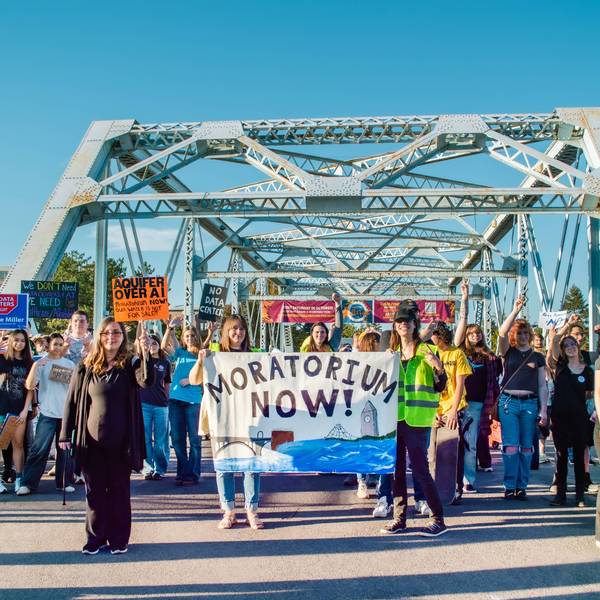

A crowd listen to speeches for racial justice in Portland, Oregon on July 23, 2020. (Photo: John Rudoff/Anadolu Agency via Getty Images)
Hundreds Say Menstrual Cycles Impacted After Exposure to Police Tear Gas at Oregon Protests
"This isn't a coincidence. Something's going on," said one person who was exposed.
Hundreds of people reported in a new study that they experienced abnormal menstrual cycles just after exposure to police-fired tear gas at racial justice protests last summer.
The findings call into question claims that the chemical weapon has only minor and temporary effects on the health of people who are exposed.
Kaiser Permanente Northwest conducted an online survey of more 2,200 people who attended demonstrations last year in Portland. The survey asked people to share their experiences after being exposed to tear gas between July 30 and August 20.
"It's really important to understand that not only are more people having these issues, but they were not minor. They were major enough that people needed to work with health professionals."
--Britta Torgrimson-Ojerio, Kaiser Permanente Center for Health Research
The survey was conducted shortly after Oregon Public Broadcasting (OPB) reported that 26 people between the ages of 17 and 43 experienced large blood clots during their menstrual periods and "cramps that felt like sharp rocks" days after being exposed to tear gas.
"This isn't a coincidence. Something's going on," said one person interviewed by OPB last summer; the new research bolsters the claims of those who took part in the report.
More than half of the people who took Kaiser Permanente's survey and who identified themselves as female, transgender men, genderqueer, or who did noy specify their sex or gender, described menstrual irregularity.
More than 36% of those respondents reported intense cramping, including pain that required visits to urgent care clinics or the emergency room in some cases, while 27.8% reported irregular spotting and 23.6% had increased bleeding. Nearly 19% reported abnormally long menstrual periods.
Britta Torgrimson-Ojerio, a nurse researcher at Kaiser Permanente Center for Health Research and the lead author of the new study, noted on social media that in addition to changes in menstruation, more than 72% of respondents reported psychological symptoms after tear gas exposure, and more than 54% of those who had health issues sought or intended to seek medical attention.
"There's a commonly held belief that the chemical agents that are used for crowd controlYi and we're referring to them as tear gasYi cause just short-term sensory impairment...and that these things dissipate really quickly," Torgrimson-Ojerio told The Oregonian/OregonLive. "It's really important to understand that not only are more people having these issues, but they were not minor. They were major enough that people needed to work with health professionals."
Research regarding the effects of tear gas on people's health has been limited, as the majority of data comes from studies done on animals and young men in military settings in the middle of the 20th century--not on people who menstruate.
"Tear gas is used increasingly on civilians, yet here we are, it took until 2021 for this study," tweeted journalist Lisa Song.
The research team led by Torgrimson-Ojerio also detected a "dose response," with people who were exposed to tear gas more frequently reporting more significant changes in their menstrual cycles.
Because the study was conducted via an anonymous, voluntary survey, Torgrimson-Ojerio called for more research into the effects of tear gas on women and others who menstruate.
"This is a really important call to action in the research community for people to investigate this further," she said.
We are at a crossroads
This country and this world are at a monumental crossroads. In a few short weeks, US voters will have an opportunity to beat back the forces of fascism and confront the billionaires who are rigging the economy, our media system, and our democracy, making it increasingly impossible for ordinary people to get by. We’re not just talking about the election. We’re talking about what must be done once these fascist elements are vanquished from power. We need a bolder set of solutions than what either major party has so far been willing to offer and a working-class movement ready to fight like hell for it. Trump didn't emerge from nowhere. The conditions that fueled MAGA authoritarianism were created by decades of radical neoliberal economic policies and a corrupt political system dominated by corporate interests. They slashed taxes on the super-rich, promising that the benefits would trickle down. They said giveaways to the corporate titans would make life more affordable for the rest of us. It was all bullshit. And when a bitter, betrayed populace searches for someone to blame, right-wing demagogues have little trouble finding scapegoats. People know when they're being lied to, but you won't hear any of this from the corporate media. Only independent journalism—powered and funded by people who believe in building a better world—can deliver truly trustworthy daily news. Our Fall Campaign is underway, and we need your help. To power our newsroom through the rest of the year, we need to raise $125,000 by midnight on October 31. So if you share our vision, please contribute whatever you can to sustain our work. |
Hundreds of people reported in a new study that they experienced abnormal menstrual cycles just after exposure to police-fired tear gas at racial justice protests last summer.
The findings call into question claims that the chemical weapon has only minor and temporary effects on the health of people who are exposed.
Kaiser Permanente Northwest conducted an online survey of more 2,200 people who attended demonstrations last year in Portland. The survey asked people to share their experiences after being exposed to tear gas between July 30 and August 20.
"It's really important to understand that not only are more people having these issues, but they were not minor. They were major enough that people needed to work with health professionals."
--Britta Torgrimson-Ojerio, Kaiser Permanente Center for Health Research
The survey was conducted shortly after Oregon Public Broadcasting (OPB) reported that 26 people between the ages of 17 and 43 experienced large blood clots during their menstrual periods and "cramps that felt like sharp rocks" days after being exposed to tear gas.
"This isn't a coincidence. Something's going on," said one person interviewed by OPB last summer; the new research bolsters the claims of those who took part in the report.
More than half of the people who took Kaiser Permanente's survey and who identified themselves as female, transgender men, genderqueer, or who did noy specify their sex or gender, described menstrual irregularity.
More than 36% of those respondents reported intense cramping, including pain that required visits to urgent care clinics or the emergency room in some cases, while 27.8% reported irregular spotting and 23.6% had increased bleeding. Nearly 19% reported abnormally long menstrual periods.
Britta Torgrimson-Ojerio, a nurse researcher at Kaiser Permanente Center for Health Research and the lead author of the new study, noted on social media that in addition to changes in menstruation, more than 72% of respondents reported psychological symptoms after tear gas exposure, and more than 54% of those who had health issues sought or intended to seek medical attention.
"There's a commonly held belief that the chemical agents that are used for crowd controlYi and we're referring to them as tear gasYi cause just short-term sensory impairment...and that these things dissipate really quickly," Torgrimson-Ojerio told The Oregonian/OregonLive. "It's really important to understand that not only are more people having these issues, but they were not minor. They were major enough that people needed to work with health professionals."
Research regarding the effects of tear gas on people's health has been limited, as the majority of data comes from studies done on animals and young men in military settings in the middle of the 20th century--not on people who menstruate.
"Tear gas is used increasingly on civilians, yet here we are, it took until 2021 for this study," tweeted journalist Lisa Song.
The research team led by Torgrimson-Ojerio also detected a "dose response," with people who were exposed to tear gas more frequently reporting more significant changes in their menstrual cycles.
Because the study was conducted via an anonymous, voluntary survey, Torgrimson-Ojerio called for more research into the effects of tear gas on women and others who menstruate.
"This is a really important call to action in the research community for people to investigate this further," she said.