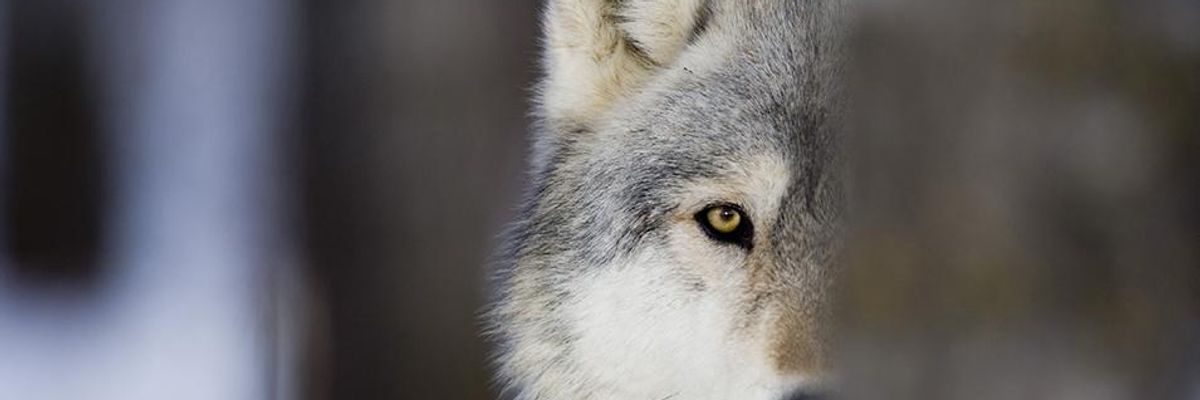
Wolf, Canis lupus, Minnesota, North America. (Photo: David Tipling/Universal Images Group via Getty Images)
'Disaster for Endangered Species and the Natural World': Advocates Decry Trump Move to Gut Habitat Protection Law
"This administration doesn't care about anything but money, and wildlife will suffer."
"If this proposal and the others put forward by the Trump administration are allowed to stand, it will be death by a thousand cuts for endangered wildlife across the country," Bonnie Rice, a senior campaigner for Sierra Club, said in a statement Friday. "Critical habitat is just that--critical for species' survival and recovery. In the face of mass extinction, and climate and health crises worsened by habitat destruction and loss of nature, it's essential that we protect more habitat, not less."
Democrats on the Senate Environment and Public Works Committee called the decision "misguided."
"Developers and polluters could basically veto any critical habitat protections for endangered species by claiming economic impacts, even without proof," said Noah Greenwald, endangered species program director at the Center for Biological Diversity. "Wildlife simply can't survive or recover if they have no place to live, but that's exactly what will happen if the Trump administration succeeds in turning over the critical habitat designation process to industry."
These warnings are the latest against continuing moves by the Trump administration to roll back environmental regulations. Environmental Protection Agency Administrator Andrew Wheeler came under fire Thursday for a speech in which he outlined further plans to gut regulations of the fossil fuel industry should President Donald Trump win a second term.
"Added together, these rules are a disaster for endangered species and the natural world," said Greenwald. "This administration doesn't care about anything but money, and wildlife will suffer."
Rice of the Sierra Club noted the urgency of the climate crisis and species loss as she called for resistance to the administration's proposed changes.
"The science is clear that we need to protect 30% of lands and waters by 2030 to avoid the worst of the climate and extinction crises," she said. "We cannot afford to continue ignoring science by allowing the Trump administration's misguided and reckless attacks on the Endangered Species Act to move forward."
Once the proposed regulations are in the Federal Register, they'll be open for public comment.
We are at a crossroads
This country and this world are at a monumental crossroads. In a few short weeks, US voters will have an opportunity to beat back the forces of fascism and confront the billionaires who are rigging the economy, our media system, and our democracy, making it increasingly impossible for ordinary people to get by. We’re not just talking about the election. We’re talking about what must be done once these fascist elements are vanquished from power. We need a bolder set of solutions than what either major party has so far been willing to offer and a working-class movement ready to fight like hell for it. Trump didn't emerge from nowhere. The conditions that fueled MAGA authoritarianism were created by decades of radical neoliberal economic policies and a corrupt political system dominated by corporate interests. They slashed taxes on the super-rich, promising that the benefits would trickle down. They said giveaways to the corporate titans would make life more affordable for the rest of us. It was all bullshit. And when a bitter, betrayed populace searches for someone to blame, right-wing demagogues have little trouble finding scapegoats. People know when they're being lied to, but you won't hear any of this from the corporate media. Only independent journalism—powered and funded by people who believe in building a better world—can deliver truly trustworthy daily news. Our Fall Campaign is underway, and we need your help. To power our newsroom through the rest of the year, we need to raise $125,000 by midnight on October 31. So if you share our vision, please contribute whatever you can to sustain our work. |
"If this proposal and the others put forward by the Trump administration are allowed to stand, it will be death by a thousand cuts for endangered wildlife across the country," Bonnie Rice, a senior campaigner for Sierra Club, said in a statement Friday. "Critical habitat is just that--critical for species' survival and recovery. In the face of mass extinction, and climate and health crises worsened by habitat destruction and loss of nature, it's essential that we protect more habitat, not less."
Democrats on the Senate Environment and Public Works Committee called the decision "misguided."
"Developers and polluters could basically veto any critical habitat protections for endangered species by claiming economic impacts, even without proof," said Noah Greenwald, endangered species program director at the Center for Biological Diversity. "Wildlife simply can't survive or recover if they have no place to live, but that's exactly what will happen if the Trump administration succeeds in turning over the critical habitat designation process to industry."
These warnings are the latest against continuing moves by the Trump administration to roll back environmental regulations. Environmental Protection Agency Administrator Andrew Wheeler came under fire Thursday for a speech in which he outlined further plans to gut regulations of the fossil fuel industry should President Donald Trump win a second term.
"Added together, these rules are a disaster for endangered species and the natural world," said Greenwald. "This administration doesn't care about anything but money, and wildlife will suffer."
Rice of the Sierra Club noted the urgency of the climate crisis and species loss as she called for resistance to the administration's proposed changes.
"The science is clear that we need to protect 30% of lands and waters by 2030 to avoid the worst of the climate and extinction crises," she said. "We cannot afford to continue ignoring science by allowing the Trump administration's misguided and reckless attacks on the Endangered Species Act to move forward."
Once the proposed regulations are in the Federal Register, they'll be open for public comment.
"If this proposal and the others put forward by the Trump administration are allowed to stand, it will be death by a thousand cuts for endangered wildlife across the country," Bonnie Rice, a senior campaigner for Sierra Club, said in a statement Friday. "Critical habitat is just that--critical for species' survival and recovery. In the face of mass extinction, and climate and health crises worsened by habitat destruction and loss of nature, it's essential that we protect more habitat, not less."
Democrats on the Senate Environment and Public Works Committee called the decision "misguided."
"Developers and polluters could basically veto any critical habitat protections for endangered species by claiming economic impacts, even without proof," said Noah Greenwald, endangered species program director at the Center for Biological Diversity. "Wildlife simply can't survive or recover if they have no place to live, but that's exactly what will happen if the Trump administration succeeds in turning over the critical habitat designation process to industry."
These warnings are the latest against continuing moves by the Trump administration to roll back environmental regulations. Environmental Protection Agency Administrator Andrew Wheeler came under fire Thursday for a speech in which he outlined further plans to gut regulations of the fossil fuel industry should President Donald Trump win a second term.
"Added together, these rules are a disaster for endangered species and the natural world," said Greenwald. "This administration doesn't care about anything but money, and wildlife will suffer."
Rice of the Sierra Club noted the urgency of the climate crisis and species loss as she called for resistance to the administration's proposed changes.
"The science is clear that we need to protect 30% of lands and waters by 2030 to avoid the worst of the climate and extinction crises," she said. "We cannot afford to continue ignoring science by allowing the Trump administration's misguided and reckless attacks on the Endangered Species Act to move forward."
Once the proposed regulations are in the Federal Register, they'll be open for public comment.