SUBSCRIBE TO OUR FREE NEWSLETTER
Daily news & progressive opinion—funded by the people, not the corporations—delivered straight to your inbox.
5
#000000
#FFFFFF
To donate by check, phone, or other method, see our More Ways to Give page.
Daily news & progressive opinion—funded by the people, not the corporations—delivered straight to your inbox.
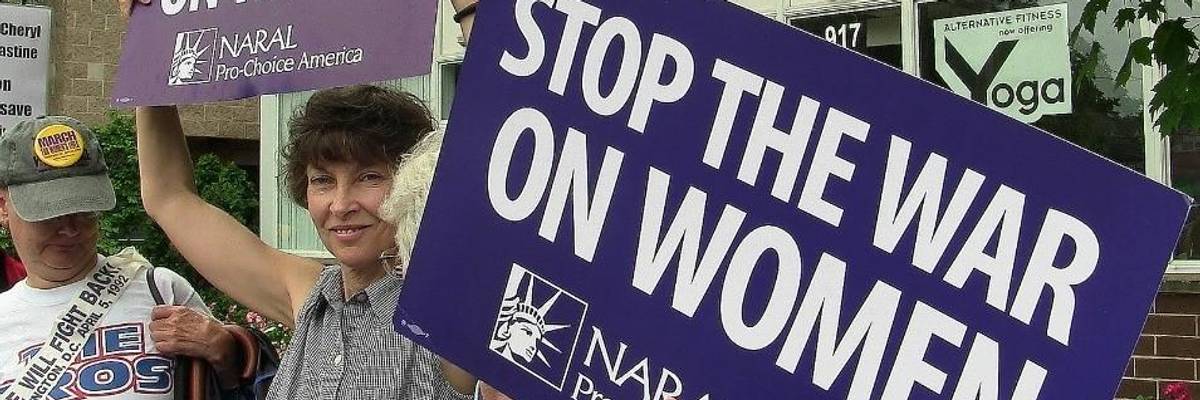
The U.S. Supreme Court ruled on Monday that Louisiana cannot impose restrictions on abortion clinics that would require doctors who provide abortion care to have admitting privileges at local hospitals. (Photo: Mikasi/cc/flickr)
Reproductive rights groups on Monday expressed relief after the U.S. Supreme Court struck down an extreme anti-choice law in Louisiana--but said they were prepared for a continued fight to protect reproductive healthcare across the country.
In a 5-4 decision in June Medical Services vs. Russo, Chief Justice John Roberts joined the high court's four liberal-leaning justices in ruling against a 2014 Louisiana law which stated doctors who provide abortion care in the state must have admitting privileges at a nearby hospital. The restriction was one of several Targeted Restrictions on Abortion Providers (TRAP) laws passed by states in recent years designed to shut down clinics.
"That this law was only struck down by a 5-4 vote shows just how precarious access to abortion is in our country, where politicians continue to pass laws designed to shut down clinics and push abortion out of reach."
--Jennifer Dalven, ACLU
In 2016, the Supreme Court rejected a similar law that had passed in Texas. Writing the opinion for the four liberal-leaning judges, Justice Stephen Breyer ruled that like the Texas law, the restriction placed an "undue burden" on patients seeking abortion care, in violation of the 1992 Casey vs. Planned Parenthood decision.
The law "poses a 'substantial obstacle' to women seeking an abortion" and "offers no significant health-related benefits," Breyer wrote, agreeing with a lower court's ruling.
As such, the Republican-led Louisiana legislature imposed an "undue burden on a woman's constitutional right to choose to have an abortion," he added.
"Today we can rest easy knowing abortion access is still intact" in Louisiana, tweeted the National Women's Law Center.
The doctors who filed a lawsuit over the legislation argued that the restriction would leave patients in Louisiana with only one eligible provider at one clinic where they could obtain care. About 10,000 women seek abortion care each year in the state.
Louisiana lawmakers have passed 89 abortion restrictions since Roe vs. Wade affirmed women's right to obtain abortion care, and there are currently only three clinics operating in the state.
The state law was struck down despite President Donald Trump's appointing of two right-wing, anti-choice judges to the court since he took office in 2017. The decision is the third ruling in less than two weeks that has been considered a legal defeat for the Trump administration.
Advocates pointed to Justice Brett Kavanaugh's support for the Louisiana restriction as new evidence that federal lawmakers who supported his confirmation, arguing that reproductive rights are secure in the U.S., must be voted out of office.
"In this moment of turmoil for our country, fighting for the fundamental rights of every body is more important than ever," said Ilyse Hogue, president of NARAL Pro-Choice America. "We will fight with everything we have to make sure the politicians like Senators Susan Collins (R-Maine), Joni Ernst (R-Iowa), Thom Tillis (R-N.C.), and Cory Gardner (R-Colo.), who rubber-stamped Trump and Mitch McConnell's efforts to stack our courts with radical right ideologues, are held accountable for putting our freedom at risk. Anti-choice politicians be warned: The 77% of Americans who support the legal right to abortion care won't forget what you did--and you'll be answering to us this November."
The fact that four of the nation's top justices ruled in favor of stripping Louisiana women of their right to abortion care--and that other state-level laws could be decided by the court in the coming months--was not lost on Nancy Northrup, president of the Center for Reproductive Rights.
"The court's ruling today will not stop those hell-bent on banning abortion," Northup said in a statement. "We will be back in court tomorrow and will continue to fight state by state, law by law to protect our constitutional right to abortion. But we shouldn't have to keep playing whack-a-mole. It's time for Congress to pass The Women's Health Protection Act, a federal bill that would ensure the promise of Roe v. Wade is realized in every state for every person."
"Just four years ago, the court held that there was no medical justification for this law, and yet today we were just one vote away from it taking effect and eviscerating access to abortion," said Jennifer Dalven, director of the ACLU Reproductive Freedom Project. "That this law was only struck down by a 5-4 vote shows just how precarious access to abortion is in our country, where politicians continue to pass laws designed to shut down clinics and push abortion out of reach."
Constitutional law expert Leah Litman noted that Roberts' reasoning for joining Justices Breyer, Sonia Sotomayor, Elena Kagan, and Ruth Bader Ginsburg in rejecting the law did not inspire confidence about the security of abortion rights. The chief justice said in a separate opinion that he only voted with the liberal judges because he believed the court's 2016 decision regarding the Texas law should be upheld--but that he had dissented in the 2016 ruling.
"It is NOT at all encouraging for the future of abortion rights given the narrowness of the Chief Justice's concurrence: 'I am voting this way only because SCOTUS struck down this exact same law 4 years ago,'" Litman wrote.
The advocacy group Demand Justice tweeted its agreement.
Hogue noted, however, that the ruling "shows that advocates can make a difference."
"Support for Roe v. Wade is at an all-time high in this country and so many made their voices heard through this process," she said. "The court's legitimacy in the eyes of the public will be threatened if they follow through on Trump's promise to end legal abortion."
Dear Common Dreams reader, It’s been nearly 30 years since I co-founded Common Dreams with my late wife, Lina Newhouser. We had the radical notion that journalism should serve the public good, not corporate profits. It was clear to us from the outset what it would take to build such a project. No paid advertisements. No corporate sponsors. No millionaire publisher telling us what to think or do. Many people said we wouldn't last a year, but we proved those doubters wrong. Together with a tremendous team of journalists and dedicated staff, we built an independent media outlet free from the constraints of profits and corporate control. Our mission has always been simple: To inform. To inspire. To ignite change for the common good. Building Common Dreams was not easy. Our survival was never guaranteed. When you take on the most powerful forces—Wall Street greed, fossil fuel industry destruction, Big Tech lobbyists, and uber-rich oligarchs who have spent billions upon billions rigging the economy and democracy in their favor—the only bulwark you have is supporters who believe in your work. But here’s the urgent message from me today. It's never been this bad out there. And it's never been this hard to keep us going. At the very moment Common Dreams is most needed, the threats we face are intensifying. We need your support now more than ever. We don't accept corporate advertising and never will. We don't have a paywall because we don't think people should be blocked from critical news based on their ability to pay. Everything we do is funded by the donations of readers like you. When everyone does the little they can afford, we are strong. But if that support retreats or dries up, so do we. Will you donate now to make sure Common Dreams not only survives but thrives? —Craig Brown, Co-founder |
Reproductive rights groups on Monday expressed relief after the U.S. Supreme Court struck down an extreme anti-choice law in Louisiana--but said they were prepared for a continued fight to protect reproductive healthcare across the country.
In a 5-4 decision in June Medical Services vs. Russo, Chief Justice John Roberts joined the high court's four liberal-leaning justices in ruling against a 2014 Louisiana law which stated doctors who provide abortion care in the state must have admitting privileges at a nearby hospital. The restriction was one of several Targeted Restrictions on Abortion Providers (TRAP) laws passed by states in recent years designed to shut down clinics.
"That this law was only struck down by a 5-4 vote shows just how precarious access to abortion is in our country, where politicians continue to pass laws designed to shut down clinics and push abortion out of reach."
--Jennifer Dalven, ACLU
In 2016, the Supreme Court rejected a similar law that had passed in Texas. Writing the opinion for the four liberal-leaning judges, Justice Stephen Breyer ruled that like the Texas law, the restriction placed an "undue burden" on patients seeking abortion care, in violation of the 1992 Casey vs. Planned Parenthood decision.
The law "poses a 'substantial obstacle' to women seeking an abortion" and "offers no significant health-related benefits," Breyer wrote, agreeing with a lower court's ruling.
As such, the Republican-led Louisiana legislature imposed an "undue burden on a woman's constitutional right to choose to have an abortion," he added.
"Today we can rest easy knowing abortion access is still intact" in Louisiana, tweeted the National Women's Law Center.
The doctors who filed a lawsuit over the legislation argued that the restriction would leave patients in Louisiana with only one eligible provider at one clinic where they could obtain care. About 10,000 women seek abortion care each year in the state.
Louisiana lawmakers have passed 89 abortion restrictions since Roe vs. Wade affirmed women's right to obtain abortion care, and there are currently only three clinics operating in the state.
The state law was struck down despite President Donald Trump's appointing of two right-wing, anti-choice judges to the court since he took office in 2017. The decision is the third ruling in less than two weeks that has been considered a legal defeat for the Trump administration.
Advocates pointed to Justice Brett Kavanaugh's support for the Louisiana restriction as new evidence that federal lawmakers who supported his confirmation, arguing that reproductive rights are secure in the U.S., must be voted out of office.
"In this moment of turmoil for our country, fighting for the fundamental rights of every body is more important than ever," said Ilyse Hogue, president of NARAL Pro-Choice America. "We will fight with everything we have to make sure the politicians like Senators Susan Collins (R-Maine), Joni Ernst (R-Iowa), Thom Tillis (R-N.C.), and Cory Gardner (R-Colo.), who rubber-stamped Trump and Mitch McConnell's efforts to stack our courts with radical right ideologues, are held accountable for putting our freedom at risk. Anti-choice politicians be warned: The 77% of Americans who support the legal right to abortion care won't forget what you did--and you'll be answering to us this November."
The fact that four of the nation's top justices ruled in favor of stripping Louisiana women of their right to abortion care--and that other state-level laws could be decided by the court in the coming months--was not lost on Nancy Northrup, president of the Center for Reproductive Rights.
"The court's ruling today will not stop those hell-bent on banning abortion," Northup said in a statement. "We will be back in court tomorrow and will continue to fight state by state, law by law to protect our constitutional right to abortion. But we shouldn't have to keep playing whack-a-mole. It's time for Congress to pass The Women's Health Protection Act, a federal bill that would ensure the promise of Roe v. Wade is realized in every state for every person."
"Just four years ago, the court held that there was no medical justification for this law, and yet today we were just one vote away from it taking effect and eviscerating access to abortion," said Jennifer Dalven, director of the ACLU Reproductive Freedom Project. "That this law was only struck down by a 5-4 vote shows just how precarious access to abortion is in our country, where politicians continue to pass laws designed to shut down clinics and push abortion out of reach."
Constitutional law expert Leah Litman noted that Roberts' reasoning for joining Justices Breyer, Sonia Sotomayor, Elena Kagan, and Ruth Bader Ginsburg in rejecting the law did not inspire confidence about the security of abortion rights. The chief justice said in a separate opinion that he only voted with the liberal judges because he believed the court's 2016 decision regarding the Texas law should be upheld--but that he had dissented in the 2016 ruling.
"It is NOT at all encouraging for the future of abortion rights given the narrowness of the Chief Justice's concurrence: 'I am voting this way only because SCOTUS struck down this exact same law 4 years ago,'" Litman wrote.
The advocacy group Demand Justice tweeted its agreement.
Hogue noted, however, that the ruling "shows that advocates can make a difference."
"Support for Roe v. Wade is at an all-time high in this country and so many made their voices heard through this process," she said. "The court's legitimacy in the eyes of the public will be threatened if they follow through on Trump's promise to end legal abortion."
Reproductive rights groups on Monday expressed relief after the U.S. Supreme Court struck down an extreme anti-choice law in Louisiana--but said they were prepared for a continued fight to protect reproductive healthcare across the country.
In a 5-4 decision in June Medical Services vs. Russo, Chief Justice John Roberts joined the high court's four liberal-leaning justices in ruling against a 2014 Louisiana law which stated doctors who provide abortion care in the state must have admitting privileges at a nearby hospital. The restriction was one of several Targeted Restrictions on Abortion Providers (TRAP) laws passed by states in recent years designed to shut down clinics.
"That this law was only struck down by a 5-4 vote shows just how precarious access to abortion is in our country, where politicians continue to pass laws designed to shut down clinics and push abortion out of reach."
--Jennifer Dalven, ACLU
In 2016, the Supreme Court rejected a similar law that had passed in Texas. Writing the opinion for the four liberal-leaning judges, Justice Stephen Breyer ruled that like the Texas law, the restriction placed an "undue burden" on patients seeking abortion care, in violation of the 1992 Casey vs. Planned Parenthood decision.
The law "poses a 'substantial obstacle' to women seeking an abortion" and "offers no significant health-related benefits," Breyer wrote, agreeing with a lower court's ruling.
As such, the Republican-led Louisiana legislature imposed an "undue burden on a woman's constitutional right to choose to have an abortion," he added.
"Today we can rest easy knowing abortion access is still intact" in Louisiana, tweeted the National Women's Law Center.
The doctors who filed a lawsuit over the legislation argued that the restriction would leave patients in Louisiana with only one eligible provider at one clinic where they could obtain care. About 10,000 women seek abortion care each year in the state.
Louisiana lawmakers have passed 89 abortion restrictions since Roe vs. Wade affirmed women's right to obtain abortion care, and there are currently only three clinics operating in the state.
The state law was struck down despite President Donald Trump's appointing of two right-wing, anti-choice judges to the court since he took office in 2017. The decision is the third ruling in less than two weeks that has been considered a legal defeat for the Trump administration.
Advocates pointed to Justice Brett Kavanaugh's support for the Louisiana restriction as new evidence that federal lawmakers who supported his confirmation, arguing that reproductive rights are secure in the U.S., must be voted out of office.
"In this moment of turmoil for our country, fighting for the fundamental rights of every body is more important than ever," said Ilyse Hogue, president of NARAL Pro-Choice America. "We will fight with everything we have to make sure the politicians like Senators Susan Collins (R-Maine), Joni Ernst (R-Iowa), Thom Tillis (R-N.C.), and Cory Gardner (R-Colo.), who rubber-stamped Trump and Mitch McConnell's efforts to stack our courts with radical right ideologues, are held accountable for putting our freedom at risk. Anti-choice politicians be warned: The 77% of Americans who support the legal right to abortion care won't forget what you did--and you'll be answering to us this November."
The fact that four of the nation's top justices ruled in favor of stripping Louisiana women of their right to abortion care--and that other state-level laws could be decided by the court in the coming months--was not lost on Nancy Northrup, president of the Center for Reproductive Rights.
"The court's ruling today will not stop those hell-bent on banning abortion," Northup said in a statement. "We will be back in court tomorrow and will continue to fight state by state, law by law to protect our constitutional right to abortion. But we shouldn't have to keep playing whack-a-mole. It's time for Congress to pass The Women's Health Protection Act, a federal bill that would ensure the promise of Roe v. Wade is realized in every state for every person."
"Just four years ago, the court held that there was no medical justification for this law, and yet today we were just one vote away from it taking effect and eviscerating access to abortion," said Jennifer Dalven, director of the ACLU Reproductive Freedom Project. "That this law was only struck down by a 5-4 vote shows just how precarious access to abortion is in our country, where politicians continue to pass laws designed to shut down clinics and push abortion out of reach."
Constitutional law expert Leah Litman noted that Roberts' reasoning for joining Justices Breyer, Sonia Sotomayor, Elena Kagan, and Ruth Bader Ginsburg in rejecting the law did not inspire confidence about the security of abortion rights. The chief justice said in a separate opinion that he only voted with the liberal judges because he believed the court's 2016 decision regarding the Texas law should be upheld--but that he had dissented in the 2016 ruling.
"It is NOT at all encouraging for the future of abortion rights given the narrowness of the Chief Justice's concurrence: 'I am voting this way only because SCOTUS struck down this exact same law 4 years ago,'" Litman wrote.
The advocacy group Demand Justice tweeted its agreement.
Hogue noted, however, that the ruling "shows that advocates can make a difference."
"Support for Roe v. Wade is at an all-time high in this country and so many made their voices heard through this process," she said. "The court's legitimacy in the eyes of the public will be threatened if they follow through on Trump's promise to end legal abortion."