SUBSCRIBE TO OUR FREE NEWSLETTER
Daily news & progressive opinion—funded by the people, not the corporations—delivered straight to your inbox.
5
#000000
#FFFFFF
To donate by check, phone, or other method, see our More Ways to Give page.
Daily news & progressive opinion—funded by the people, not the corporations—delivered straight to your inbox.
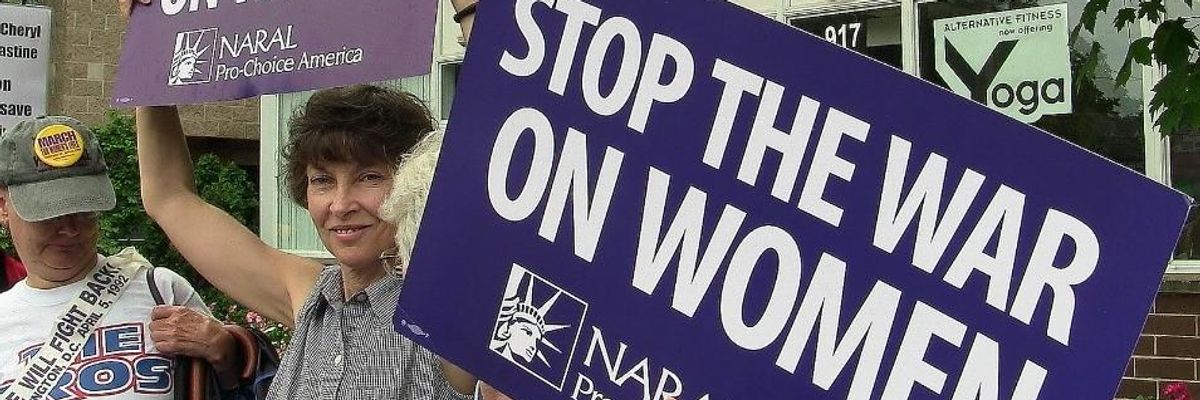
A woman in California was charged Wednesday with first-degree murder in the death of her stillborn baby, who had toxic levels of methamphetamine in his system. Experts caution against the criminalization of women who use drugs during pregnancy. (Photo: Mikasi/cc/flickr)
Reproductive and human rights advocates on Thursday warned that first-degree murder charges against a woman in California for the death of her stillborn baby is "the direct result" of the anti-choice movement's push for extreme laws pitting the rights of women against those of unborn children.
"Charging someone with murder for a stillbirth, under any circumstance, is dystopian." --Callie Beusman, The Cut
Chelsea Cheyenne Becker was arrested and charged on Wednesday with murder in Hanford, California and held on $5 million bail, several weeks after giving birth to a stillborn baby. The baby was found to have toxic levels of methamphetamine in his system, suggesting to investigators that Becker had used the drug throughout her pregnancy.
Becker has reportedly struggled long-term with substance addiction; her three living children were born with meth in their systems and are in the custody of adoptive parents and family members.
As Hannah Gold wrote at The Cut, "murder charges are not an unfortunate but natural outcome of becoming pregnant while dealing with substance-abuse issues":
As reproductive-justice advocates argue, cases like this are part of a burgeoning, disturbing pattern, in which the rights of pregnant women are directly pitted against those of the "unborn child," a term that encompasses fertilized eggs, embryos, and fetuses. It's a direct result of the so-called "fetal personhood" movement, which seeks to legally redefine a fetus as a person as a means of overturning Roe v. Wade.
While Becker's case seems complicated, most experts agree that overzealous punishment of pregnant women with substance-abuse issues does far more harm than good.
Becker's charges come five months after an Alabama woman, Marshae Jones, was charged with manslaughter for miscarrying a pregnancy after she was shot. Authorities accused her of starting a fight with the person who shot her. Outraged reproductive rights advocates linked Jones's arrest to state Republicans' embrace of the "fetal personhood" movement and Alabama's extreme abortion ban.
Amnesty International published a report in 2017 condemning laws that criminalize women who abuse substances during pregnancy, saying such measures, which have been passed in recent years in states including Tennessee and Alabama, prevent women with abuse disorders from seeking prenatal care and drug treatment.
Those laws, Amnesty wrote, "claim to promote maternal and infant health [but] are in fact driving pregnant women away from vital health services, jeopardizing their well-being and violating their right to health."
"Drug dependence is a health condition but U.S. authorities are treating it as a crime, failing to ensure treatment is available for pregnant women and then punishing them for their ongoing condition," the group added. "These harsh and discriminatory laws are making pregnancy more dangerous and trampling on human rights in the process."
The U.K.-based British Pregnancy Advisory Service wrote Thursday that criminalizing pregnant women's behavior "will never improve outcomes for either mothers or their children."
Alabama's so-called "chemical endangerment law" has been linked to the arrests of more than 400 pregnant women since it was passed in 2006. ProPublica reported in 2015 on an Alabama woman who gave birth to a healthy baby, but was visited by a child welfare agency and then arrested after telling her doctor that she had taken a single Valium pill late in her pregnancy.
Calls to offer Becker and other pregnant patients with substance addictions the healthcare that they need came from NARAL, the Abortion Care Network, and Dr. Jenn Conti of Physicians for Reproductive Rights.
"Charging someone with murder for a stillbirth, under any circumstance, is dystopian," tweeted Callie Beusman, an editor at The Cut. "Pregnant people with substance abuse issues need support and services; incarceration is not the answer."
Dear Common Dreams reader, It’s been nearly 30 years since I co-founded Common Dreams with my late wife, Lina Newhouser. We had the radical notion that journalism should serve the public good, not corporate profits. It was clear to us from the outset what it would take to build such a project. No paid advertisements. No corporate sponsors. No millionaire publisher telling us what to think or do. Many people said we wouldn't last a year, but we proved those doubters wrong. Together with a tremendous team of journalists and dedicated staff, we built an independent media outlet free from the constraints of profits and corporate control. Our mission has always been simple: To inform. To inspire. To ignite change for the common good. Building Common Dreams was not easy. Our survival was never guaranteed. When you take on the most powerful forces—Wall Street greed, fossil fuel industry destruction, Big Tech lobbyists, and uber-rich oligarchs who have spent billions upon billions rigging the economy and democracy in their favor—the only bulwark you have is supporters who believe in your work. But here’s the urgent message from me today. It's never been this bad out there. And it's never been this hard to keep us going. At the very moment Common Dreams is most needed, the threats we face are intensifying. We need your support now more than ever. We don't accept corporate advertising and never will. We don't have a paywall because we don't think people should be blocked from critical news based on their ability to pay. Everything we do is funded by the donations of readers like you. When everyone does the little they can afford, we are strong. But if that support retreats or dries up, so do we. Will you donate now to make sure Common Dreams not only survives but thrives? —Craig Brown, Co-founder |
Reproductive and human rights advocates on Thursday warned that first-degree murder charges against a woman in California for the death of her stillborn baby is "the direct result" of the anti-choice movement's push for extreme laws pitting the rights of women against those of unborn children.
"Charging someone with murder for a stillbirth, under any circumstance, is dystopian." --Callie Beusman, The Cut
Chelsea Cheyenne Becker was arrested and charged on Wednesday with murder in Hanford, California and held on $5 million bail, several weeks after giving birth to a stillborn baby. The baby was found to have toxic levels of methamphetamine in his system, suggesting to investigators that Becker had used the drug throughout her pregnancy.
Becker has reportedly struggled long-term with substance addiction; her three living children were born with meth in their systems and are in the custody of adoptive parents and family members.
As Hannah Gold wrote at The Cut, "murder charges are not an unfortunate but natural outcome of becoming pregnant while dealing with substance-abuse issues":
As reproductive-justice advocates argue, cases like this are part of a burgeoning, disturbing pattern, in which the rights of pregnant women are directly pitted against those of the "unborn child," a term that encompasses fertilized eggs, embryos, and fetuses. It's a direct result of the so-called "fetal personhood" movement, which seeks to legally redefine a fetus as a person as a means of overturning Roe v. Wade.
While Becker's case seems complicated, most experts agree that overzealous punishment of pregnant women with substance-abuse issues does far more harm than good.
Becker's charges come five months after an Alabama woman, Marshae Jones, was charged with manslaughter for miscarrying a pregnancy after she was shot. Authorities accused her of starting a fight with the person who shot her. Outraged reproductive rights advocates linked Jones's arrest to state Republicans' embrace of the "fetal personhood" movement and Alabama's extreme abortion ban.
Amnesty International published a report in 2017 condemning laws that criminalize women who abuse substances during pregnancy, saying such measures, which have been passed in recent years in states including Tennessee and Alabama, prevent women with abuse disorders from seeking prenatal care and drug treatment.
Those laws, Amnesty wrote, "claim to promote maternal and infant health [but] are in fact driving pregnant women away from vital health services, jeopardizing their well-being and violating their right to health."
"Drug dependence is a health condition but U.S. authorities are treating it as a crime, failing to ensure treatment is available for pregnant women and then punishing them for their ongoing condition," the group added. "These harsh and discriminatory laws are making pregnancy more dangerous and trampling on human rights in the process."
The U.K.-based British Pregnancy Advisory Service wrote Thursday that criminalizing pregnant women's behavior "will never improve outcomes for either mothers or their children."
Alabama's so-called "chemical endangerment law" has been linked to the arrests of more than 400 pregnant women since it was passed in 2006. ProPublica reported in 2015 on an Alabama woman who gave birth to a healthy baby, but was visited by a child welfare agency and then arrested after telling her doctor that she had taken a single Valium pill late in her pregnancy.
Calls to offer Becker and other pregnant patients with substance addictions the healthcare that they need came from NARAL, the Abortion Care Network, and Dr. Jenn Conti of Physicians for Reproductive Rights.
"Charging someone with murder for a stillbirth, under any circumstance, is dystopian," tweeted Callie Beusman, an editor at The Cut. "Pregnant people with substance abuse issues need support and services; incarceration is not the answer."
Reproductive and human rights advocates on Thursday warned that first-degree murder charges against a woman in California for the death of her stillborn baby is "the direct result" of the anti-choice movement's push for extreme laws pitting the rights of women against those of unborn children.
"Charging someone with murder for a stillbirth, under any circumstance, is dystopian." --Callie Beusman, The Cut
Chelsea Cheyenne Becker was arrested and charged on Wednesday with murder in Hanford, California and held on $5 million bail, several weeks after giving birth to a stillborn baby. The baby was found to have toxic levels of methamphetamine in his system, suggesting to investigators that Becker had used the drug throughout her pregnancy.
Becker has reportedly struggled long-term with substance addiction; her three living children were born with meth in their systems and are in the custody of adoptive parents and family members.
As Hannah Gold wrote at The Cut, "murder charges are not an unfortunate but natural outcome of becoming pregnant while dealing with substance-abuse issues":
As reproductive-justice advocates argue, cases like this are part of a burgeoning, disturbing pattern, in which the rights of pregnant women are directly pitted against those of the "unborn child," a term that encompasses fertilized eggs, embryos, and fetuses. It's a direct result of the so-called "fetal personhood" movement, which seeks to legally redefine a fetus as a person as a means of overturning Roe v. Wade.
While Becker's case seems complicated, most experts agree that overzealous punishment of pregnant women with substance-abuse issues does far more harm than good.
Becker's charges come five months after an Alabama woman, Marshae Jones, was charged with manslaughter for miscarrying a pregnancy after she was shot. Authorities accused her of starting a fight with the person who shot her. Outraged reproductive rights advocates linked Jones's arrest to state Republicans' embrace of the "fetal personhood" movement and Alabama's extreme abortion ban.
Amnesty International published a report in 2017 condemning laws that criminalize women who abuse substances during pregnancy, saying such measures, which have been passed in recent years in states including Tennessee and Alabama, prevent women with abuse disorders from seeking prenatal care and drug treatment.
Those laws, Amnesty wrote, "claim to promote maternal and infant health [but] are in fact driving pregnant women away from vital health services, jeopardizing their well-being and violating their right to health."
"Drug dependence is a health condition but U.S. authorities are treating it as a crime, failing to ensure treatment is available for pregnant women and then punishing them for their ongoing condition," the group added. "These harsh and discriminatory laws are making pregnancy more dangerous and trampling on human rights in the process."
The U.K.-based British Pregnancy Advisory Service wrote Thursday that criminalizing pregnant women's behavior "will never improve outcomes for either mothers or their children."
Alabama's so-called "chemical endangerment law" has been linked to the arrests of more than 400 pregnant women since it was passed in 2006. ProPublica reported in 2015 on an Alabama woman who gave birth to a healthy baby, but was visited by a child welfare agency and then arrested after telling her doctor that she had taken a single Valium pill late in her pregnancy.
Calls to offer Becker and other pregnant patients with substance addictions the healthcare that they need came from NARAL, the Abortion Care Network, and Dr. Jenn Conti of Physicians for Reproductive Rights.
"Charging someone with murder for a stillbirth, under any circumstance, is dystopian," tweeted Callie Beusman, an editor at The Cut. "Pregnant people with substance abuse issues need support and services; incarceration is not the answer."