
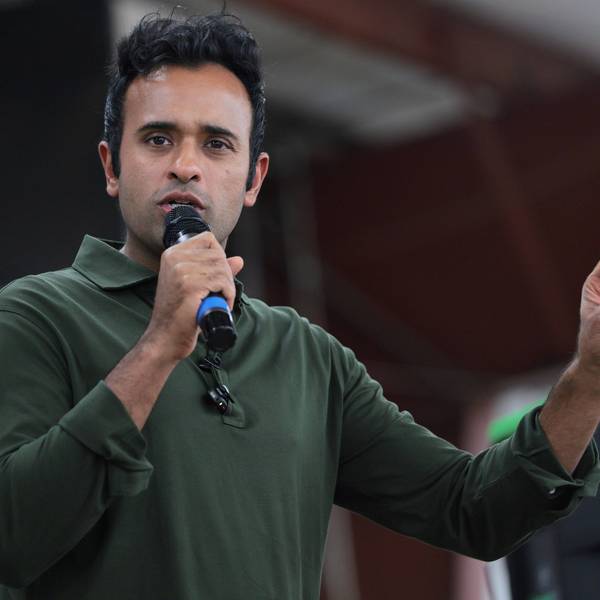

Senator and Democratic presidential candidate Elizabeth Warren greets attendees in the rain after speaking at a Labor Day house party on September 2, 2019 in Hampton Falls, New Hampshire. (Photo: Scott Eisen/Getty Images)
'A Solution for All Generations': With Plan for Social Security Expansion, Warren Demands Rich Pay Fair Share to Lift 5 Million Out of Poverty
"No one who spends 30 years working and contributing to Social Security should retire in poverty."
Sen. Elizabeth Warren on Thursday unveiled her plan to expand Social Security benefits for senior citizens and future generations after retirement, a proposal she would fund with an increase in taxes on the wealthiest Americans.
The Massachusetts Democrats's expansion of the 84-year-old program would immediately increase benefits for seniors by $200 per month, or $2,400 per year, while adding even more to benefits for retired women, lower income households, people with disabilities, and others who face disproportionately low wages throughout their working lives.
The plan would be financed by new requirements for the highest earners to contribute their "fair share" to the national Social Security fund. The fund currently contains $3 trillion but has been threatened for years with proposed cuts and privatization by Republicans and which has yielded smaller and smaller benefits for retirees in recent years.
"Because of inadequate contributions to the program by the rich, we are projected to draw down that reserve by 2035, prompting automatic 20 percent across-the-board benefit cuts if nothing is done," Warren wrote.
The top two percent of earners--those making individual wages above $250,000--would be required to contribute 14.8 percent of their wages to Social Security benefits. Investment income for the wealthiest earners and families would also be subject to a 14.8 percent contribution.
"The plan results in a much more progressive Social Security system," wrote Mark Zandi, chief economist at Moody's Analytics, in an independent analysis, "as high-income people shoulder the financial burden of the plan, while low- and middle-income people benefit substantially."
The plan was praised by Social Security Works, a national group that works to protect the program.
"Senator Elizabeth Warren is a powerful leader in the movement to expand Social Security," said Nancy Altman, president of the group. "Her bold new plan tackles the nation's looming retirement income crisis head-on, as well as rising income and wealth inequality and the squeeze on working families. It is a solution for all generations."
Sixty-four million Americans rely on Social Security for at least part of their income, with more than 20 percent of married seniors and 45 percent of unmarried seniors counting on the benefit for 90% of their income.
The numbers are higher for people of color, with 40 percent of Latinx retirees, a third of black seniors, and more than a quarter of Asian and Pacific Islanders relying on the benefits as their only source of income after retirement.
Congress hasn't increased Social Security benefits in nearly 50 years and President Donald Trump proposed cutting them even further shortly after signing off on a $1.5 trillion tax cut for the wealthiest Americans. Decades of wage stagnation have left the average beneficiary receiving only $1,354 per month from Social Security in 2019.
Aspects of Warren's plan meant to ensure that low-income workers and people who spend years out of the workforce to care for children or elderly family members would not spend their later years in poverty were also met with praise.
The proposal would create a credit for people who spend years performing unpaid caregiving work at home--60 percent of whom are women.
The credit would increase the Social Security lifetime earnings calculation--used to determine monthly benefits--for anyone who provides 80 hours a month of unpaid care to a child under the age of six, a family member with a disability, or an elderly relative.
At Glamour, Mattie Kahn wrote that this detail of Warren's plan highlighted Social Security and poverty in retirement--more common among women--as a feminist issue:
When people talk about the issues that have the biggest impact on women's lives on campaign trails or in boardrooms, the same problems tend to come up: the wage gap, paid leave, childcare, violence against women, and reproductive health care. But those structural issues don't affect women in a vacuum; each has consequences that can sometimes be overlooked.
[...]
Because of work and wage discrimination, Warren explains, and the fact that some women take time out of the workforce to care for children or sick relatives (and do so at higher rates than men), women's average monthly Social Security benefit is just 78 percent of the average monthly benefit men receive. It's more than unfair. It's catastrophic, and it's affecting women's financial futures.
Altman also applauded the attention Warren gave to unpaid labor in the home.
"She knows that caregivers--disproportionately women--who take time out of the workforce to care for loved ones provide invaluable work for their families and the nation," Altman said.
Calling the number of retirees who live in poverty "unacceptably high," Warren would also restructure the Special Minimum Benefit, which was created by Congress in 1972 to support people who worked for consistently low wages before retiring and therefore have smaller benefits to draw from. The benefit, Warren wrote at Medium, is increasingly difficult to qualify for and has shrunk in value as the cost of living has gone up.
"No one who spends 30 years working and contributing to Social Security should retire in poverty," the senator wrote. "That's why my plan restructures the Special Minimum Benefit so that more people are eligible for it and the benefits are a lot higher. Under my plan, any person who has done 30 years of Social Security-covered work will receive an annual benefit of at least 125 percent of the federal poverty line when they reach retirement age."
Warren's plan is projected to reduce the poverty rate for seniors by 68 percent, lifting nearly five million people out of poverty.
"Warren's bold plan expands Social Security and ensures that all benefits can be paid in full and on time," wrote Altman. "All Americans owe her a debt of gratitude for standing up for our Social Security system."
We are at a crossroads
This country and this world are at a monumental crossroads. In a few short weeks, US voters will have an opportunity to beat back the forces of fascism and confront the billionaires who are rigging the economy, our media system, and our democracy, making it increasingly impossible for ordinary people to get by. We’re not just talking about the election. We’re talking about what must be done once these fascist elements are vanquished from power. We need a bolder set of solutions than what either major party has so far been willing to offer and a working-class movement ready to fight like hell for it. Trump didn't emerge from nowhere. The conditions that fueled MAGA authoritarianism were created by decades of radical neoliberal economic policies and a corrupt political system dominated by corporate interests. They slashed taxes on the super-rich, promising that the benefits would trickle down. They said giveaways to the corporate titans would make life more affordable for the rest of us. It was all bullshit. And when a bitter, betrayed populace searches for someone to blame, right-wing demagogues have little trouble finding scapegoats. People know when they're being lied to, but you won't hear any of this from the corporate media. Only independent journalism—powered and funded by people who believe in building a better world—can deliver truly trustworthy daily news. Our Fall Campaign is underway, and we need your help. To power our newsroom through the rest of the year, we need to raise $125,000 by midnight on October 31. So if you share our vision, please contribute whatever you can to sustain our work. |
Sen. Elizabeth Warren on Thursday unveiled her plan to expand Social Security benefits for senior citizens and future generations after retirement, a proposal she would fund with an increase in taxes on the wealthiest Americans.
The Massachusetts Democrats's expansion of the 84-year-old program would immediately increase benefits for seniors by $200 per month, or $2,400 per year, while adding even more to benefits for retired women, lower income households, people with disabilities, and others who face disproportionately low wages throughout their working lives.
The plan would be financed by new requirements for the highest earners to contribute their "fair share" to the national Social Security fund. The fund currently contains $3 trillion but has been threatened for years with proposed cuts and privatization by Republicans and which has yielded smaller and smaller benefits for retirees in recent years.
"Because of inadequate contributions to the program by the rich, we are projected to draw down that reserve by 2035, prompting automatic 20 percent across-the-board benefit cuts if nothing is done," Warren wrote.
The top two percent of earners--those making individual wages above $250,000--would be required to contribute 14.8 percent of their wages to Social Security benefits. Investment income for the wealthiest earners and families would also be subject to a 14.8 percent contribution.
"The plan results in a much more progressive Social Security system," wrote Mark Zandi, chief economist at Moody's Analytics, in an independent analysis, "as high-income people shoulder the financial burden of the plan, while low- and middle-income people benefit substantially."
The plan was praised by Social Security Works, a national group that works to protect the program.
"Senator Elizabeth Warren is a powerful leader in the movement to expand Social Security," said Nancy Altman, president of the group. "Her bold new plan tackles the nation's looming retirement income crisis head-on, as well as rising income and wealth inequality and the squeeze on working families. It is a solution for all generations."
Sixty-four million Americans rely on Social Security for at least part of their income, with more than 20 percent of married seniors and 45 percent of unmarried seniors counting on the benefit for 90% of their income.
The numbers are higher for people of color, with 40 percent of Latinx retirees, a third of black seniors, and more than a quarter of Asian and Pacific Islanders relying on the benefits as their only source of income after retirement.
Congress hasn't increased Social Security benefits in nearly 50 years and President Donald Trump proposed cutting them even further shortly after signing off on a $1.5 trillion tax cut for the wealthiest Americans. Decades of wage stagnation have left the average beneficiary receiving only $1,354 per month from Social Security in 2019.
Aspects of Warren's plan meant to ensure that low-income workers and people who spend years out of the workforce to care for children or elderly family members would not spend their later years in poverty were also met with praise.
The proposal would create a credit for people who spend years performing unpaid caregiving work at home--60 percent of whom are women.
The credit would increase the Social Security lifetime earnings calculation--used to determine monthly benefits--for anyone who provides 80 hours a month of unpaid care to a child under the age of six, a family member with a disability, or an elderly relative.
At Glamour, Mattie Kahn wrote that this detail of Warren's plan highlighted Social Security and poverty in retirement--more common among women--as a feminist issue:
When people talk about the issues that have the biggest impact on women's lives on campaign trails or in boardrooms, the same problems tend to come up: the wage gap, paid leave, childcare, violence against women, and reproductive health care. But those structural issues don't affect women in a vacuum; each has consequences that can sometimes be overlooked.
[...]
Because of work and wage discrimination, Warren explains, and the fact that some women take time out of the workforce to care for children or sick relatives (and do so at higher rates than men), women's average monthly Social Security benefit is just 78 percent of the average monthly benefit men receive. It's more than unfair. It's catastrophic, and it's affecting women's financial futures.
Altman also applauded the attention Warren gave to unpaid labor in the home.
"She knows that caregivers--disproportionately women--who take time out of the workforce to care for loved ones provide invaluable work for their families and the nation," Altman said.
Calling the number of retirees who live in poverty "unacceptably high," Warren would also restructure the Special Minimum Benefit, which was created by Congress in 1972 to support people who worked for consistently low wages before retiring and therefore have smaller benefits to draw from. The benefit, Warren wrote at Medium, is increasingly difficult to qualify for and has shrunk in value as the cost of living has gone up.
"No one who spends 30 years working and contributing to Social Security should retire in poverty," the senator wrote. "That's why my plan restructures the Special Minimum Benefit so that more people are eligible for it and the benefits are a lot higher. Under my plan, any person who has done 30 years of Social Security-covered work will receive an annual benefit of at least 125 percent of the federal poverty line when they reach retirement age."
Warren's plan is projected to reduce the poverty rate for seniors by 68 percent, lifting nearly five million people out of poverty.
"Warren's bold plan expands Social Security and ensures that all benefits can be paid in full and on time," wrote Altman. "All Americans owe her a debt of gratitude for standing up for our Social Security system."
Sen. Elizabeth Warren on Thursday unveiled her plan to expand Social Security benefits for senior citizens and future generations after retirement, a proposal she would fund with an increase in taxes on the wealthiest Americans.
The Massachusetts Democrats's expansion of the 84-year-old program would immediately increase benefits for seniors by $200 per month, or $2,400 per year, while adding even more to benefits for retired women, lower income households, people with disabilities, and others who face disproportionately low wages throughout their working lives.
The plan would be financed by new requirements for the highest earners to contribute their "fair share" to the national Social Security fund. The fund currently contains $3 trillion but has been threatened for years with proposed cuts and privatization by Republicans and which has yielded smaller and smaller benefits for retirees in recent years.
"Because of inadequate contributions to the program by the rich, we are projected to draw down that reserve by 2035, prompting automatic 20 percent across-the-board benefit cuts if nothing is done," Warren wrote.
The top two percent of earners--those making individual wages above $250,000--would be required to contribute 14.8 percent of their wages to Social Security benefits. Investment income for the wealthiest earners and families would also be subject to a 14.8 percent contribution.
"The plan results in a much more progressive Social Security system," wrote Mark Zandi, chief economist at Moody's Analytics, in an independent analysis, "as high-income people shoulder the financial burden of the plan, while low- and middle-income people benefit substantially."
The plan was praised by Social Security Works, a national group that works to protect the program.
"Senator Elizabeth Warren is a powerful leader in the movement to expand Social Security," said Nancy Altman, president of the group. "Her bold new plan tackles the nation's looming retirement income crisis head-on, as well as rising income and wealth inequality and the squeeze on working families. It is a solution for all generations."
Sixty-four million Americans rely on Social Security for at least part of their income, with more than 20 percent of married seniors and 45 percent of unmarried seniors counting on the benefit for 90% of their income.
The numbers are higher for people of color, with 40 percent of Latinx retirees, a third of black seniors, and more than a quarter of Asian and Pacific Islanders relying on the benefits as their only source of income after retirement.
Congress hasn't increased Social Security benefits in nearly 50 years and President Donald Trump proposed cutting them even further shortly after signing off on a $1.5 trillion tax cut for the wealthiest Americans. Decades of wage stagnation have left the average beneficiary receiving only $1,354 per month from Social Security in 2019.
Aspects of Warren's plan meant to ensure that low-income workers and people who spend years out of the workforce to care for children or elderly family members would not spend their later years in poverty were also met with praise.
The proposal would create a credit for people who spend years performing unpaid caregiving work at home--60 percent of whom are women.
The credit would increase the Social Security lifetime earnings calculation--used to determine monthly benefits--for anyone who provides 80 hours a month of unpaid care to a child under the age of six, a family member with a disability, or an elderly relative.
At Glamour, Mattie Kahn wrote that this detail of Warren's plan highlighted Social Security and poverty in retirement--more common among women--as a feminist issue:
When people talk about the issues that have the biggest impact on women's lives on campaign trails or in boardrooms, the same problems tend to come up: the wage gap, paid leave, childcare, violence against women, and reproductive health care. But those structural issues don't affect women in a vacuum; each has consequences that can sometimes be overlooked.
[...]
Because of work and wage discrimination, Warren explains, and the fact that some women take time out of the workforce to care for children or sick relatives (and do so at higher rates than men), women's average monthly Social Security benefit is just 78 percent of the average monthly benefit men receive. It's more than unfair. It's catastrophic, and it's affecting women's financial futures.
Altman also applauded the attention Warren gave to unpaid labor in the home.
"She knows that caregivers--disproportionately women--who take time out of the workforce to care for loved ones provide invaluable work for their families and the nation," Altman said.
Calling the number of retirees who live in poverty "unacceptably high," Warren would also restructure the Special Minimum Benefit, which was created by Congress in 1972 to support people who worked for consistently low wages before retiring and therefore have smaller benefits to draw from. The benefit, Warren wrote at Medium, is increasingly difficult to qualify for and has shrunk in value as the cost of living has gone up.
"No one who spends 30 years working and contributing to Social Security should retire in poverty," the senator wrote. "That's why my plan restructures the Special Minimum Benefit so that more people are eligible for it and the benefits are a lot higher. Under my plan, any person who has done 30 years of Social Security-covered work will receive an annual benefit of at least 125 percent of the federal poverty line when they reach retirement age."
Warren's plan is projected to reduce the poverty rate for seniors by 68 percent, lifting nearly five million people out of poverty.
"Warren's bold plan expands Social Security and ensures that all benefits can be paid in full and on time," wrote Altman. "All Americans owe her a debt of gratitude for standing up for our Social Security system."