SUBSCRIBE TO OUR FREE NEWSLETTER
Daily news & progressive opinion—funded by the people, not the corporations—delivered straight to your inbox.
5
#000000
#FFFFFF
To donate by check, phone, or other method, see our More Ways to Give page.
Aggressive anti-immigration policies and rhetoric from President Donald Trump and other xenophobic right-wing world leaders has contributed greatly to the skyrocketing number of refugees around the world, the United Nation's refugee agency said Wednesday.
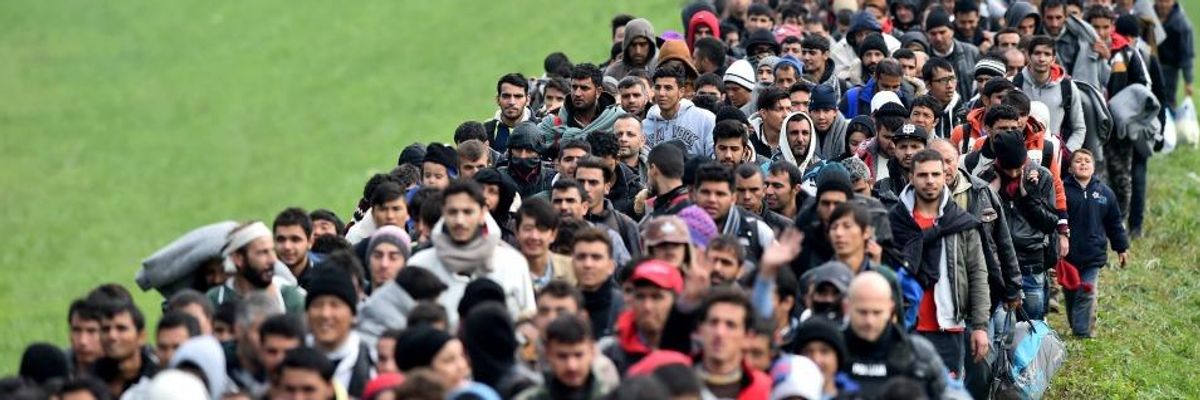
Marking a distressing record, the UN High Commissioner for Refugees (UNHCR) revealed in its annual Global Trends report that the number of refugees worldwide is now the highest it's ever been since the UN began keeping records, with more than 70 million people seeking refuge after being forced from their homes.
At least one in 108 people around the world were displaced in 2018, including both those who had been refugees previously and those who were forced to leave their homes last year due to issues including war, violence, food shortages, and the effects of the climate crisis.
Half of the world's refugees are children, the UN found.
The European Union director for Human Rights Watch, Lotte Leicht, called the findings "devastating."
The UN stressed that the 70.8 million people it determined were refugees in 2018 represented a conservative estimate, as the number of people displaced by Venezuela's humanitarian and economic crisis is not known.
The agency also noted that the number of refugees grew significantly in 2018 from the previous year, and claimed the growth likely stemmed from Venezuela's crisis--which the U.S. contributed to through years of economic sanctions.
Meanwhile, the Trump administration's aggressive anti-immigration policies have worsened conditions for people seeking refuge all over the world, the UN's commissioner for refugees, Fillippo Grandi, told The Guardian.
"In America, just like in Europe and in other parts of the world, what we are witnessing is an identification of refugees...with people that take away jobs, that threaten our security, our values," Grandi said. "And I want to say to the U.S. administration, to the president but also to leaders around the world: this is damaging."
The UN's report came two days after Trump announced his administration would begin removing millions of undocumented immigrants--people he and others refer to disparagingly as "illegal aliens"--and weeks after the UNHCR warned of the effects of anti-immigration policies in Europe on refugees attempting to cross the Mediterranean Sea from Africa.
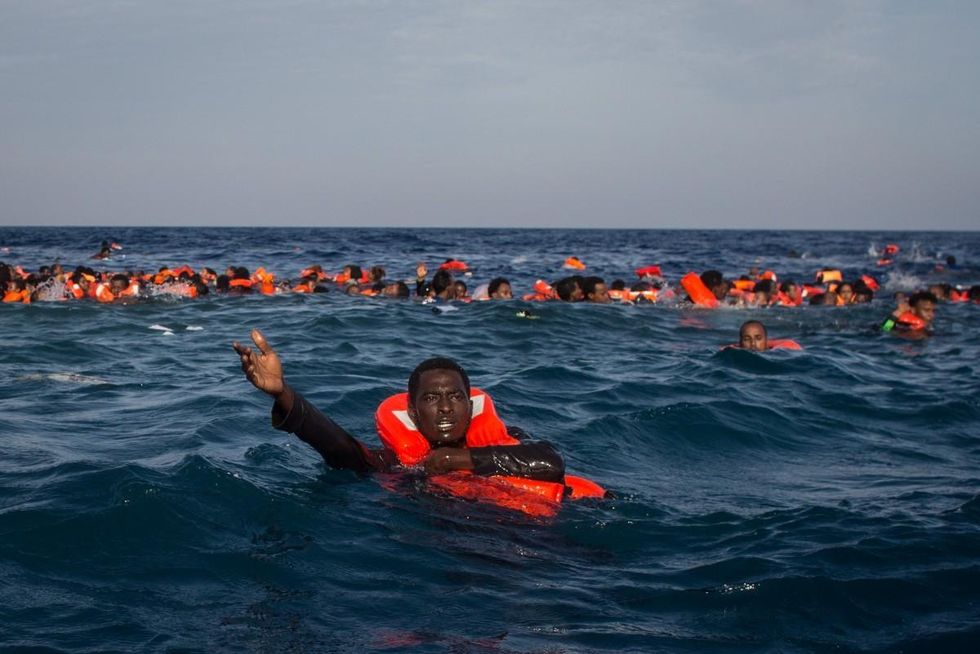
With Italy's far-right government criminalizing NGO boats which have rescued refugees in the Mediterranean in recent years, the agency said earlier this month, "If we do not intervene soon, there will be a sea of blood."
Overall, human rights group say, wealthy countries are doing less and less to support the world's exploding refugee population. Between 2016 and 2017, the number of resettlement slots offered to asylum seekers was cut in half according to The Guardian.
Instead, the work of resettling refugees has largely fallen on far less wealthy countries than the U.S., U.K., and most of Western Europe.
Turkey hosted the most refugees in 2018, setting the record for the fourth year in a row by resettling 3.7 million people. Pakistan, Uganda, Sudan, and Germany rounded out the top five countries offering asylum to refugees.
"Developing countries host the largest share of the world's refugees," the UNHCR said in a video posted to social media.
"We must...redouble our solidarity with the many thousands of innocent people who are forced to flee their homes each day," the UNHCR said.
Aggressive anti-immigration policies and rhetoric from President Donald Trump and other xenophobic right-wing world leaders has contributed greatly to the skyrocketing number of refugees around the world, the United Nation's refugee agency said Wednesday.
Marking a distressing record, the UN High Commissioner for Refugees (UNHCR) revealed in its annual Global Trends report that the number of refugees worldwide is now the highest it's ever been since the UN began keeping records, with more than 70 million people seeking refuge after being forced from their homes.
At least one in 108 people around the world were displaced in 2018, including both those who had been refugees previously and those who were forced to leave their homes last year due to issues including war, violence, food shortages, and the effects of the climate crisis.
Half of the world's refugees are children, the UN found.
The European Union director for Human Rights Watch, Lotte Leicht, called the findings "devastating."
The UN stressed that the 70.8 million people it determined were refugees in 2018 represented a conservative estimate, as the number of people displaced by Venezuela's humanitarian and economic crisis is not known.
The agency also noted that the number of refugees grew significantly in 2018 from the previous year, and claimed the growth likely stemmed from Venezuela's crisis--which the U.S. contributed to through years of economic sanctions.
Meanwhile, the Trump administration's aggressive anti-immigration policies have worsened conditions for people seeking refuge all over the world, the UN's commissioner for refugees, Fillippo Grandi, told The Guardian.
"In America, just like in Europe and in other parts of the world, what we are witnessing is an identification of refugees...with people that take away jobs, that threaten our security, our values," Grandi said. "And I want to say to the U.S. administration, to the president but also to leaders around the world: this is damaging."
The UN's report came two days after Trump announced his administration would begin removing millions of undocumented immigrants--people he and others refer to disparagingly as "illegal aliens"--and weeks after the UNHCR warned of the effects of anti-immigration policies in Europe on refugees attempting to cross the Mediterranean Sea from Africa.
With Italy's far-right government criminalizing NGO boats which have rescued refugees in the Mediterranean in recent years, the agency said earlier this month, "If we do not intervene soon, there will be a sea of blood."
Overall, human rights group say, wealthy countries are doing less and less to support the world's exploding refugee population. Between 2016 and 2017, the number of resettlement slots offered to asylum seekers was cut in half according to The Guardian.
Instead, the work of resettling refugees has largely fallen on far less wealthy countries than the U.S., U.K., and most of Western Europe.
Turkey hosted the most refugees in 2018, setting the record for the fourth year in a row by resettling 3.7 million people. Pakistan, Uganda, Sudan, and Germany rounded out the top five countries offering asylum to refugees.
"Developing countries host the largest share of the world's refugees," the UNHCR said in a video posted to social media.
"We must...redouble our solidarity with the many thousands of innocent people who are forced to flee their homes each day," the UNHCR said.
Aggressive anti-immigration policies and rhetoric from President Donald Trump and other xenophobic right-wing world leaders has contributed greatly to the skyrocketing number of refugees around the world, the United Nation's refugee agency said Wednesday.
Marking a distressing record, the UN High Commissioner for Refugees (UNHCR) revealed in its annual Global Trends report that the number of refugees worldwide is now the highest it's ever been since the UN began keeping records, with more than 70 million people seeking refuge after being forced from their homes.
At least one in 108 people around the world were displaced in 2018, including both those who had been refugees previously and those who were forced to leave their homes last year due to issues including war, violence, food shortages, and the effects of the climate crisis.
Half of the world's refugees are children, the UN found.
The European Union director for Human Rights Watch, Lotte Leicht, called the findings "devastating."
The UN stressed that the 70.8 million people it determined were refugees in 2018 represented a conservative estimate, as the number of people displaced by Venezuela's humanitarian and economic crisis is not known.
The agency also noted that the number of refugees grew significantly in 2018 from the previous year, and claimed the growth likely stemmed from Venezuela's crisis--which the U.S. contributed to through years of economic sanctions.
Meanwhile, the Trump administration's aggressive anti-immigration policies have worsened conditions for people seeking refuge all over the world, the UN's commissioner for refugees, Fillippo Grandi, told The Guardian.
"In America, just like in Europe and in other parts of the world, what we are witnessing is an identification of refugees...with people that take away jobs, that threaten our security, our values," Grandi said. "And I want to say to the U.S. administration, to the president but also to leaders around the world: this is damaging."
The UN's report came two days after Trump announced his administration would begin removing millions of undocumented immigrants--people he and others refer to disparagingly as "illegal aliens"--and weeks after the UNHCR warned of the effects of anti-immigration policies in Europe on refugees attempting to cross the Mediterranean Sea from Africa.
With Italy's far-right government criminalizing NGO boats which have rescued refugees in the Mediterranean in recent years, the agency said earlier this month, "If we do not intervene soon, there will be a sea of blood."
Overall, human rights group say, wealthy countries are doing less and less to support the world's exploding refugee population. Between 2016 and 2017, the number of resettlement slots offered to asylum seekers was cut in half according to The Guardian.
Instead, the work of resettling refugees has largely fallen on far less wealthy countries than the U.S., U.K., and most of Western Europe.
Turkey hosted the most refugees in 2018, setting the record for the fourth year in a row by resettling 3.7 million people. Pakistan, Uganda, Sudan, and Germany rounded out the top five countries offering asylum to refugees.
"Developing countries host the largest share of the world's refugees," the UNHCR said in a video posted to social media.
"We must...redouble our solidarity with the many thousands of innocent people who are forced to flee their homes each day," the UNHCR said.