SUBSCRIBE TO OUR FREE NEWSLETTER
Daily news & progressive opinion—funded by the people, not the corporations—delivered straight to your inbox.
5
#000000
#FFFFFF
To donate by check, phone, or other method, see our More Ways to Give page.
Daily news & progressive opinion—funded by the people, not the corporations—delivered straight to your inbox.
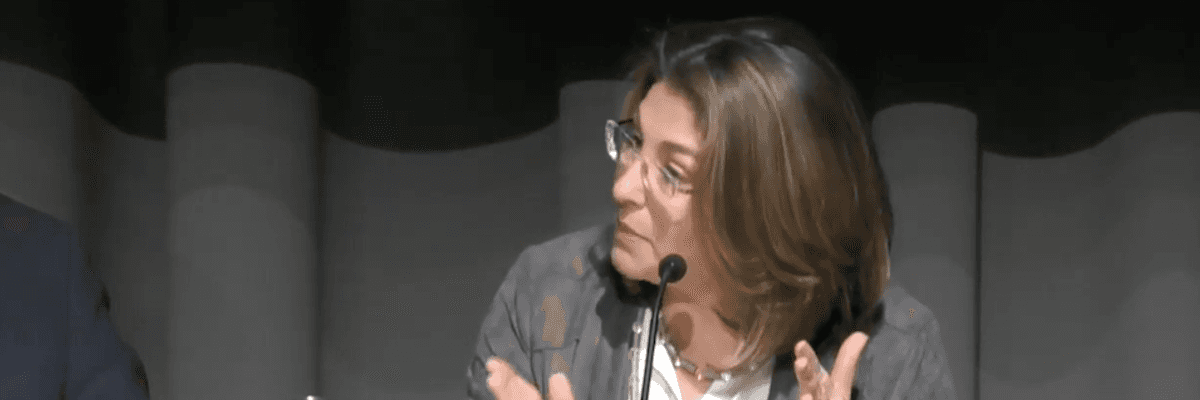
Naomi Klein speaks to the audience at an April 30 CJR/The Nation town hall. (Photo: screenshot, YouTube)
News coverage of the climate crisis can no longer rely on the false pretense of objectivity, writer and activist Naomi Klein said Tuesday.
"There is a confirmation bias among the largest chunk of journalists out there who really pride themselves on being centrists," Klein said Tuesday during a town hall at the Columbia Journalism School in New York. "There's an absolute fetish for centrism, for seriousness defined by splitting the difference--and not getting too excited about anything"
The mainstream media is "profoundly distrustful of people who are saying 'actually, the house is on fire,'" Klein said, citing the impulse among many journalists to remain objective and hear both sides.
"But guess what," said Klein. "The house is on fire."
The journalism school's publication, The Columbia Journalism Review (CJR), is joining with The Nation to launch an initiative, #CoveringClimateNow, to change coverage of the climate crisis.
In an essay describing the initiative from April 22, Mark Hertsgaard, environmental correspondent for The Nation, and Kyle Pope, the publisher of CJR, described how they see the journalist's job in the climate crisis as one of sounding the alarm.
"Instead of sleepwalking us toward disaster, the U.S. news media need to remember their Paul Revere responsibilities," wrote Hertsgaard and Pope, "to awaken, inform, and rouse the people to action."
Part of that mission, Klein said, is pushing back on conventional wisdom about the role of extractive technologies in furthering neoliberal economic development.
"You can't leave it all to the markets," Klein said, laying out a vision of the future that leaves neoliberalism behind.
"You have to plan," Klein added. "You have to regulate."
Further, said Klein, the entire project of neoliberalism "falls apart" if the climate crisis is reality.
Watch Klein's comments:
This country and this world are at a monumental crossroads. US voters have an opportunity to beat back the forces of fascism and confront the billionaires who are rigging the economy, our media system, and our democracy, making it increasingly impossible for ordinary people to get by. We’re not just talking about the election. We’re talking about what must be done once these fascist elements are vanquished from power. We need a bolder set of solutions than what either major party has so far been willing to offer and a working-class movement ready to fight like hell for it. Trump didn't emerge from nowhere. The conditions that fueled MAGA authoritarianism were created by decades of radical neoliberal economic policies and a corrupt political system dominated by corporate interests. They slashed taxes on the super-rich, promising that the benefits would trickle down. They said giveaways to the corporate titans would make life more affordable for the rest of us. It was all bullshit. And when a bitter, betrayed populace searches for someone to blame, right-wing demagogues have little trouble finding scapegoats. People know when they're being lied to, but you won't hear any of this from the corporate media. Only independent journalism—powered and funded by people who believe in building a better world—can deliver truly trustworthy daily news. If you share our vision, please contribute whatever you can to sustain our work. |
News coverage of the climate crisis can no longer rely on the false pretense of objectivity, writer and activist Naomi Klein said Tuesday.
"There is a confirmation bias among the largest chunk of journalists out there who really pride themselves on being centrists," Klein said Tuesday during a town hall at the Columbia Journalism School in New York. "There's an absolute fetish for centrism, for seriousness defined by splitting the difference--and not getting too excited about anything"
The mainstream media is "profoundly distrustful of people who are saying 'actually, the house is on fire,'" Klein said, citing the impulse among many journalists to remain objective and hear both sides.
"But guess what," said Klein. "The house is on fire."
The journalism school's publication, The Columbia Journalism Review (CJR), is joining with The Nation to launch an initiative, #CoveringClimateNow, to change coverage of the climate crisis.
In an essay describing the initiative from April 22, Mark Hertsgaard, environmental correspondent for The Nation, and Kyle Pope, the publisher of CJR, described how they see the journalist's job in the climate crisis as one of sounding the alarm.
"Instead of sleepwalking us toward disaster, the U.S. news media need to remember their Paul Revere responsibilities," wrote Hertsgaard and Pope, "to awaken, inform, and rouse the people to action."
Part of that mission, Klein said, is pushing back on conventional wisdom about the role of extractive technologies in furthering neoliberal economic development.
"You can't leave it all to the markets," Klein said, laying out a vision of the future that leaves neoliberalism behind.
"You have to plan," Klein added. "You have to regulate."
Further, said Klein, the entire project of neoliberalism "falls apart" if the climate crisis is reality.
Watch Klein's comments: