SUBSCRIBE TO OUR FREE NEWSLETTER
Daily news & progressive opinion—funded by the people, not the corporations—delivered straight to your inbox.
5
#000000
#FFFFFF
To donate by check, phone, or other method, see our More Ways to Give page.
Daily news & progressive opinion—funded by the people, not the corporations—delivered straight to your inbox.
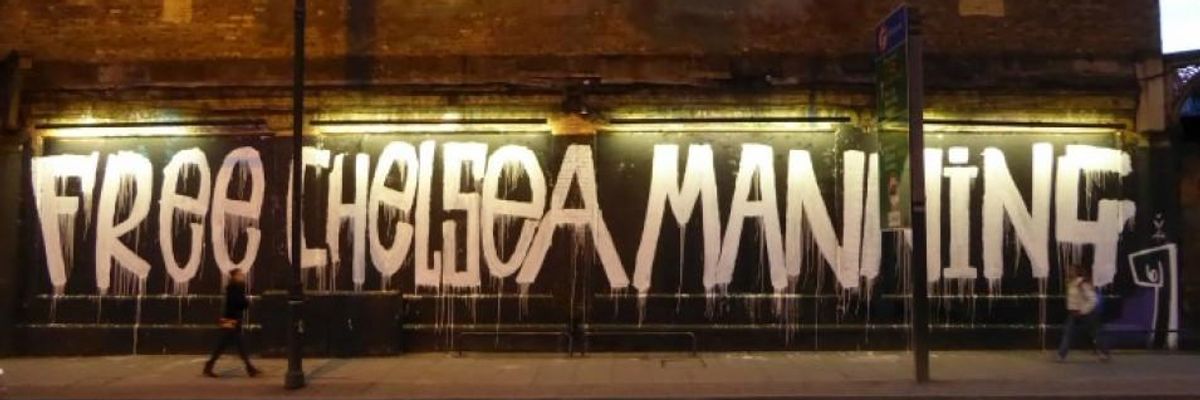
A federal appeals court rejected Chelsea Manning's bid for release. (Photo: duncan c/flickr/cc)
Chelsea Manning remained in jail on Monday after a federal appeals court rejected her bid to be released and affirmed a lower court's finding of contempt.
The whistleblower was sent to jail March 8, and has spent part of the detention in solitary confinement for contempt due to her refusal to testify before a grand jury investigating WikiLeaks.
"Appellant Manning argues on appeal that the district court improperly denied her motion concerning electronic surveillance, failed to properly address the issue of grand jury abuse, and improperly sealed the courtroom during substantial portions of the hearing," the order from three judges on the U.S. Court of Appeals for the Fourth Circuit stated.
"Upon consideration of the memorandum briefs filed on appeal and the record of proceedings in the district court, the court finds no error in the district court's rulings and affirms its finding of civil contempt. The court also denies appellant's motion for release on bail," it stated.
The court order comes less than two weeks after WikiLeaks founder Julian Assange was forcibly removed from the Ecuadoran embassy in London and arrested by British police. As The Hill reported, the two cases are intertwined.
Legal experts have pointed to Manning's current case as a sign that further charges could be filed against Assange, ahead of his extradition proceedings from the United Kingdom to the U.S.
"Prosecutors appear to be pressing for Manning's testimony in order to bolster their case against WikiLeaks founder Julian Assange," wrote Politico's Josh Gerstein.
In a statement reacting to the appeals court decision, Manning said she's pursuing the legal avenues she has--either appealing to the full panel of Fourth Circuit judges or to the Supreme Court.
"While disappointing, we can still raise issues as the government continues to abuse the grand jury process," Manning said. "I don't have anything to contribute to this, or any other grand jury."
"While I miss home, they can continue to hold me in jail, with all the harmful consequences that brings. I will not give up," she said.
A member of Manning's legal team, Moira Meltzer-Cohen, said the subpoena and prolonged detainment amounted to grand jury abuse.
"It is improper for a prosecutor to use the grand jury to prepare for trial. As pointed out in Ms. Manning's motions and appeals, since her testimony is not necessary to the grand jury's investigation, the likely purpose for her subpoena is to help the prosecutor preview and undermine her potential testimony as a defense witness for a pending trial."
Dear Common Dreams reader, It’s been nearly 30 years since I co-founded Common Dreams with my late wife, Lina Newhouser. We had the radical notion that journalism should serve the public good, not corporate profits. It was clear to us from the outset what it would take to build such a project. No paid advertisements. No corporate sponsors. No millionaire publisher telling us what to think or do. Many people said we wouldn't last a year, but we proved those doubters wrong. Together with a tremendous team of journalists and dedicated staff, we built an independent media outlet free from the constraints of profits and corporate control. Our mission has always been simple: To inform. To inspire. To ignite change for the common good. Building Common Dreams was not easy. Our survival was never guaranteed. When you take on the most powerful forces—Wall Street greed, fossil fuel industry destruction, Big Tech lobbyists, and uber-rich oligarchs who have spent billions upon billions rigging the economy and democracy in their favor—the only bulwark you have is supporters who believe in your work. But here’s the urgent message from me today. It's never been this bad out there. And it's never been this hard to keep us going. At the very moment Common Dreams is most needed, the threats we face are intensifying. We need your support now more than ever. We don't accept corporate advertising and never will. We don't have a paywall because we don't think people should be blocked from critical news based on their ability to pay. Everything we do is funded by the donations of readers like you. When everyone does the little they can afford, we are strong. But if that support retreats or dries up, so do we. Will you donate now to make sure Common Dreams not only survives but thrives? —Craig Brown, Co-founder |
Chelsea Manning remained in jail on Monday after a federal appeals court rejected her bid to be released and affirmed a lower court's finding of contempt.
The whistleblower was sent to jail March 8, and has spent part of the detention in solitary confinement for contempt due to her refusal to testify before a grand jury investigating WikiLeaks.
"Appellant Manning argues on appeal that the district court improperly denied her motion concerning electronic surveillance, failed to properly address the issue of grand jury abuse, and improperly sealed the courtroom during substantial portions of the hearing," the order from three judges on the U.S. Court of Appeals for the Fourth Circuit stated.
"Upon consideration of the memorandum briefs filed on appeal and the record of proceedings in the district court, the court finds no error in the district court's rulings and affirms its finding of civil contempt. The court also denies appellant's motion for release on bail," it stated.
The court order comes less than two weeks after WikiLeaks founder Julian Assange was forcibly removed from the Ecuadoran embassy in London and arrested by British police. As The Hill reported, the two cases are intertwined.
Legal experts have pointed to Manning's current case as a sign that further charges could be filed against Assange, ahead of his extradition proceedings from the United Kingdom to the U.S.
"Prosecutors appear to be pressing for Manning's testimony in order to bolster their case against WikiLeaks founder Julian Assange," wrote Politico's Josh Gerstein.
In a statement reacting to the appeals court decision, Manning said she's pursuing the legal avenues she has--either appealing to the full panel of Fourth Circuit judges or to the Supreme Court.
"While disappointing, we can still raise issues as the government continues to abuse the grand jury process," Manning said. "I don't have anything to contribute to this, or any other grand jury."
"While I miss home, they can continue to hold me in jail, with all the harmful consequences that brings. I will not give up," she said.
A member of Manning's legal team, Moira Meltzer-Cohen, said the subpoena and prolonged detainment amounted to grand jury abuse.
"It is improper for a prosecutor to use the grand jury to prepare for trial. As pointed out in Ms. Manning's motions and appeals, since her testimony is not necessary to the grand jury's investigation, the likely purpose for her subpoena is to help the prosecutor preview and undermine her potential testimony as a defense witness for a pending trial."
Chelsea Manning remained in jail on Monday after a federal appeals court rejected her bid to be released and affirmed a lower court's finding of contempt.
The whistleblower was sent to jail March 8, and has spent part of the detention in solitary confinement for contempt due to her refusal to testify before a grand jury investigating WikiLeaks.
"Appellant Manning argues on appeal that the district court improperly denied her motion concerning electronic surveillance, failed to properly address the issue of grand jury abuse, and improperly sealed the courtroom during substantial portions of the hearing," the order from three judges on the U.S. Court of Appeals for the Fourth Circuit stated.
"Upon consideration of the memorandum briefs filed on appeal and the record of proceedings in the district court, the court finds no error in the district court's rulings and affirms its finding of civil contempt. The court also denies appellant's motion for release on bail," it stated.
The court order comes less than two weeks after WikiLeaks founder Julian Assange was forcibly removed from the Ecuadoran embassy in London and arrested by British police. As The Hill reported, the two cases are intertwined.
Legal experts have pointed to Manning's current case as a sign that further charges could be filed against Assange, ahead of his extradition proceedings from the United Kingdom to the U.S.
"Prosecutors appear to be pressing for Manning's testimony in order to bolster their case against WikiLeaks founder Julian Assange," wrote Politico's Josh Gerstein.
In a statement reacting to the appeals court decision, Manning said she's pursuing the legal avenues she has--either appealing to the full panel of Fourth Circuit judges or to the Supreme Court.
"While disappointing, we can still raise issues as the government continues to abuse the grand jury process," Manning said. "I don't have anything to contribute to this, or any other grand jury."
"While I miss home, they can continue to hold me in jail, with all the harmful consequences that brings. I will not give up," she said.
A member of Manning's legal team, Moira Meltzer-Cohen, said the subpoena and prolonged detainment amounted to grand jury abuse.
"It is improper for a prosecutor to use the grand jury to prepare for trial. As pointed out in Ms. Manning's motions and appeals, since her testimony is not necessary to the grand jury's investigation, the likely purpose for her subpoena is to help the prosecutor preview and undermine her potential testimony as a defense witness for a pending trial."