SUBSCRIBE TO OUR FREE NEWSLETTER
Daily news & progressive opinion—funded by the people, not the corporations—delivered straight to your inbox.
5
#000000
#FFFFFF
To donate by check, phone, or other method, see our More Ways to Give page.
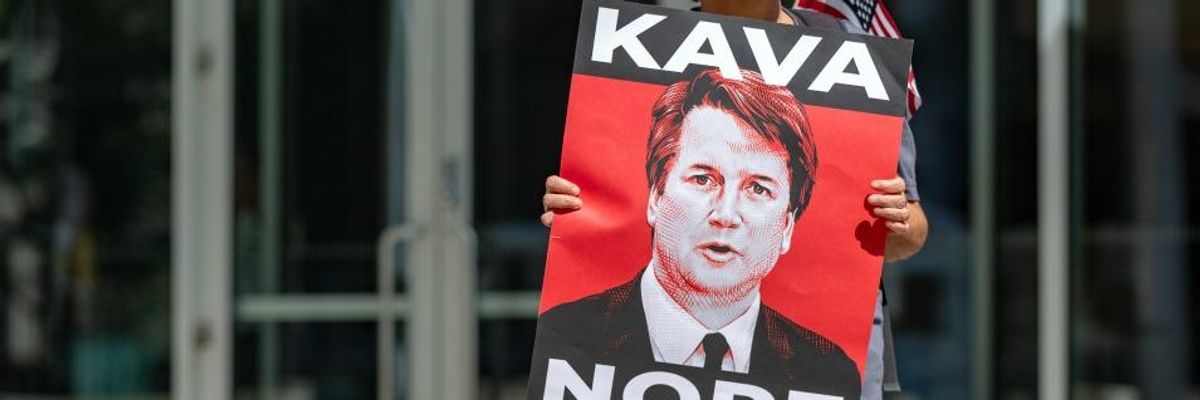
By releasing new documents (pdf) previously marked "committee confidential" late on Tuesday, Sen. Dick Durbin (D-Ill.) doubled down on accusations that U.S. Supreme Court nominee Brett Kavanaugh committed perjury in his 2006 confirmation hearing for his seat on a federal appeals court.
In defiance of Senate Judiciary Committee Chairman Sen. Chuck Grassley (R-Iowa), Durbin shared with the public two pages of emails showing that Kavanaugh was involved in discussions regarding the nomination of William Haynes for a judicial seat in 2002.
Four years later, Durbin said, Kavanaugh misled the Judiciary Committee about his involvement while under oath.
"It is clear now that not only did Judge Kavanaugh mislead me when it came to his involvement in the Bush administration's detention and interrogation policies, but also regarding his role in the controversial Haynes nomination," Durbin said.
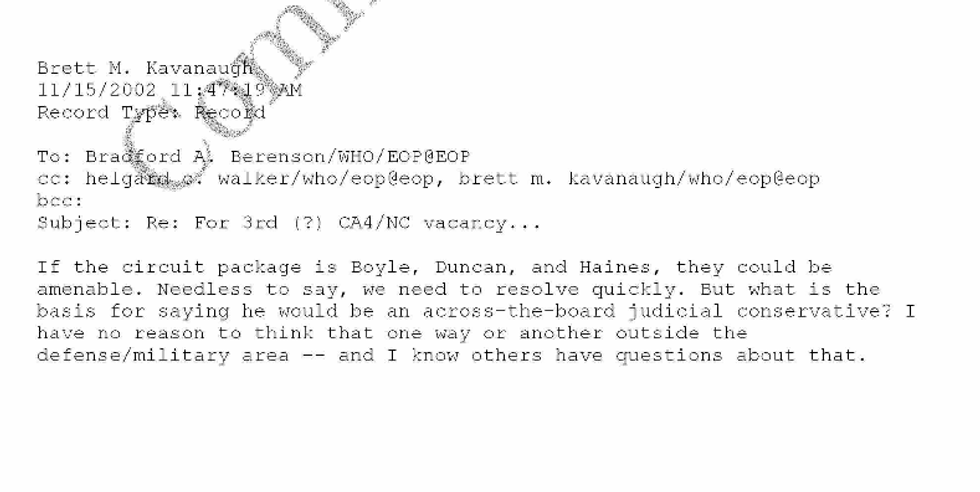
In an email dated November 15, 2002, Kavanaugh asked other White House officials whether Haynes, who helped form the Bush administration's torture policy while working as general counsel for the Pentagon, would be a sufficiently conservative judge.
"This is a theme that we see emerge with Judge Kavanaugh time and time again--he says one thing under oath, and then the documents tell a different story," said Durbin. "It is no wonder the White House and Senate Republicans are rushing through this nomination and hiding much of Judge Kavanaugh's record--the questions about this nominee's credibility are growing every day."
Last week, Kavanaugh told the Judiciary Committee that he had not been involved in the nomination of another judge with far right-wing views, claiming in an exchange with Sen. Patrick Leahy (D-Vt.) that he didn't "believe" he had interviewed anti-choice Judge William Pryor for his nomination to the D.C. Circuit Court.
At a 2004 hearing Kavanaugh had also denied that he had "personally handled" the nomination, but emails from 2002 and 2003 showed that he had been included in meetings to "coordinate plans and efforts" regarding Pryor.
Following Kavanaugh's confirmation hearings last week, which drew widespread protests from the public--only 38 percent of whom approve of his nomination--progressives have called not only for senators to reject him for a lifetime appointment to the Supreme Court but also for him to be disqualified from any federal judicial seat.
By releasing new documents (pdf) previously marked "committee confidential" late on Tuesday, Sen. Dick Durbin (D-Ill.) doubled down on accusations that U.S. Supreme Court nominee Brett Kavanaugh committed perjury in his 2006 confirmation hearing for his seat on a federal appeals court.
In defiance of Senate Judiciary Committee Chairman Sen. Chuck Grassley (R-Iowa), Durbin shared with the public two pages of emails showing that Kavanaugh was involved in discussions regarding the nomination of William Haynes for a judicial seat in 2002.
Four years later, Durbin said, Kavanaugh misled the Judiciary Committee about his involvement while under oath.
"It is clear now that not only did Judge Kavanaugh mislead me when it came to his involvement in the Bush administration's detention and interrogation policies, but also regarding his role in the controversial Haynes nomination," Durbin said.
In an email dated November 15, 2002, Kavanaugh asked other White House officials whether Haynes, who helped form the Bush administration's torture policy while working as general counsel for the Pentagon, would be a sufficiently conservative judge.
"This is a theme that we see emerge with Judge Kavanaugh time and time again--he says one thing under oath, and then the documents tell a different story," said Durbin. "It is no wonder the White House and Senate Republicans are rushing through this nomination and hiding much of Judge Kavanaugh's record--the questions about this nominee's credibility are growing every day."
Last week, Kavanaugh told the Judiciary Committee that he had not been involved in the nomination of another judge with far right-wing views, claiming in an exchange with Sen. Patrick Leahy (D-Vt.) that he didn't "believe" he had interviewed anti-choice Judge William Pryor for his nomination to the D.C. Circuit Court.
At a 2004 hearing Kavanaugh had also denied that he had "personally handled" the nomination, but emails from 2002 and 2003 showed that he had been included in meetings to "coordinate plans and efforts" regarding Pryor.
Following Kavanaugh's confirmation hearings last week, which drew widespread protests from the public--only 38 percent of whom approve of his nomination--progressives have called not only for senators to reject him for a lifetime appointment to the Supreme Court but also for him to be disqualified from any federal judicial seat.
By releasing new documents (pdf) previously marked "committee confidential" late on Tuesday, Sen. Dick Durbin (D-Ill.) doubled down on accusations that U.S. Supreme Court nominee Brett Kavanaugh committed perjury in his 2006 confirmation hearing for his seat on a federal appeals court.
In defiance of Senate Judiciary Committee Chairman Sen. Chuck Grassley (R-Iowa), Durbin shared with the public two pages of emails showing that Kavanaugh was involved in discussions regarding the nomination of William Haynes for a judicial seat in 2002.
Four years later, Durbin said, Kavanaugh misled the Judiciary Committee about his involvement while under oath.
"It is clear now that not only did Judge Kavanaugh mislead me when it came to his involvement in the Bush administration's detention and interrogation policies, but also regarding his role in the controversial Haynes nomination," Durbin said.
In an email dated November 15, 2002, Kavanaugh asked other White House officials whether Haynes, who helped form the Bush administration's torture policy while working as general counsel for the Pentagon, would be a sufficiently conservative judge.
"This is a theme that we see emerge with Judge Kavanaugh time and time again--he says one thing under oath, and then the documents tell a different story," said Durbin. "It is no wonder the White House and Senate Republicans are rushing through this nomination and hiding much of Judge Kavanaugh's record--the questions about this nominee's credibility are growing every day."
Last week, Kavanaugh told the Judiciary Committee that he had not been involved in the nomination of another judge with far right-wing views, claiming in an exchange with Sen. Patrick Leahy (D-Vt.) that he didn't "believe" he had interviewed anti-choice Judge William Pryor for his nomination to the D.C. Circuit Court.
At a 2004 hearing Kavanaugh had also denied that he had "personally handled" the nomination, but emails from 2002 and 2003 showed that he had been included in meetings to "coordinate plans and efforts" regarding Pryor.
Following Kavanaugh's confirmation hearings last week, which drew widespread protests from the public--only 38 percent of whom approve of his nomination--progressives have called not only for senators to reject him for a lifetime appointment to the Supreme Court but also for him to be disqualified from any federal judicial seat.