SUBSCRIBE TO OUR FREE NEWSLETTER
Daily news & progressive opinion—funded by the people, not the corporations—delivered straight to your inbox.
5
#000000
#FFFFFF
To donate by check, phone, or other method, see our More Ways to Give page.
Daily news & progressive opinion—funded by the people, not the corporations—delivered straight to your inbox.
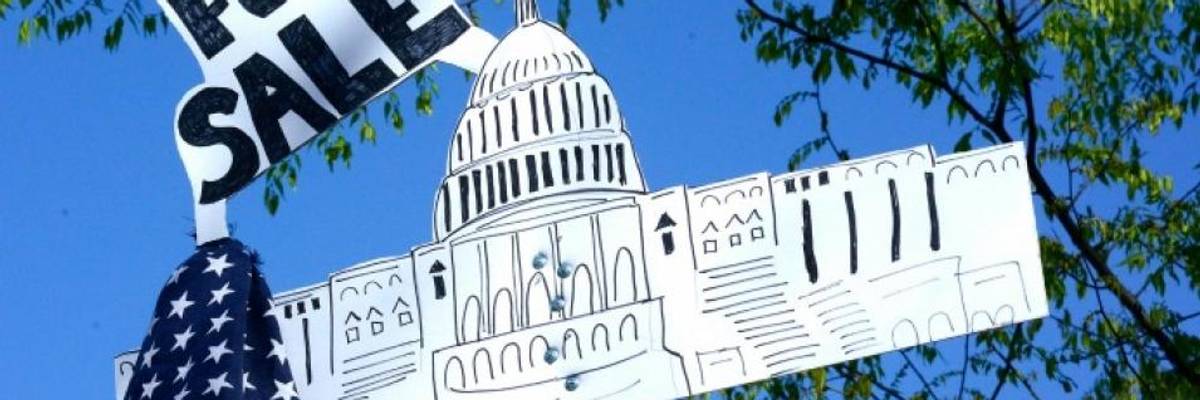
"Based on this ruling," said CREW's Noah Bookbinder, "the public should know a whole lot more about who is giving money for the purpose of influencing an election, and it will be much harder for donors to anonymously contribute to groups that advertise in elections." (Photo: Stephen Melkisethian/flickr/cc)
An ethics watchdog has claimed a "major court victory" after a federal judge issued a ruling invalidating a Federal Election Commission (FEC) regulation that allowed contributors to so-called dark money organizations avoid disclosure.
"This ruling looks like a major game changer," said Noah Bookbinder, executive director of Citizens for Responsibility and Ethics in Washington (CREW). "Based on this ruling, the public should know a whole lot more about who is giving money for the purpose of influencing an election, and it will be much harder for donors to anonymously contribute to groups that advertise in elections."
CREW was a plaintiff in the case, and had challenged in 2012 Karl Rove's Crossroads GPS--a "not-political committee"--over its failure to disclose who donated $6 million in the Ohio Senate race, a sum CREW argued was subject to federal reporting requirements.
U.S. District Court Judge Beryl A. Howell found that Crossroads GPS's defense didn't hold water, writing Friday that the three-decade old FEC regulation at question fell short "of the broad disclosure that Congress intended."
The challenged regulation, she concluded, can facilitate groups' "routing" of contributions to candidates or the groups' affiliated super PACS, and
blatantly undercuts the congressional goal of fully disclosing the sources of money flowing into federal political campaigns, and thereby suppresses the benefits intended to accrue from disclosure, including informing the electorate, deterring corruption, and enforcing bans on foreign contributions being used to buy access and influence to American political officials.
Her decision, CREW explains, means that "dark money groups that spend at least $250 in independent expenditures--a key type of political ad--must report every contributor who gave at least $200 in the past year as well as those who give to finance independent expenditures generally."
In a Twitter thread outlining the importance of ruling, Center for Responsive Politics' Robert Maguire says it "could fundamentally change the role dark money plays in elections (if it has a role at all)."
Bookbinder agreed, saying it "could dramatically change the American political landscape and result in significantly more transparency."
"Major donors are now on notice that if they contribute to politically active 501(c)(4) organizations, their contributions will have to be disclosed," he said, "and if they are not, CREW will pursue enforcement cases with the FEC and, if necessary, in court."
This country and this world are at a monumental crossroads. US voters have an opportunity to beat back the forces of fascism and confront the billionaires who are rigging the economy, our media system, and our democracy, making it increasingly impossible for ordinary people to get by. We’re not just talking about the election. We’re talking about what must be done once these fascist elements are vanquished from power. We need a bolder set of solutions than what either major party has so far been willing to offer and a working-class movement ready to fight like hell for it. Trump didn't emerge from nowhere. The conditions that fueled MAGA authoritarianism were created by decades of radical neoliberal economic policies and a corrupt political system dominated by corporate interests. They slashed taxes on the super-rich, promising that the benefits would trickle down. They said giveaways to the corporate titans would make life more affordable for the rest of us. It was all bullshit. And when a bitter, betrayed populace searches for someone to blame, right-wing demagogues have little trouble finding scapegoats. People know when they're being lied to, but you won't hear any of this from the corporate media. Only independent journalism—powered and funded by people who believe in building a better world—can deliver truly trustworthy daily news. If you share our vision, please contribute whatever you can to sustain our work. |
An ethics watchdog has claimed a "major court victory" after a federal judge issued a ruling invalidating a Federal Election Commission (FEC) regulation that allowed contributors to so-called dark money organizations avoid disclosure.
"This ruling looks like a major game changer," said Noah Bookbinder, executive director of Citizens for Responsibility and Ethics in Washington (CREW). "Based on this ruling, the public should know a whole lot more about who is giving money for the purpose of influencing an election, and it will be much harder for donors to anonymously contribute to groups that advertise in elections."
CREW was a plaintiff in the case, and had challenged in 2012 Karl Rove's Crossroads GPS--a "not-political committee"--over its failure to disclose who donated $6 million in the Ohio Senate race, a sum CREW argued was subject to federal reporting requirements.
U.S. District Court Judge Beryl A. Howell found that Crossroads GPS's defense didn't hold water, writing Friday that the three-decade old FEC regulation at question fell short "of the broad disclosure that Congress intended."
The challenged regulation, she concluded, can facilitate groups' "routing" of contributions to candidates or the groups' affiliated super PACS, and
blatantly undercuts the congressional goal of fully disclosing the sources of money flowing into federal political campaigns, and thereby suppresses the benefits intended to accrue from disclosure, including informing the electorate, deterring corruption, and enforcing bans on foreign contributions being used to buy access and influence to American political officials.
Her decision, CREW explains, means that "dark money groups that spend at least $250 in independent expenditures--a key type of political ad--must report every contributor who gave at least $200 in the past year as well as those who give to finance independent expenditures generally."
In a Twitter thread outlining the importance of ruling, Center for Responsive Politics' Robert Maguire says it "could fundamentally change the role dark money plays in elections (if it has a role at all)."
Bookbinder agreed, saying it "could dramatically change the American political landscape and result in significantly more transparency."
"Major donors are now on notice that if they contribute to politically active 501(c)(4) organizations, their contributions will have to be disclosed," he said, "and if they are not, CREW will pursue enforcement cases with the FEC and, if necessary, in court."