SUBSCRIBE TO OUR FREE NEWSLETTER
Daily news & progressive opinion—funded by the people, not the corporations—delivered straight to your inbox.
5
#000000
#FFFFFF
To donate by check, phone, or other method, see our More Ways to Give page.
As a growing number of political candidates facing November elections proclaim their support for single-payer healthcare--which the majority of Americans want to replace the nation's current for-profit system--the Democratic primary for Hawaii's 1st Congressional District is shedding light on the insurance and pharmaceutical industry forces working against a transition to Medicare for All.
"We need healthcare champions, not puppets."
--Kaniela Ing, Hawaii congressional candidate
At least three of the six candidates running to represent the "reliably" Democratic district in Hawaii "took time out from their schedules to talk to a consultant dispatched by the Healthcare Leadership Council, a lobbying group that seeks to advance the goals of the largest players in the private healthcare industry," according to a new report by The Intercept.
Although much of the report focuses on the Hawaii race, as The Intercept notes, the Healthcare Leadership Council--which is funded by Big Pharma companies such as Pfizer and Novartis--spends more than $5 million a year representing the interests of "insurers, hospitals, drugmakers, medical device manufacturers, pharmacies, health product distributors, and information technology companies" across the nation.
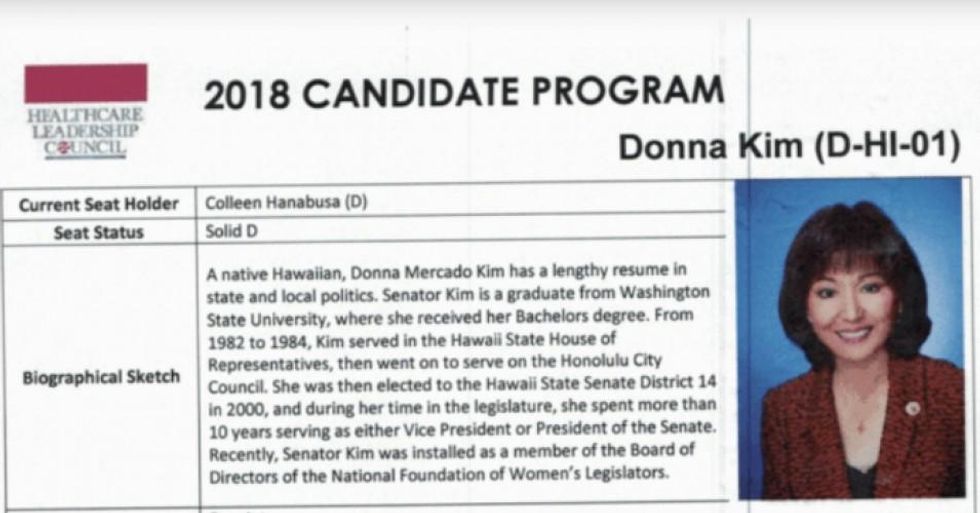
The lobbying group reached out to and met with former state Sen. Donna Mercado Kim, Hawaii Lt. Gov. Doug Chin, and Honolulu City Council Member Ernest Martin, then crafted dossiers that included "their photos, biographical sketches, contact information for their campaigns, and a checklist for determining their positions on certain issues of importance to the Healthcare Leadership Council," based in part upon the candidates' answers to a survey about specific policy proposals.
The Intercept, which obtained and published the dossiers, reports:
Of Kim, the former state senator, the group's profile says, "She is very pro-market, opposes any attempt at single-payer, does not support price controls on pharmaceuticals, and agrees that Medicaid and Medicare need to be managed by the private market."
Chin is a "moderate Democrat that has represented healthcare providers in Med-mal lawsuits," said the Healthcare Leadership Council's profile. Chin, the survey noted, "supports the market concept advocated by HLC and does not think a single-payer/Medicare for All approach would work in Hawaii."
"Martin supports a majority of HLC's positions," the profile on the Honolulu City Council member says. "He does not want single-payer." But, the dossier noted, Martin needed better education on health policy.
In some cases, what the candidates told the lobbyist appeared to differ from what they told voters.
"Democrats running in a primary election will say they support 'Medicare for All,' but what do they say to lobbyists behind the scenes?" responded fellow candidate Kaniela Ing, a vocal supporter of Medicare for All and other progressive policies who did not meet with the healthcare industry lobbyists.
"We need healthcare champions, not puppets," added Ing, a state lawmaker and democratic socialist whose recent campaign ad has drawn national attention to the race.
People for Bernie, a collective formed in response to the 2016 presidential run of Sen. Bernie Sanders (I-Vt.)--a longtime supporter of single-payer who introduced a Medicare for All bill in the Senate last September--turned to Twitter Thursday to share the report and urge progressives to help Ing get elected.
Of the other two candidates in the race, a spokesperson for Republican-turned-Democratic state legislator Beth Fukumoto told The Intercept that the Healthcare Leadership Council had not contacted her campaign, and Ed Case, a former congressman and "Blue Dog" Democrat, did not respond to request for comment.
As a growing number of political candidates facing November elections proclaim their support for single-payer healthcare--which the majority of Americans want to replace the nation's current for-profit system--the Democratic primary for Hawaii's 1st Congressional District is shedding light on the insurance and pharmaceutical industry forces working against a transition to Medicare for All.
"We need healthcare champions, not puppets."
--Kaniela Ing, Hawaii congressional candidate
At least three of the six candidates running to represent the "reliably" Democratic district in Hawaii "took time out from their schedules to talk to a consultant dispatched by the Healthcare Leadership Council, a lobbying group that seeks to advance the goals of the largest players in the private healthcare industry," according to a new report by The Intercept.
Although much of the report focuses on the Hawaii race, as The Intercept notes, the Healthcare Leadership Council--which is funded by Big Pharma companies such as Pfizer and Novartis--spends more than $5 million a year representing the interests of "insurers, hospitals, drugmakers, medical device manufacturers, pharmacies, health product distributors, and information technology companies" across the nation.
The lobbying group reached out to and met with former state Sen. Donna Mercado Kim, Hawaii Lt. Gov. Doug Chin, and Honolulu City Council Member Ernest Martin, then crafted dossiers that included "their photos, biographical sketches, contact information for their campaigns, and a checklist for determining their positions on certain issues of importance to the Healthcare Leadership Council," based in part upon the candidates' answers to a survey about specific policy proposals.
The Intercept, which obtained and published the dossiers, reports:
Of Kim, the former state senator, the group's profile says, "She is very pro-market, opposes any attempt at single-payer, does not support price controls on pharmaceuticals, and agrees that Medicaid and Medicare need to be managed by the private market."
Chin is a "moderate Democrat that has represented healthcare providers in Med-mal lawsuits," said the Healthcare Leadership Council's profile. Chin, the survey noted, "supports the market concept advocated by HLC and does not think a single-payer/Medicare for All approach would work in Hawaii."
"Martin supports a majority of HLC's positions," the profile on the Honolulu City Council member says. "He does not want single-payer." But, the dossier noted, Martin needed better education on health policy.
In some cases, what the candidates told the lobbyist appeared to differ from what they told voters.
"Democrats running in a primary election will say they support 'Medicare for All,' but what do they say to lobbyists behind the scenes?" responded fellow candidate Kaniela Ing, a vocal supporter of Medicare for All and other progressive policies who did not meet with the healthcare industry lobbyists.
"We need healthcare champions, not puppets," added Ing, a state lawmaker and democratic socialist whose recent campaign ad has drawn national attention to the race.
People for Bernie, a collective formed in response to the 2016 presidential run of Sen. Bernie Sanders (I-Vt.)--a longtime supporter of single-payer who introduced a Medicare for All bill in the Senate last September--turned to Twitter Thursday to share the report and urge progressives to help Ing get elected.
Of the other two candidates in the race, a spokesperson for Republican-turned-Democratic state legislator Beth Fukumoto told The Intercept that the Healthcare Leadership Council had not contacted her campaign, and Ed Case, a former congressman and "Blue Dog" Democrat, did not respond to request for comment.
As a growing number of political candidates facing November elections proclaim their support for single-payer healthcare--which the majority of Americans want to replace the nation's current for-profit system--the Democratic primary for Hawaii's 1st Congressional District is shedding light on the insurance and pharmaceutical industry forces working against a transition to Medicare for All.
"We need healthcare champions, not puppets."
--Kaniela Ing, Hawaii congressional candidate
At least three of the six candidates running to represent the "reliably" Democratic district in Hawaii "took time out from their schedules to talk to a consultant dispatched by the Healthcare Leadership Council, a lobbying group that seeks to advance the goals of the largest players in the private healthcare industry," according to a new report by The Intercept.
Although much of the report focuses on the Hawaii race, as The Intercept notes, the Healthcare Leadership Council--which is funded by Big Pharma companies such as Pfizer and Novartis--spends more than $5 million a year representing the interests of "insurers, hospitals, drugmakers, medical device manufacturers, pharmacies, health product distributors, and information technology companies" across the nation.
The lobbying group reached out to and met with former state Sen. Donna Mercado Kim, Hawaii Lt. Gov. Doug Chin, and Honolulu City Council Member Ernest Martin, then crafted dossiers that included "their photos, biographical sketches, contact information for their campaigns, and a checklist for determining their positions on certain issues of importance to the Healthcare Leadership Council," based in part upon the candidates' answers to a survey about specific policy proposals.
The Intercept, which obtained and published the dossiers, reports:
Of Kim, the former state senator, the group's profile says, "She is very pro-market, opposes any attempt at single-payer, does not support price controls on pharmaceuticals, and agrees that Medicaid and Medicare need to be managed by the private market."
Chin is a "moderate Democrat that has represented healthcare providers in Med-mal lawsuits," said the Healthcare Leadership Council's profile. Chin, the survey noted, "supports the market concept advocated by HLC and does not think a single-payer/Medicare for All approach would work in Hawaii."
"Martin supports a majority of HLC's positions," the profile on the Honolulu City Council member says. "He does not want single-payer." But, the dossier noted, Martin needed better education on health policy.
In some cases, what the candidates told the lobbyist appeared to differ from what they told voters.
"Democrats running in a primary election will say they support 'Medicare for All,' but what do they say to lobbyists behind the scenes?" responded fellow candidate Kaniela Ing, a vocal supporter of Medicare for All and other progressive policies who did not meet with the healthcare industry lobbyists.
"We need healthcare champions, not puppets," added Ing, a state lawmaker and democratic socialist whose recent campaign ad has drawn national attention to the race.
People for Bernie, a collective formed in response to the 2016 presidential run of Sen. Bernie Sanders (I-Vt.)--a longtime supporter of single-payer who introduced a Medicare for All bill in the Senate last September--turned to Twitter Thursday to share the report and urge progressives to help Ing get elected.
Of the other two candidates in the race, a spokesperson for Republican-turned-Democratic state legislator Beth Fukumoto told The Intercept that the Healthcare Leadership Council had not contacted her campaign, and Ed Case, a former congressman and "Blue Dog" Democrat, did not respond to request for comment.