SUBSCRIBE TO OUR FREE NEWSLETTER
Daily news & progressive opinion—funded by the people, not the corporations—delivered straight to your inbox.
5
#000000
#FFFFFF
To donate by check, phone, or other method, see our More Ways to Give page.
Daily news & progressive opinion—funded by the people, not the corporations—delivered straight to your inbox.
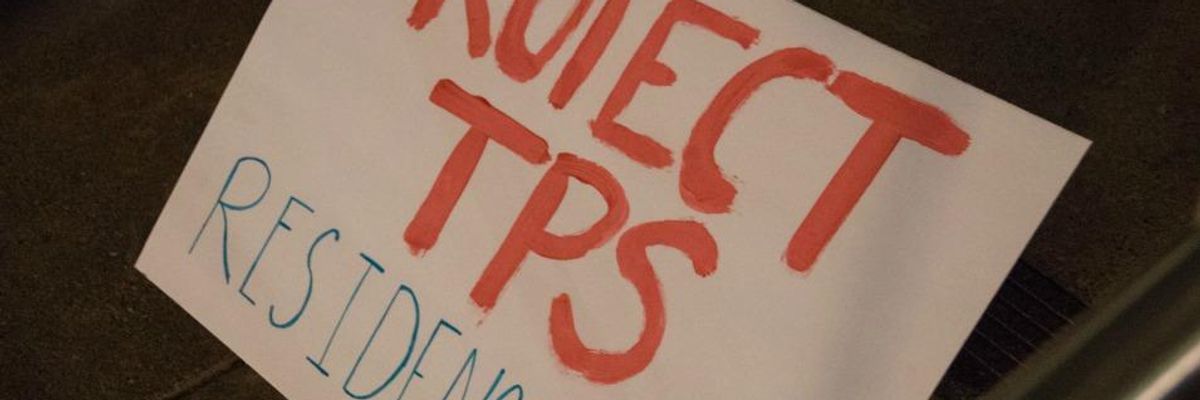
The Trump administration said Friday it would move to end temporary protections for Hondurans, many of whom have been in the U.S. for nearly 20 years. (Photo: Peg Hunter/Flickr/cc)
More than 50,000 people will be "condemned to misery," according to one immigrant rights advocate, following the Trump administration's decision to end Temporary Protected Status (TPS) for Hondurans who arrived in the U.S. after fleeing their hurricane-ravaged country in 1999.
"The Trump administration is turning its back on thousands of families who arrived from Honduras seeking safety," said Marselha Goncalves Margerin, an advocacy director at Amnesty International USA. "Many families, including children who are U.S. citizens, could risk threats, kidnapping, gender-based violence, or even death if sent to Honduras. It is heartless to offer safety to people seeking protection only to take it away and force them to return to a place where the justice system can't deliver justice."
While Honduras is no longer recovering from Hurricane Mitch, which forced 57,000 people to flee to the U.S., the country is one of the world's most violent, with gang warfare an ongoing occurrence and massive deadly political unrest following the last presidential election.
Following a U.S.-backed military coup in 2009, in which the party of current president Juan Orlando Hernandez forcibly took power, thousands of Hondurans have fled the country, including many of the asylum-seekers who traveled through Mexico to the U.S. border in recent weeks, arriving this week.
"When individuals often feel they don't have a choice but to flee their beautiful countries, it's because they have lost all hope," Martin Pineda, an organizer with Carecen, said in a statement. "It is no coincidence that 80 percent of the Central American Refugee Caravan consists of Hondurans, particularly mothers, children, and members of the LGBTQI communities who are seeking their legal right of asylum."
Now Hondurans who have lived, worked, and raised families in the U.S. for nearly two decades will have less than two years to leave the country or face deportation.
Hondurans are the second largest group, after Salvadoreans, who have had their TPS protection revoked by the U.S. About 200,000 people who had come to the country from El Salvador were told earlier this year that they had a matter of months to leave the country.
As CNN reports, the decision to revoke TPS for Hondurans "brings the total number of immigrants for whom the administration has decided to end temporary protected status in the last year to more than 425,000, many who have lived in the US legally for decades, according to numbers from U.S. Citizenship and Immigration Services."
"There is little doubt that the White House has been driving these TPS decisions based on ideology, not based upon what is best for our foreign policy interests and for the region," Kevin Appleby of the Center for Migration Studies told the Washington Post.
Dear Common Dreams reader, It’s been nearly 30 years since I co-founded Common Dreams with my late wife, Lina Newhouser. We had the radical notion that journalism should serve the public good, not corporate profits. It was clear to us from the outset what it would take to build such a project. No paid advertisements. No corporate sponsors. No millionaire publisher telling us what to think or do. Many people said we wouldn't last a year, but we proved those doubters wrong. Together with a tremendous team of journalists and dedicated staff, we built an independent media outlet free from the constraints of profits and corporate control. Our mission has always been simple: To inform. To inspire. To ignite change for the common good. Building Common Dreams was not easy. Our survival was never guaranteed. When you take on the most powerful forces—Wall Street greed, fossil fuel industry destruction, Big Tech lobbyists, and uber-rich oligarchs who have spent billions upon billions rigging the economy and democracy in their favor—the only bulwark you have is supporters who believe in your work. But here’s the urgent message from me today. It's never been this bad out there. And it's never been this hard to keep us going. At the very moment Common Dreams is most needed, the threats we face are intensifying. We need your support now more than ever. We don't accept corporate advertising and never will. We don't have a paywall because we don't think people should be blocked from critical news based on their ability to pay. Everything we do is funded by the donations of readers like you. When everyone does the little they can afford, we are strong. But if that support retreats or dries up, so do we. Will you donate now to make sure Common Dreams not only survives but thrives? —Craig Brown, Co-founder |
More than 50,000 people will be "condemned to misery," according to one immigrant rights advocate, following the Trump administration's decision to end Temporary Protected Status (TPS) for Hondurans who arrived in the U.S. after fleeing their hurricane-ravaged country in 1999.
"The Trump administration is turning its back on thousands of families who arrived from Honduras seeking safety," said Marselha Goncalves Margerin, an advocacy director at Amnesty International USA. "Many families, including children who are U.S. citizens, could risk threats, kidnapping, gender-based violence, or even death if sent to Honduras. It is heartless to offer safety to people seeking protection only to take it away and force them to return to a place where the justice system can't deliver justice."
While Honduras is no longer recovering from Hurricane Mitch, which forced 57,000 people to flee to the U.S., the country is one of the world's most violent, with gang warfare an ongoing occurrence and massive deadly political unrest following the last presidential election.
Following a U.S.-backed military coup in 2009, in which the party of current president Juan Orlando Hernandez forcibly took power, thousands of Hondurans have fled the country, including many of the asylum-seekers who traveled through Mexico to the U.S. border in recent weeks, arriving this week.
"When individuals often feel they don't have a choice but to flee their beautiful countries, it's because they have lost all hope," Martin Pineda, an organizer with Carecen, said in a statement. "It is no coincidence that 80 percent of the Central American Refugee Caravan consists of Hondurans, particularly mothers, children, and members of the LGBTQI communities who are seeking their legal right of asylum."
Now Hondurans who have lived, worked, and raised families in the U.S. for nearly two decades will have less than two years to leave the country or face deportation.
Hondurans are the second largest group, after Salvadoreans, who have had their TPS protection revoked by the U.S. About 200,000 people who had come to the country from El Salvador were told earlier this year that they had a matter of months to leave the country.
As CNN reports, the decision to revoke TPS for Hondurans "brings the total number of immigrants for whom the administration has decided to end temporary protected status in the last year to more than 425,000, many who have lived in the US legally for decades, according to numbers from U.S. Citizenship and Immigration Services."
"There is little doubt that the White House has been driving these TPS decisions based on ideology, not based upon what is best for our foreign policy interests and for the region," Kevin Appleby of the Center for Migration Studies told the Washington Post.
More than 50,000 people will be "condemned to misery," according to one immigrant rights advocate, following the Trump administration's decision to end Temporary Protected Status (TPS) for Hondurans who arrived in the U.S. after fleeing their hurricane-ravaged country in 1999.
"The Trump administration is turning its back on thousands of families who arrived from Honduras seeking safety," said Marselha Goncalves Margerin, an advocacy director at Amnesty International USA. "Many families, including children who are U.S. citizens, could risk threats, kidnapping, gender-based violence, or even death if sent to Honduras. It is heartless to offer safety to people seeking protection only to take it away and force them to return to a place where the justice system can't deliver justice."
While Honduras is no longer recovering from Hurricane Mitch, which forced 57,000 people to flee to the U.S., the country is one of the world's most violent, with gang warfare an ongoing occurrence and massive deadly political unrest following the last presidential election.
Following a U.S.-backed military coup in 2009, in which the party of current president Juan Orlando Hernandez forcibly took power, thousands of Hondurans have fled the country, including many of the asylum-seekers who traveled through Mexico to the U.S. border in recent weeks, arriving this week.
"When individuals often feel they don't have a choice but to flee their beautiful countries, it's because they have lost all hope," Martin Pineda, an organizer with Carecen, said in a statement. "It is no coincidence that 80 percent of the Central American Refugee Caravan consists of Hondurans, particularly mothers, children, and members of the LGBTQI communities who are seeking their legal right of asylum."
Now Hondurans who have lived, worked, and raised families in the U.S. for nearly two decades will have less than two years to leave the country or face deportation.
Hondurans are the second largest group, after Salvadoreans, who have had their TPS protection revoked by the U.S. About 200,000 people who had come to the country from El Salvador were told earlier this year that they had a matter of months to leave the country.
As CNN reports, the decision to revoke TPS for Hondurans "brings the total number of immigrants for whom the administration has decided to end temporary protected status in the last year to more than 425,000, many who have lived in the US legally for decades, according to numbers from U.S. Citizenship and Immigration Services."
"There is little doubt that the White House has been driving these TPS decisions based on ideology, not based upon what is best for our foreign policy interests and for the region," Kevin Appleby of the Center for Migration Studies told the Washington Post.