

SUBSCRIBE TO OUR FREE NEWSLETTER
Daily news & progressive opinion—funded by the people, not the corporations—delivered straight to your inbox.
5
#000000
#FFFFFF
To donate by check, phone, or other method, see our More Ways to Give page.
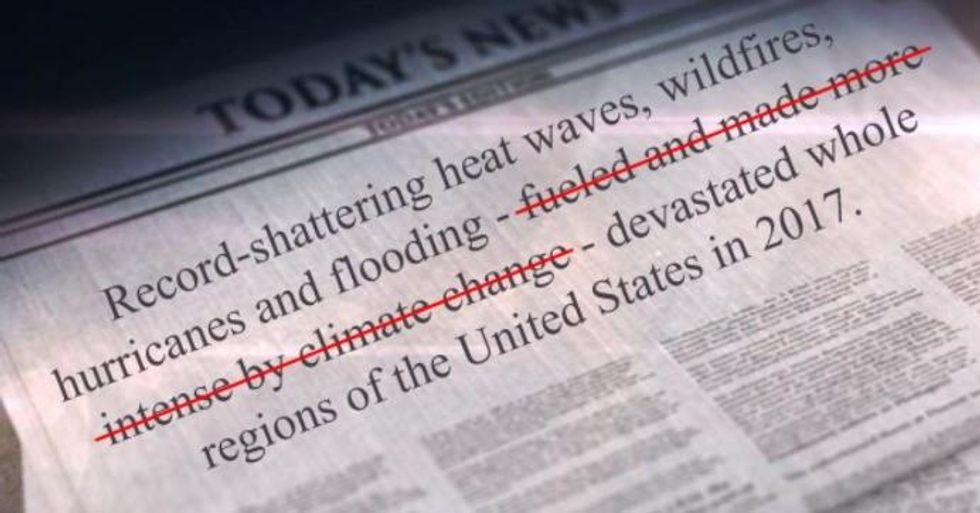
Despite the fact that 2017 saw a flurry of devastating and "record-shattering" hurricanes, enormously destructive wildfires, and extreme droughts, a new report by Public Citizen published on Friday concludes that major American media outlets "largely failed" to connect these weather events to the broader global climate crisis.
"Given the gravity and urgency of the climate crisis, as well as a surfeit of relevant, newsworthy developments, one would expect U.S. media to report on climate and clean energy issues daily."
--David Arkush, Public Citizen
Titled "Carbon Omission: How the U.S. Media Underreported Climate Change in 2017" (pdf) and written by Public Citizen's climate program director David Arkush, the analysis takes an in-depth look at the 2017 weather coverage of more than a dozen prominent newspapers and television networks, from the New York Times to the Denver Post to the Fox News Network.
"Given the gravity and urgency of the climate crisis, as well as a surfeit of relevant, newsworthy developments, one would expect U.S. media to report on climate and clean energy issues daily," Arkush writes at the outset of his report.
However, a closer look revealed that more often than not last year, the opposite was the case.
While coverage of hurricanes, wildfires, and other major weather events frequently dominated newspaper headlines and television segments in 2017, the "proportion of pieces that mentioned climate change in climate-relevant contexts was decidely low," Arkush writes--even though scientific research has frequently demonstrated the link between climate change and extreme weather.
After scouring news coverage through LexisNexis and conducting "a separate targeted search of major outlets," Arkush discovered that:
Extreme weather throughout the U.S. and across the globe over the past several months led one analyst to call 2017 "the year climate change began to spin out of control," but the media's failure to "connect the dots on evidence right in front of our faces" has left many consumers of U.S. news uninformed about the link between climate change and these disastrous events, Arkush argues.
"Most Americans report that they rarely hear about climate change in the news, and rarely discuss the issue with friends or family," Arkush said in a statement accompanying his report. "We can't fix the climate crisis if we aren't talking about it."
In recent days, climate change has been in the news quite a bit--but for all the wrong reasons. Last week, President Donald Trump cited the extremely cold weather being felt in the eastern U.S. as evidence that the world could "use a little bit of that good old global warming."
With Trump and the Environmental Protection Agency under the leadership of Scott Pruitt working tirelessly to challenge the overwhelming scientific consensus on human-caused climate change and dismantle the safeguards against its devastating consequences, Arkush concludes that it is "critical that the media start reporting on the crisis with the quality and quantity it merits."
"We're talking about the greatest challenge of our time," he writes.
Despite the fact that 2017 saw a flurry of devastating and "record-shattering" hurricanes, enormously destructive wildfires, and extreme droughts, a new report by Public Citizen published on Friday concludes that major American media outlets "largely failed" to connect these weather events to the broader global climate crisis.
"Given the gravity and urgency of the climate crisis, as well as a surfeit of relevant, newsworthy developments, one would expect U.S. media to report on climate and clean energy issues daily."
--David Arkush, Public Citizen
Titled "Carbon Omission: How the U.S. Media Underreported Climate Change in 2017" (pdf) and written by Public Citizen's climate program director David Arkush, the analysis takes an in-depth look at the 2017 weather coverage of more than a dozen prominent newspapers and television networks, from the New York Times to the Denver Post to the Fox News Network.
"Given the gravity and urgency of the climate crisis, as well as a surfeit of relevant, newsworthy developments, one would expect U.S. media to report on climate and clean energy issues daily," Arkush writes at the outset of his report.
However, a closer look revealed that more often than not last year, the opposite was the case.
While coverage of hurricanes, wildfires, and other major weather events frequently dominated newspaper headlines and television segments in 2017, the "proportion of pieces that mentioned climate change in climate-relevant contexts was decidely low," Arkush writes--even though scientific research has frequently demonstrated the link between climate change and extreme weather.
After scouring news coverage through LexisNexis and conducting "a separate targeted search of major outlets," Arkush discovered that:
Extreme weather throughout the U.S. and across the globe over the past several months led one analyst to call 2017 "the year climate change began to spin out of control," but the media's failure to "connect the dots on evidence right in front of our faces" has left many consumers of U.S. news uninformed about the link between climate change and these disastrous events, Arkush argues.
"Most Americans report that they rarely hear about climate change in the news, and rarely discuss the issue with friends or family," Arkush said in a statement accompanying his report. "We can't fix the climate crisis if we aren't talking about it."
In recent days, climate change has been in the news quite a bit--but for all the wrong reasons. Last week, President Donald Trump cited the extremely cold weather being felt in the eastern U.S. as evidence that the world could "use a little bit of that good old global warming."
With Trump and the Environmental Protection Agency under the leadership of Scott Pruitt working tirelessly to challenge the overwhelming scientific consensus on human-caused climate change and dismantle the safeguards against its devastating consequences, Arkush concludes that it is "critical that the media start reporting on the crisis with the quality and quantity it merits."
"We're talking about the greatest challenge of our time," he writes.
Despite the fact that 2017 saw a flurry of devastating and "record-shattering" hurricanes, enormously destructive wildfires, and extreme droughts, a new report by Public Citizen published on Friday concludes that major American media outlets "largely failed" to connect these weather events to the broader global climate crisis.
"Given the gravity and urgency of the climate crisis, as well as a surfeit of relevant, newsworthy developments, one would expect U.S. media to report on climate and clean energy issues daily."
--David Arkush, Public Citizen
Titled "Carbon Omission: How the U.S. Media Underreported Climate Change in 2017" (pdf) and written by Public Citizen's climate program director David Arkush, the analysis takes an in-depth look at the 2017 weather coverage of more than a dozen prominent newspapers and television networks, from the New York Times to the Denver Post to the Fox News Network.
"Given the gravity and urgency of the climate crisis, as well as a surfeit of relevant, newsworthy developments, one would expect U.S. media to report on climate and clean energy issues daily," Arkush writes at the outset of his report.
However, a closer look revealed that more often than not last year, the opposite was the case.
While coverage of hurricanes, wildfires, and other major weather events frequently dominated newspaper headlines and television segments in 2017, the "proportion of pieces that mentioned climate change in climate-relevant contexts was decidely low," Arkush writes--even though scientific research has frequently demonstrated the link between climate change and extreme weather.
After scouring news coverage through LexisNexis and conducting "a separate targeted search of major outlets," Arkush discovered that:
Extreme weather throughout the U.S. and across the globe over the past several months led one analyst to call 2017 "the year climate change began to spin out of control," but the media's failure to "connect the dots on evidence right in front of our faces" has left many consumers of U.S. news uninformed about the link between climate change and these disastrous events, Arkush argues.
"Most Americans report that they rarely hear about climate change in the news, and rarely discuss the issue with friends or family," Arkush said in a statement accompanying his report. "We can't fix the climate crisis if we aren't talking about it."
In recent days, climate change has been in the news quite a bit--but for all the wrong reasons. Last week, President Donald Trump cited the extremely cold weather being felt in the eastern U.S. as evidence that the world could "use a little bit of that good old global warming."
With Trump and the Environmental Protection Agency under the leadership of Scott Pruitt working tirelessly to challenge the overwhelming scientific consensus on human-caused climate change and dismantle the safeguards against its devastating consequences, Arkush concludes that it is "critical that the media start reporting on the crisis with the quality and quantity it merits."
"We're talking about the greatest challenge of our time," he writes.

