SUBSCRIBE TO OUR FREE NEWSLETTER
Daily news & progressive opinion—funded by the people, not the corporations—delivered straight to your inbox.
5
#000000
#FFFFFF
To donate by check, phone, or other method, see our More Ways to Give page.
Daily news & progressive opinion—funded by the people, not the corporations—delivered straight to your inbox.
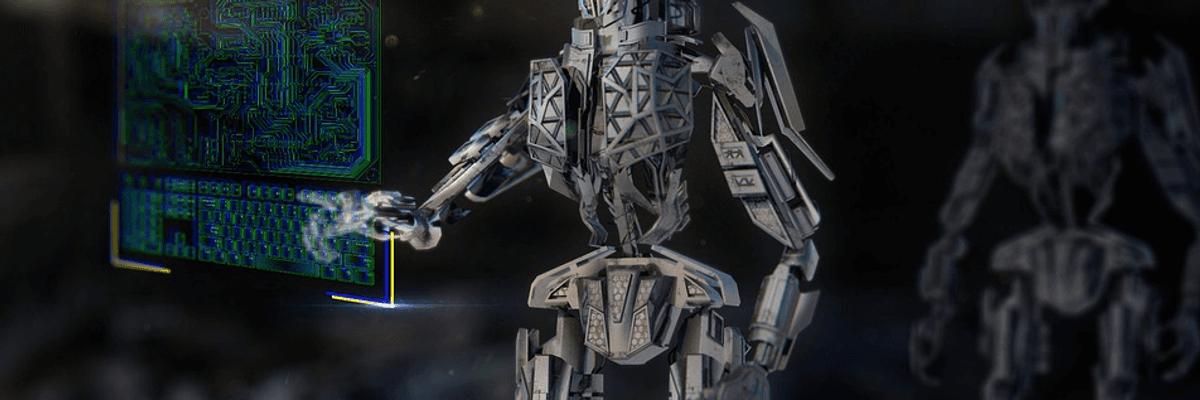
While some have raised concerns about the ability to compete with countries that may develop autonomous robots, a high-ranking General said Tuesday that humans should retain control of decisions in warfare. (Photo: Nicolas Kovarik/Getty)
Urgent warnings about the danger of autonomous weapons systems have come from two very different segments of American life this week. On Tuesday, the second highest-ranking general in the U.S. military testified at a Senate hearing that the use of robots during warfare could endanger human lives--echoing concerns brought up by inventor Elon Musk the previous weekend.
Gen. Paul Selva spoke about automation at his confirmation hearing before the Senate Armed Services Committee, saying that the "ethical rules of war" should be kept in place even as artificial intelligence (AI) and drone technology advances, "lest we unleash on humanity a set of robots that we don't know how to control."
The Defense Department currently mandates that a human must control all actions taken by a drone. But at the hearing, Sen. Gary Peters (D-Mich.) suggested that by enforcing that requirement, which is set to expire this year, the U.S. could fall behind other countries including Russia. Peters cited recent reports of Russia's "ambition to employ AI-directed weapons equipped with a neural network capable of identifying and engaging targets," and to sell those weapons to other countries.
"Our adversaries often do not to consider the same moral and ethical issues that we consider each and every day," Peters said.
Selva firmly stated his view that humans should retain decision-making power in the U.S. military.
"I don't think it's reasonable for us to put robots in charge of whether or not we take a human life," Selva told the committee.
In an open letter in 2015, Tesla and SpaceX CEO Elon Musk joined with scientist Stephen Hawking to warn against competing with other countries to develop AI for military purposes.
"Starting a military AI arms race is a bad idea, and should be prevented by a ban on offensive autonomous weapons beyond meaningful human control," the letter said.
Musk has previously called the development of robots that can make their own decisions, "summoning the demon." Days before Gen. Selva's hearing, Musk spoke at the National Governors Association about the potential for an uncontrollable contingent of robots in the future.
The inventor acknowledged the risks AI poses for American workers, but added that the concerns go beyond employment. "AI is a fundamental existential risk for human civilization, and I don't think people fully appreciate that," Musk said.
He urged governors throughout the U.S. to start thinking seriously now about how to regulate robotics--before AI becomes an issue that's out of humans' control.
"Until people see robots going down the street killing people, they don't know how to react because it seems so ethereal. AI is a rare case where I think we need to be proactive in regulation instead of reactive. Because I think by the time we are reactive in AI regulation, it's too late," warned Musk.
Dear Common Dreams reader, It’s been nearly 30 years since I co-founded Common Dreams with my late wife, Lina Newhouser. We had the radical notion that journalism should serve the public good, not corporate profits. It was clear to us from the outset what it would take to build such a project. No paid advertisements. No corporate sponsors. No millionaire publisher telling us what to think or do. Many people said we wouldn't last a year, but we proved those doubters wrong. Together with a tremendous team of journalists and dedicated staff, we built an independent media outlet free from the constraints of profits and corporate control. Our mission has always been simple: To inform. To inspire. To ignite change for the common good. Building Common Dreams was not easy. Our survival was never guaranteed. When you take on the most powerful forces—Wall Street greed, fossil fuel industry destruction, Big Tech lobbyists, and uber-rich oligarchs who have spent billions upon billions rigging the economy and democracy in their favor—the only bulwark you have is supporters who believe in your work. But here’s the urgent message from me today. It's never been this bad out there. And it's never been this hard to keep us going. At the very moment Common Dreams is most needed, the threats we face are intensifying. We need your support now more than ever. We don't accept corporate advertising and never will. We don't have a paywall because we don't think people should be blocked from critical news based on their ability to pay. Everything we do is funded by the donations of readers like you. When everyone does the little they can afford, we are strong. But if that support retreats or dries up, so do we. Will you donate now to make sure Common Dreams not only survives but thrives? —Craig Brown, Co-founder |
Urgent warnings about the danger of autonomous weapons systems have come from two very different segments of American life this week. On Tuesday, the second highest-ranking general in the U.S. military testified at a Senate hearing that the use of robots during warfare could endanger human lives--echoing concerns brought up by inventor Elon Musk the previous weekend.
Gen. Paul Selva spoke about automation at his confirmation hearing before the Senate Armed Services Committee, saying that the "ethical rules of war" should be kept in place even as artificial intelligence (AI) and drone technology advances, "lest we unleash on humanity a set of robots that we don't know how to control."
The Defense Department currently mandates that a human must control all actions taken by a drone. But at the hearing, Sen. Gary Peters (D-Mich.) suggested that by enforcing that requirement, which is set to expire this year, the U.S. could fall behind other countries including Russia. Peters cited recent reports of Russia's "ambition to employ AI-directed weapons equipped with a neural network capable of identifying and engaging targets," and to sell those weapons to other countries.
"Our adversaries often do not to consider the same moral and ethical issues that we consider each and every day," Peters said.
Selva firmly stated his view that humans should retain decision-making power in the U.S. military.
"I don't think it's reasonable for us to put robots in charge of whether or not we take a human life," Selva told the committee.
In an open letter in 2015, Tesla and SpaceX CEO Elon Musk joined with scientist Stephen Hawking to warn against competing with other countries to develop AI for military purposes.
"Starting a military AI arms race is a bad idea, and should be prevented by a ban on offensive autonomous weapons beyond meaningful human control," the letter said.
Musk has previously called the development of robots that can make their own decisions, "summoning the demon." Days before Gen. Selva's hearing, Musk spoke at the National Governors Association about the potential for an uncontrollable contingent of robots in the future.
The inventor acknowledged the risks AI poses for American workers, but added that the concerns go beyond employment. "AI is a fundamental existential risk for human civilization, and I don't think people fully appreciate that," Musk said.
He urged governors throughout the U.S. to start thinking seriously now about how to regulate robotics--before AI becomes an issue that's out of humans' control.
"Until people see robots going down the street killing people, they don't know how to react because it seems so ethereal. AI is a rare case where I think we need to be proactive in regulation instead of reactive. Because I think by the time we are reactive in AI regulation, it's too late," warned Musk.
Urgent warnings about the danger of autonomous weapons systems have come from two very different segments of American life this week. On Tuesday, the second highest-ranking general in the U.S. military testified at a Senate hearing that the use of robots during warfare could endanger human lives--echoing concerns brought up by inventor Elon Musk the previous weekend.
Gen. Paul Selva spoke about automation at his confirmation hearing before the Senate Armed Services Committee, saying that the "ethical rules of war" should be kept in place even as artificial intelligence (AI) and drone technology advances, "lest we unleash on humanity a set of robots that we don't know how to control."
The Defense Department currently mandates that a human must control all actions taken by a drone. But at the hearing, Sen. Gary Peters (D-Mich.) suggested that by enforcing that requirement, which is set to expire this year, the U.S. could fall behind other countries including Russia. Peters cited recent reports of Russia's "ambition to employ AI-directed weapons equipped with a neural network capable of identifying and engaging targets," and to sell those weapons to other countries.
"Our adversaries often do not to consider the same moral and ethical issues that we consider each and every day," Peters said.
Selva firmly stated his view that humans should retain decision-making power in the U.S. military.
"I don't think it's reasonable for us to put robots in charge of whether or not we take a human life," Selva told the committee.
In an open letter in 2015, Tesla and SpaceX CEO Elon Musk joined with scientist Stephen Hawking to warn against competing with other countries to develop AI for military purposes.
"Starting a military AI arms race is a bad idea, and should be prevented by a ban on offensive autonomous weapons beyond meaningful human control," the letter said.
Musk has previously called the development of robots that can make their own decisions, "summoning the demon." Days before Gen. Selva's hearing, Musk spoke at the National Governors Association about the potential for an uncontrollable contingent of robots in the future.
The inventor acknowledged the risks AI poses for American workers, but added that the concerns go beyond employment. "AI is a fundamental existential risk for human civilization, and I don't think people fully appreciate that," Musk said.
He urged governors throughout the U.S. to start thinking seriously now about how to regulate robotics--before AI becomes an issue that's out of humans' control.
"Until people see robots going down the street killing people, they don't know how to react because it seems so ethereal. AI is a rare case where I think we need to be proactive in regulation instead of reactive. Because I think by the time we are reactive in AI regulation, it's too late," warned Musk.