SUBSCRIBE TO OUR FREE NEWSLETTER
Daily news & progressive opinion—funded by the people, not the corporations—delivered straight to your inbox.
5
#000000
#FFFFFF
To donate by check, phone, or other method, see our More Ways to Give page.
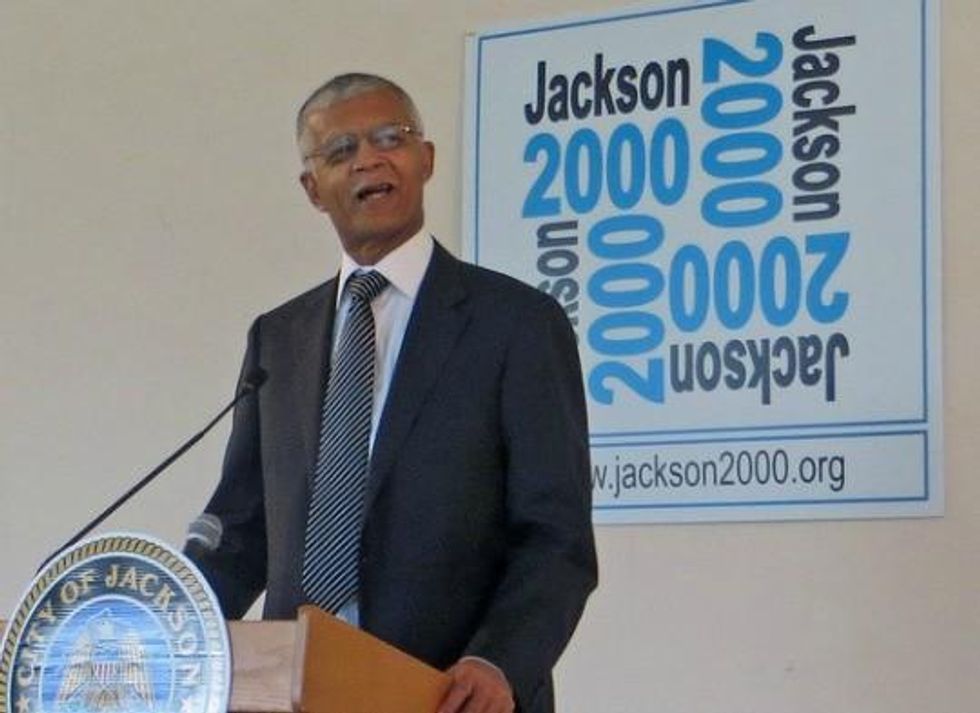
Before entering politics, Lumumba rose to prominence as a civil rights activist and human rights attorney--defending notable clients including Black Panther Assata Shakur. Lumumba served as a leading figure in the Republic of New Afrika, and co-founded the National Coalition of Blacks for Reparations in America and the Malcolm X Grassroots Movement.
Of his upbringing and the source of his activism, The Nation's John Nichols writes:
Chokwe Lumumba maintained a civil rights commitment that was rooted in the moment when his mother showed her eight-year-old son the Jet magazine photograph of a beaten Emmett Till in his open casket. The commitment was nurtured on the streets of Detroit, where Lumumba and his mother collected money to support the Southern Nonviolent Coordinating Committee and the civil rights struggles of the early 1960s. [...]
As a young man, inspired by the Rev. Martin Luther King Jr's struggle to address "infectious discrimination, racism and apartheid," and shocked into a deeper activism by King's assassination, Lumumba changed his name from Edwin Taliaferro--taking his new first name from an African tribe that had resisted slavery and his new last name from the Congolese independence leader Patrice Lumumba.
In June 2013, Lumumba was elected to be the third black mayor of Jackson, Mississippi. His vision for Jackson was based in the principle of "solidarity economics," in order to rise up what he said was a population that "suffered some of the worst kinds of abuses in history."
"We have to make sure that economically we're free, and part of that is the whole idea of economic democracy," Lumumba told San Francisco's WBAI-AfroBeat Radio in an interview last June. "We have to deal with more cooperative thinking and more involvement of people in the control of businesses, as opposed to just the big money changers, or the big CEOs and the big multinational corporations, the big capitalist corporations which generally control here in Mississippi."
At the time, Ann Garrison at WBAI said Lumumba "stands to be a historic mayor."
"Some of the most significant things happen in history when you get the right people in the right place at the right time, and I think that's where we are," Lumumba told Laura Flanders in an interview just two weeks before his death. Lumumba was preparing to launch his solidarity economics plan at the Jackson Rising Conference in May.
Following news of his death, Twitter was filled with messages of grief and appreciation.
In June 2013, days after being elected Mayor of Jackson, Lumumba took part in a discussion on Democracy Now! describing his vision for the city.
_____________________
Before entering politics, Lumumba rose to prominence as a civil rights activist and human rights attorney--defending notable clients including Black Panther Assata Shakur. Lumumba served as a leading figure in the Republic of New Afrika, and co-founded the National Coalition of Blacks for Reparations in America and the Malcolm X Grassroots Movement.
Of his upbringing and the source of his activism, The Nation's John Nichols writes:
Chokwe Lumumba maintained a civil rights commitment that was rooted in the moment when his mother showed her eight-year-old son the Jet magazine photograph of a beaten Emmett Till in his open casket. The commitment was nurtured on the streets of Detroit, where Lumumba and his mother collected money to support the Southern Nonviolent Coordinating Committee and the civil rights struggles of the early 1960s. [...]
As a young man, inspired by the Rev. Martin Luther King Jr's struggle to address "infectious discrimination, racism and apartheid," and shocked into a deeper activism by King's assassination, Lumumba changed his name from Edwin Taliaferro--taking his new first name from an African tribe that had resisted slavery and his new last name from the Congolese independence leader Patrice Lumumba.
In June 2013, Lumumba was elected to be the third black mayor of Jackson, Mississippi. His vision for Jackson was based in the principle of "solidarity economics," in order to rise up what he said was a population that "suffered some of the worst kinds of abuses in history."
"We have to make sure that economically we're free, and part of that is the whole idea of economic democracy," Lumumba told San Francisco's WBAI-AfroBeat Radio in an interview last June. "We have to deal with more cooperative thinking and more involvement of people in the control of businesses, as opposed to just the big money changers, or the big CEOs and the big multinational corporations, the big capitalist corporations which generally control here in Mississippi."
At the time, Ann Garrison at WBAI said Lumumba "stands to be a historic mayor."
"Some of the most significant things happen in history when you get the right people in the right place at the right time, and I think that's where we are," Lumumba told Laura Flanders in an interview just two weeks before his death. Lumumba was preparing to launch his solidarity economics plan at the Jackson Rising Conference in May.
Following news of his death, Twitter was filled with messages of grief and appreciation.
In June 2013, days after being elected Mayor of Jackson, Lumumba took part in a discussion on Democracy Now! describing his vision for the city.
_____________________
Before entering politics, Lumumba rose to prominence as a civil rights activist and human rights attorney--defending notable clients including Black Panther Assata Shakur. Lumumba served as a leading figure in the Republic of New Afrika, and co-founded the National Coalition of Blacks for Reparations in America and the Malcolm X Grassroots Movement.
Of his upbringing and the source of his activism, The Nation's John Nichols writes:
Chokwe Lumumba maintained a civil rights commitment that was rooted in the moment when his mother showed her eight-year-old son the Jet magazine photograph of a beaten Emmett Till in his open casket. The commitment was nurtured on the streets of Detroit, where Lumumba and his mother collected money to support the Southern Nonviolent Coordinating Committee and the civil rights struggles of the early 1960s. [...]
As a young man, inspired by the Rev. Martin Luther King Jr's struggle to address "infectious discrimination, racism and apartheid," and shocked into a deeper activism by King's assassination, Lumumba changed his name from Edwin Taliaferro--taking his new first name from an African tribe that had resisted slavery and his new last name from the Congolese independence leader Patrice Lumumba.
In June 2013, Lumumba was elected to be the third black mayor of Jackson, Mississippi. His vision for Jackson was based in the principle of "solidarity economics," in order to rise up what he said was a population that "suffered some of the worst kinds of abuses in history."
"We have to make sure that economically we're free, and part of that is the whole idea of economic democracy," Lumumba told San Francisco's WBAI-AfroBeat Radio in an interview last June. "We have to deal with more cooperative thinking and more involvement of people in the control of businesses, as opposed to just the big money changers, or the big CEOs and the big multinational corporations, the big capitalist corporations which generally control here in Mississippi."
At the time, Ann Garrison at WBAI said Lumumba "stands to be a historic mayor."
"Some of the most significant things happen in history when you get the right people in the right place at the right time, and I think that's where we are," Lumumba told Laura Flanders in an interview just two weeks before his death. Lumumba was preparing to launch his solidarity economics plan at the Jackson Rising Conference in May.
Following news of his death, Twitter was filled with messages of grief and appreciation.
In June 2013, days after being elected Mayor of Jackson, Lumumba took part in a discussion on Democracy Now! describing his vision for the city.
_____________________