
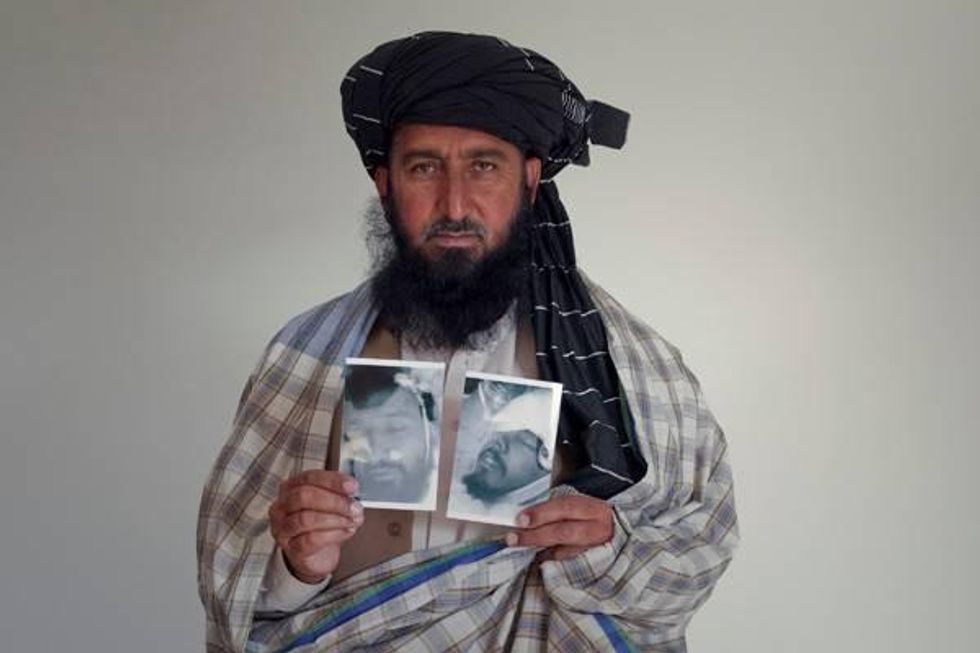
Shahzad Akbar, who is Khan's lawyer and a fellow for the UK-based charity Reprieve, argued to the Rawalpindi Bench of the Lahore High Court on Wednesday that intelligence services were likely responsible for Khan's kidnapping. In response, the presiding judge ordered Pakistan's intelligence services, overseen by the Ministry of the Interior, to produce Khan by February 20th, according to a statement by Reprieve.
"Kareem Khan has already lost a brother and son to U.S. drone strikes," said Akbar. "Now, he too has disappeared. All because he had the courage to speak out about what happened to him and about the terrible civilian toll such strikes are having."
Khan's 35-year-old brother, Asif Iqbal, and 18-year-old son, Zaneullah Khan -- both of them civilians -- died when a 2009 CIA drone strike destroyed Khan's home in North Waziristan. Khan stated in a previous interview with CNN, "When my house was attacked, it flashed on the news that militants have been killed. There were no militants in my house, neither on the day of drone strike nor before. My house wasn't a training center, either. Only innocent people where killed."
In the years since, Khan has been a prominent campaigner and witness against drones. He previously took legal action against the CIA demanding a halt to U.S. drone killings. At the time of his abduction, he was in the midst of legal proceedings against the Pakistani government for its failure to investigate the murder of his son and brother.
Kareem was kidnapped from his home on February 5th in front of his wife and young children by 15 to 20 men wearing police uniforms and plain clothes, according to a statement from Reprieve. "When they went inside, the first thing they did, they took their guns out and started shouting. Then they picked up Karim Khan, and searched the house," said Dilbar Jan, Khan's brother-in-law, in an interview with Al Jazeera America.
Pakistani police claim they have no knowledge of the kidnapping.
The abduction occurred just before he was set to travel to Europe to meet with German, Dutch and British parliamentarians to testify on U.S. drone strikes. In an open letter to Pakistani Prime Minister Nawaz Sharif, UK parliamentarian Tom Watson expressed concern that Khan's "disappearance may in some way be related to his visit... despite numerous inquiries to the Pakistani police, Mr. Khan's family has not located Mr. Khan or discovered why he has been detained."
Many of Khan's supporters believe the Pakistani government is responsible for his abduction, and U.S.-based CODEPINK is demanding his immediate release in a petition to Pakistani Ambassador Jalil Abbas Jilani.
"It has now been a week since anyone has seen or heard from Kareem Khan," said Reprieve's Executive Director Clare Algar. "The Pakistani Government must immediately tell us where he is and why they have tried to silence such an important anti-drones voice. Failure to do so raises disturbing questions of continued PK complicity in the US drone programme."
"We are concerned that prominent human rights activist Kareem Khan may have been disappeared to prevent him from giving testimony overseas about US drone strikes in Pakistan," said Isabelle Arradon, Asia-Pacific Deputy Director at Amnesty International.
_____________________
Shahzad Akbar, who is Khan's lawyer and a fellow for the UK-based charity Reprieve, argued to the Rawalpindi Bench of the Lahore High Court on Wednesday that intelligence services were likely responsible for Khan's kidnapping. In response, the presiding judge ordered Pakistan's intelligence services, overseen by the Ministry of the Interior, to produce Khan by February 20th, according to a statement by Reprieve.
"Kareem Khan has already lost a brother and son to U.S. drone strikes," said Akbar. "Now, he too has disappeared. All because he had the courage to speak out about what happened to him and about the terrible civilian toll such strikes are having."
Khan's 35-year-old brother, Asif Iqbal, and 18-year-old son, Zaneullah Khan -- both of them civilians -- died when a 2009 CIA drone strike destroyed Khan's home in North Waziristan. Khan stated in a previous interview with CNN, "When my house was attacked, it flashed on the news that militants have been killed. There were no militants in my house, neither on the day of drone strike nor before. My house wasn't a training center, either. Only innocent people where killed."
In the years since, Khan has been a prominent campaigner and witness against drones. He previously took legal action against the CIA demanding a halt to U.S. drone killings. At the time of his abduction, he was in the midst of legal proceedings against the Pakistani government for its failure to investigate the murder of his son and brother.
Kareem was kidnapped from his home on February 5th in front of his wife and young children by 15 to 20 men wearing police uniforms and plain clothes, according to a statement from Reprieve. "When they went inside, the first thing they did, they took their guns out and started shouting. Then they picked up Karim Khan, and searched the house," said Dilbar Jan, Khan's brother-in-law, in an interview with Al Jazeera America.
Pakistani police claim they have no knowledge of the kidnapping.
The abduction occurred just before he was set to travel to Europe to meet with German, Dutch and British parliamentarians to testify on U.S. drone strikes. In an open letter to Pakistani Prime Minister Nawaz Sharif, UK parliamentarian Tom Watson expressed concern that Khan's "disappearance may in some way be related to his visit... despite numerous inquiries to the Pakistani police, Mr. Khan's family has not located Mr. Khan or discovered why he has been detained."
Many of Khan's supporters believe the Pakistani government is responsible for his abduction, and U.S.-based CODEPINK is demanding his immediate release in a petition to Pakistani Ambassador Jalil Abbas Jilani.
"It has now been a week since anyone has seen or heard from Kareem Khan," said Reprieve's Executive Director Clare Algar. "The Pakistani Government must immediately tell us where he is and why they have tried to silence such an important anti-drones voice. Failure to do so raises disturbing questions of continued PK complicity in the US drone programme."
"We are concerned that prominent human rights activist Kareem Khan may have been disappeared to prevent him from giving testimony overseas about US drone strikes in Pakistan," said Isabelle Arradon, Asia-Pacific Deputy Director at Amnesty International.
_____________________
Shahzad Akbar, who is Khan's lawyer and a fellow for the UK-based charity Reprieve, argued to the Rawalpindi Bench of the Lahore High Court on Wednesday that intelligence services were likely responsible for Khan's kidnapping. In response, the presiding judge ordered Pakistan's intelligence services, overseen by the Ministry of the Interior, to produce Khan by February 20th, according to a statement by Reprieve.
"Kareem Khan has already lost a brother and son to U.S. drone strikes," said Akbar. "Now, he too has disappeared. All because he had the courage to speak out about what happened to him and about the terrible civilian toll such strikes are having."
Khan's 35-year-old brother, Asif Iqbal, and 18-year-old son, Zaneullah Khan -- both of them civilians -- died when a 2009 CIA drone strike destroyed Khan's home in North Waziristan. Khan stated in a previous interview with CNN, "When my house was attacked, it flashed on the news that militants have been killed. There were no militants in my house, neither on the day of drone strike nor before. My house wasn't a training center, either. Only innocent people where killed."
In the years since, Khan has been a prominent campaigner and witness against drones. He previously took legal action against the CIA demanding a halt to U.S. drone killings. At the time of his abduction, he was in the midst of legal proceedings against the Pakistani government for its failure to investigate the murder of his son and brother.
Kareem was kidnapped from his home on February 5th in front of his wife and young children by 15 to 20 men wearing police uniforms and plain clothes, according to a statement from Reprieve. "When they went inside, the first thing they did, they took their guns out and started shouting. Then they picked up Karim Khan, and searched the house," said Dilbar Jan, Khan's brother-in-law, in an interview with Al Jazeera America.
Pakistani police claim they have no knowledge of the kidnapping.
The abduction occurred just before he was set to travel to Europe to meet with German, Dutch and British parliamentarians to testify on U.S. drone strikes. In an open letter to Pakistani Prime Minister Nawaz Sharif, UK parliamentarian Tom Watson expressed concern that Khan's "disappearance may in some way be related to his visit... despite numerous inquiries to the Pakistani police, Mr. Khan's family has not located Mr. Khan or discovered why he has been detained."
Many of Khan's supporters believe the Pakistani government is responsible for his abduction, and U.S.-based CODEPINK is demanding his immediate release in a petition to Pakistani Ambassador Jalil Abbas Jilani.
"It has now been a week since anyone has seen or heard from Kareem Khan," said Reprieve's Executive Director Clare Algar. "The Pakistani Government must immediately tell us where he is and why they have tried to silence such an important anti-drones voice. Failure to do so raises disturbing questions of continued PK complicity in the US drone programme."
"We are concerned that prominent human rights activist Kareem Khan may have been disappeared to prevent him from giving testimony overseas about US drone strikes in Pakistan," said Isabelle Arradon, Asia-Pacific Deputy Director at Amnesty International.
_____________________