SUBSCRIBE TO OUR FREE NEWSLETTER
Daily news & progressive opinion—funded by the people, not the corporations—delivered straight to your inbox.
5
#000000
#FFFFFF
To donate by check, phone, or other method, see our More Ways to Give page.
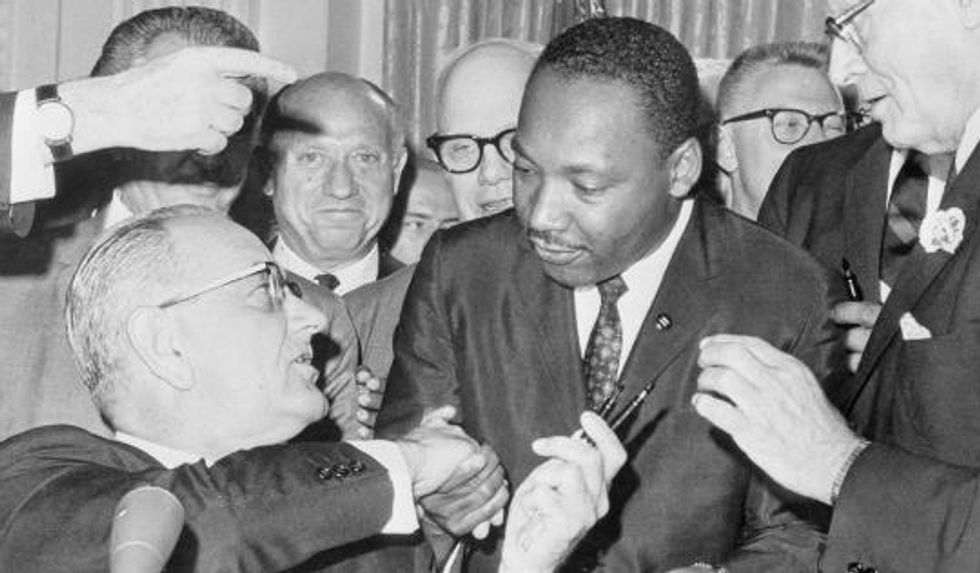
These revelations raise the obvious question: If the NSA was targeting people like Sen. Frank Church, who were in a position to oversee the NSA--is that happening now?
They were joined on the NSA's "watch list" by roughly 1,600 other prominent war critics whose overseas phone calls, telexes and cables were monitored.
While Vietnam-era spying on U.S. citizens, conducted under the codename Operation Minaret, was known at the time, the targets of this surveillance were not public until now.
The documents were forced to be declassified this week following an appeal to the Interagency Security Classification Appeals Panel (ISCAP) by an independent research institute, the National Security Archive.
Kevin Gosztola at FireDogLake reports Thursday, the documents, which comprise of the NSA's own multi-volume history of the agency, show that the Minaret project "employed unusual procedures."
"For example," Gosztola writes, "the NSA did not use the 'usual serialization' to distribute the reports. The reports were made to look like human intelligence reports instead of signals intelligence reports."
At one point the documents show that the NSA was all too aware of its "disreputable" tactics. The document states, "Years later, the NSA lawyer who first looked at the procedural aspects stated that the people involved seemed to understand that the operation was disreputable if not outright illegal."
The documents also mention that the NSA director at the time, Lew Allen, also felt it "appeared to be a possible violation of constitutional guarantees."
As Matthew Aid and William Burr at Foreign Policy note, a startling revelation within the documents is the fact that the NSA spied on two prominent members of Congress, Sen. Frank Church (D-Idaho) and Sen. Howard Baker (R-Tenn.).
"As shocking as the recent revelations about the NSA's domestic eavesdropping have been," Aid and Burr write, "there has been no evidence so far of today's signal intelligence corps taking a step like this, to monitor the White House's political enemies."
However, as civil liberties expert Christopher H. Pyle said in a statement, this week's revelations about the NSA's past could be a view into the NSA's current practices:
We still need more information about what happened then. But more critically, we need more information about what's happening now. These revelations raise the obvious question: If the NSA was targeting people like Sen. Frank Church, who were in a position to oversee the NSA--is that happening now? That is, are people like intelligence committee chairs Sen. Dianne Feinstein (D-Calif.), Rep. Mike Rogers (R-Mich.) and other congressional leaders -- who are supposed to be providing oversight themselves -- compromised in some way by the NSA? If so, as seems quite certain from the recent Edward Snowden revelations, then how can they conduct genuine oversight of the NSA with their committees?
_______________________
These revelations raise the obvious question: If the NSA was targeting people like Sen. Frank Church, who were in a position to oversee the NSA--is that happening now?
They were joined on the NSA's "watch list" by roughly 1,600 other prominent war critics whose overseas phone calls, telexes and cables were monitored.
While Vietnam-era spying on U.S. citizens, conducted under the codename Operation Minaret, was known at the time, the targets of this surveillance were not public until now.
The documents were forced to be declassified this week following an appeal to the Interagency Security Classification Appeals Panel (ISCAP) by an independent research institute, the National Security Archive.
Kevin Gosztola at FireDogLake reports Thursday, the documents, which comprise of the NSA's own multi-volume history of the agency, show that the Minaret project "employed unusual procedures."
"For example," Gosztola writes, "the NSA did not use the 'usual serialization' to distribute the reports. The reports were made to look like human intelligence reports instead of signals intelligence reports."
At one point the documents show that the NSA was all too aware of its "disreputable" tactics. The document states, "Years later, the NSA lawyer who first looked at the procedural aspects stated that the people involved seemed to understand that the operation was disreputable if not outright illegal."
The documents also mention that the NSA director at the time, Lew Allen, also felt it "appeared to be a possible violation of constitutional guarantees."
As Matthew Aid and William Burr at Foreign Policy note, a startling revelation within the documents is the fact that the NSA spied on two prominent members of Congress, Sen. Frank Church (D-Idaho) and Sen. Howard Baker (R-Tenn.).
"As shocking as the recent revelations about the NSA's domestic eavesdropping have been," Aid and Burr write, "there has been no evidence so far of today's signal intelligence corps taking a step like this, to monitor the White House's political enemies."
However, as civil liberties expert Christopher H. Pyle said in a statement, this week's revelations about the NSA's past could be a view into the NSA's current practices:
We still need more information about what happened then. But more critically, we need more information about what's happening now. These revelations raise the obvious question: If the NSA was targeting people like Sen. Frank Church, who were in a position to oversee the NSA--is that happening now? That is, are people like intelligence committee chairs Sen. Dianne Feinstein (D-Calif.), Rep. Mike Rogers (R-Mich.) and other congressional leaders -- who are supposed to be providing oversight themselves -- compromised in some way by the NSA? If so, as seems quite certain from the recent Edward Snowden revelations, then how can they conduct genuine oversight of the NSA with their committees?
_______________________
These revelations raise the obvious question: If the NSA was targeting people like Sen. Frank Church, who were in a position to oversee the NSA--is that happening now?
They were joined on the NSA's "watch list" by roughly 1,600 other prominent war critics whose overseas phone calls, telexes and cables were monitored.
While Vietnam-era spying on U.S. citizens, conducted under the codename Operation Minaret, was known at the time, the targets of this surveillance were not public until now.
The documents were forced to be declassified this week following an appeal to the Interagency Security Classification Appeals Panel (ISCAP) by an independent research institute, the National Security Archive.
Kevin Gosztola at FireDogLake reports Thursday, the documents, which comprise of the NSA's own multi-volume history of the agency, show that the Minaret project "employed unusual procedures."
"For example," Gosztola writes, "the NSA did not use the 'usual serialization' to distribute the reports. The reports were made to look like human intelligence reports instead of signals intelligence reports."
At one point the documents show that the NSA was all too aware of its "disreputable" tactics. The document states, "Years later, the NSA lawyer who first looked at the procedural aspects stated that the people involved seemed to understand that the operation was disreputable if not outright illegal."
The documents also mention that the NSA director at the time, Lew Allen, also felt it "appeared to be a possible violation of constitutional guarantees."
As Matthew Aid and William Burr at Foreign Policy note, a startling revelation within the documents is the fact that the NSA spied on two prominent members of Congress, Sen. Frank Church (D-Idaho) and Sen. Howard Baker (R-Tenn.).
"As shocking as the recent revelations about the NSA's domestic eavesdropping have been," Aid and Burr write, "there has been no evidence so far of today's signal intelligence corps taking a step like this, to monitor the White House's political enemies."
However, as civil liberties expert Christopher H. Pyle said in a statement, this week's revelations about the NSA's past could be a view into the NSA's current practices:
We still need more information about what happened then. But more critically, we need more information about what's happening now. These revelations raise the obvious question: If the NSA was targeting people like Sen. Frank Church, who were in a position to oversee the NSA--is that happening now? That is, are people like intelligence committee chairs Sen. Dianne Feinstein (D-Calif.), Rep. Mike Rogers (R-Mich.) and other congressional leaders -- who are supposed to be providing oversight themselves -- compromised in some way by the NSA? If so, as seems quite certain from the recent Edward Snowden revelations, then how can they conduct genuine oversight of the NSA with their committees?
_______________________