
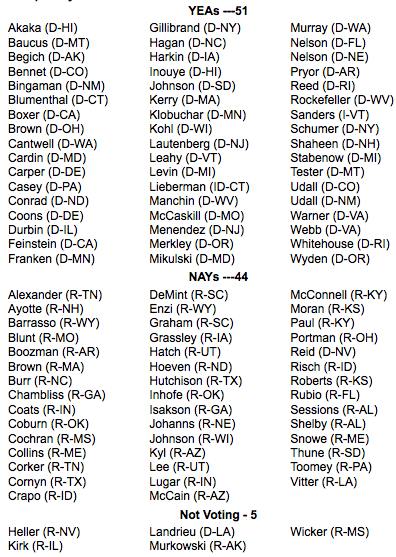
Senate Republicans blocked the Disclose Act Monday night, effectively killing a bid for campaign donor transparency in the post-Citizens United world. The Disclose Act, which was defeated 51-44, would have required independent groups to release the names of campaign donors who give more than $10,000 for political ads and other campaign tactics.
The Act was drafted in response to the 2010 Citizens United ruling, which allows limitless corporate donations to be given to outside political campaigners, known as super PACs, in secret.
"The DISCLOSE Act would help the American people understand who is behind the political messages we're bombarded with every day," said Michael Keegan, President of People For the American Way. "Apparently, GOP senators would rather keep the public in the dark about who is bankrolling their campaigns. What do they have to hide?"
"Today, the Senate had a chance to protect the American people's right to know who is trying to sway their vote. Unfortunately, Senate Republicans chose to protect the anonymity of the wealthy few at the expense of the American public."
The Republican filibuster of the bill was led by Senate Minority Leader Mitch McConnell (R-Ky.) one of several republican senators who once supported campaign finance disclosure but have recently favored increased secrecy in Washington, including Sen. John McCain (R-Ariz.), Sens. Olympia Snowe (R-Maine), Susan Collins (R-Maine), Richard Lugar (R-Ind.), and Scott Brown (R-Mass.).
"These same politicians were for the disclosure measure for years, until there was a chance it might actually pass. Now they are filibustering it," said Michael Waldman, at the Brennan Center at NYU.
As a result, corporations will continue to spend large sums of money to influence elections and subsequent policy while remaining anonymous.
* * *
| Question: On Cloture on the Motion to Proceed (Motion to Invoke Cloture on the Motion to Proceed to S.3369 ) | |||
| Vote Number: | 179 | Vote Date: | July 16, 2012, 06:08 PM |
| Required For Majority: | 3/5 | Vote Result: | Cloture on the Motion to Proceed Rejected |
| Measure Number: | S. 3369 | ||
| Measure Title: | A bill to amend the Federal Election Campaign Act of 1971 to provide for additional disclosure requirements for corporations, labor organizations, Super PACs and other entities, and for other purposes. | ||
| Vote Counts: | YEAs | 51 |
| NAYs | 44 | |
| Not Voting | 5 |
# # #
Senate Republicans blocked the Disclose Act Monday night, effectively killing a bid for campaign donor transparency in the post-Citizens United world. The Disclose Act, which was defeated 51-44, would have required independent groups to release the names of campaign donors who give more than $10,000 for political ads and other campaign tactics.
The Act was drafted in response to the 2010 Citizens United ruling, which allows limitless corporate donations to be given to outside political campaigners, known as super PACs, in secret.
"The DISCLOSE Act would help the American people understand who is behind the political messages we're bombarded with every day," said Michael Keegan, President of People For the American Way. "Apparently, GOP senators would rather keep the public in the dark about who is bankrolling their campaigns. What do they have to hide?"
"Today, the Senate had a chance to protect the American people's right to know who is trying to sway their vote. Unfortunately, Senate Republicans chose to protect the anonymity of the wealthy few at the expense of the American public."
The Republican filibuster of the bill was led by Senate Minority Leader Mitch McConnell (R-Ky.) one of several republican senators who once supported campaign finance disclosure but have recently favored increased secrecy in Washington, including Sen. John McCain (R-Ariz.), Sens. Olympia Snowe (R-Maine), Susan Collins (R-Maine), Richard Lugar (R-Ind.), and Scott Brown (R-Mass.).
"These same politicians were for the disclosure measure for years, until there was a chance it might actually pass. Now they are filibustering it," said Michael Waldman, at the Brennan Center at NYU.
As a result, corporations will continue to spend large sums of money to influence elections and subsequent policy while remaining anonymous.
* * *
| Question: On Cloture on the Motion to Proceed (Motion to Invoke Cloture on the Motion to Proceed to S.3369 ) | |||
| Vote Number: | 179 | Vote Date: | July 16, 2012, 06:08 PM |
| Required For Majority: | 3/5 | Vote Result: | Cloture on the Motion to Proceed Rejected |
| Measure Number: | S. 3369 | ||
| Measure Title: | A bill to amend the Federal Election Campaign Act of 1971 to provide for additional disclosure requirements for corporations, labor organizations, Super PACs and other entities, and for other purposes. | ||
| Vote Counts: | YEAs | 51 |
| NAYs | 44 | |
| Not Voting | 5 |
# # #
Senate Republicans blocked the Disclose Act Monday night, effectively killing a bid for campaign donor transparency in the post-Citizens United world. The Disclose Act, which was defeated 51-44, would have required independent groups to release the names of campaign donors who give more than $10,000 for political ads and other campaign tactics.
The Act was drafted in response to the 2010 Citizens United ruling, which allows limitless corporate donations to be given to outside political campaigners, known as super PACs, in secret.
"The DISCLOSE Act would help the American people understand who is behind the political messages we're bombarded with every day," said Michael Keegan, President of People For the American Way. "Apparently, GOP senators would rather keep the public in the dark about who is bankrolling their campaigns. What do they have to hide?"
"Today, the Senate had a chance to protect the American people's right to know who is trying to sway their vote. Unfortunately, Senate Republicans chose to protect the anonymity of the wealthy few at the expense of the American public."
The Republican filibuster of the bill was led by Senate Minority Leader Mitch McConnell (R-Ky.) one of several republican senators who once supported campaign finance disclosure but have recently favored increased secrecy in Washington, including Sen. John McCain (R-Ariz.), Sens. Olympia Snowe (R-Maine), Susan Collins (R-Maine), Richard Lugar (R-Ind.), and Scott Brown (R-Mass.).
"These same politicians were for the disclosure measure for years, until there was a chance it might actually pass. Now they are filibustering it," said Michael Waldman, at the Brennan Center at NYU.
As a result, corporations will continue to spend large sums of money to influence elections and subsequent policy while remaining anonymous.
* * *
| Question: On Cloture on the Motion to Proceed (Motion to Invoke Cloture on the Motion to Proceed to S.3369 ) | |||
| Vote Number: | 179 | Vote Date: | July 16, 2012, 06:08 PM |
| Required For Majority: | 3/5 | Vote Result: | Cloture on the Motion to Proceed Rejected |
| Measure Number: | S. 3369 | ||
| Measure Title: | A bill to amend the Federal Election Campaign Act of 1971 to provide for additional disclosure requirements for corporations, labor organizations, Super PACs and other entities, and for other purposes. | ||
| Vote Counts: | YEAs | 51 |
| NAYs | 44 | |
| Not Voting | 5 |
# # #