

SUBSCRIBE TO OUR FREE NEWSLETTER
Daily news & progressive opinion—funded by the people, not the corporations—delivered straight to your inbox.
5
#000000
#FFFFFF
To donate by check, phone, or other method, see our More Ways to Give page.


Daily news & progressive opinion—funded by the people, not the corporations—delivered straight to your inbox.
A young child presents to emergency in respiratory distress, his asthma worsened by smoke exposure. An elder has uncontrolled blood pressure because there wasn't time to get her medications when the evacuation orders came through. Scabies and other illnesses related to crowding spread quickly through the close quarters of the evacuees. Sudden departure from and worry about home bring significant mental stress.
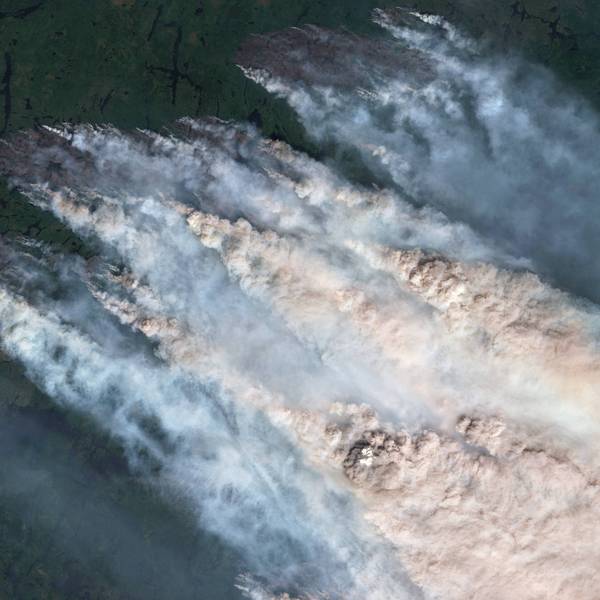
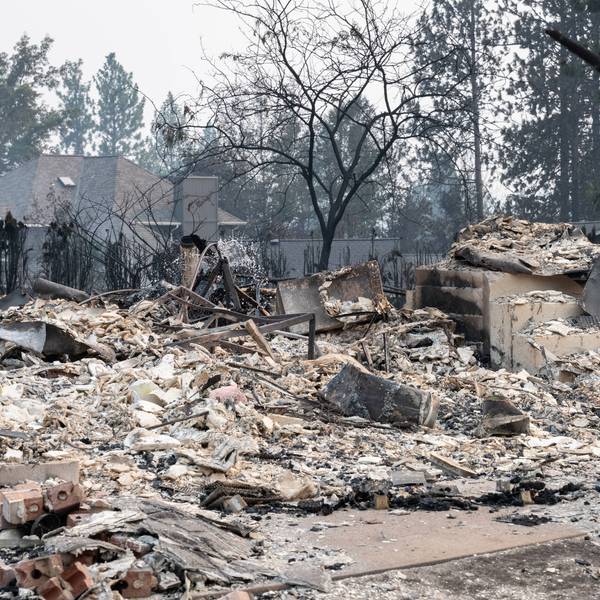
A young child presents to emergency in respiratory distress, his asthma worsened by smoke exposure. An elder has uncontrolled blood pressure because there wasn't time to get her medications when the evacuation orders came through. Scabies and other illnesses related to crowding spread quickly through the close quarters of the evacuees. Sudden departure from and worry about home bring significant mental stress. These sorts of health problems are commonplace for people in circumstances like the over 13,000 Northern Saskatchewan residents forced to leave their homes due to forest fires.
As physicians, we're taught to not only look at the symptoms of an illness, but to seek its root causes. For these patients, the connection is fairly obvious: through smoke and relocation, the fires have hurt their health. And the cause of those fires? Canadian experts are pointing to high temperatures and dry conditions, with climate change the likely culprit.
The people who have been relocated in Saskatchewan come from Northern communities with higher rates of poverty than the rest of the province. This is the predicted pattern of climate change, as more remote communities with less infrastructure are more prone to its effects. Poverty, lower rate of employment, the effects of colonization and other social determinants also lead to higher rates of illness. It also means that community members are more susceptible to the health effects of changes in temperature, air quality and diet that come with disruption of climate.
We now have internally displaced people in Saskatchewan, and although they do benefit from state protection, they are as or even more vulnerable than resettled refugees. The federal response to the forest fire crisis is certainly better than the treatment refugees to Canada have received in recent history, as exemplified by the cuts to the Interim Federal Health Program, reducing health services to this vulnerable population.
Natural disasters can bring out the best in our political leaders. They come forward with extraordinary support for people affected or displaced by floods or forest fires. We've seen this in the past couple of weeks in Saskatchewan, as the provincial and federal governments have been assisting evacuees and adding additional resources to fight the fires devastating the North of the province. This action is admirable, a manifestation of the care we provide for each other as a society, and of governments and civil society acting decisively in the public interest.
Tragic times can paradoxically be a boon for political leaders. It's a chance for dramatic speeches and fire station photo-ops from government and opposition leaders alike. We say this not to cast doubt on their motivations. A strong performance in times like these demonstrates the dedication the public expects from their elected leaders. However, we should be able to expect more.
The point is that talking about climate change is not bringing up politics in a time of tragedy. There are already politics at play. What we need from our leaders is more than a robust response to the downstream effects of climate change. For the health of Canadians, we need to see upstream thinking to prevent this from occurring over and over.
Unfortunately, we're hearing nothing of the sort. Quite the opposite in fact; at the same time as the federal government is stepping in to take action to respond to the effects of climate change, they are the subject of international criticism at the Climate Summit of the Americas in Toronto for their inaction on its prevention or mitigation. Premier Wall has been openly resistant to taking any meaningful action to reduce carbon emissions, despite Saskatchewan leading the country in per capita carbon output.
Climate change is a massive and complex issue, and can be hard for people to get there heads around, and hard to motivate political leaders to make sacrifices to act. Sometimes what it takes to understand something on this scale is to see its effects on the health of a single person or a community. Saskatchewan now has thousands of climate refugees suffering as a result of climate change. Will that be enough to change minds and spur meaningful action? If our leaders have, as they should, the health and wellbeing of the population as their highest priority, it must.
Dear Common Dreams reader, It’s been nearly 30 years since I co-founded Common Dreams with my late wife, Lina Newhouser. We had the radical notion that journalism should serve the public good, not corporate profits. It was clear to us from the outset what it would take to build such a project. No paid advertisements. No corporate sponsors. No millionaire publisher telling us what to think or do. Many people said we wouldn't last a year, but we proved those doubters wrong. Together with a tremendous team of journalists and dedicated staff, we built an independent media outlet free from the constraints of profits and corporate control. Our mission has always been simple: To inform. To inspire. To ignite change for the common good. Building Common Dreams was not easy. Our survival was never guaranteed. When you take on the most powerful forces—Wall Street greed, fossil fuel industry destruction, Big Tech lobbyists, and uber-rich oligarchs who have spent billions upon billions rigging the economy and democracy in their favor—the only bulwark you have is supporters who believe in your work. But here’s the urgent message from me today. It's never been this bad out there. And it's never been this hard to keep us going. At the very moment Common Dreams is most needed, the threats we face are intensifying. We need your support now more than ever. We don't accept corporate advertising and never will. We don't have a paywall because we don't think people should be blocked from critical news based on their ability to pay. Everything we do is funded by the donations of readers like you. When everyone does the little they can afford, we are strong. But if that support retreats or dries up, so do we. Will you donate now to make sure Common Dreams not only survives but thrives? —Craig Brown, Co-founder |
A young child presents to emergency in respiratory distress, his asthma worsened by smoke exposure. An elder has uncontrolled blood pressure because there wasn't time to get her medications when the evacuation orders came through. Scabies and other illnesses related to crowding spread quickly through the close quarters of the evacuees. Sudden departure from and worry about home bring significant mental stress. These sorts of health problems are commonplace for people in circumstances like the over 13,000 Northern Saskatchewan residents forced to leave their homes due to forest fires.
As physicians, we're taught to not only look at the symptoms of an illness, but to seek its root causes. For these patients, the connection is fairly obvious: through smoke and relocation, the fires have hurt their health. And the cause of those fires? Canadian experts are pointing to high temperatures and dry conditions, with climate change the likely culprit.
The people who have been relocated in Saskatchewan come from Northern communities with higher rates of poverty than the rest of the province. This is the predicted pattern of climate change, as more remote communities with less infrastructure are more prone to its effects. Poverty, lower rate of employment, the effects of colonization and other social determinants also lead to higher rates of illness. It also means that community members are more susceptible to the health effects of changes in temperature, air quality and diet that come with disruption of climate.
We now have internally displaced people in Saskatchewan, and although they do benefit from state protection, they are as or even more vulnerable than resettled refugees. The federal response to the forest fire crisis is certainly better than the treatment refugees to Canada have received in recent history, as exemplified by the cuts to the Interim Federal Health Program, reducing health services to this vulnerable population.
Natural disasters can bring out the best in our political leaders. They come forward with extraordinary support for people affected or displaced by floods or forest fires. We've seen this in the past couple of weeks in Saskatchewan, as the provincial and federal governments have been assisting evacuees and adding additional resources to fight the fires devastating the North of the province. This action is admirable, a manifestation of the care we provide for each other as a society, and of governments and civil society acting decisively in the public interest.
Tragic times can paradoxically be a boon for political leaders. It's a chance for dramatic speeches and fire station photo-ops from government and opposition leaders alike. We say this not to cast doubt on their motivations. A strong performance in times like these demonstrates the dedication the public expects from their elected leaders. However, we should be able to expect more.
The point is that talking about climate change is not bringing up politics in a time of tragedy. There are already politics at play. What we need from our leaders is more than a robust response to the downstream effects of climate change. For the health of Canadians, we need to see upstream thinking to prevent this from occurring over and over.
Unfortunately, we're hearing nothing of the sort. Quite the opposite in fact; at the same time as the federal government is stepping in to take action to respond to the effects of climate change, they are the subject of international criticism at the Climate Summit of the Americas in Toronto for their inaction on its prevention or mitigation. Premier Wall has been openly resistant to taking any meaningful action to reduce carbon emissions, despite Saskatchewan leading the country in per capita carbon output.
Climate change is a massive and complex issue, and can be hard for people to get there heads around, and hard to motivate political leaders to make sacrifices to act. Sometimes what it takes to understand something on this scale is to see its effects on the health of a single person or a community. Saskatchewan now has thousands of climate refugees suffering as a result of climate change. Will that be enough to change minds and spur meaningful action? If our leaders have, as they should, the health and wellbeing of the population as their highest priority, it must.
A young child presents to emergency in respiratory distress, his asthma worsened by smoke exposure. An elder has uncontrolled blood pressure because there wasn't time to get her medications when the evacuation orders came through. Scabies and other illnesses related to crowding spread quickly through the close quarters of the evacuees. Sudden departure from and worry about home bring significant mental stress. These sorts of health problems are commonplace for people in circumstances like the over 13,000 Northern Saskatchewan residents forced to leave their homes due to forest fires.
As physicians, we're taught to not only look at the symptoms of an illness, but to seek its root causes. For these patients, the connection is fairly obvious: through smoke and relocation, the fires have hurt their health. And the cause of those fires? Canadian experts are pointing to high temperatures and dry conditions, with climate change the likely culprit.
The people who have been relocated in Saskatchewan come from Northern communities with higher rates of poverty than the rest of the province. This is the predicted pattern of climate change, as more remote communities with less infrastructure are more prone to its effects. Poverty, lower rate of employment, the effects of colonization and other social determinants also lead to higher rates of illness. It also means that community members are more susceptible to the health effects of changes in temperature, air quality and diet that come with disruption of climate.
We now have internally displaced people in Saskatchewan, and although they do benefit from state protection, they are as or even more vulnerable than resettled refugees. The federal response to the forest fire crisis is certainly better than the treatment refugees to Canada have received in recent history, as exemplified by the cuts to the Interim Federal Health Program, reducing health services to this vulnerable population.
Natural disasters can bring out the best in our political leaders. They come forward with extraordinary support for people affected or displaced by floods or forest fires. We've seen this in the past couple of weeks in Saskatchewan, as the provincial and federal governments have been assisting evacuees and adding additional resources to fight the fires devastating the North of the province. This action is admirable, a manifestation of the care we provide for each other as a society, and of governments and civil society acting decisively in the public interest.
Tragic times can paradoxically be a boon for political leaders. It's a chance for dramatic speeches and fire station photo-ops from government and opposition leaders alike. We say this not to cast doubt on their motivations. A strong performance in times like these demonstrates the dedication the public expects from their elected leaders. However, we should be able to expect more.
The point is that talking about climate change is not bringing up politics in a time of tragedy. There are already politics at play. What we need from our leaders is more than a robust response to the downstream effects of climate change. For the health of Canadians, we need to see upstream thinking to prevent this from occurring over and over.
Unfortunately, we're hearing nothing of the sort. Quite the opposite in fact; at the same time as the federal government is stepping in to take action to respond to the effects of climate change, they are the subject of international criticism at the Climate Summit of the Americas in Toronto for their inaction on its prevention or mitigation. Premier Wall has been openly resistant to taking any meaningful action to reduce carbon emissions, despite Saskatchewan leading the country in per capita carbon output.
Climate change is a massive and complex issue, and can be hard for people to get there heads around, and hard to motivate political leaders to make sacrifices to act. Sometimes what it takes to understand something on this scale is to see its effects on the health of a single person or a community. Saskatchewan now has thousands of climate refugees suffering as a result of climate change. Will that be enough to change minds and spur meaningful action? If our leaders have, as they should, the health and wellbeing of the population as their highest priority, it must.