
How San Diego Is a Petri Dish for the ALEC Agenda
This week, the American Legislative Exchange Council (ALEC) descends on San Diego, California for its annual meeting of lobbyists and legislators.
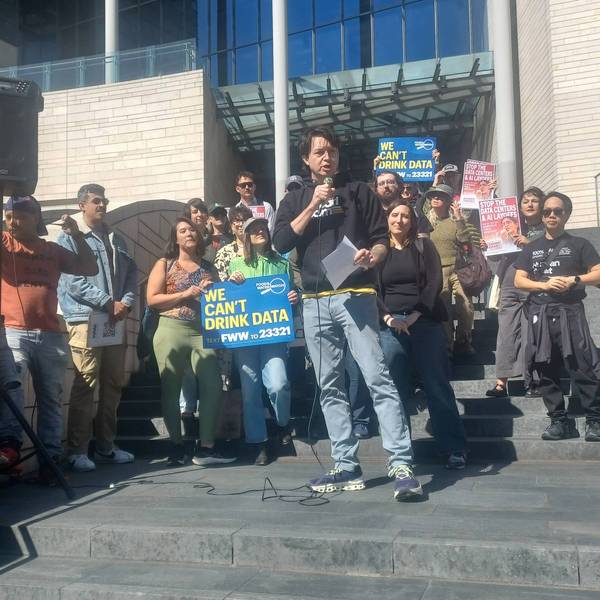
In many ways, San Diego is an appropriate setting for ALEC's conference. Beyond the walls of the Manchester Grand Hyatt, where ALEC members convene under heavy security and behind closed doors, the city known as "America's Finest" has been a major battleground in the corporate-backed resistance to local control over paid sick days and the minimum wage.
It was at ACCE's last meeting, held in Washington D.C. in December, where an ALEC task force director claimed that "the biggest threat comes from the local level" when it comes to grassroots efforts to raise the wage and enact paid sick days, and warned that "we are seeing a number of localities that have increased their minimum wage."
San Diego is one of them. One year ago, the San Diego City Council voted 6-3 to raise the minimum wage for 172,000 workers to $11.50 by 2017, and to allow at least 279,000 workers to earn paid sick days.
Mayor Kevin Faulconer opposed the measure, but it passed the city council after hundreds of people packed hearings in support. Former basketball star Bill Walton testified in favor of the bill and urged the council to adopt the proposal, which he called "good economics and good public policy."
Mayor Faulconer, a Republican, vetoed the measure. The city council then overrode the veto.
But corporate members of ALEC were not deterred, and bankrolled a front group to try reversing the law.
San Diego a Line in the Sand
Around the country, local efforts to raise the wage and allow workers to earn paid sick days have been gaining momentum. And this has spooked some of the corporations that fund ALEC and ACCE.
In Republican-controlled states like Michigan or Oklahoma, ALEC and its funders have managed to pass state "preemption" laws that block local control over economic issues. Yet a statewide law is less likely in blue states like California. And national corporate interests decided that San Diego was where they would draw a line in the sand against local wage laws.
Brian Crawford, a national VP of the American Hotel & Lodging Association, described the San Diego strategy at the joint meeting of ACCE and ALEC last December.
Crawford explained that, after the San Diego law was enacted, "we partnered with the Restaurant Association and local hoteliers in San Diego, and put together a coalition called the 'San Diego Small Business Coalition' - a really forward-facing, aggressive coalition that went to the media and started talking about the issue."
The AHLA and California Restaurant Association (through their "San Diego Small Business Coalition" front group) initiated a referendum to postpone the paid sick day and minimum wage measures and put the question on the 2016 ballot. The group used alarmist claims and outright lies to gather signatures, and more than one paid local petitioner for the group was caught on tape claiming that the petition was actually in support of a minimum wage hike.
"We successfully gathered 53,000 signatures, and the City Council was forced to rescind the ordinance," Crawford boasted to the ACCE/ALEC crowd. Corporate interests have also used the referendum process in San Diego to block the council's efforts to guarantee affordable housing.
The San Diego Small Business Coalition was headed by Jason Roe, Mayor Faulconer's political consultant. He made clear that business interests viewed San Diego as a bulwark against grassroots wage campaigns: "They have seen an opportunity in San Diego to stop this that they haven't had in other cities," he told BusinessWeek..
Mayor Faulconer will address the ACCE meeting, perhaps because he has shown himself to be a willing ally to the corporate interests that fund ALEC.
ALEC Funders Bankrolled San Diego Anti-Worker Effort
Contributions to the "San Diego Small Business Coalition" from actual San Diego small businesses were "few and far between," as the San Diego Reader put it. In fact, most of the money came from ALEC funders and their affiliates.
The national AHLA gave $100,000 to the group, and local hotel trade groups added another $70,000. The state and local chapters of ALEC member the National Restaurant Association added a combined $135,000. ALEC member the International Franchise Association added another $25,000. The local chapter of the U.S. Chamber of Commerce, another ALEC member, added $152,499.
Nationally, the AHLA--a trade group for the $163 billion hotel industry--has been spinning a $15 minimum wage as "extreme."
The AHLA also sued Los Angeles when it raised the minimum wage to $15.37 per hour for hotel workers. And it is a major mover behind the "Coalition to Save Local Businesses," which is encouraging Congress to challenge the National Labor Relations Board's determination that McDonald's is a joint employer of franchise employees.
At last December's ALEC meeting, Crawford compared the industry's battle against local wage laws to a game of Whack-a-Mole: "We're trying to beat them down when they pop up."
An Urgent Message From Our Co-Founder
Dear Common Dreams reader, It’s been nearly 30 years since I co-founded Common Dreams with my late wife, Lina Newhouser. We had the radical notion that journalism should serve the public good, not corporate profits. It was clear to us from the outset what it would take to build such a project. No paid advertisements. No corporate sponsors. No millionaire publisher telling us what to think or do. Many people said we wouldn't last a year, but we proved those doubters wrong. Together with a tremendous team of journalists and dedicated staff, we built an independent media outlet free from the constraints of profits and corporate control. Our mission has always been simple: To inform. To inspire. To ignite change for the common good. Building Common Dreams was not easy. Our survival was never guaranteed. When you take on the most powerful forces—Wall Street greed, fossil fuel industry destruction, Big Tech lobbyists, and uber-rich oligarchs who have spent billions upon billions rigging the economy and democracy in their favor—the only bulwark you have is supporters who believe in your work. But here’s the urgent message from me today. It's never been this bad out there. And it's never been this hard to keep us going. At the very moment Common Dreams is most needed, the threats we face are intensifying. We need your support now more than ever. We don't accept corporate advertising and never will. We don't have a paywall because we don't think people should be blocked from critical news based on their ability to pay. Everything we do is funded by the donations of readers like you. When everyone does the little they can afford, we are strong. But if that support retreats or dries up, so do we. Will you donate now to make sure Common Dreams not only survives but thrives? —Craig Brown, Co-founder |
This week, the American Legislative Exchange Council (ALEC) descends on San Diego, California for its annual meeting of lobbyists and legislators.
In many ways, San Diego is an appropriate setting for ALEC's conference. Beyond the walls of the Manchester Grand Hyatt, where ALEC members convene under heavy security and behind closed doors, the city known as "America's Finest" has been a major battleground in the corporate-backed resistance to local control over paid sick days and the minimum wage.
It was at ACCE's last meeting, held in Washington D.C. in December, where an ALEC task force director claimed that "the biggest threat comes from the local level" when it comes to grassroots efforts to raise the wage and enact paid sick days, and warned that "we are seeing a number of localities that have increased their minimum wage."
San Diego is one of them. One year ago, the San Diego City Council voted 6-3 to raise the minimum wage for 172,000 workers to $11.50 by 2017, and to allow at least 279,000 workers to earn paid sick days.
Mayor Kevin Faulconer opposed the measure, but it passed the city council after hundreds of people packed hearings in support. Former basketball star Bill Walton testified in favor of the bill and urged the council to adopt the proposal, which he called "good economics and good public policy."
Mayor Faulconer, a Republican, vetoed the measure. The city council then overrode the veto.
But corporate members of ALEC were not deterred, and bankrolled a front group to try reversing the law.
San Diego a Line in the Sand
Around the country, local efforts to raise the wage and allow workers to earn paid sick days have been gaining momentum. And this has spooked some of the corporations that fund ALEC and ACCE.
In Republican-controlled states like Michigan or Oklahoma, ALEC and its funders have managed to pass state "preemption" laws that block local control over economic issues. Yet a statewide law is less likely in blue states like California. And national corporate interests decided that San Diego was where they would draw a line in the sand against local wage laws.
Brian Crawford, a national VP of the American Hotel & Lodging Association, described the San Diego strategy at the joint meeting of ACCE and ALEC last December.
Crawford explained that, after the San Diego law was enacted, "we partnered with the Restaurant Association and local hoteliers in San Diego, and put together a coalition called the 'San Diego Small Business Coalition' - a really forward-facing, aggressive coalition that went to the media and started talking about the issue."
The AHLA and California Restaurant Association (through their "San Diego Small Business Coalition" front group) initiated a referendum to postpone the paid sick day and minimum wage measures and put the question on the 2016 ballot. The group used alarmist claims and outright lies to gather signatures, and more than one paid local petitioner for the group was caught on tape claiming that the petition was actually in support of a minimum wage hike.
"We successfully gathered 53,000 signatures, and the City Council was forced to rescind the ordinance," Crawford boasted to the ACCE/ALEC crowd. Corporate interests have also used the referendum process in San Diego to block the council's efforts to guarantee affordable housing.
The San Diego Small Business Coalition was headed by Jason Roe, Mayor Faulconer's political consultant. He made clear that business interests viewed San Diego as a bulwark against grassroots wage campaigns: "They have seen an opportunity in San Diego to stop this that they haven't had in other cities," he told BusinessWeek..
Mayor Faulconer will address the ACCE meeting, perhaps because he has shown himself to be a willing ally to the corporate interests that fund ALEC.
ALEC Funders Bankrolled San Diego Anti-Worker Effort
Contributions to the "San Diego Small Business Coalition" from actual San Diego small businesses were "few and far between," as the San Diego Reader put it. In fact, most of the money came from ALEC funders and their affiliates.
The national AHLA gave $100,000 to the group, and local hotel trade groups added another $70,000. The state and local chapters of ALEC member the National Restaurant Association added a combined $135,000. ALEC member the International Franchise Association added another $25,000. The local chapter of the U.S. Chamber of Commerce, another ALEC member, added $152,499.
Nationally, the AHLA--a trade group for the $163 billion hotel industry--has been spinning a $15 minimum wage as "extreme."
The AHLA also sued Los Angeles when it raised the minimum wage to $15.37 per hour for hotel workers. And it is a major mover behind the "Coalition to Save Local Businesses," which is encouraging Congress to challenge the National Labor Relations Board's determination that McDonald's is a joint employer of franchise employees.
At last December's ALEC meeting, Crawford compared the industry's battle against local wage laws to a game of Whack-a-Mole: "We're trying to beat them down when they pop up."
This week, the American Legislative Exchange Council (ALEC) descends on San Diego, California for its annual meeting of lobbyists and legislators.
In many ways, San Diego is an appropriate setting for ALEC's conference. Beyond the walls of the Manchester Grand Hyatt, where ALEC members convene under heavy security and behind closed doors, the city known as "America's Finest" has been a major battleground in the corporate-backed resistance to local control over paid sick days and the minimum wage.
It was at ACCE's last meeting, held in Washington D.C. in December, where an ALEC task force director claimed that "the biggest threat comes from the local level" when it comes to grassroots efforts to raise the wage and enact paid sick days, and warned that "we are seeing a number of localities that have increased their minimum wage."
San Diego is one of them. One year ago, the San Diego City Council voted 6-3 to raise the minimum wage for 172,000 workers to $11.50 by 2017, and to allow at least 279,000 workers to earn paid sick days.
Mayor Kevin Faulconer opposed the measure, but it passed the city council after hundreds of people packed hearings in support. Former basketball star Bill Walton testified in favor of the bill and urged the council to adopt the proposal, which he called "good economics and good public policy."
Mayor Faulconer, a Republican, vetoed the measure. The city council then overrode the veto.
But corporate members of ALEC were not deterred, and bankrolled a front group to try reversing the law.
San Diego a Line in the Sand
Around the country, local efforts to raise the wage and allow workers to earn paid sick days have been gaining momentum. And this has spooked some of the corporations that fund ALEC and ACCE.
In Republican-controlled states like Michigan or Oklahoma, ALEC and its funders have managed to pass state "preemption" laws that block local control over economic issues. Yet a statewide law is less likely in blue states like California. And national corporate interests decided that San Diego was where they would draw a line in the sand against local wage laws.
Brian Crawford, a national VP of the American Hotel & Lodging Association, described the San Diego strategy at the joint meeting of ACCE and ALEC last December.
Crawford explained that, after the San Diego law was enacted, "we partnered with the Restaurant Association and local hoteliers in San Diego, and put together a coalition called the 'San Diego Small Business Coalition' - a really forward-facing, aggressive coalition that went to the media and started talking about the issue."
The AHLA and California Restaurant Association (through their "San Diego Small Business Coalition" front group) initiated a referendum to postpone the paid sick day and minimum wage measures and put the question on the 2016 ballot. The group used alarmist claims and outright lies to gather signatures, and more than one paid local petitioner for the group was caught on tape claiming that the petition was actually in support of a minimum wage hike.
"We successfully gathered 53,000 signatures, and the City Council was forced to rescind the ordinance," Crawford boasted to the ACCE/ALEC crowd. Corporate interests have also used the referendum process in San Diego to block the council's efforts to guarantee affordable housing.
The San Diego Small Business Coalition was headed by Jason Roe, Mayor Faulconer's political consultant. He made clear that business interests viewed San Diego as a bulwark against grassroots wage campaigns: "They have seen an opportunity in San Diego to stop this that they haven't had in other cities," he told BusinessWeek..
Mayor Faulconer will address the ACCE meeting, perhaps because he has shown himself to be a willing ally to the corporate interests that fund ALEC.
ALEC Funders Bankrolled San Diego Anti-Worker Effort
Contributions to the "San Diego Small Business Coalition" from actual San Diego small businesses were "few and far between," as the San Diego Reader put it. In fact, most of the money came from ALEC funders and their affiliates.
The national AHLA gave $100,000 to the group, and local hotel trade groups added another $70,000. The state and local chapters of ALEC member the National Restaurant Association added a combined $135,000. ALEC member the International Franchise Association added another $25,000. The local chapter of the U.S. Chamber of Commerce, another ALEC member, added $152,499.
Nationally, the AHLA--a trade group for the $163 billion hotel industry--has been spinning a $15 minimum wage as "extreme."
The AHLA also sued Los Angeles when it raised the minimum wage to $15.37 per hour for hotel workers. And it is a major mover behind the "Coalition to Save Local Businesses," which is encouraging Congress to challenge the National Labor Relations Board's determination that McDonald's is a joint employer of franchise employees.
At last December's ALEC meeting, Crawford compared the industry's battle against local wage laws to a game of Whack-a-Mole: "We're trying to beat them down when they pop up."