SUBSCRIBE TO OUR FREE NEWSLETTER
Daily news & progressive opinion—funded by the people, not the corporations—delivered straight to your inbox.
5
#000000
#FFFFFF
To donate by check, phone, or other method, see our More Ways to Give page.
Daily news & progressive opinion—funded by the people, not the corporations—delivered straight to your inbox.
The tiny and very rich Persian Gulf emirate of Qatar has become a hostile target for two nations with significant influence in the U.S.: Israel and the United Arab Emirates. Israel is furious over Qatar's support for Palestinians generally and (allegedly) Hamas specifically, while the UAE is upset that Qatar supports the Muslim Brotherhood in Egypt (UAE supports the leaders of the military coup) and that Qatar funds Islamist rebels in Libya (UAE supports forces aligned with Ghadaffi).
This animosity has resulted in a new campaign in the west to demonize the Qataris as the key supporter of terrorism. The Israelis have chosen the direct approach of publicly accusing their new enemy in Doha of being terrorist supporters, while the UAE has opted for a more covert strategy: paying millions of dollars to a U.S. lobbying firm - composed of former high-ranking Treasury officials from both parties - to plant anti-Qatar stories with American journalists. That more subtle tactic has been remarkably successful, and shines important light on how easily political narratives in U.S. media discourse can be literally purchased.
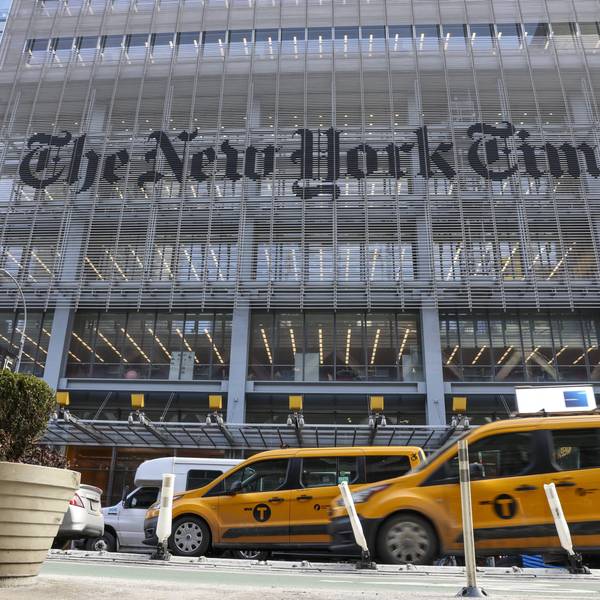
This murky anti-Qatar campaign was first referenced by a New York Times article two weeks ago by David Kirkpatrick, which reported that "an unlikely alignment of interests, including Saudi Arabia, the United Arab Emirates, Egypt and Israel" is seeking to depict Doha as "a godfather to terrorists everywhere" (Qatar vehemently denies the accusation). One critical component of that campaign was mentioned in passing:
The United Arab Emirates have retained an American consulting firm, Camstoll Group, staffed by several former United States Treasury Department officials. Its public disclosure forms, filed as a registered foreign agent, showed a pattern of conversations with journalists who subsequently wrote articles critical of Qatar's role in terrorist fund-raising.
How that process worked is fascinating, and its efficacy demonstrates how American public perceptions and media reports are manipulated with little difficulty.
Read the full article at The Intercept.
Dear Common Dreams reader, It’s been nearly 30 years since I co-founded Common Dreams with my late wife, Lina Newhouser. We had the radical notion that journalism should serve the public good, not corporate profits. It was clear to us from the outset what it would take to build such a project. No paid advertisements. No corporate sponsors. No millionaire publisher telling us what to think or do. Many people said we wouldn't last a year, but we proved those doubters wrong. Together with a tremendous team of journalists and dedicated staff, we built an independent media outlet free from the constraints of profits and corporate control. Our mission has always been simple: To inform. To inspire. To ignite change for the common good. Building Common Dreams was not easy. Our survival was never guaranteed. When you take on the most powerful forces—Wall Street greed, fossil fuel industry destruction, Big Tech lobbyists, and uber-rich oligarchs who have spent billions upon billions rigging the economy and democracy in their favor—the only bulwark you have is supporters who believe in your work. But here’s the urgent message from me today. It's never been this bad out there. And it's never been this hard to keep us going. At the very moment Common Dreams is most needed, the threats we face are intensifying. We need your support now more than ever. We don't accept corporate advertising and never will. We don't have a paywall because we don't think people should be blocked from critical news based on their ability to pay. Everything we do is funded by the donations of readers like you. When everyone does the little they can afford, we are strong. But if that support retreats or dries up, so do we. Will you donate now to make sure Common Dreams not only survives but thrives? —Craig Brown, Co-founder |
The tiny and very rich Persian Gulf emirate of Qatar has become a hostile target for two nations with significant influence in the U.S.: Israel and the United Arab Emirates. Israel is furious over Qatar's support for Palestinians generally and (allegedly) Hamas specifically, while the UAE is upset that Qatar supports the Muslim Brotherhood in Egypt (UAE supports the leaders of the military coup) and that Qatar funds Islamist rebels in Libya (UAE supports forces aligned with Ghadaffi).
This animosity has resulted in a new campaign in the west to demonize the Qataris as the key supporter of terrorism. The Israelis have chosen the direct approach of publicly accusing their new enemy in Doha of being terrorist supporters, while the UAE has opted for a more covert strategy: paying millions of dollars to a U.S. lobbying firm - composed of former high-ranking Treasury officials from both parties - to plant anti-Qatar stories with American journalists. That more subtle tactic has been remarkably successful, and shines important light on how easily political narratives in U.S. media discourse can be literally purchased.
This murky anti-Qatar campaign was first referenced by a New York Times article two weeks ago by David Kirkpatrick, which reported that "an unlikely alignment of interests, including Saudi Arabia, the United Arab Emirates, Egypt and Israel" is seeking to depict Doha as "a godfather to terrorists everywhere" (Qatar vehemently denies the accusation). One critical component of that campaign was mentioned in passing:
The United Arab Emirates have retained an American consulting firm, Camstoll Group, staffed by several former United States Treasury Department officials. Its public disclosure forms, filed as a registered foreign agent, showed a pattern of conversations with journalists who subsequently wrote articles critical of Qatar's role in terrorist fund-raising.
How that process worked is fascinating, and its efficacy demonstrates how American public perceptions and media reports are manipulated with little difficulty.
Read the full article at The Intercept.
The tiny and very rich Persian Gulf emirate of Qatar has become a hostile target for two nations with significant influence in the U.S.: Israel and the United Arab Emirates. Israel is furious over Qatar's support for Palestinians generally and (allegedly) Hamas specifically, while the UAE is upset that Qatar supports the Muslim Brotherhood in Egypt (UAE supports the leaders of the military coup) and that Qatar funds Islamist rebels in Libya (UAE supports forces aligned with Ghadaffi).
This animosity has resulted in a new campaign in the west to demonize the Qataris as the key supporter of terrorism. The Israelis have chosen the direct approach of publicly accusing their new enemy in Doha of being terrorist supporters, while the UAE has opted for a more covert strategy: paying millions of dollars to a U.S. lobbying firm - composed of former high-ranking Treasury officials from both parties - to plant anti-Qatar stories with American journalists. That more subtle tactic has been remarkably successful, and shines important light on how easily political narratives in U.S. media discourse can be literally purchased.
This murky anti-Qatar campaign was first referenced by a New York Times article two weeks ago by David Kirkpatrick, which reported that "an unlikely alignment of interests, including Saudi Arabia, the United Arab Emirates, Egypt and Israel" is seeking to depict Doha as "a godfather to terrorists everywhere" (Qatar vehemently denies the accusation). One critical component of that campaign was mentioned in passing:
The United Arab Emirates have retained an American consulting firm, Camstoll Group, staffed by several former United States Treasury Department officials. Its public disclosure forms, filed as a registered foreign agent, showed a pattern of conversations with journalists who subsequently wrote articles critical of Qatar's role in terrorist fund-raising.
How that process worked is fascinating, and its efficacy demonstrates how American public perceptions and media reports are manipulated with little difficulty.
Read the full article at The Intercept.