SUBSCRIBE TO OUR FREE NEWSLETTER
Daily news & progressive opinion—funded by the people, not the corporations—delivered straight to your inbox.
5
#000000
#FFFFFF
To donate by check, phone, or other method, see our More Ways to Give page.
Western air and naval strikes against Libya are threatening the Arab Spring.
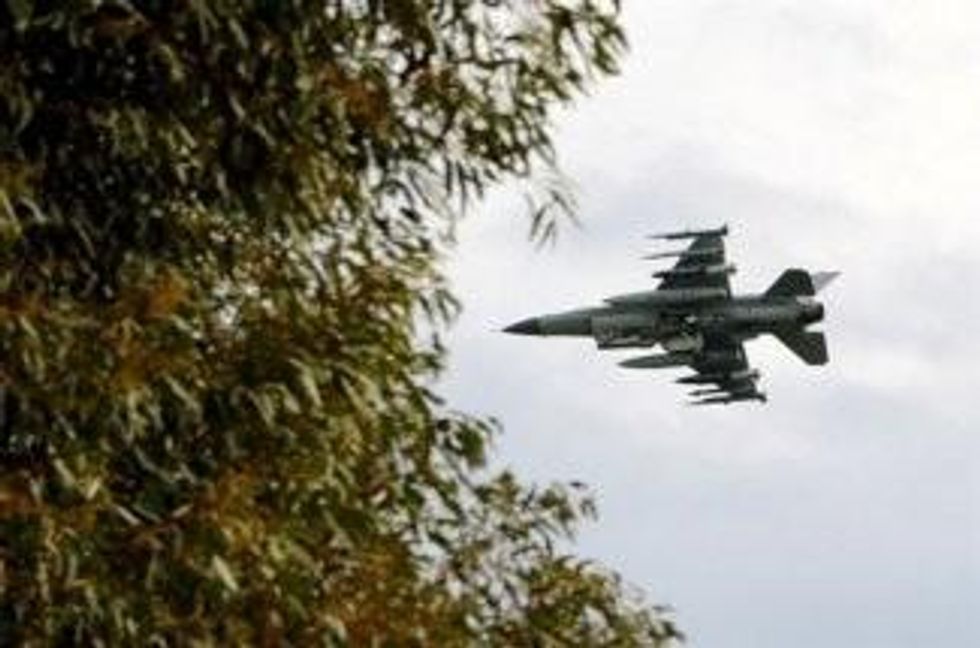
Instead, it turns out that just the opposite may be the result: It was after the UN passed its no-fly zone and use-of-force resolution, and just as US, British, French and other warplanes and warships launched their attacks against Libya, that other Arab regimes escalated their crack-down on their own democratic movements.
In Yemen, 52 unarmed protesters were killed and more than 200 wounded on Friday by forces of the US-backed and US-armed government of Ali Abdullah Saleh. It was the bloodiest day of the month-long Yemeni uprising. President Obama "strongly condemned" the attacks and called on Saleh to "allow demonstrations to take place peacefully".
But while a number of Saleh's government officials resigned in protest, there was no talk from Saleh's US backers of real accountability, of a travel ban or asset freeze, not even of slowing the financial and military aid flowing into Yemen in the name of fighting terrorism.
Similarly in US-allied Bahrain, home of the US Navy's Fifth Fleet, at least 13 civilians have been killed by government forces. Since the March 15 arrival of 1,500 foreign troops from Saudi Arabia and the UAE, brought in to protect the absolute power of the king of Bahrain, 63 people have been reported missing.
Hillary Clinton, the US secretary of state, said: "We have made clear that security alone cannot resolve the challenges facing Bahrain. Violence is not the answer, a political process is."
But she never demanded that foreign troops leave Bahrain, let alone threatened a no-fly zone or targeted air strikes to stop their attacks.
Legality vs. legitimacy
Despite its official UN-granted legality, the credibility and legitimacy of Western military action is dwindling rapidly, even in key diplomatic circles. For the Western alliance, and most especially for the Obama administration, support from the Arab League was a critical prerequisite to approving the military intervention in Libya.
The League's actual resolution, passed just a couple of days before the UN Security Council vote, approved a far narrower military option - essentially only a no-fly zone, with a number of stated cautions against any direct foreign intervention.
Of course, a no-fly zone is foreign intervention, whether one wants to acknowledge it or not, but it is not surprising that the Arab League's approval was hesitant - it is, after all, composed of the exact same leaders who are facing inchoate or massive challenges to their ruling power at home. Supporting the attack on a fellow dictator - oops, sorry, a fellow Arab ruler - was never going to be easy.
And as soon as the air strikes began in Libya, Arab League chief Amr Moussa immediately criticised the Western military assault. Some commentators noted the likelihood that Arab governments were pressuring Moussa out of fear of Libyan terror attacks in their country; I believe it is more likely that Arab leaders fear popular opposition, already challenging their rule, will escalate as Libyan deaths rise.
Read the full article at Al-Jazeera.
Western air and naval strikes against Libya are threatening the Arab Spring.
Instead, it turns out that just the opposite may be the result: It was after the UN passed its no-fly zone and use-of-force resolution, and just as US, British, French and other warplanes and warships launched their attacks against Libya, that other Arab regimes escalated their crack-down on their own democratic movements.
In Yemen, 52 unarmed protesters were killed and more than 200 wounded on Friday by forces of the US-backed and US-armed government of Ali Abdullah Saleh. It was the bloodiest day of the month-long Yemeni uprising. President Obama "strongly condemned" the attacks and called on Saleh to "allow demonstrations to take place peacefully".
But while a number of Saleh's government officials resigned in protest, there was no talk from Saleh's US backers of real accountability, of a travel ban or asset freeze, not even of slowing the financial and military aid flowing into Yemen in the name of fighting terrorism.
Similarly in US-allied Bahrain, home of the US Navy's Fifth Fleet, at least 13 civilians have been killed by government forces. Since the March 15 arrival of 1,500 foreign troops from Saudi Arabia and the UAE, brought in to protect the absolute power of the king of Bahrain, 63 people have been reported missing.
Hillary Clinton, the US secretary of state, said: "We have made clear that security alone cannot resolve the challenges facing Bahrain. Violence is not the answer, a political process is."
But she never demanded that foreign troops leave Bahrain, let alone threatened a no-fly zone or targeted air strikes to stop their attacks.
Legality vs. legitimacy
Despite its official UN-granted legality, the credibility and legitimacy of Western military action is dwindling rapidly, even in key diplomatic circles. For the Western alliance, and most especially for the Obama administration, support from the Arab League was a critical prerequisite to approving the military intervention in Libya.
The League's actual resolution, passed just a couple of days before the UN Security Council vote, approved a far narrower military option - essentially only a no-fly zone, with a number of stated cautions against any direct foreign intervention.
Of course, a no-fly zone is foreign intervention, whether one wants to acknowledge it or not, but it is not surprising that the Arab League's approval was hesitant - it is, after all, composed of the exact same leaders who are facing inchoate or massive challenges to their ruling power at home. Supporting the attack on a fellow dictator - oops, sorry, a fellow Arab ruler - was never going to be easy.
And as soon as the air strikes began in Libya, Arab League chief Amr Moussa immediately criticised the Western military assault. Some commentators noted the likelihood that Arab governments were pressuring Moussa out of fear of Libyan terror attacks in their country; I believe it is more likely that Arab leaders fear popular opposition, already challenging their rule, will escalate as Libyan deaths rise.
Read the full article at Al-Jazeera.
Western air and naval strikes against Libya are threatening the Arab Spring.
Instead, it turns out that just the opposite may be the result: It was after the UN passed its no-fly zone and use-of-force resolution, and just as US, British, French and other warplanes and warships launched their attacks against Libya, that other Arab regimes escalated their crack-down on their own democratic movements.
In Yemen, 52 unarmed protesters were killed and more than 200 wounded on Friday by forces of the US-backed and US-armed government of Ali Abdullah Saleh. It was the bloodiest day of the month-long Yemeni uprising. President Obama "strongly condemned" the attacks and called on Saleh to "allow demonstrations to take place peacefully".
But while a number of Saleh's government officials resigned in protest, there was no talk from Saleh's US backers of real accountability, of a travel ban or asset freeze, not even of slowing the financial and military aid flowing into Yemen in the name of fighting terrorism.
Similarly in US-allied Bahrain, home of the US Navy's Fifth Fleet, at least 13 civilians have been killed by government forces. Since the March 15 arrival of 1,500 foreign troops from Saudi Arabia and the UAE, brought in to protect the absolute power of the king of Bahrain, 63 people have been reported missing.
Hillary Clinton, the US secretary of state, said: "We have made clear that security alone cannot resolve the challenges facing Bahrain. Violence is not the answer, a political process is."
But she never demanded that foreign troops leave Bahrain, let alone threatened a no-fly zone or targeted air strikes to stop their attacks.
Legality vs. legitimacy
Despite its official UN-granted legality, the credibility and legitimacy of Western military action is dwindling rapidly, even in key diplomatic circles. For the Western alliance, and most especially for the Obama administration, support from the Arab League was a critical prerequisite to approving the military intervention in Libya.
The League's actual resolution, passed just a couple of days before the UN Security Council vote, approved a far narrower military option - essentially only a no-fly zone, with a number of stated cautions against any direct foreign intervention.
Of course, a no-fly zone is foreign intervention, whether one wants to acknowledge it or not, but it is not surprising that the Arab League's approval was hesitant - it is, after all, composed of the exact same leaders who are facing inchoate or massive challenges to their ruling power at home. Supporting the attack on a fellow dictator - oops, sorry, a fellow Arab ruler - was never going to be easy.
And as soon as the air strikes began in Libya, Arab League chief Amr Moussa immediately criticised the Western military assault. Some commentators noted the likelihood that Arab governments were pressuring Moussa out of fear of Libyan terror attacks in their country; I believe it is more likely that Arab leaders fear popular opposition, already challenging their rule, will escalate as Libyan deaths rise.
Read the full article at Al-Jazeera.