

SUBSCRIBE TO OUR FREE NEWSLETTER
Daily news & progressive opinion—funded by the people, not the corporations—delivered straight to your inbox.
5
#000000
#FFFFFF
To donate by check, phone, or other method, see our More Ways to Give page.
Daily news & progressive opinion—funded by the people, not the corporations—delivered straight to your inbox.

"As families struggle to keep food on the table, Congress must prioritize work on efforts to lower costs and help Americans stay afloat," said the Washington Democrat.
As Americans face rising grocery prices under President Donald Trump and rally behind progressive policies and primary candidates, US Rep. Pramila Jayapal on Thursday introduced a bill that shows what kind of proposals could become reality with more Democrats like her in Congress.
Inspired by a program in her own district in Washington state, the chair emerita of the Congressional Progressive Caucus introduced the Fresh Bucks for Fresh Produce Act, which would create a pilot program at the US Department of Agriculture (USDA) that gives households earning 80% or less of their area's median income $60 per month to buy fruits and vegetables.
The USDA pilot would be modeled on Seattle's Fresh Bucks initiative, in which enrolled households "experience a 31% higher rate of food security and consume at least three daily servings of fruits and vegetables 37% more often than those assigned to a program waitlist," according to University of Washington (UW) research published last August.
"I would classify both of those numbers as pretty large," study co-author Jessica Jones-Smith a professor at UW and University of California, Irvine, said at the time. "We don't routinely see interventions that work that well. It's a pretty big impact on diet in terms of what we can do from a policy perspective and expect to make a difference in food insecurity."
In Seattle—generally ranked as an expensive but livable metropolis—a single person living within city limits on a monthly income of $7,070, or $84,850 a year, can apply for the program. For a family of four, it's $10,095 per month, or $121,150 annually. In January, the city the welcomed over 4,500 more local households off its waitlist and increased monthly benefits from $40 to $60.
Those enrolled in Seattle's program can buy "fresh fruits and vegetables at supermarkets, and fresh, frozen, canned, and dried fruits and vegetables (with no added fats, sugars, or salt) at farmers markets and independent grocers" that accept Fresh Bucks cards.
Adam Porter, who directs the Meals on Wheels program at the Seattle-based Sound Generations, said Thursday that "older adults across King County are facing impossible choices as grocery prices continue to rise. Seattle's Fresh Bucks program has had a substantial impact on our clients' health and quality of life: We have seen firsthand how a targeted produce benefit can increase health equity, improve food security, and keep food dollars circulating locally.
"A USDA pilot modeled on that success would be a meaningful step toward healthier households and stronger community food systems nationwide," Porter continued. In addition to his organization, groups endorsing Jayapal's bill include the Center for Biological Diversity, Coalition for Organic and Regenerative Agriculture, Farm Action Fund, Food & Water Watch, National Education Association, Southern Poverty Law Center, White Center Community Development Association (WCCDA), and over a dozen more.
"In White Center and historically underinvested communities across King County, we see every day how rising grocery costs continue to strain working families, seniors, immigrants, and households already navigating increasing housing and living expenses," said WCCDA executive director Aaron Garcia. "Access to healthy, culturally relevant food should not be determined by income—it should not be considered a luxury."
"At WCCDA, we believe thriving communities require systems that make healthy food accessible, affordable, and attainable—and that investments in food access are investments in community health, economic stability, and opportunity," Garcia said. "We strongly support Congresswoman Jayapal's leadership in advancing innovative solutions that respond to the realities families face today while strengthening local food systems and neighborhood businesses that give us our vibrancy."
"Expanding the proven Seattle Fresh Bucks model through a federal pilot offers an opportunity to increase food security, support local producers and retailers, and help communities across the country build healthier, more resilient futures," he added.
Jayapal has celebrated recent primary wins by leftists in New York, and on Thursday, with the November midterms just four months away, she called out her Republican colleagues—who are trying to hang on to their narrow majorities in both chambers of Congress after using them to pass cuts to federal food and healthcare programs while giving more tax breaks to the rich.
"As families struggle to keep food on the table, Congress must prioritize work on efforts to lower costs and help Americans stay afloat," said Jayapal, who is joined in sponsoring the bill by Democratic Reps. Alma Adams (NC), Nanette Barragán (Calif.), Chris Deluzio (Pa.), Shomari Figures (Ala.), Jahana Hayes (Conn.), Eleanor Holmes Norton (DC), Andrea Salinas (Ore.), Adam Smith (Wash.), and Shri Thanedar (Mich).
"While Republicans in Congress enacted legislation to raise food prices and are hell-bent on cutting food assistance, Seattle is once again leading the way with the Fresh Bucks program, which is successfully keeping people fed with nutritious food and reducing hunger," she said. "We must pass this legislation to expand the program nationwide and get families in every corner of the country healthy produce they can afford."
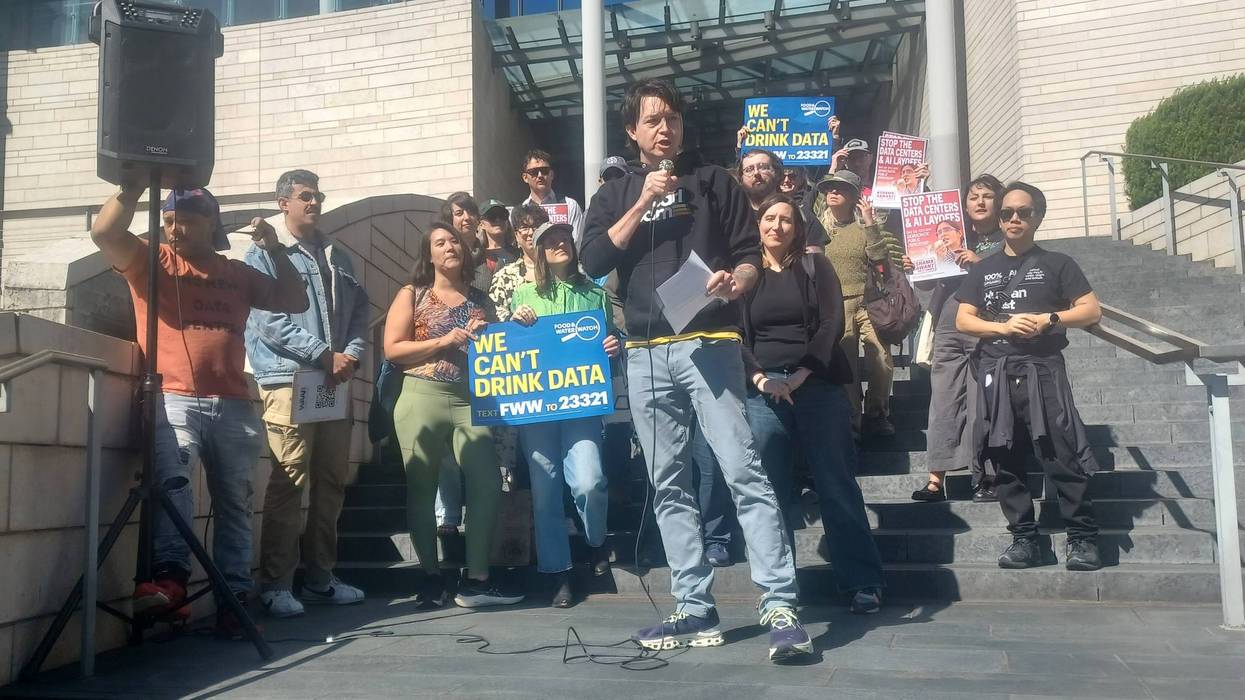
To celebrate, the network of local activists who fought for the moratorium launched a People’s AI Bill of Rights to advocate for fairness, privacy, transparency, and accountability in technological development.
Seattle—a city whose image and economy has been linked to Big Tech since Microsoft set up shop in nearby Redmond, Washington 40 years ago—is now making a name for itself as part of the anti-tech resistance as its City Council voted 9-0 on Tuesday to make it the biggest US city so far to pass a moratorium on new large-scale AI data centers.
The council unanimously approved two measures—a resolution to study the impacts of data centers and an ordinance passing the moratorium itself—to rousing applause. The votes followed approximately 50 comments from members of the public in support of the measure, as union members, tech workers, and community members voiced concerns ranging from the climate crisis and water use to affordability, AI-driven job loss, surveillance under an increasingly authoritarian federal government, and a general mistrust of Big Tech and its motives.
"We're not a company town. We don't owe our soul to the company store," one member of the public said.
Ahead of the vote, Council Member Alexis Mercedes Rinck noted that she had heard impassioned opposition to data centers at every committee meeting in which the moratorium was discussed.
"We have a moral imperative... to put the health of our people and our planet above the profit margins of tech companies."
"If we do not legislate or regulate this right, the people will bear the brunt. And I believe we have a moral imperative... to put the health of our people and our planet above the profit margins of tech companies," Rinck said.
To celebrate the win, the network of local activists who pushed for the moratorium launched a People’s AI Bill of Rights on the steps of City Hall after the vote. The campaigners, who organize under the umbrella of Washington AI Resistance (WA-AIR), hope to use the yearlong permitting pause to advocate for a meaningful regulatory framework that would ensure any rollout of artificial intelligence benefits human and ecological well-being rather than the profits of tech billionaires.
“Washington is home to some of the biggest tech companies in the world, and we've been at the forefront of the digital revolution in many ways,” Evan Sutton, an activist with WA-AIR who helped develop the bill of rights, told Common Dreams. “This time, we need to be at the forefront of a human revolution and have leaders rise to the moment to protect us in a meaningful way.”
The passage of the Seattle moratorium itself is both a reflection of and a booster for the growing national movement against data centers and AI.
Since news first broke April 10 that four companies had approached Seattle City Light with proposals to build five large data centers, which would have consumed one-third of the city’s current electricity demand, over 98,000 concerned residents sent letters to the City Council and Seattle Mayor Katie Wilson calling for a pause. (In the midst of the letter-writing campaign, two companies dropped their plans.) An organizational endorsement letter garnered over 50 signatures from a broad swath of interests such as influential unions like the Seattle Education Association and UNITE HERE Local 8, environmental organizations like Food & Water Watch and Third Act Washington, and large advocacy groups like Seattle Indivisible and the Washington Working Families Party.
Ben Jones, the digital and communications director at local climate group and WA-AIR founding member 350 Seattle, said he had been informed by the City Council that it had received more comments about data centers than all other issues for this council put together. The outpouring of anti-data center and AI sentiment reminded him of the climate strike movement of 2017-2018, in which "you've had a lot of people that have been hearing about an issue for a long time that are now realizing the existential stakes of it."
“People are concerned about the role of billionaires, they're concerned about their jobs, they're concerned about being, you know, automated without a safety net, they're concerned about the climate impacts,” Jones told Common Dreams. “There's just really nothing that ordinary people like about this stuff. And that the fact that this is like such an outcry, I think, is in part because people have had very few other ways to actually say, ‘No’ to this stuff.”
"People see data centers as the bridge to AI, and people are not happy with AI."
At the same time, local activists were able to effectively channel and direct that outcry because they had been keeping tabs on national and statewide fights, as Lauren Redfield of Seattle Democratic Socialists of America (DSA) explained.
During the fall and winter, Seattle DSA; 350; and Troublemakers, another Seattle-based activist group organized a series of People’s Forums on AI. The WA-AIR network grew out of those forums, and mobilized to support statewide legislation regulating AI and data centers during the 2026 session. While most of the bills they supported were first watered down by tech lobbyists and ultimately defeated, the network remained in place.
“That system, those partnerships, those listservs existed before we needed them to,” Redfield said. “It was really helpful for us to be prepared to act quickly once the rumor broke.”
It also gave organizers another chance to counteract the power of Big Tech.
“Because our legislators weren't able to protect us, now we have to fight community by community,” Redfield said.
Redfield hoped the Seattle moratorium would give the city a chance to enact regulations that would be a “leading example for the rest of the state.” Activists also hope that moratoria will spread across the state—nearby cities Burien and Renton are currently considering them—and be passed for all of King County (where Seattle is located and its utility serves other customers) as well.
And they haven’t given up on statewide legislation.
“We want to have such a strong pushback against these at the local level, that we're sending a very clear signal to our representatives for the next time that they're in session,” Redfield said.
Jones agreed. He told Common Dreams that a "reason why we're so excited to see the Seattle City Council so strongly embrace this is that we need these City Council members in Seattle to be a strong voice when it comes to the legislative session."
Jones and Redfield hope that legislation will set guidelines for both data centers and what they enable.
"I want to see our legislators also think about not just how to protect communities from the infrastructure of AI, but also how to protect communities from AI itself," Redfield said.
Jones added, "People see data centers as the bridge to AI, and people are not happy with AI."
The City Council meeting suggested the activists will have allies in the statewide fight. Council Member Debora Juarez noted that of 9 state bills her office had tracked in the last legislative session relating to AI and data centers, only 1 had passed.
"I'm hoping that this crowd understands, and I know you do, that when this next legislative session comes around, we need to take the bull by the horns and send and talk to your elected representatives," Juarez said.
Part of mobilizing for statewide legislation and beyond is the launch of the People’s AI Bill of Rights.
The framework—which was developed over months of research and discussion among members of WA-AIR—is being released both to take advantage of the excitement surrounding the moratorium and to inject new ideas into the space provided by the yearlong pause.
“The bill of rights has to capitalize on that momentum and tell voters and regular people, ‘You don't have to take it, the future that is expressed that you did not have input in,’” Suraj Mirpuri, a member of WA-AIR and Seattle DSA who helped write the document, told Common Dreams. “This is the time for that.”
Becca Deutsch, co-founder of Amazon Employees for Climate Justice, said during the press conference launching the bill of rights: "We need to make sure we don't allow our power to evaporate in the heat of this moment. We need to design policies right now that make sure workers and the public come out on the other side of any AI buildout with more power, not less."
Sutton told Common Dreams that the launch was "an important moment to say: 'This is a great start. Seattle is not enough, and data centers are not enough, and let's take this momentum and demand more.'”
“We can really guarantee a better future for ourselves and actually the whole nation.”
The bill of rights consists of two documents—a brief and a longer policy framework. It is built around four core values—fairness, privacy, transparency, and accountability—that each correspond to different potential policy recommendations.
"The Washington People's AI Bill of Rights is built on 4 simple ideas," Sutton explained during the launch. "No. 1, fairness: AI must benefit everyone, not just ultra billionaires. No. 2, transparency: We must know when and how AI is being used and have ways to say, 'No fucking thank you.' No. 3, privacy: We will not live in a panopticon where every movement we make is tracked, surveiled, and used to exploit us. And No. 4, accountability: There must be real consequences for tech billionaires who unleash dangerous products on the world."
Proposed regulations include a fee to offset automation impacts on taxation, a ban on facial recognition technology in consumer goods, a ban on nondisclosure agreements between data center developers and governments, and criminal and civil liability for CEOs whose products harm Washingtonians.
The framework also proposes a statewide moratorium on data centers until laws are passed that ensure they are powered by renewable energy, do not strain water resources or harm river ecosystems, and can produce accurate yearly sustainability reports.
“We have an opportunity in Washington to be the leaders in this space and really address a lot of things that have been unaddressed, using this to heal the wrongs,” Mirpuri said.
After Tuesday’s launch, organizers plan to hold a series of listening sessions in communities across the state to solicit feedback and incorporate it into the document. The goal is to end the summer with proposals that can be transformed into bills to be introduced into the state legislature.
“We'll work with legislators and candidates to get people committed to carrying and introducing those bills and hopefully, hopefully be able to go into the 2027 legislative session with some really bold proposals and a statewide constituency ready to mobilize behind it,” Sutton said.
However, the authors of the bill of rights are also thinking beyond Washington state, hoping to promote a “package of bills” that can be introduced in statehouses across the country and ultimately transform the industry.
Mirpuri offered the example of California’s air quality regulations, which have set the standard for vehicles across the country.
“We can really guarantee a better future for ourselves and actually the whole nation,” he said.
At the same time, the experience of the 2026 legislative session taught activists that they will have a fight on their hands.
“Washington state being a tech leader, we think it will be really powerful if we're able to, you know, overcome what we expect to be an absolute flood of lobbying from some of the biggest tech firms in the world that are based here,” Sutton said.
He emphasized that opposition to AI and data centers are bipartisan issues—even a recent Fox News poll found that 8 in 10 voters believe it is “urgent” that the government enact regulations—and that urban and rural Washingtonians from across the political spectrum would need to unite to impose meaningful guardrails on tech oligarchs.
“Every corner of the state is going to be needed to fight these guys, and we can either link arms together as Americans and take a stand against these extractive billionaires, or we can fight with each other and let them steamroll all of us,” he said. “I certainly hope folks will come together and find a common cause for our shared future.”
Editor's note: Olivia Rosane is a member of WA-AIR, Seattle DSA, and 350 Seattle.
"I am not buying Starbucks and you should not either."
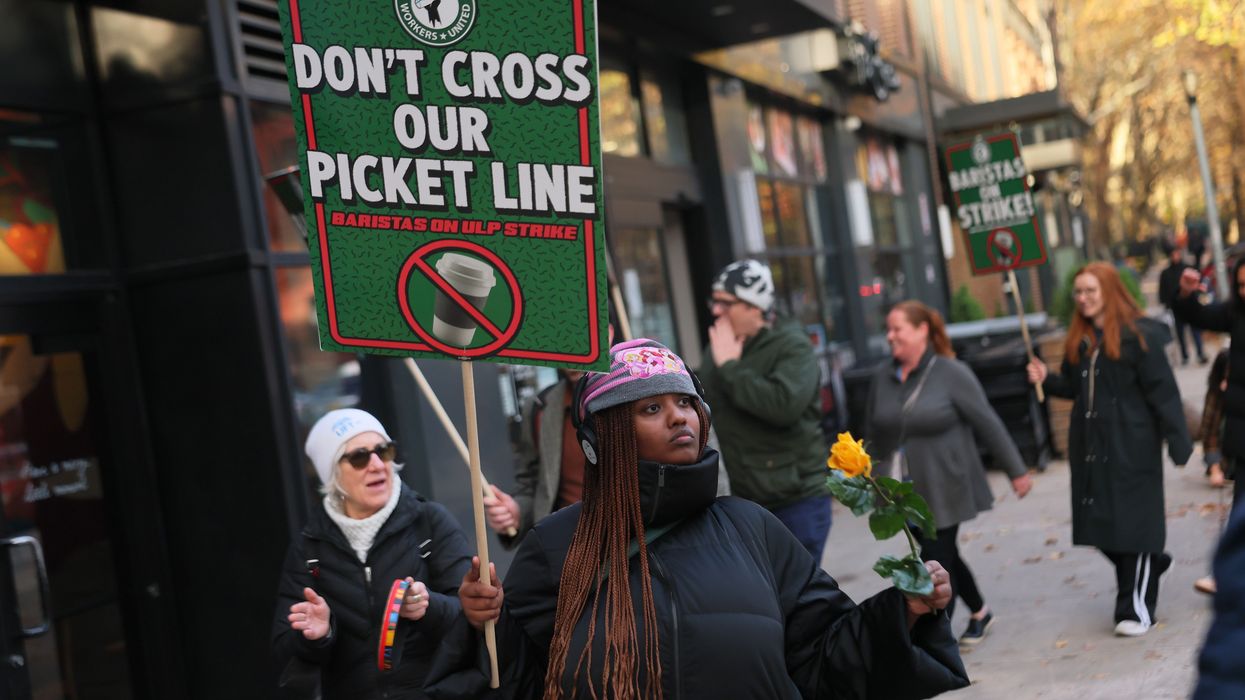
The mayors-elect in both Seattle and New York City are backing the nationwide strike by Starbucks baristas launched this week, calling on the people of their respective cities to honor the consumer boycott of the coffee giant running parallel to the strike so that workers can win their fight for better working conditions.
“Together, we can send a powerful message: No contract, no coffee,” Zohran Mamdani, the democratic socialist who will take control of the New York City's mayor office on January 1, declared in a social media post to his more than 1 million followers.
In Seattle, mayor-elect Katie Wilson, who on Thursday was declared the winner of the race in Seattle, where Starbucks was founded and where its corporate headquarters remains, joined the picket line with striking workers in her city on the very same day to show them her support.
"I am not buying Starbucks and you should not either,” Wilson told the crowd.
She also delivered a message directly to the corporate leadership of Starbucks. "This is your hometown and mine," she said. "Seattle's making some changes right now, and I urge you to do the right thing. Because in Seattle, when workers' rights are under attack, what do we do?" To which the crowd responded in a chant-style response: "Stand up! Fight back!"
Socialist Seattle Mayor-elect Katie Wilson's first move after winning the election was to boycott Starbucks, a hometown company. pic.twitter.com/zPoNULxfuk
— Ari Hoffman 🎗 (@thehoffather) November 14, 2025
In his post, Mamdani said, "Starbucks workers across the country are on an Unfair Labor Practices strike, fighting for a fair contract," as he called for people everywhere to honor the picket line by not buying from the company.
At a rally with New York City workers outside a Starbucks location on Thursday, Mamdani referenced the massive disparity between profits and executive pay at the company compared to what the average barista makes.
Zohran Mamdani says that New York City stands with Starbucks employees!He points out their CEO made 96 billion last year. That’s 6,666 times the median Starbucks worker salary. Boycott Starbucks. Support the workers. Demand they receive a living wage.
[image or embed]
— Kelly (@broadwaybabyto.bsky.social) November 12, 2025 at 10:45 PM
The striking workers, said Mamdani, "are asking for a salary they can actually live off of. They are asking for hours they can actually build their life around. They are asking for the violations of labor law to finally be resolved. And they deserve a city that has their back and I am here to say that is what New York City will be."