

SUBSCRIBE TO OUR FREE NEWSLETTER
Daily news & progressive opinion—funded by the people, not the corporations—delivered straight to your inbox.
5
#000000
#FFFFFF
To donate by check, phone, or other method, see our More Ways to Give page.
Daily news & progressive opinion—funded by the people, not the corporations—delivered straight to your inbox.

"The problem with conflicts like this is always: you don't just have to get in, you have to get out again. We saw that very painfully in Afghanistan for 20 years. We saw it in Iraq."
German Chancellor Friedrich Merz on Monday warned that the United States is being "humiliated" by Iran and risks getting trapped in a quagmire there like it did in Afghanistan and Iraq.
"The Iranians are clearly stronger than expected and the Americans clearly have no truly convincing strategy in the negotiations either," Merz told students at the Carolus-Magnus-Gymnasium in Marsberg, North Rhine-Westphalia. "The problem with conflicts like this is always: You don't just have to get in, you have to get out again. We saw that very painfully in Afghanistan for 20 years. We saw it in Iraq."
"At the moment, I do not see what strategic exit the Americans will choose, especially since the Iranians are clearly negotiating very skillfully—or very skillfully not negotiating," the Christian Democratic Union leader continued. "An entire nation is being humiliated by the Iranian leadership, particularly by the so-called Revolutionary Guards."
US President Donald Trump on Saturday abruptly canceled a planned trip by special envoys Jared Kushner and Steve Witkoff to Islamabad, Pakistan to negotiate a ceasefire with Iranian officials after prior talks ended without an agreement.
Nearly two months of US and Israeli airstrikes on Iran have killed more than 3,400 people, at least 2,100 of them civilians—including 503 women, 413 children, 91 health workers, and 9 journalists, according to the Human Rights Activists News Agency.
The Lebanese Health Ministry said Monday that the death toll from Israeli bombing of its northern neighbor has topped 2,500, including hundreds of women and children. At least 14 people were killed on Sunday by Israeli strikes, despite a US-brokered ceasefire.
The head of the Iranian Red Crescent Society said Saturday that the organization has submitted evidence of US and Israeli war crimes to the International Criminal Court in The Hague, which in 2024 issued arrest warrants for Israeli Prime Minister Benjamin Netanyahu and former Israeli Defense Minister Yoav Gallant for crimes against humanity and war crimes—including murder and forced starvation—in Gaza, where more than 250,000 people have been killed or injured since October 2023.
Merz said Monday that the US-Israeli war on Iran is harming his country.
"It is at the moment a pretty tangled situation," he said. "And it is costing us a great deal of money. This conflict, this war against Iran, has a direct impact on our economic output."
Merz said that Germany was still open to deploying minesweeping warships to help reopen the Strait of Hormuz, where Iran has blocked almost all international shipping. However, the chancellor said such a move would only come after fighting stops.
The German leader also told students at the school that their country must assume a greater leadership role within the European Union.
"If we were to unite more effectively and do more together," he said, "we could be at least as strong as the United States of America."
Some observers asserted that the US isn't the only country being humiliated, pointing to Germany's support for Israel, which is rooted in deep-seated guilt over the country's systematic slaughter of 6 million Jews during the Nazi-era Holocaust.
In addition to brutally cracking down on pro-Palestine protests and suppressing speech critical of Israel's obliteration of Gaza, Germany initially planned to intervene in the South Africa-led genocide case against Israel at the International Court of Justice (ICJ), also in The Hague.
However, Berlin said last month that it will not intervene in the ICJ case in support of Israel so that it can better focus on its own defense in a separate case before the tribunal filed by Nicaragua accusing Germany of enabling Israel’s genocidal assault on Gaza via arms sales.
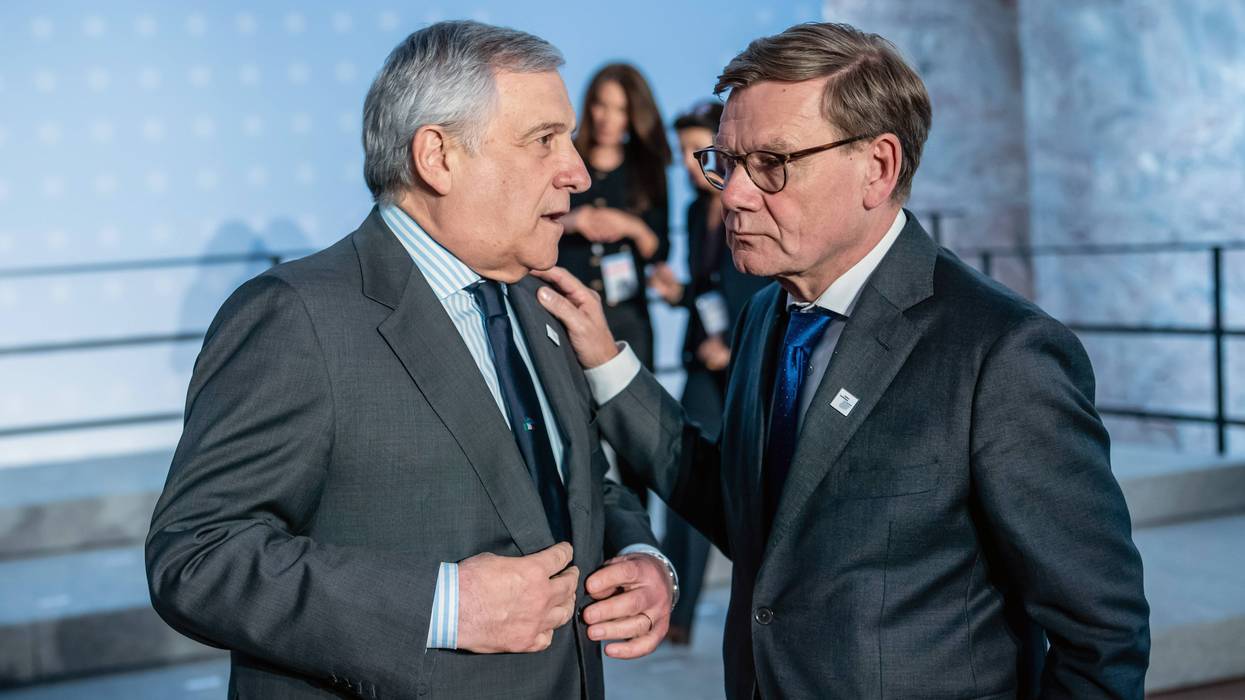
“The European Union can no longer remain on the sidelines,” said three foreign ministers who called for a suspension of the deal.
Calls have steadily intensified in recent weeks for the European Union to suspend a trade agreement with Israel as the country's right-wing government has ignored growing condemnation over its anti-Palestinian policies and its assaults on Gaza, the West Bank, and Lebanon—but on Tuesday, German and Italian officials blocked an effort to pause the trade deal, with Germany's foreign minister saying the move would be "inappropriate."
The foreign minister, Johann Wadephul, suggested that world governments have not yet appealed enough to Israel in an attempt to stop it from attacking civilian infrastructure in Lebanon and Gaza; backing settlers who wage violence on Palestinians as Prime Minister Benjamin Netanyahu's government seeks to illegally annex the territory; and passing a death penalty law that makes death by hanging the default punishment for Palestinians convicted of killing Israelis.
“We have to talk with Israel about the critical issues,” Wadephul said at a meeting of EU foreign ministers in Luxembourg, which was called by his counterparts from Ireland, Slovenia, and Spain. “That has to be done in a critical, constructive dialogue with Israel.”
Italian Foreign Minister Antonio Tajani added that "no decision will be taken today" and said that "other possible initiatives will be discussed at the next ministerial meeting on May 11."
Critics, however, blasted the decision.
Erika Guevara-Rosas, a senior director for Amnesty International, called the move by Italy and Germany "a moral failure" that "illustrates brazen contempt for civilian lives" in Gaza, the Occupied Palestinian Territory (OPT), and in Lebanon.
Failure to act in the face of Israel's repeated and ongoing atrocities, said Guevara-Rosas, "will be remembered as another shameful chapter in one of the most disgraceful moments in the EU’s history."
The Irish, Spanish, and Slovenian officials wrote to EU foreign affairs chief Kaja Kallas last week, saying that Israel has breached Article 2 of the EU-Israel Association Agreement, which stipulates that "relations between the parties, as well as all the provisions of the agreement itself, shall be based on respect for human rights and democratic principles."
A European Commission review last year found "indications" that Israel is breaching its human rights obligations under the 1995 agreement.
The death penalty law, said the foreign ministers, is a "grave violation of fundamental human rights," while settlers and Israel Defense Forces soldiers act "with absolute impunity" in the West Bank.
“The European Union can no longer remain on the sidelines,” they said.
Ahead of Tuesday's meeting in Luxembourg, Spanish Foreign Minister Jose Manuel Albares called on every European country "to uphold what the International Court of Justice and the UN say on human rights and the defense of international law" and that failing to do so regarding Israel "would be a defeat for the European Union."
Irish Foreign Minister Helen McEntee called on the EU to "move in unison" to pressure Israel to meet its human rights obligations. Suspending the trade agreement requires unanimous support from the bloc's 27 member countries.
McEntee said that she was urging "all of our colleagues today to support our call for the suspension of the overall agreement but, at the very least, if we can't reach that full agreement, that we would have suspension of the overall trade elements of it."
"Where the EU moves together, we have a greater impact."
📽️Watch Minister @HMcEntee's remarks ahead of the Foreign Affairs Council in Luxembourg. pic.twitter.com/c5w9S4qdQp
— Ireland In The EU (@IrelandInEU) April 21, 2026
But Germany and Italy's refusal to back the suspension of the agreement, said Irish author Andrew Madden, suggested "a preference for the ongoing slaughter of innocent people" over angering Israel.
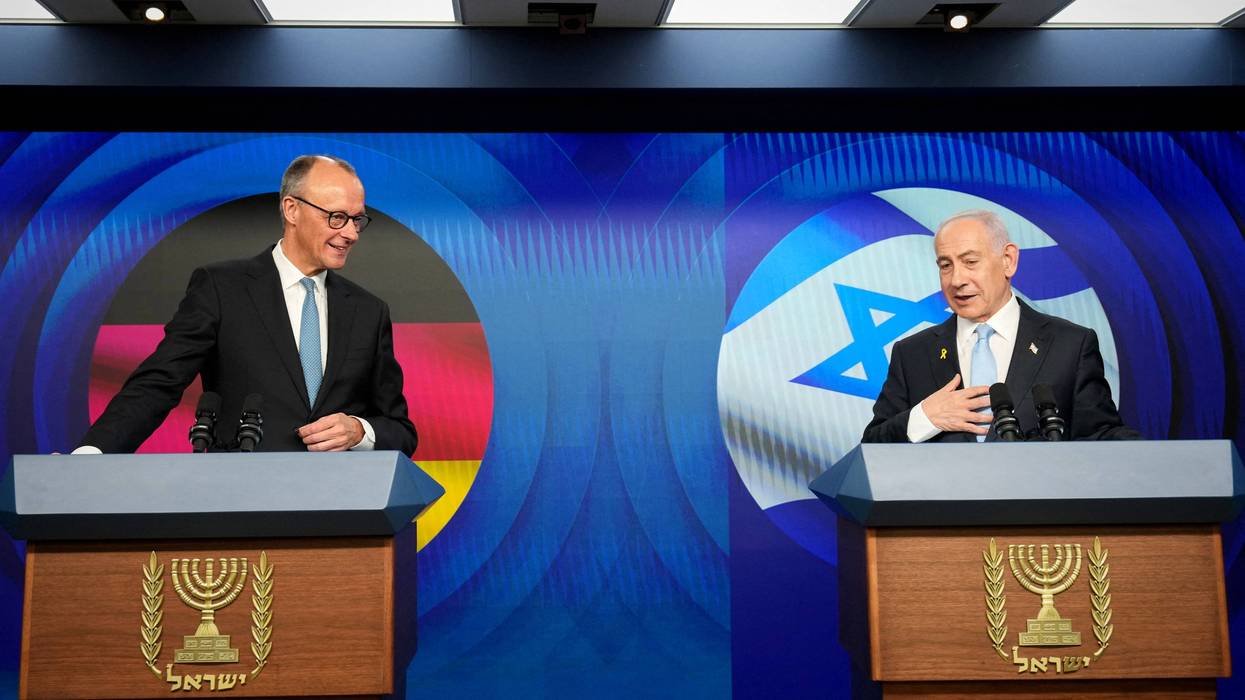
Berlin says it needs to focus on its defense in a separate ICJ case in which Nicaragua accuses Germany of supporting Israel's genocidal war on Gaza.
Germany said Wednesday that it will drop its planned intervention in the International Court of Justice genocide against Israel so that it can better focus on its own defense in a separate ICJ case filed by Nicaragua accusing Berlin of enabling Israel's genocidal assault on Gaza via arms sales.
Deputy German Foreign Minister Josef Hinterseher said during a press conference in Berlin that his country "will not intervene" on Israel's side in the South Africa v. Israel genocide case filed at the Hague-based tribunal in December 2023.
This is a marked departure from Germany's January 2024 announcement that it would intervene on behalf of Israel in the case, arguing that the genocide allegation made by South Africa had "no basis whatsoever."
Nearly two dozen nations, most recently the Netherlands, Namibia, and Iceland, have either formally intervened on the side of South Africa or announced their intent to do so. The Herero and Nama peoples of modern-day Namibia suffered a genocide during the region's colonization by Germany in the late 19th and early 20th centuries.
A handful of countries including the United States, Hungary, and Fiji have also intervened on behalf of Israel.
In 2024, Nicaragua filed a case against Germany at the ICJ, arguing that the European nation “has not only failed to fulfill its obligation to prevent the genocide committed and being committed against the Palestinian people... but has contributed to the commission of genocide in violation" of the Genocide Convention.
Germany has provided financial, military, diplomatic, and political support to Israel. It also temporarily halted financial contributions to the United Nations Relief and Works Agency for Palestine Refugees in the Near East (UNRWA) based on unsubstantiated Israeli claims that a dozen of its worjers were involved in the Hamas-led attack of October 7, 2023.
Unlike Germany, the US and Israel are not members of the ICJ. The US quit the tribunal after it ruled against the Reagan administration in Nicaragua v. United States, a 1984 ruling that determined the US illegally supported Contra terrorists and mined Nicaraguan harbors.
However, under the court's territorial jurisdiction powers, countries that are not members of the court can still be brought before it for crimes committed in member states.
Further complicating matters, Germany is one of numerous countries which have intervened in Gambia v. Myanmar, which the African nation filed at the ICJ in 2019 amid the Burmese junta's ongoing genocide against Rohingya Muslims.
The ICJ has issued several provisional orders in South Africa v. Israel, including directives to prevent genocidal acts and allow aid into the besieged Gaza Strip amid a burgeoning famine. Israel has been accused of ignoring these orders.
The US under the Biden and Trump administrations pressured ICJ members to refrain from intervening on behalf of South Africa. The Trump administration has also sanctioned members of the International Criminal Court (ICC)‚ which in 2024 issued arrest warrants for Israeli Prime Minister Benjamin Netanyahu and former Defense Minister Yoav Gallant for alleged crimes against humanity and war crimes in Gaza.
In Germany, as in several other Western nations, authorities have cracked down on pro-Palestine protests, free expression of support for Palestinian rights, and criticism of Israel. Critics say the persistent framing of German national identity around enduring guilt for the Nazis' wholesale slaughter of 6 million Jews during the Holocaust is driving overzealous policing of dissent and conflation of pro-Palestinian activism with antisemitism.
This perceived moral burden, say observers, risks stifling legitimate political debate, curtailing free speech, and criminalizing solidarity with Palestinians under the pretext of historical responsibility. This has driven German actions from secretly funding Israel's development of nuclear weapons over half a century ago to brutally assaulting and arresting pro-Palestine protesters—including women, elders, minors, and people with disabilities—after the October 2023 attack.
German police punch an anti-genocide woman in front of the cameras.
[image or embed]
— Antifa_Ultras (@antifa-ultras.bsky.social) October 7, 2025 at 2:20 PM
Amnesty International's latest annual human rights report on Germany notes "excessive use of force by police during peaceful protests by climate activists and supporters of Palestinians’ rights," as well as Berlin's "irresponsible arms transfers" to not only Israel but also Saudi Arabia.