

SUBSCRIBE TO OUR FREE NEWSLETTER
Daily news & progressive opinion—funded by the people, not the corporations—delivered straight to your inbox.
5
#000000
#FFFFFF
To donate by check, phone, or other method, see our More Ways to Give page.
Daily news & progressive opinion—funded by the people, not the corporations—delivered straight to your inbox.
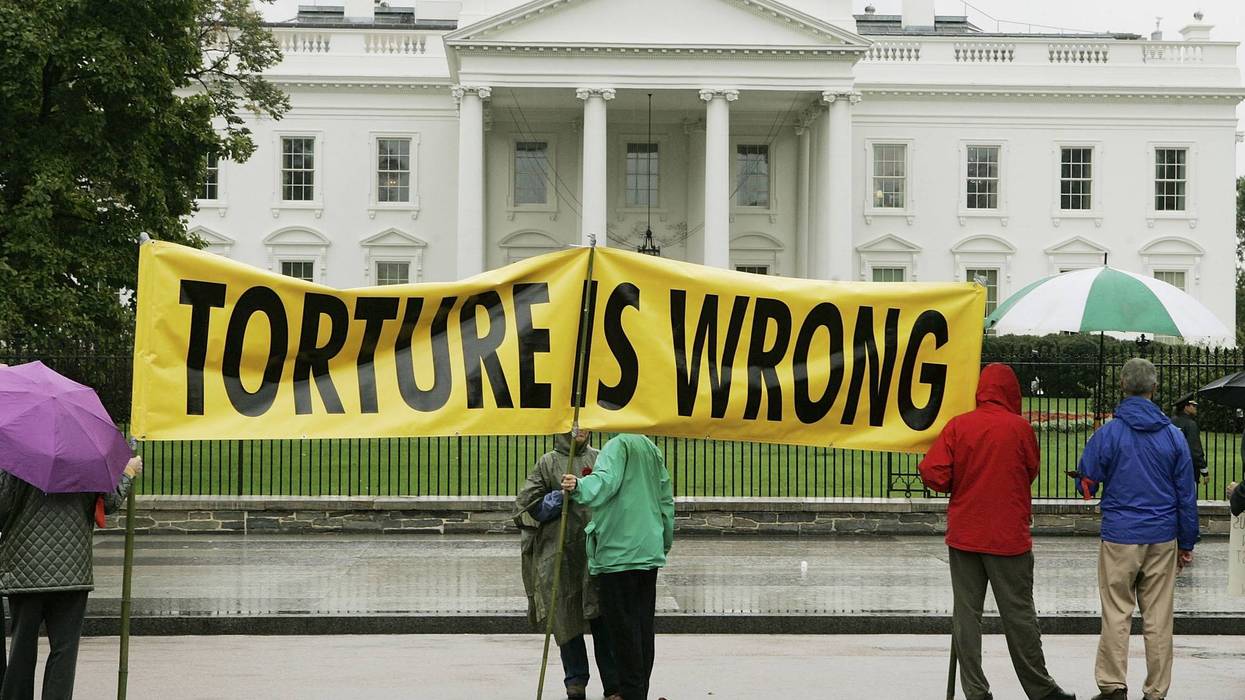
The lack of accountability set a template. And the impunity of those who orchestrated and carried out these crimes is one of the darkest legacies of the so-called "war on terror" that will forever haunt the nation's history.
A quarter-century has nearly passed since the terrorist attack that killed almost 3,000 people in the United States on Sept. 11, 2001. During the first seven years after that mass atrocity, Pentagon spending doubled. The aftermath of 9/11 was also a huge boost for “the intelligence community.” Despite—and because of—their failure to prevent the carnage on that day, the CIA and the National Security Agency as well as 14 smaller spy agencies boomed with enormous jolts of funds.
Along the way, some line items paid for torture that persisted during the George W. Bush presidency under the euphemism of “enhanced interrogation techniques.”
The most publicized location was Guantánamo on the island of Cuba. There, “the US opened the offshore detention facility in an attempt to evade the rule of law,” the London-based organization Freedom From Torture reports. “In the name of the US's ‘War on Terror,’ people deemed by the US to be ‘enemy combatants’ were detained at the facility. Many were tortured and denied basic human rights and due process… Since the first detainees arrived in 2002, Guantánamo Bay has imprisoned 780 men and boys from 48 countries…. Yet only 16 detainees have ever been convicted of a crime—just 2 percent.”
Despite public pressure, Bush vetoed a version of the Intelligence Authorization Act in March 2008 that would have required CIA interrogators to adhere to Army Field Manual regulations. As soon as Barack Obama became president, he issued an executive order rescinding the free hand for the CIA director on interrogations that Bush had reaffirmed in a July 2007 order. Obama’s directive removed the CIA’s detention power and required the agency to follow Army Field Manual rules.
Yet five and a half years went by before President Obama acknowledged, in his notable words, “We tortured some folks.” He told a news conference: “When we engaged in some of these enhanced interrogation techniques, techniques that I believe and I think any fair-minded person would believe were torture, we crossed a line.”
The acknowledgement came four months before the long-awaited release of a report in December 2014 by the Senate Select Committee on Intelligence. While heavily redacted, it was a political indictment of torture. “CIA personnel, aided by two outside contractors, decided to initiate a program of indefinite secret detention and the use of brutal interrogation techniques in violation of US law, treaty obligations, and our values,” wrote the committee’s chair, Senator Dianne Feinstein. Among the report’s conclusions:
Months later, the New England Journal of Medicine summed up aspects of the Senate committee’s findings: “Medical professionals, primarily private contractors, filled four basic roles at the black sites: clearing terrorist suspects as ‘medically fit’ for torture; monitoring torture to prevent death and treat injuries; developing novel torture methods; and actually torturing prisoners. All these actions were taken only after CIA and US Department of Justice attorneys assured the medical professionals that they had immunity from prosecution and would not be held legally responsible for violating US and international law against torture as long as they used the techniques approved in legal memos (since withdrawn) written to justify their actions. Lawyers agreed to provide immunity assurances that specific torture techniques were legal ‘enhanced interrogation’ methods only if the physicians assured them that they would be present to prevent permanent harm to prisoners. The CIA opened more than a dozen black sites around the world after 9/11, in which at least 117 prisoners were held; 39 of these prisoners were subjected to one or more torture techniques.”
At least hundreds more “suspected terrorists” who’d been captured by the US were turned over to ruthless governments. “If you want a serious interrogation, you send a prisoner to Jordan,” former CIA officer Bob Baer said. “If you want them to be tortured, you send them to Syria. If you want someone to disappear—never to see them again—you send them to Egypt.”
When shocking photos emerged of vile mistreatment of Iraqi prisoners by US soldiers at Abu Ghraib prison near Baghdad, a media uproar caused an official probe by two-star Army General Anthonio Taguba. His report, issued in 2004, concluded that “numerous incidents of sadistic, blatant, and wanton criminal abuses were inflicted on several detainees." Taguba’s candor got him pushed into early retirement. In the preface to a Physicians for Human Rights report in 2008, he addressed the matter of accountability by flatly declaring that ”the Commander-in-Chief and those under him authorized a systematic regime of torture.”
But in spite of the voluminous evidence that documented high-level approval of methodical torture, not a single US official went to prison as a result. Foreshadowing such impunity was a comment by Obama nine days before he became president in January 2009. On national television, he voiced “a belief that we need to look forward as opposed to looking backwards.” The words that came next were even more telling: “And part of my job is to make sure that for example at the CIA, you’ve got extraordinarily talented people who are working very hard to keep Americans safe. I don’t want them to suddenly feel like they’ve got to spend all their time looking over their shoulders and lawyering.”
The lack of accountability set a template. As president, Obama continued with his theme of governance without a rear-view mirror. On October 25, 2012, he tweeted: "We don't look backwards, we look forward." Career outlooks were bright for top CIA officials who’d been implicated in Bush-era torture.
“Much has been made of President Trump’s disregard for rules and norms—boundaries delineated by ethics and morality if not written laws themselves,” Adam Serwer wrote in March 2018. “But transgressing laws, rules, and norms isn’t the only way to destroy them. Another way is simply not to enforce them. In that regard, the 44th president, Barack Obama, bears a measure of responsibility for the recklessness of his successor, in particular Trump’s decision to appoint Gina Haspel, the Central Intelligence Agency’s deputy director, to run the agency itself.”
Haspel became the CIA’s director in 2018 when confirmed by the Senate despite her key role in the CIA’s torture program. Citing declassified documents, the National Security Archive at George Washington University explained that she “personally supervised the torture of a CIA detainee in 2002 leading to at least three waterboard sessions, subsequently drafted the cable that ordered destruction of the videotape evidence of torture, and served as a senior CIA official while the Agency was lying to itself, Presidents George W. Bush and Barack Obama, the Congress, and the public about the effectiveness of torture in eliciting useful intelligence.”
The Center for Victims of Torture points out that “architects and operators of the CIA torture program have risen to prestigious positions in government, the private sector, the federal judiciary and academia.” And so it was after president-elect Joe Biden nominated Avril Haines to be Director of National Intelligence. As Obama’s CIA deputy director, she had worked to impede the Senate committee investigation into torture.
“In 2015, Haines had to decide what to do about CIA officials who had hacked into the computers of Senate intelligence committee staffers who had been compiling a comprehensive report on torture, and even drummed up spurious criminal cases against them,” the Guardian reported. “She overrode the advice of the CIA inspector general and recommended against disciplinary action.” The lead researcher for that committee, Daniel J. Jones (who was portrayed by Adam Driver in the movie “The Report”), warned against Biden going through with the nomination, saying: “This is about the continuing cover-up of the torture program, the long legacy of that. And I wish I could say Haines wasn’t a part of that, but she was.” The Senate confirmed Haines to the DNI job with an 84-10 vote. She remained in the position throughout Biden’s presidency.
Three months ago, the Carnegie Endowment for International Peace announced that its next president will be Avril Haines. The organization declared: “One of the most respected national security leaders of her generation, Avril brings a deep commitment to public service and the values at the heart of our mission.”
Democratic Rep. Pramila Jayapal called for an immediate end to the US blockade, warning that "we are contributing to immense suffering in Cuba and a worsening humanitarian crisis."
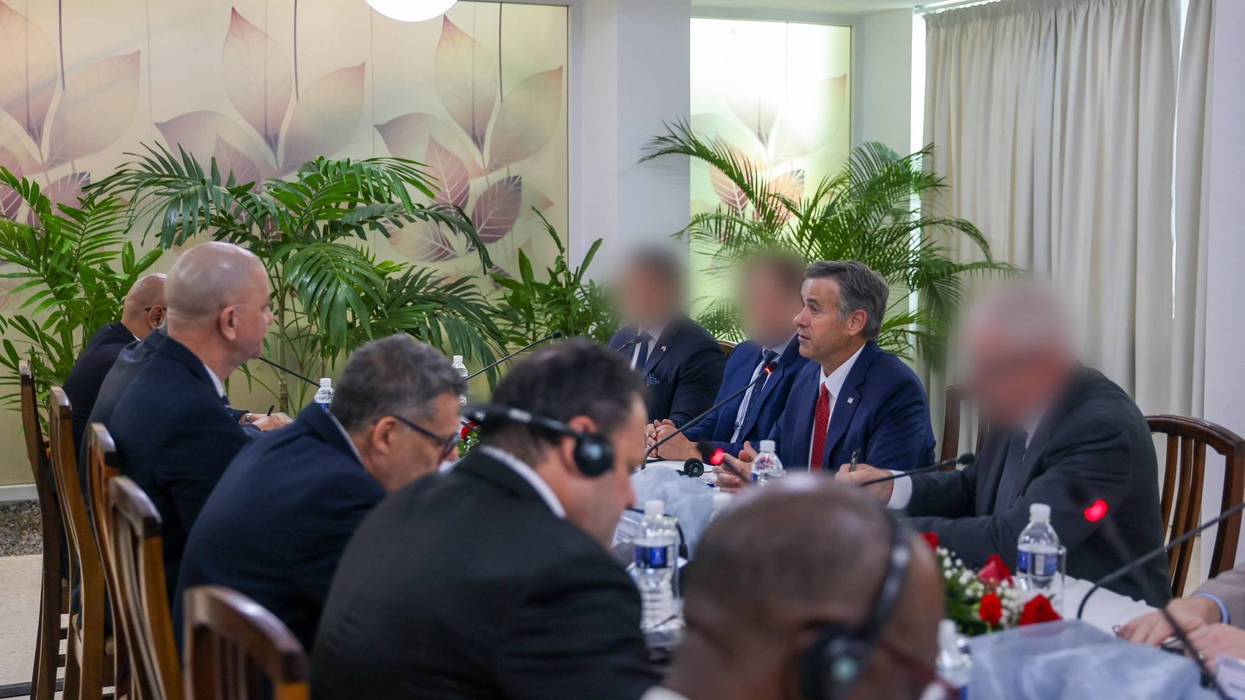
The director of the US Central Intelligence Agency met with Cuban officials in Havana on Thursday after the island nation's government said it had completely run out of fuel due to the Trump administration's oil blockade.
The CIA's X account posted photos of some of Director John Ratcliffe's meetings, blurring the faces of US intelligence officials who accompanied the agency chief. In a statement, the CIA said it met with Raúl Rodríguez Castro, the grandson of former Cuban President Raúl Castro; Interior Minister Lázaro Álvarez Casas; and the head of Cuba's intelligence services.
Havana, Cuba pic.twitter.com/7S7TtJPyf5
— CIA (@CIA) May 14, 2026
"This is one of the most sinister and ominous social media posts I've ever seen," legal scholar Maryam Jamshidi wrote in response to the CIA photos.
Ratcliffe, the highest-ranking Trump administration official to visit Cuba, decided to visit "to personally deliver President Donald Trump's message that the United States is prepared to seriously engage on economic and security issues, but only if Cuba makes fundamental changes," the CIA said.
A CIA official told NewsNation that "while the director emphasized that President Trump prefers dialogue, the Cubans should have no illusions that the President will not enforce red lines."
Trump has repeatedly threatened to seize Cuba by force, describing the island country as his next military target after Venezuela and Iran. Fears of an imminent military attack have grown in recent weeks amid Trump's belligerent rhetoric and surging US surveillance flights off Cuba's coast.
"I think I can do anything I want with [Cuba], if you want to know the truth," Trump told reporters in the Oval Office in March. "A very weakened nation."
"This failed policy needs to end immediately. Every day, we are contributing to immense suffering in Cuba and a worsening humanitarian crisis."
The spy chief's trip came a day after Cuba's energy minister announced that months after Trump imposed an oil blockade on the island, "we have absolutely no fuel oil, absolutely no diesel."
The same day, the US State Department dangled "$100 million in direct humanitarian assistance to the Cuban people." Cuban Foreign Minister Bruno Rodríguez Parrilla said Cuba's leadership is "willing to hear the details of the offer and the manner in which it would be implemented."
"We hope it is free of political maneuvers and attempts to exploit the shortages and suffering of a people under siege," he added. "The best aid that the US government could provide to the noble Cuban people at this or any time is to de-escalate the measures of the energy, economic, commercial, and financial blockade, intensified as never before in recent months, which severely affects all sectors of the Cuban economy and society."
Cuban President Miguel Díaz-Canel echoed that sentiment, writing in a Thursday social media post that "the damage could be alleviated in a much easier and more expeditious way by lifting or easing the blockade, as it is well known that the humanitarian situation is coldly calculated and induced."
Progressive lawmakers in the US are imploring the Trump administration to end US economic warfare against Cuba, engage diplomatically with the country, and drop any plans for a military assault.
Rep. Pramila Jayapal (D-Wash.), who has come under attack from Republican lawmakers for visiting Cuba in April, said Thursday that "Cuba has run out of diesel and fuel oil and is enduring some of the worst blackouts in decades because of the US’ cruel oil blockade."
"This failed policy needs to end immediately," said Jayapal. "Every day, we are contributing to immense suffering in Cuba and a worsening humanitarian crisis."
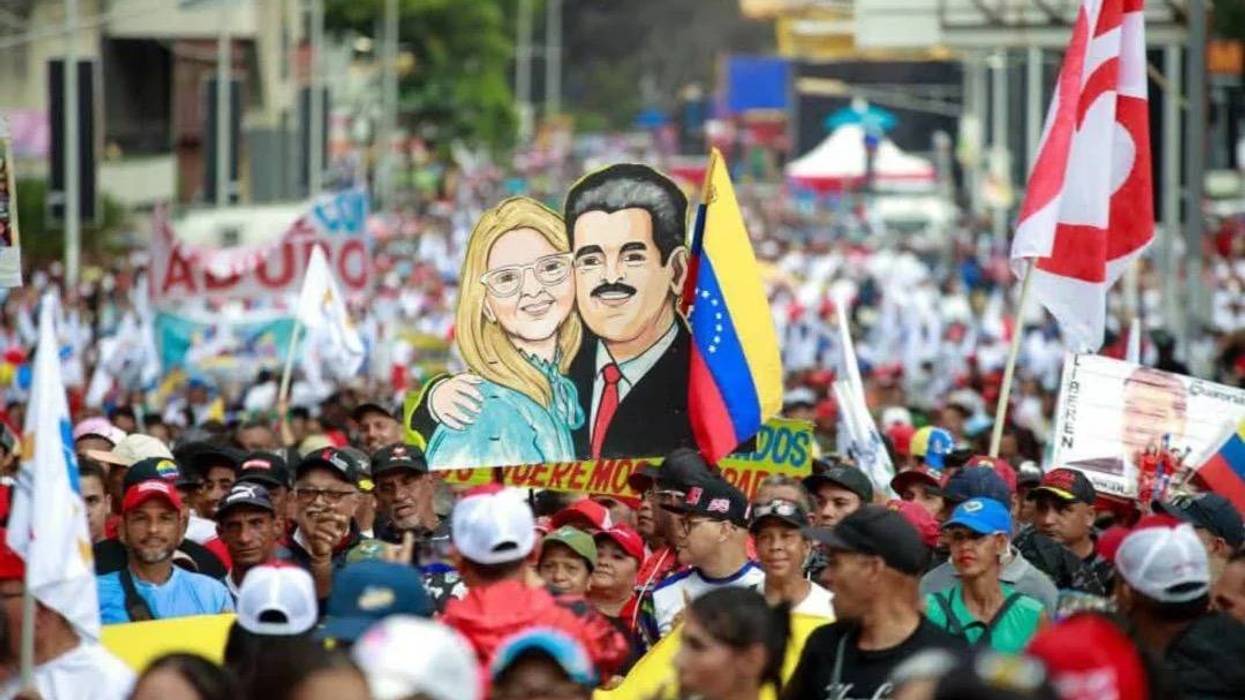
In Caracas, the situation is tangled, contradictory, and volatile. But amid the uncertainty, one thing felt clear: the Venezuelan left is not collapsing. It is recalibrating.
On our recent delegation to Venezuela, one quote echoed again and again — a warning written nearly two centuries ago by Simón Bolívar in 1829:
“The United States appears destined by Providence to plague America with misery in the name of liberty.”
For many Venezuelans, that line no longer feels like history. It feels like the present.
The January 3 US military operation that seized President Nicolás Maduro and First Lady Cilia Flores marked a dramatic escalation in a conflict that Venezuelans describe not as sudden but as cumulative—the culmination of decades of pressure, sanctions, and attempts at isolation. “We still haven’t totally processed what happened on January 3,” sanctions expert William Castillo told us. “But it was the culmination of over 25 years of aggression and 11 years of resisting devastating sanctions. A 20-year-old today has lived half his life in a blockaded country.”
Carlos Ron, former deputy foreign minister and now with the Tricontinental Institute for Social Research, described the buildup to the invasion as the result of a carefully constructed narrative. “First there was the dangerous rhetoric describing Venezuelans in the United States as criminals,” he said. “Then endless references to the Tren de Aragua gang. Then the boat strikes blowing up alleged smugglers. Then the oil tanker seizures and naval blockade. The pressure wasn’t working, so they escalated to the January 3 invasion and kidnapping of President Maduro and his wife, Cilia Flores, and the deaths of over 100 people.”
While in the United States the events of January 3 have largely been forgotten, replaced by a devastating war with Iran, in Venezuela the reminders are everywhere. Huge banners draped from apartment buildings demand: “Bring them home.” Weekly protests call for their release.
In the Tiuna neighborhood of Caracas, we met Mileidy Chirinos, who lives in an apartment complex overlooking the site where Maduro was captured. From her rooftop, she told us about that dreadful night, when the sky lit up with explosions so loud her building shook and everyone ran outside screaming.
“Have your children ever woken up terrified to the sound of bombs?” she asked.
We shook our heads.
“Ours have,” she said. “And they are US bombs. Now we understand what Palestinians in Gaza feel every day.”
She told us psychologists now visit weekly to help residents cope with the trauma.
Within days of the US invasion, the National Assembly swore in Vice President Delcy Rodríguez as acting president. President Trump publicly praised Rodríguez for “doing a good job,” emphasizing his strong relationship with her. But from the beginning, she has been negotiating with the United States with a gun to her head. She was told that any refusal to compromise would result not in the kidnapping of her and her team, but death and the continued bombing of Venezuela.
The presence of US power looms large. Nuclear submarines still patrol offshore. Thousands of troops remain positioned nearby. Every statement and decision made by the government is scrutinized. And on February 2, despite Trump’s praise for Delcy Rodríguez, he renewed the 2015 executive order declaring Venezuela an “unusual and extraordinary threat” to US national security.
The visits from the heads of the CIA and Southern Command have undoubtedly been difficult for the government to swallow. Delcy’s revolutionary father was tortured to death in 1976 by a Venezuelan government that worked closely with the CIA. The US Southern Command coordinated the January 3 attack.
But the government is not without leverage.
“The United States thought the state was weak, that it didn’t have popular support, that the military was divided,” said Tania Díaz of the ruling PSUV party. “January 3rd could have triggered looting, military defections, or widespread destabilization. None of that happened.”
The United States has overwhelming military dominance, but it was also aware that millions of Venezuelans signed up to be part of the people’s militia. This militia, along with the army that remained loyal to the government, gave Washington pause about launching a prolonged war and attempting to replace Delcy Rodríguez with opposition leader María Corina Machado.
While Machado enjoys enthusiastic support among Venezuelan exiles in Miami and the Trump administration recognized her movement as the winner of the 2024 election, the picture inside Venezuela is very different. The opposition remains deeply divided and Trump realized there was no viable faction ready to assume power.
Besides, as William Castillo put it bluntly: “Trump does not care about elections or human rights or political prisoners. He cares about three other things: oil, oil, and oil.” To that, we can add gold, where the US just pushed Venezuela to provide direct access to gold exports and investment opportunities in the country’s gold and mineral sector,
Certainly, under the circumstances, the Venezuelan leadership has had little choice but to grant the United States significant influence over its oil exports. But while Trump boasts that this is the fruit of his “spectacular assault,” Maduro had long been open to cooperation with US oil companies.
“Maduro was well aware that Venezuela needed investment in its oil facilities,” Castillo told us, “but the lack of investment is because of US sanctions, not because of Maduro. Venezuela never stopped selling to the US.; it is the US that stopped buying. And it also stopped selling spare parts needed to repair the infrastructure. So the US started the fire that decimated our oil industry and now acts as if it’s the firefighter coming to the rescue.”
In any case, the easing of oil sanctions—the only sanctions that have been partially lifted—is already bringing an infusion of much-needed dollars, and the government has been able to use these funds to support social programs.
But in Venezuela the conflict is not seen as simply about oil. Blanca Eekhout, head of the Simon Bolivar Institute, says US actions represent a brazen return to the 1823 Monroe Doctrine. The doctrine originally warned European powers not to interfere in the Western Hemisphere, but over time it became a justification for repeated US interventions across the region.
“We have gone back 200 years,” she said. “All rules of sovereignty have been violated. But while the Trump administration thinks it can control the hemisphere by force, it can’t.”
The historical contradiction is stark. In 1823, the young United States declared Latin America its sphere of influence. A year earlier, Bolívar envisioned a powerful, sovereign Latin America capable of charting its own destiny. That tension still echoes through the present.
Bolívar’s dream is also being battered by the resurgence of the right across the region. The left in Latin America is far weaker than during the days of Hugo Chávez. Bolivia’s Evo Morales and Ecuador’s Rafael Correa have been replaced by conservative leaders. Cuba remains under a suffocating US siege. Progressive regional institutions like CELAC and ALBA have faded, and the vision of Latin American unity that once seemed within reach now feels far more fragile.
In Caracas, the situation is tangled, contradictory, and volatile. But amid the uncertainty, one thing felt clear: the Venezuelan left is not collapsing. It is recalibrating.
As Blanca told us before we left:
“They thought we would fall apart. But we are still here.”
And in the background, Bolívar’s warning continues to drift through the air—like a storm that never quite passes.
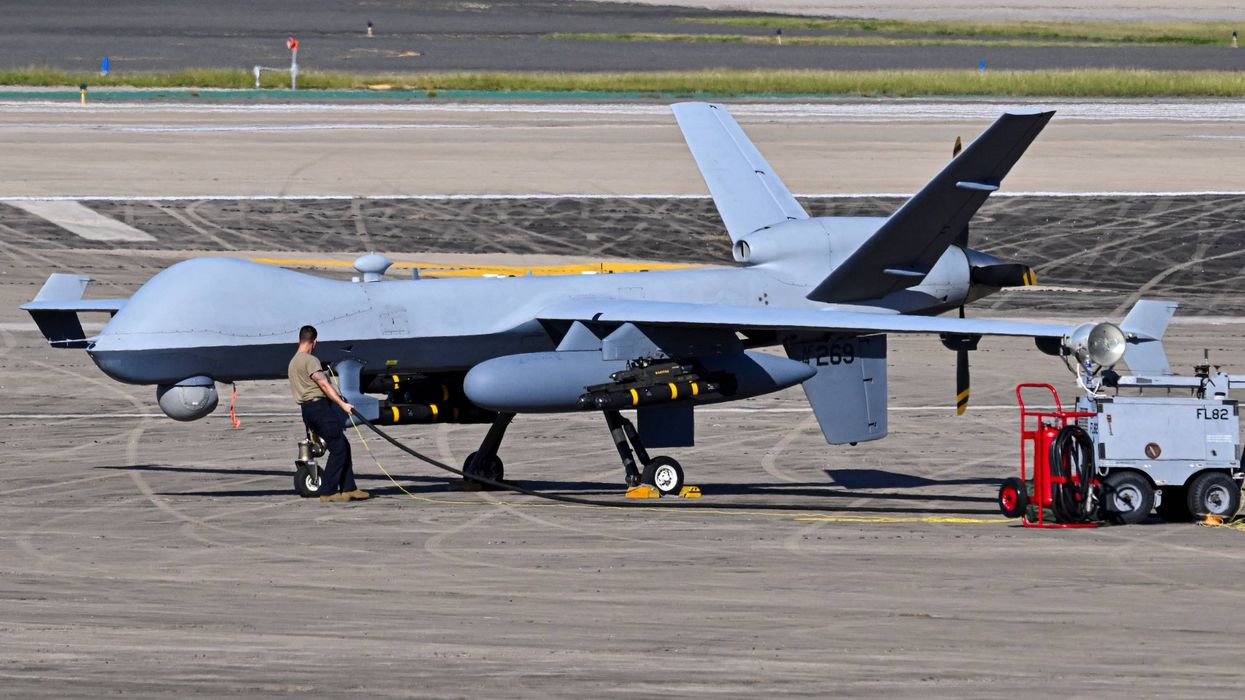
One expert called the reported drone strike a "violation of Article 2(4) of the UN Charter and the Take Care Clause of the Constitution."
The US Central Intelligence Agency reportedly carried out a drone strike earlier this month on a port facility inside Venezuela, marking the first time the Trump administration launched an attack within the South American country amid a broader military campaign that observers fear could lead to war.
CNN on Monday was first to report the details of the CIA drone strike, days after President Donald Trump suggested in a radio interview that the US recently took out a "big facility" in Venezuela, prompting confusion and alarm. Trump authorized covert CIA action against Venezuela in October.
According to CNN, which cited unnamed sources, the drone strike "targeted a remote dock on the Venezuelan coast that the US government believed was being used by the Venezuelan gang Tren de Aragua to store drugs and move them onto boats for onward shipping."
To date, the Trump administration has not provided any evidence to support its claim that boats it has illegally bombed in international waters were involved in drug trafficking. No casualties were reported from the drone strike, and the Venezuelan government has not publicly commented on the attack.
"This is an act of war and illegal under both US and international law, let’s just be clear about that," journalist Mehdi Hasan wrote in response to news of the drone strike.
Brian Finucane, senior adviser with the US Program at the International Crisis Group, called the reported drone attack a "violation of Article 2(4) of the UN Charter and the Take Care Clause of the Constitution."
"Seemingly conducted as covert action and then casually disclosed by POTUS while calling into a radio show," he added.
CNN's reporting, later corroborated by the New York Times, came after the Trump administration launched its 30th strike on a vessel in international waters, bringing the death toll from the lawless military campaign to at least 107.
The Times reported late Monday that "it is not clear" if the drone used in last week's mission "was owned by the CIA or borrowed from the US military."
"The Pentagon has stationed several MQ-9 Reaper drones, which carry Hellfire missiles, at bases in Puerto Rico as part of the pressure campaign," the Times added.
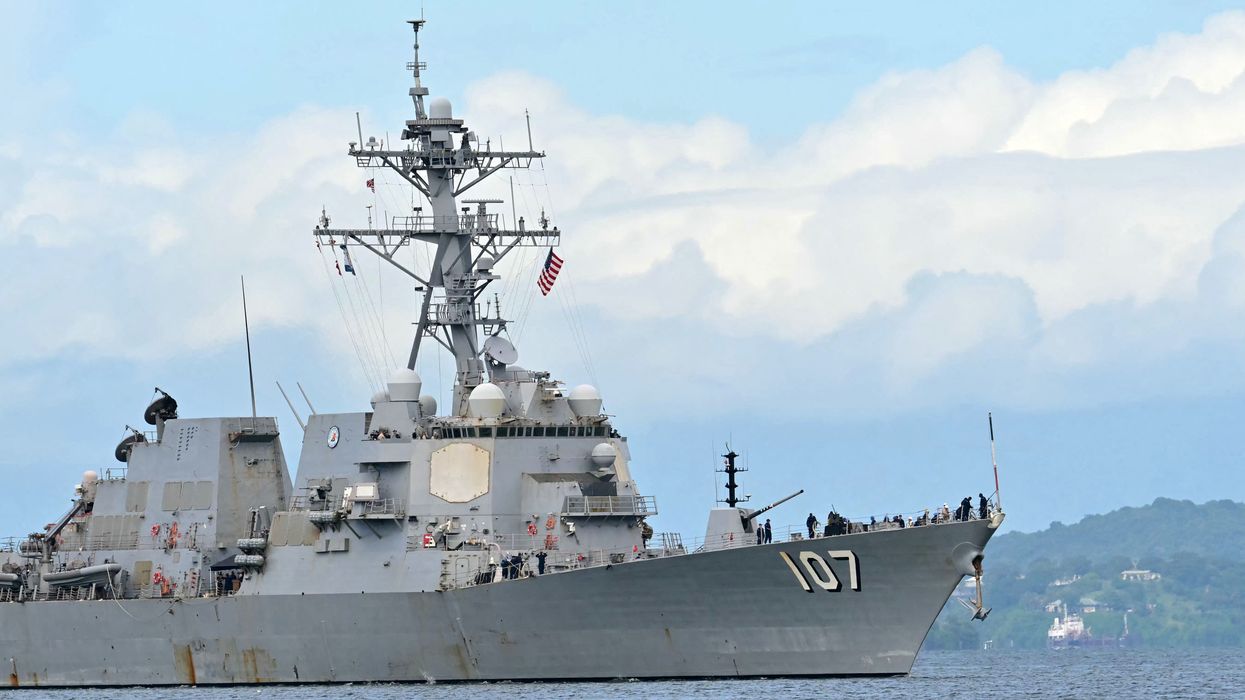
"This is a colonial operation of military aggression that seeks to turn the Caribbean into a space for lethal violence and US imperial domination."
The government of Venezuelan President Nicolás Maduro said Sunday that his country's security forces captured a group of mercenaries aligned with the US Central Intelligence Agency, less than two weeks after President Donald Trump confirmed his authorization of covert CIA action against the South American nation.
Venezuela "reports that it has captured a mercenary group with direct information from the US intelligence agency, CIA, being able to determine that a false-flag attack is underway from waters bordering Trinidad and Tobago, or from Trinidad or Venezuelan territory itself," the Venezuelan government said in a statement.
“This planned action perfectly evokes the provocation of the Battleship Maine and the Gulf of Tonkin, which gave rise to the war against Spain to seize Cuba in 1898 and allowed the US Congress to authorize involvement in an eternal war against Vietnam in 1964, from which they emerged defeated by the Vietnamese people after facing incalculable destruction and regrettable human loss," the statement continues.
"The government of Prime Minister Kamla Persad-Bissessar has renounced the sovereignty of Trinidad and Tobago to act as a military colony subordinate to US hegemonic interests, turning its territory into a US aircraft carrier for war throughout the Caribbean against Venezuela, Colombia, and all of South America,” Caracas asserted.
The statement continues:
By folding to Washington’s militaristic agenda, Persad-Bissessar not only intends to attack Venezuela, a country that has always maintained a policy of energy cooperation, mutual respect, and Caribbean integration, and break our historic bonds of brotherhood; she also violates the United Nations Charter, the proclamation of Latin America and the Caribbean as a Zone of Peace approved by [the Community of Latin American and Caribbean States], and the principles of [the Caribbean Community], which protect all peoples of the Caribbean.
These are not defensive exercises: this is a colonial operation of military aggression that seeks to turn the Caribbean into a space for lethal violence and US imperial domination.
"Venezuela does not accept threats from any vassal government of the US. We are not intimidated by military exercises or war cries," the statement says, adding that the country "will always defend its sovereignty, its territorial integrity, and its right to live in peace against foreign enemies and [their] vassals."
Venezuela's accusation came amid joint military exercises between the US and Trinidad and Tobago in the Caribbean Sea and follows a string of deadly US attacks on vessels the Trump administration claimed—without evidence—were transporting drugs bound for the United States. According to the Trump administration, at least 43 people have been killed in the US boat strikes in the southern Caribbean and Pacific Ocean since early last month.
Trinidad and Tobago challenged Venezuela to provide proof of the alleged false-flag operation and said the joint military operation with the United States "aims to bolster the fight against transnational crime and build resilience through training, humanitarian activities, and security cooperation."
The Trump administration—which had already deployed an armada of warships and thousands of troops to the southern Caribbean—said Friday that it ordered the USS Gerald R. Ford carrier strike group off the coast of Venezuela, which possesses the world's largest oil reserves.
The US has been meddling in Venezuelan affairs since at least the late 19th century, going back to the 1895 border dispute between Venezuela and Britain. Since then, the United States has helped install and prop up brutal dictators and assisted in the subversion of democratic movements, including by training Venezuelan forces in torture and repression at the notorious US Army School of the Americas.
In the 21st century, successive US administrations beginning with George W. Bush have tried to thwart the Bolivarian Revolution that was launched by former President Hugo Chávez and continued under Maduro. During the first Trump administration, Venezuela foiled an attempt by a group of mercenaries, including two Americans, to invade the country and topple Maduro.
Tens of thousands of Venezuelans have also died as a result of US economic sanctions, according to research from the Center for Economic and Policy Research.
Taunting the Venezuelan president during a Sunday appearance on CBS "60 Minutes," Sen. Rick Scott (R-Fla.) said, “If I was Maduro, I'd head to Russia or China right now."
However, senior Venezuelan officials waxed defiant in the face of the latest US threat.
“Once again, the empire and its accomplices seek to bend the sovereign will of the Venezuelan people through a criminal economic siege that flagrantly violates the Charter of the United Nations and international humanitarian law," Venezuelan Foreign Minister Yván Gil Pinto said Monday.
"These actions are not only illegal," he added, "they are an unconventional act of war that we are determined to face and defeat in all scenarios."
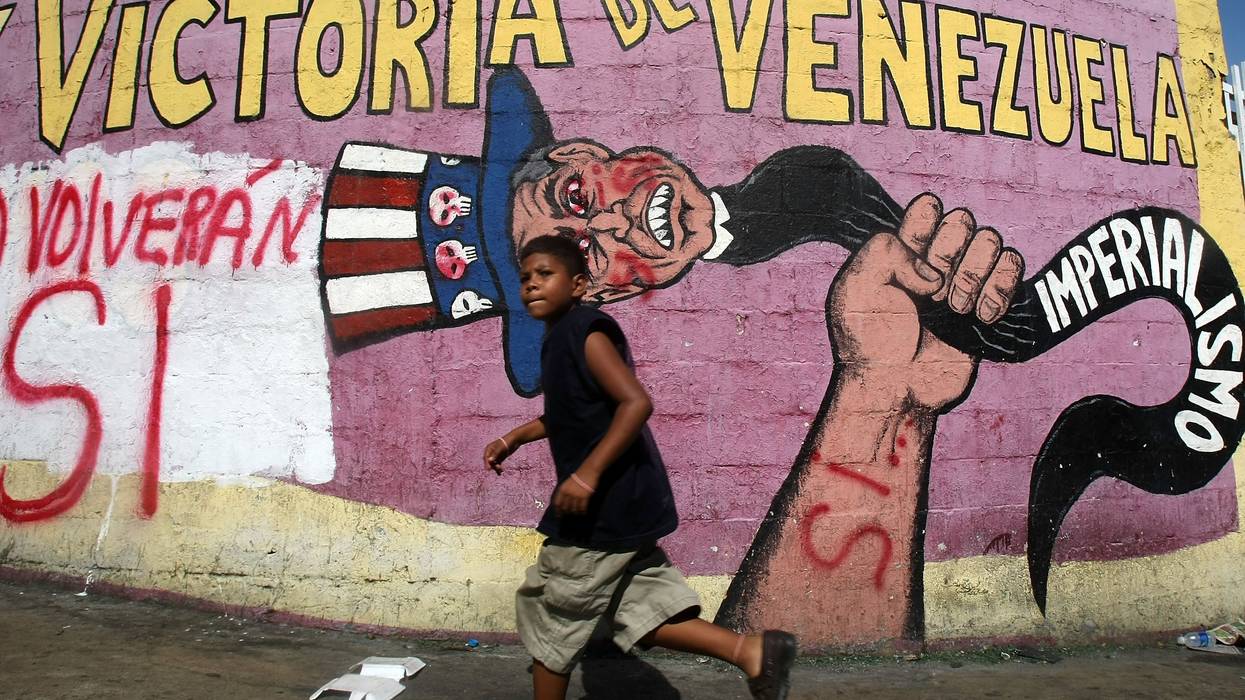
“Using covert or military measures to destabilize or overthrow regimes reminds us of some of the most notorious episodes in American foreign policy," said a former adviser to Sen. Bernie Sanders.
President Donald Trump's authorization this week of Central Intelligence Agency operations aimed at toppling Venezuelan President Nicolás Maduro prompted warnings from foreign policy experts of yet another US war of choice and the introduction of a bipartisan Senate resolution aimed at blocking unauthorized military action against the South American country.
“Reports that the Trump administration has authorized covert efforts seeking to foment regime change in Venezuela are deeply concerning," Matt Duss, executive vice president of the Center for International Policy, a Washington, DC-based think tank, said Thursday in a statement.
"These reports follow on the administration’s unlawful and unauthorized use of military force against vessels and their crews in the Caribbean—which constitute extrajudicial killings," added Duss, a former foreign policy adviser to Sen. Bernie Sanders (I-Vt.).
🚨New Statement by @mattduss.bsky.social in response to reports that the Trump Administration has authorized covert CIA action in Venezuela. internationalpolicy.org/publications...
[image or embed]
— Center for International Policy (@cipolicy.bsky.social) October 16, 2025 at 10:48 AM
Trump said Wednesday that he had authorized the CIA to conduct covert operations inside the South American nation "for two reasons"—at least the first of which is a lie.
“Number one, they have emptied their prisons into the United States of America,” he said. “And the other thing, the drugs, we have a lot of drugs coming in from Venezuela, and a lot of the Venezuelan drugs come in through the sea.”
There is no credible evidence that the Venezuelan government has systematically or deliberately released prisoners and sent them to the United States. The claim—which has been popularized by Trump and some Republicans—has been repeatedly debunked by experts and US officials.
As for drugs, while Venezuela is a transit point for cocaine—mostly produced in neighboring Colombia—the amount of narcotics entering the United States via the country is relatively insignificant compared with routes via Mexico, Central America, and the Pacific coast.
Approximately 90% of US-bound cocaine enters the country via Mexico, according to the US Drug Enforcement Administration and other government agencies. Venezuela is also not a significant source of fentanyl, which is the leading cause of overdoses in the US and is also trafficked primarily through Mexico.
“Using covert or military measures to destabilize or overthrow regimes reminds us of some of the most notorious episodes in American foreign policy, which undermined the human rights and sovereignty of countries throughout Latin America and the Caribbean," said Duss.
According to John Coatsworth, a historian specializing in Latin America, the US has launched at least 41 interventions that successfully overthrew governments in the hemisphere since 1898. The number of US military interventions in the region is much higher.
The US has been meddling in Venezuelan affairs since the 19th century, going back to an 1895 boundary dispute between Venezuela and Britain and possibly earlier. Since then, Washington has helped install and prop up brutal dictators and assisted in the subversion of democratic movements, including by training Venezuelan forces in torture and repression at the notorious US Army School of the Americas.
This century, successive US administrations beginning with George W. Bush have worked to thwart the Bolivarian Revolution launched by former President Hugo Chávez and continued under Maduro. Under Trump, the US has deployed a small armada of warships and thousands of troops off the coast of Venezuela, a rattling of proverbial sabers familiar to students of US imperialism in Latin America.
Tens of thousands of Venezuelans have also died as a result of US economic sanctions on Venezuela, according to research from the Center for Economic and Policy Research.
“The CIA has been sent to Venezuela for regime change," Maduro said Thursday in Caracas. "Since its creation, no US government has so openly ordered this agency to kill, overthrow, or destroy other countries."
“If Venezuela did not possess oil, gas, gold, fertile land, and water, the imperialists wouldn’t even look at our country," he added.
Duss noted that the United States is "still dealing with many of the harmful consequences of these disastrous interventions in today’s challenges with migration and the drug trade."
"Such interventions rarely lead to democratic or peaceful outcomes," he stressed. "Instead, they exacerbate internal divisions, reinforce authoritarianism, and destabilize societies for generations."
As Tim Weiner, the Pulitzer Prize-winning author of multiple histories of the CIA, said in a Friday interview with CNN senior politics writer Zachary Wolf, former Cuban leader Fidel Castro "survived covert action under presidents from [Dwight] Eisenhower onward and outlived them all."
Weiner said that even operations considered successes created tremendous problems.
“The successes, for example, in Guatemala, ushered in dictatorships and led to the deaths of hundreds of thousands of people,” he said, referring to the 1954 CIA overthrow of reformist Guatemalan President Jacobo Árbenz—codenamed PBSUCCESS—which led to decades of bloody repression and a US-backed genocide against Indigenous Mayan peoples.
Writing for Responsible Statecraft on Thursday, Joseph Addington, associate editor and Latin America columnist at The American Conservative, asserted that any US invasion of Venezuela "comes with a number of costs and risks American policymakers should bear in mind and carefully weigh against the potential benefits of intervention."
"There is no free lunch in geopolitics," he argued.
Addington cited an example of the US ousting a drug trafficking leader, who was an erstwhile ally and CIA asset:
The most obvious costs are those of the initial invasion. The American invasion of Panama in 1989, to overthrow the government of Gen. Manuel Noriega, was carried out by a force of some 27,000 US troops, 23 of which were killed and hundreds more wounded. Venezuela is vastly larger than Panama, and while its military is very poorly equipped, it likewise dwarfs the forces that were available to Noriega. The Center for Strategic and International Studies estimates an invasion of Venezuela would require nearly 50,000 troops, some of which will not return home. Any American government should be extremely conscientious about the causes on which it spends the lives of American soldiers.
"The real risks of such an operation, however, come after the invasion," Addington said. "Toppling Maduro’s government is one thing; there is no real chance that the impoverished and corrupt Venezuelan armed forces can put up a serious fight against the American military. But occupying and rebuilding the country is another, as the US learned to its chagrin in the Middle East."
Duss noted that “Trump ran as an anti-war candidate and casts himself as a Nobel Prize-worthy peacemaker," and that "a majority of Americans oppose US military involvement in Venezuela."
"Lawmakers must make clear that Trump does not have the American people’s support or Congress’ authorization for the use of force against Venezuela or anywhere else in the region," he said.
On Friday, a bipartisan group of US senators—Tim Kaine (D-Va.), Rand Paul (R-Ky.), and Adam Schiff (D-Calif.)—introduced a war powers resolution that would bar US military action within or against Venezuela.
“I’m extremely troubled that the Trump administration is considering launching illegal military strikes inside Venezuela without a specific authorization by Congress," Kaine said in a statement. "Americans don’t want to send their sons and daughters into more wars—especially wars that carry a serious risk of significant destabilization and massive new waves of migration in our hemisphere."
"If my colleagues disagree and think a war with Venezuela is a good idea," he added, "they need to meet their constitutional obligations by making their case to the American people and passing an authorization for use of military force."
It's the second time Kaine and Schiff have tried to introduce such a measure. Earlier this month, Democratic Sen. John Fetterman joined his GOP colleagues in voting down a Venezuela war powers resolution. Paul joined Democrats and independent Sens. Bernie Sanders (Vt.) and Angus King (Maine) in voting for the legislation.
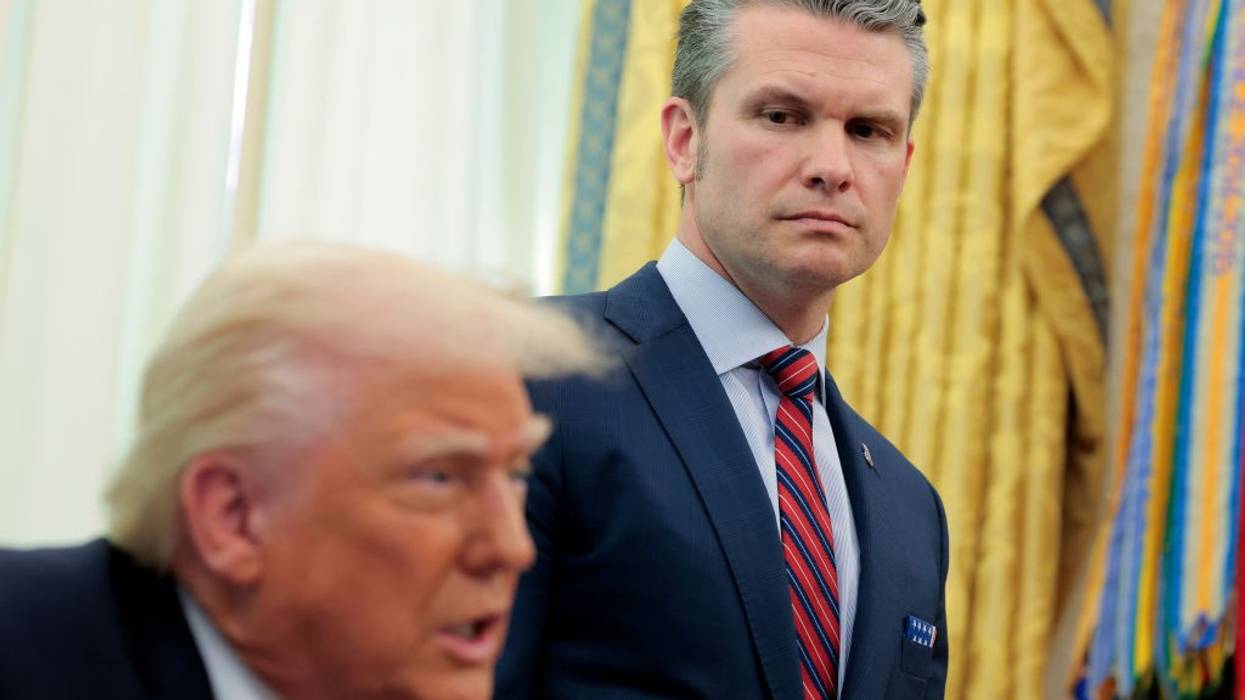
"A reminder that various administration officials lied under oath in the Senate yesterday," said one former Democratic congressman, "which is a crime punishable by imprisonment."
In response to U.S. Secretary of Defense Pete Hegseth claiming on live television earlier this week that "nobody was texting war plans," The Atlantic magazine on Wednesday morning published the "war plans" that were, in fact, shared on the private sector messaging app Signal by top members of President Donald Trump's national security team, including Hegseth and national security advisor Mike Waltz.
It was The Atlantic's Jeffrey Goldberg who on Monday published a bombshell report about how he was, seemingly "inadvertently," added to the Signal group chat by Waltz, a conversation that, in addition to Hegseth, also included director of national security Tulsi Gabbard, CIA director John Ratcliffe, White House deputy chief of staff Stephen Miller, Vice President JD Vance, and others.
In the new piece published, Goldberg said that public denials by these top officials since the original reporting presented the magazine "with a dilemma" about what to do with information the editorial team had initially withheld, citing national security concerns.
"These are strike plans. There must be a broad investigation of how compromised our national security is because of their shocking incompetence." — Rep. Veronica Escobar (D-Texas)
Though its editorial decision to withhold information was criticized by some journalists who believe the public has a right to know such details—including reporter Ken Klippenstein who accused the magazine of falling prey to "media paternalism" by not initally releasing the full contents of the chat—Goldberg explained The Atlantic's decision this way:
we withheld specific information related to weapons and to the timing of attacks that we found in certain texts. As a general rule, we do not publish information about military operations if that information could possibly jeopardize the lives of U.S. personnel. That is why we chose to characterize the nature of the information being shared, not specific details about the attacks.
However—citing Hegseth's on-air denial Monday, a statement by Trump that nothing in the chat was "classified," as well as testimony before a committee in the U.S. Senate on Tuesday by Gabbard and Ratcliffe, both of whom said under oath that classified information was not shared—Goldberg said the magazine's assessment changed.
"We believe," writes Goldberg in the latest piece, "that people should see the texts in order to reach their own conclusions. There is a clear public interest in disclosing the sort of information that Trump advisers included in nonsecure communications channels, especially because senior administration figures are attempting to downplay the significance of the messages that were shared."
Given that the nation's highest-level national security officials, up to and including the President of the United States, have said the material is not classified, the magazine acknowledged—and since the attack plans were for an operation already carried out against Houthis targets in Yemen—it would be strange if The Atlantic still felt not at liberty to publish them.
After reaching out to various agencies in advance of its decision to publish, Goldberg reports that the White House still objected to the release of the exchange, with press secretary Karoline Leavitt claiming that even though "there was no classified information transmitted in the group chat," the administration holds that what was said on the unsecured, third-party communication app was "intended to be a an [sic] internal and private deliberation amongst high-level senior staff and sensitive information was discussed."
What follows are screenshots of the detailed war plans discussed on the Signal group chat by Trump's top officials, as reported by The Atlantic:
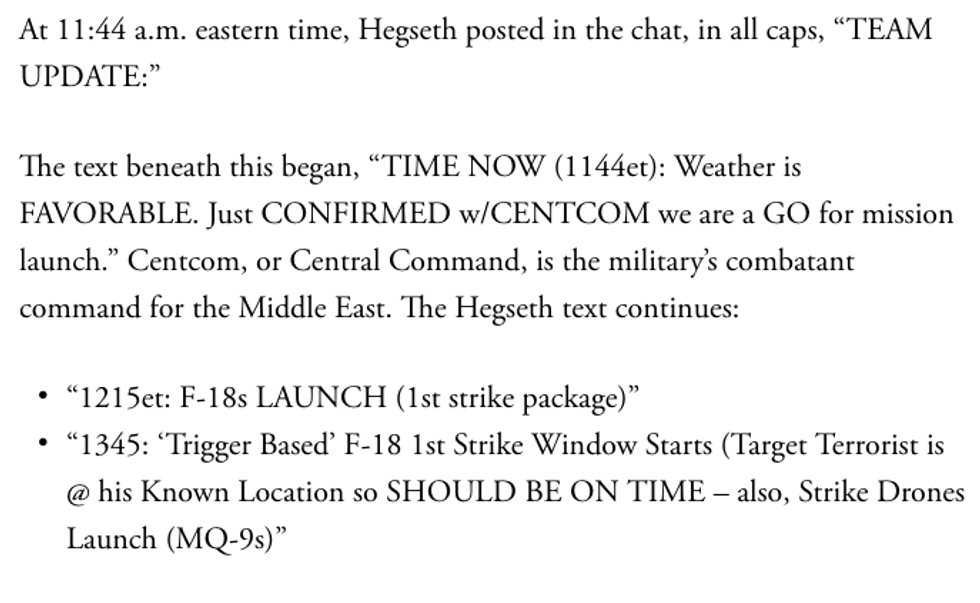
After this portion, Goldberg notes: "If this text had been received by someone hostile to American interests—or someone merely indiscreet, and with access to social media—the Houthis would have had time to prepare for what was meant to be a surprise attack on their strongholds. The consequences for American pilots could have been catastrophic."
More details:
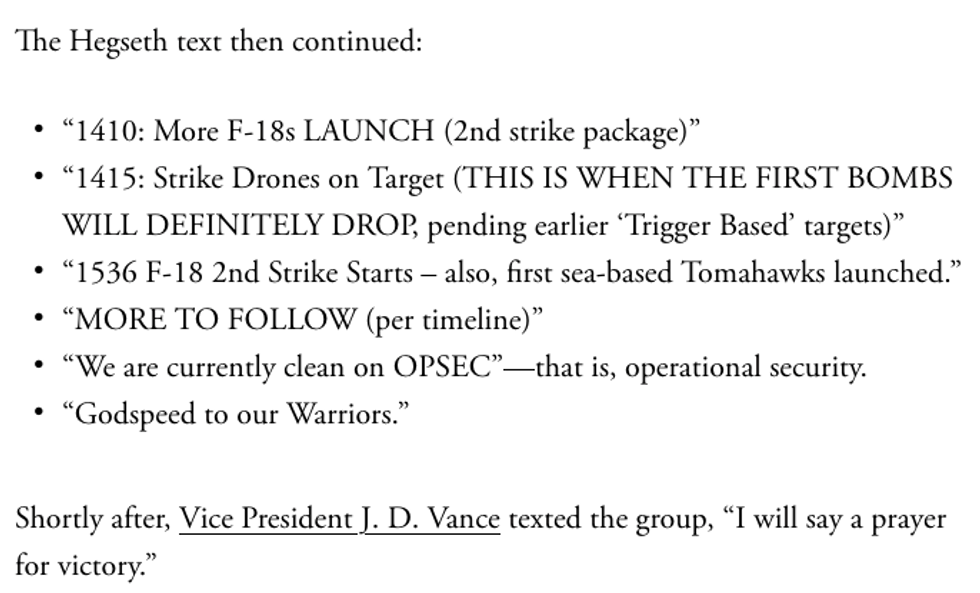
And then these paragraphs:
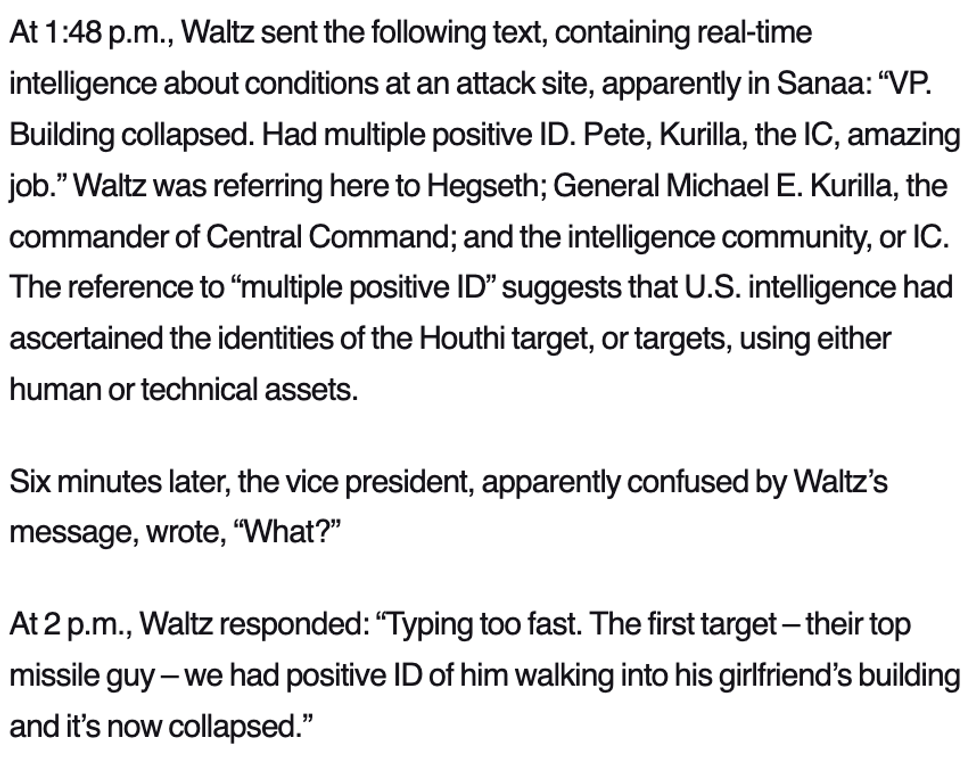
While The Atlantic's new reporting on Wednesday sits behind a paywall, reaction to it was immediate and widespread.
"Hegseth repeatedly lied to the American people and should be fired—along with all the others in the chat," said Rep. Veronica Escobar (D-Texas) in response to Goldberg's latest revelations. "These are strike plans. There must be a broad investigation of how compromised our national security is because of their shocking incompetence."
On Wednesday, two Democratic House members—Rep. Gerald E. Connolly, Ranking Member of the Committee on Oversight and Government Reform, and Rep. Maxwell Alejandro Frost, Ranking Member of the Subcommittee on Economic Growth, Energy Policy, and Regulatory Affairs—launched a congressional probe into whether or not war plans were discussed in the group chat and called on every official involved to preserve all related documents and communications.
"This incident raises grave concerns about the misuse of unsecured communication platforms for classified discussions and the potential that American military and intelligence professionals may have been compromised by the reckless dissemination of such classified material,” Connolly and Frost wrote in a letter addressed to all the officials involved.
Given their testimony before the Senate on Tuesday, Ratcliffe and Gabbard may come under specific scrutiny by members of that committee and other lawmakers.
"A reminder that various administration officials lied under oath in the Senate yesterday," said former Democratic congressman Mondaire Jones, "which is a crime punishable by imprisonment."
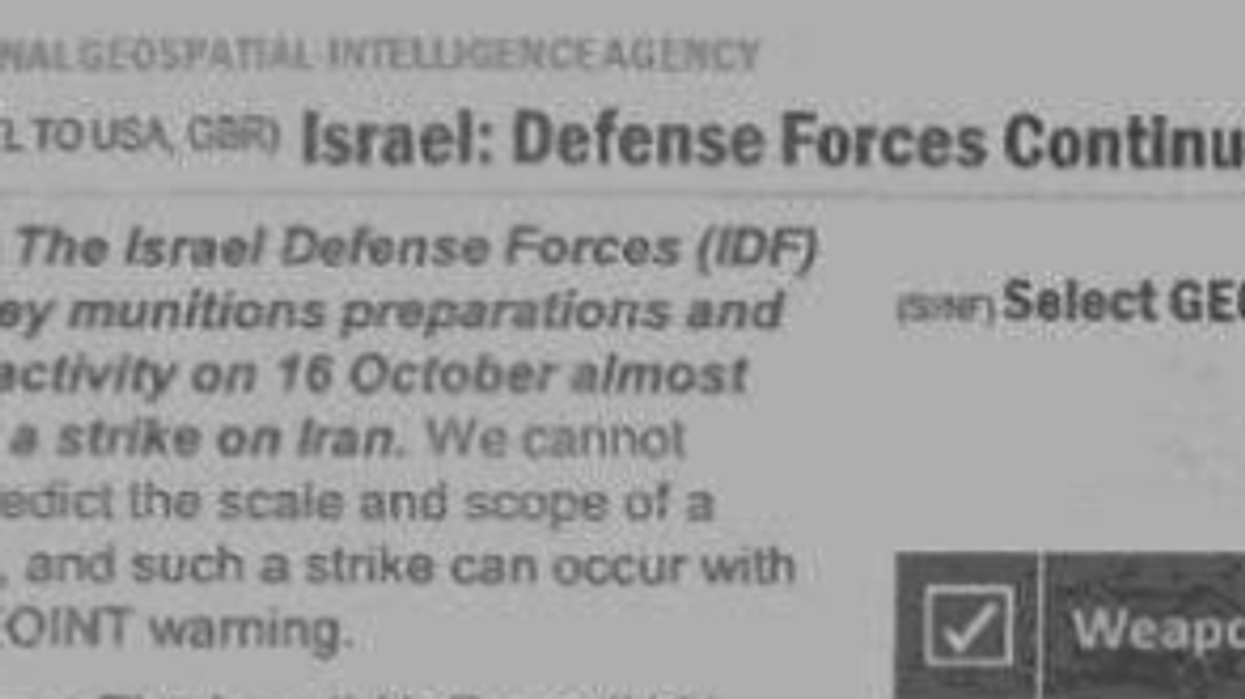
Another of the alleged documents, which multiple outlets have been told appear authentic, confirm U.S. spying on Israeli military forces and shows "a strike on Iran" is "almost certainly" coming.
"We have not observed indications that Israel intends to use a nuclear weapon."
That sentence is the concluding line from an allegedly leaked (or hacked) U.S. intelligence document posted online this week and later reported on by Axios, CNN, and other outlets.
As Axios reported on Saturday, "U.S. officials are extremely concerned about a potentially major security breach after two alleged U.S. intelligence documents about Israel's preparations for an attack on Iran were published by a Telegram account affiliated with Iran."
The Associated Press and independent investigative journalist Ken Klippenstein both cited government sources who said the documents appeared to be authentic. While U.S. officials have yet to comment publicly on the material, reporting confirmed an investigation into their authenticity and how they came to be in the public domain was underway.
Since a barrage of missile strikes aimed at military targets in Israel by Iran on Oct 1, a retaliatory strike in response to Israel's assassination of Hezbollah leader Hassan Nasrallah and other attacks, the world has been waiting for Israel's promised military response.
Assuming the documents are authentic, what they show is that U.S. intelligence—as is well known and despite being close allies—keeps a close and clandestine eye on Israeli military operations.
CNN cited an unnamed U.S. official who called the documents being made public "deeply concerning," though the outlet did not publish the documents in full. The documents, according to CNN,
are marked top secret and have markings indicating they are meant to be seen only by the US and its "Five Eyes" allies — Australia, Canada, New Zealand and the United Kingdom.
They describe preparations Israel appears to be making for a strike against Iran. One of the documents, which says it was compiled by the National Geospatial-Intelligence Agency, says the plans involve Israel moving munitions around.
Another document says it is sourced to the National Security Agency and outlines Israeli air force exercises involving air-to-surface missiles, also believed to be in preparation for a strike on Iran. CNN is not quoting directly from or showing the documents.
It has long been known that Israel has a nuclear weapons program and maintains a nuclear arsenal, but it remains both Israeli and U.S. government policy never to acknowledge or confirm the existence of either. In one of the documents, the U.S. specifically references Israel's ability to deploy a nuclear weapon, though it categorizes the threat of doing so in this case as low.
Independent journalist Ken Klippenstein, recently banned from X for posting an internal opposition research dossier that the Trump campaign had compiled on JD Vance, posted images of both documents to his substack page, as he excoriated major outlets for refusing to do.
"As with the J.D. Vance Dossier, which the entire media knew about but refused to publish, it appears the media has once again lost its nerve – and its sense of what's news," Klippenstein wrote.
According to Klippenstein's assessment:
The intelligence report includes a rundown of the various aspects of Israeli military activities that the U.S. is monitoring to inform its judgments and conclusions: weapons handling, air defense, ground forces, Navy, Air, Special Forces, and even Israel’s Nuclear Forces. But even then, only the weapons handling and special forces categories are identified as having a “medium” predictive ability in regards to determining Israel’s action; the rest are designated “low” predictive ability.
The second intelligence report is titled “Israel: Air Force Continues Preparations for Strike on Iran and Conducts a Second Large-Force Employment Exercise.” The document details Israeli activities during an evident “mission rehearsal” (in U.S. lingo) that could be indicative of how Israel will strike Iran. Citing imagery analysis and other sources, the NGA report notes that the Israeli Air Force is already conducting covert drone operations over Iran (evidently doing its own spying), and how, as part of Israeli Air Force activity, has been handling air-launched ballistic missiles and other weapons.
Defending release of the full documents, he explained that both provide "insight of enormous public interest as we stand at the precipice of a broader conflict" and contained "information that directly bears upon U.S. obligations and actions. It is for that reason that I've decided to publish the basic documents."
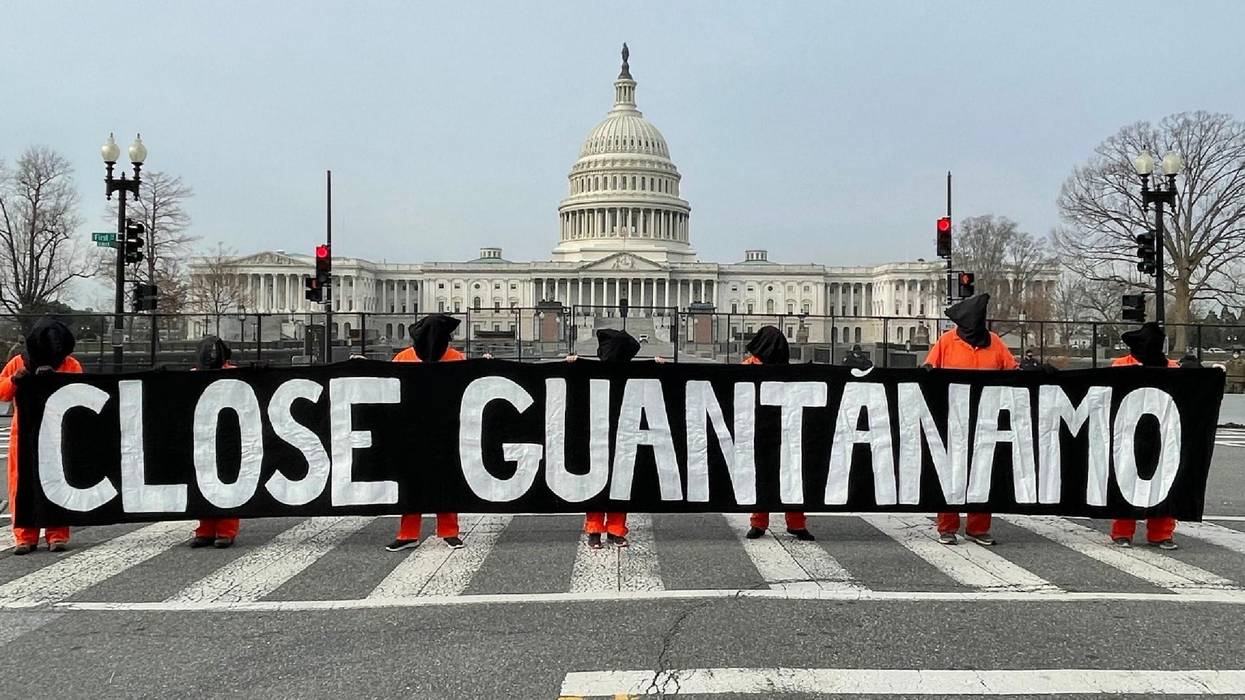
"This should be the beginning of the end of the Guantánamo Bay detention center," said one Amnesty International campaigner.
Forced into a legal corner due to the torture of men accused of planning the September 11, 2001 attacks on the United States, the Pentagon on Wednesday announced it has reached plea agreements with three top 9/11 suspects, who will spend the rest of their lives in prison and avoid execution.
The U.S. Department of Defense said in a statement that Brig. Gen. Susan Escallier, the convening authority for the legally dubious Guantánamo Bay military commissions, "has entered into pretrial agreements" with alleged 9/11 mastermind Khalid Sheikh Mohammed, Walid bin Attash, and Mustafa al-Hawsawi.
Although the Pentagon statement said that "the specific terms and conditions of the pretrial agreements are not available to the public at this time," The New York Times reported that news of the deal was revealed in a recent letter from military prosecutors to relatives of 9/11 victims.
"In exchange for the removal of the death penalty as a possible punishment, these three accused have agreed to plead guilty to all of the charged offenses, including the murder of the 2,976 people listed in the charge sheet," the letter, which was signed by Rear Adm. Aaron C. Rugh, explained.
Responding to the news, the Center for Constitutional Rights (CCR)—which has represented and advocated for Guantánamo detainees—said that "these plea agreements are a substantial step toward ending military commissions and the extralegal nightmare of Guantánamo."
"They were also inevitable because the 9/11 case was never going to be tried before a military commission," CCR continued. "The military commissions at Guantánamo have never provided justice or accountability for anyone. Rather, for the last two decades, they have provided a veneer of legal process that serves only to maintain the unacceptable status quo and cover up the torture and abuse of detainees."
"But as illustrated by the military commission cases of our clients David Hicks and Majid Khan, they have also been a way out of Guantánamo," the group added. "Ironic, because it is ultimately men like our clients Guled Duran and Sharqawi Al Hajj, who committed no offense and are approved for transfer, who remain in detention indefinitely. This has been a central, ugly truth of Guantánamo since it opened in January 2002."
The case against the plea deal trio and other 9/11 defendants—who have been imprisoned by the U.S. military for more than 20 years—was mired in pretrial delays. Defense lawyers asserted that the defendants' torture in CIA "black sites" and at Guantánamo, and the government's subsequent cover-ups, invalidated prosecution evidence against them.
The five 9/11 defendants—the three who struck plea deals plus Ammar al-Baluchi and Ramzi bin al-Shib—were all captured in Pakistan in late 2002 and early 2003 before being turned over to the United States and transferred to CIA black sites, including the notorius "Salt Pit" outside Kabul, Afghanistan, where suspected militant Gul Rahman was tortured to death in November 2002. In 2006, the five were transferred to Guantánamo Bay.
All five men were tortured. Mohammed was waterboarded 183 times and subjected to other tortures approved under the George W. Bush administration's euphemistically named "enhanced interrogation" program. Al-Hawsawi suffered a shredded rectum resulting from sodomization during so-called "rectal hydration" and has had to manually reinsert parts of his anal cavity to defecate.
In 2012, Col. James L. Pohl, then the presiding military commission judge, prohibited all testimony related to the defendants' capture, imprisonment, and torture. According to a May 2016 court filing, Pohl conspired with military prosecutors to destroy evidence in Mohammed's case.
Over the years, numerous Guantánamo prosecutors resigned over what they called a corrupt military commission system designed to guarantee convictions. In 2008, former lead prosecutor Col. Morris Davis blasted the 9/11 trials as "rigged from the start," claiming he was told by a top Bush administration lawyer that acquittals were unacceptable. At least four other military prosecutors asked to be removed from the commissions over perceived unfairness.
This isn't the first time that U.S. torture has stymied military plans to prosecute 9/11 suspects.
In 2004, then-Guantánamo prosecutor Col. Stuart Crouch—whose Marine Corps buddy initially piloted one of the planes that was hijacked and crashed into the World Trade Center on 9/11—refused to prosecute Mohamedou Ould Slahi, who allegedly helped organize the plane's hijacking, citing his torture.
Five years later, Susan J. Crawford, the top Bush administration official in charge of deciding which Guantánamo detainees to bring to trial, declared that the U.S. "tortured" Mohammed al-Qahtani, the alleged would-be 20th 9/11 hijacker, and blocked his prosecution.
More recently, in 2021, all but one member of the military jury convened to hear the case against Guantánamo detainee and alleged terrorist plotter Majid Khan recommended total clemency after the accused testified how he endured torture including rape, being hung from a ceiling beam, and being waterboarded while he was held at a CIA black site in Afghanistan.
Military prosecutors and defense lawyers had been in talks about a possible plea deal for the 9/11 suspects since at least last year. In recent years, people including U.S. Senate Judiciary Chair Dick Durbin (D-Ill.), 9/11 survivors and victims' relatives, and Ted Olsen—the former Bush solicitor-general who once defended the indefinite detention and torture of Guantánamo prisoners—have called for plea agreements and the prison's closure. However, President Joe Biden reportedly balked at the idea of sparing the defendants' lives.
While many Republican U.S. lawmakers condemned Wednesday's plea agreements as a betrayal to relatives of 9/11 victims, rights groups called the deals a big step toward justice and closure.
"This is an incredibly welcome and long-overdue step," Yumna Rizvi, a senior policy analyst at the Center for Victims of Torture, said on social media. "The Biden administration can and should #CloseGuantanamo."
Daphne Eviatar, director of the Security with Human Rights program at Amnesty International USA, said in a statement: "This is welcome news. Finally, after more than 20 years, there will be some accountability for the 9/11 attacks, and justice for the victims and survivors of those horrific crimes. We are also pleased that there is finally an outcome for at least some of the accused, who were tortured and then languished in detention without trial for more than two decades."
"This should be the beginning of the end of the Guantánamo Bay detention center," she added. "We urge the Biden administration to release the remaining detainees who have not been charged with crimes, and close the facility once and for all."
There are 19 men still imprisoned without charge in Guantánamo. Sixteen have been cleared for release, some of them for many years.
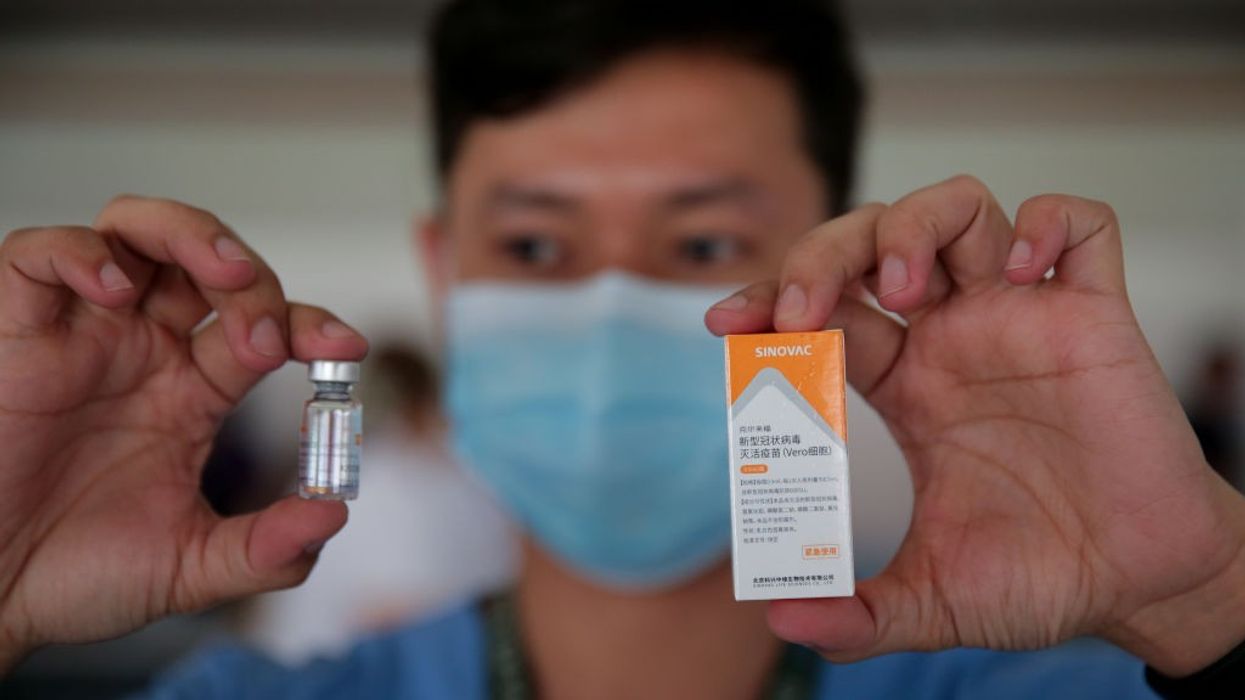
A few thoughts on an idiotic psyop that may have killed innocent people and blown back against our own citizens.
In June, Reuters reported on a hitherto secret U.S. program connected with the Covid-19 pandemic. In the spring of 2020, as the coronavirus rapidly spread throughout the world, our government sought to respond to Chinese disinformation which attempted to deflect responsibility for the virus’s origin by claiming that it had originated in a biological research lab at Fort Detrick, Maryland. What was our government’s plan? To fight fire with fire.
This was at the same time that the then-president of the Philippines, Rodrigo Duterte, was making noises about a closer relationship to China, even hinting that if China prioritized sending vaccine to his country, he would cede territory in the South China Sea to Beijing. Simultaneously, an element within the U.S. military in the Pacific was agitating Washington about keeping the Philippines on side and fighting the deluge of Chinese propaganda.
As a result, the Pentagon authorized a covert disinformation campaign against China, focusing on discrediting Chinese vaccine and protective medical equipment like masks. The channels of propaganda would be Twitter (now X), Facebook, and other social media. The campaign appears to have worked: the Philippines ended up with a very low vaccination rate in international comparison (in spite of Duterte’s efforts), and a high death rate.
While it is generally acknowledged that the Chinese vaccine (known as CoronaVac or Sinovac) is less effective, it is hardly useless: typically a 60-70-percent effectiveness versus the roughly 90-percent effectiveness of Western vaccines. Thus, it could have saved lives in the Philippines but for the U.S. disinformation campaign.
It is one more reason why Trump and his appointees should never be entrusted with public office. Will Congress ever investigate this misbegotten operation and finally nail down the chain of events?
It’s all there in the Reuters article, and there is no need to expatiate on the obvious immorality of the operation, quite apart from its colossal stupidity—at the same time U.S. public health officials were tearing out their hair trying to combat domestic Covid-19 disinformation, and doctors and nurses were risking their lives caring for terminally ill vaccine refusers, their government was pumping the same ideological poison into the minds of innocent people abroad. The nonchalant statement of an unnamed Pentagon official says it all: “We weren’t looking at this from a public health perspective. We were looking at how we could drag China through the mud.”
The report left a few dangling lose ends, however, that deserve further investigation by Congress and the Pentagon inspector general.
Are U.S. special forces out of control? The report says that the program was initiated after persistent lobbying by the then-commander of Special Operations Command Pacific, General Jonathan Braga. The article implies that he pleaded directly to Washington. Did his superiors at U.S. Pacific Command in Hawaii know what he was doing? Did they approve? We know from Reuters that various U.S. ambassadors in Southeast Asia did not approve, and they would ordinarily have overruled the general because it was a stupid idea that could harm diplomatic relations. But because the then-Secretary of Defense Mark Esper designated the propaganda campaign as a de facto wartime action, the diplomats’ objections could be disregarded.
U.S. special forces were vastly expanded during the wars in Iraq and Afghanistan and were given greater operational flexibility. They have also tended to produce loose cannons throughout the ranks. General Stanley McChrystal was special forces commander at the height of the Iraq war and later became commander of all coalition forces in Afghanistan. His career came to grief when he had the bad judgment to insult President Obama and other civilian leaders in front of a Rolling Stone reporter. Apparently, the civilian pukes in Washington lacked the general’s gung-ho attitude that with just a little more door-kicking and pyrotechnics, Afghanistan would be pacified—something that hadn’t happened since the Mongol invasions.
This kinetic mentality can get out of hand, as it did in 2017. Four Navy SEALs who were posted to the U.S. embassy in Mali, in a “juvenile” attempt to haze an Army special forces soldier, killed him. Their court martial, in a strange display of leniency, sentenced the most culpable perpetrator to only 10 years in prison, while one of the four defendants did not even receive a punitive discharge. The 10-year sentence was later vacated, with the defendant hiring a Trump lawyer to try to get him off the hook.
Ironically, vaccine refusal was the cause of another special forces stunt. Personnel from the Navy Special Warfare Command, including SEALs, not only declined to be vaccinated, but sued the Department of Defense. Their venue-shopping landed them in the Fort Worth court room of U.S. District Judge Reed O’Connor, a favorite destination for nutty conservative causes, and shockingly but not surprisingly, the judge ruled in favor of the plaintiffs. Ultimately, the Supreme Court blocked the judge’s ruling, but only insofar as it allowed the Navy to reassign, as opposed to discipline or discharge, the plaintiffs, while litigation continued.
What the personnel had done merited not merely reassignment or discharge, but potentially a court martial for the following: deliberately rendering themselves undeployable; endangering other service members; gross insubordination; and possibly even mutiny, as it was an organized action against their unit.
I have written before how religion is bandied about for political advantage by people whose own religious faith is ludicrously insincere. The justification of the SEALs—whose profession is to kill people—was a risible claim that deep Christian devotion prompted their refusal, advancing the heretofore undiscovered theological tenet that modification of their bodies by vaccine is an “affront to their Creator.” Apparently that doctrine exempts steroid abuse, which is common in the Navy’s special warfare community.
Even the military has begun to recognize that special forces may have become the tail that wags the dog—too big (bigger than the entire German army), diluted in quality, often operating outside the regular chain of command, and infected with a cowboy mentality. The mindless popular adulation, particularly of SEALs, has according to some observers had an adverse impact on civil-military relations. Perhaps we will always need door-kickers, but should they be overruling ambassadors in order to execute a cruel and asinine operation in a friendly country?
Who ultimately ordered the covert operation? The Reuters piece noted that Esper signed the directive to conduct the operation. The legality of his action rested on a provision in the 2019 defense authorization act permitting the military to conduct clandestine influence operations against other countries, including “outside of areas of active hostilities.”
This only raises more questions. Were the defense and intelligence committees of Congress, then controlled by the Democrats, duly notified of the disinformation campaign? If so, did the notification simply state that a covert psychological operation was underway, or did it provide enough details to make it clear that it was based on lies that could endanger the population of a friendly country? What was the reaction of Congress?
Perhaps we will always need door-kickers, but should they be overruling ambassadors in order to execute a cruel and asinine operation in a friendly country?
It seems unlikely that even as powerful a bureaucratic actor as the secretary of defense would order such a sensitive operation in defiance of the State Department without the guidance of those above him, or at least as a result of their signing off on his plan. The rules of Washington normally impel a person like Esper to seek cover for his actions. Accordingly, it is probable that he either notified the president directly or through the national security council of his order.
Then-President Trump had already directed the CIA in 2019 to conduct covert psychological operations inside China, so it is hardly a stretch to speculate that he would have had no problem approving DoD’s covert operation in the Philippines. It is one more reason why Trump and his appointees should never be entrusted with public office. Will Congress ever investigate this misbegotten operation and finally nail down the chain of events?
How do we know the operation did not blow back on the United States? The military is prohibited by law from conducting propaganda campaigns in the United States. But given the instant global connectedness of the internet, how could the Pentagon be so sure that its black propaganda campaigns in other countries wouldn’t leak back to the American population? They were, after all, using Twitter and Facebook accounts.
According to the U.S. Census Bureau, the Filipino population in the United States was 4.4 million in 2020, the third-largest Asian-American group. It is inconceivable that none of them would have had contact with friends and relatives in the Philippines who might have been gulled by the American disinformation. Had their contacts made them vaccine-hesitant, it would have exacerbated the already epidemic anti-vaccine movement here.
Why did it take so long to shut down the program? Shortly after the inauguration, representatives from Facebook arranged a meeting with incoming Biden administration officials to complain about the covert program, which contradicted the company’s policy against spreading vaccine disinformation. The officials were properly horrified, but again, there are loose ends to the Reuters story.
Why hadn’t the new administration learned about the program through Pentagon channels already during the transition? Why did it take until the spring of 2021 to order DoD to shut it down? And in spite of the order, why did the program linger through the summer? Was the Biden administration lax in its follow-up, or was the Pentagon out of control?
Over the decades, the U.S. military has conducted numerous programs of breathtaking stupidity: the above-ground nuclear tests of the 1950s that exposed draftees to atomic radiation, dumping thousands of tons of Agent Orange defoliant over Indochina during the 1960s, the toxic burn pits of the Iraq war. Civilian leadership in this country needs to shed its adolescent awe of martial exploits and gain firm control over a very dangerous weapon.