

SUBSCRIBE TO OUR FREE NEWSLETTER
Daily news & progressive opinion—funded by the people, not the corporations—delivered straight to your inbox.
5
#000000
#FFFFFF
To donate by check, phone, or other method, see our More Ways to Give page.
Daily news & progressive opinion—funded by the people, not the corporations—delivered straight to your inbox.
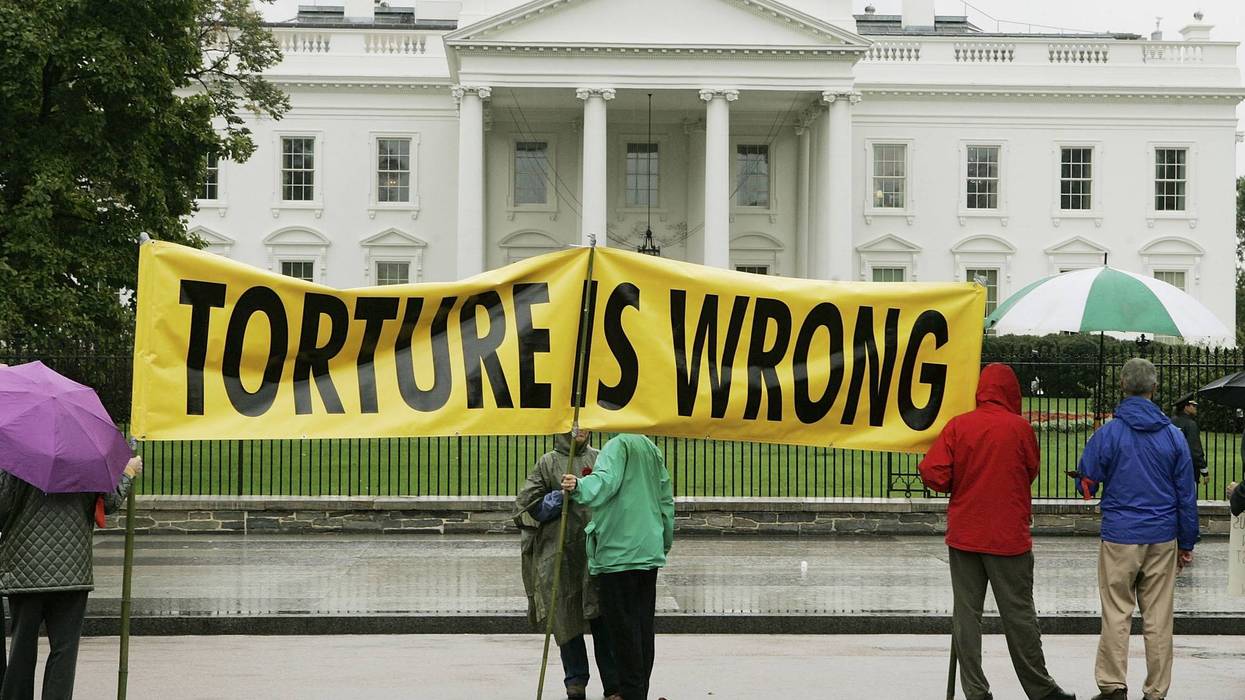
The lack of accountability set a template. And the impunity of those who orchestrated and carried out these crimes is one of the darkest legacies of the so-called "war on terror" that will forever haunt the nation's history.
A quarter-century has nearly passed since the terrorist attack that killed almost 3,000 people in the United States on Sept. 11, 2001. During the first seven years after that mass atrocity, Pentagon spending doubled. The aftermath of 9/11 was also a huge boost for “the intelligence community.” Despite—and because of—their failure to prevent the carnage on that day, the CIA and the National Security Agency as well as 14 smaller spy agencies boomed with enormous jolts of funds.
Along the way, some line items paid for torture that persisted during the George W. Bush presidency under the euphemism of “enhanced interrogation techniques.”
The most publicized location was Guantánamo on the island of Cuba. There, “the US opened the offshore detention facility in an attempt to evade the rule of law,” the London-based organization Freedom From Torture reports. “In the name of the US's ‘War on Terror,’ people deemed by the US to be ‘enemy combatants’ were detained at the facility. Many were tortured and denied basic human rights and due process… Since the first detainees arrived in 2002, Guantánamo Bay has imprisoned 780 men and boys from 48 countries…. Yet only 16 detainees have ever been convicted of a crime—just 2 percent.”
Despite public pressure, Bush vetoed a version of the Intelligence Authorization Act in March 2008 that would have required CIA interrogators to adhere to Army Field Manual regulations. As soon as Barack Obama became president, he issued an executive order rescinding the free hand for the CIA director on interrogations that Bush had reaffirmed in a July 2007 order. Obama’s directive removed the CIA’s detention power and required the agency to follow Army Field Manual rules.
Yet five and a half years went by before President Obama acknowledged, in his notable words, “We tortured some folks.” He told a news conference: “When we engaged in some of these enhanced interrogation techniques, techniques that I believe and I think any fair-minded person would believe were torture, we crossed a line.”
The acknowledgement came four months before the long-awaited release of a report in December 2014 by the Senate Select Committee on Intelligence. While heavily redacted, it was a political indictment of torture. “CIA personnel, aided by two outside contractors, decided to initiate a program of indefinite secret detention and the use of brutal interrogation techniques in violation of US law, treaty obligations, and our values,” wrote the committee’s chair, Senator Dianne Feinstein. Among the report’s conclusions:
Months later, the New England Journal of Medicine summed up aspects of the Senate committee’s findings: “Medical professionals, primarily private contractors, filled four basic roles at the black sites: clearing terrorist suspects as ‘medically fit’ for torture; monitoring torture to prevent death and treat injuries; developing novel torture methods; and actually torturing prisoners. All these actions were taken only after CIA and US Department of Justice attorneys assured the medical professionals that they had immunity from prosecution and would not be held legally responsible for violating US and international law against torture as long as they used the techniques approved in legal memos (since withdrawn) written to justify their actions. Lawyers agreed to provide immunity assurances that specific torture techniques were legal ‘enhanced interrogation’ methods only if the physicians assured them that they would be present to prevent permanent harm to prisoners. The CIA opened more than a dozen black sites around the world after 9/11, in which at least 117 prisoners were held; 39 of these prisoners were subjected to one or more torture techniques.”
At least hundreds more “suspected terrorists” who’d been captured by the US were turned over to ruthless governments. “If you want a serious interrogation, you send a prisoner to Jordan,” former CIA officer Bob Baer said. “If you want them to be tortured, you send them to Syria. If you want someone to disappear—never to see them again—you send them to Egypt.”
When shocking photos emerged of vile mistreatment of Iraqi prisoners by US soldiers at Abu Ghraib prison near Baghdad, a media uproar caused an official probe by two-star Army General Anthonio Taguba. His report, issued in 2004, concluded that “numerous incidents of sadistic, blatant, and wanton criminal abuses were inflicted on several detainees." Taguba’s candor got him pushed into early retirement. In the preface to a Physicians for Human Rights report in 2008, he addressed the matter of accountability by flatly declaring that ”the Commander-in-Chief and those under him authorized a systematic regime of torture.”
But in spite of the voluminous evidence that documented high-level approval of methodical torture, not a single US official went to prison as a result. Foreshadowing such impunity was a comment by Obama nine days before he became president in January 2009. On national television, he voiced “a belief that we need to look forward as opposed to looking backwards.” The words that came next were even more telling: “And part of my job is to make sure that for example at the CIA, you’ve got extraordinarily talented people who are working very hard to keep Americans safe. I don’t want them to suddenly feel like they’ve got to spend all their time looking over their shoulders and lawyering.”
The lack of accountability set a template. As president, Obama continued with his theme of governance without a rear-view mirror. On October 25, 2012, he tweeted: "We don't look backwards, we look forward." Career outlooks were bright for top CIA officials who’d been implicated in Bush-era torture.
“Much has been made of President Trump’s disregard for rules and norms—boundaries delineated by ethics and morality if not written laws themselves,” Adam Serwer wrote in March 2018. “But transgressing laws, rules, and norms isn’t the only way to destroy them. Another way is simply not to enforce them. In that regard, the 44th president, Barack Obama, bears a measure of responsibility for the recklessness of his successor, in particular Trump’s decision to appoint Gina Haspel, the Central Intelligence Agency’s deputy director, to run the agency itself.”
Haspel became the CIA’s director in 2018 when confirmed by the Senate despite her key role in the CIA’s torture program. Citing declassified documents, the National Security Archive at George Washington University explained that she “personally supervised the torture of a CIA detainee in 2002 leading to at least three waterboard sessions, subsequently drafted the cable that ordered destruction of the videotape evidence of torture, and served as a senior CIA official while the Agency was lying to itself, Presidents George W. Bush and Barack Obama, the Congress, and the public about the effectiveness of torture in eliciting useful intelligence.”
The Center for Victims of Torture points out that “architects and operators of the CIA torture program have risen to prestigious positions in government, the private sector, the federal judiciary and academia.” And so it was after president-elect Joe Biden nominated Avril Haines to be Director of National Intelligence. As Obama’s CIA deputy director, she had worked to impede the Senate committee investigation into torture.
“In 2015, Haines had to decide what to do about CIA officials who had hacked into the computers of Senate intelligence committee staffers who had been compiling a comprehensive report on torture, and even drummed up spurious criminal cases against them,” the Guardian reported. “She overrode the advice of the CIA inspector general and recommended against disciplinary action.” The lead researcher for that committee, Daniel J. Jones (who was portrayed by Adam Driver in the movie “The Report”), warned against Biden going through with the nomination, saying: “This is about the continuing cover-up of the torture program, the long legacy of that. And I wish I could say Haines wasn’t a part of that, but she was.” The Senate confirmed Haines to the DNI job with an 84-10 vote. She remained in the position throughout Biden’s presidency.
Three months ago, the Carnegie Endowment for International Peace announced that its next president will be Avril Haines. The organization declared: “One of the most respected national security leaders of her generation, Avril brings a deep commitment to public service and the values at the heart of our mission.”

"History will show that it was the Supreme Court that denied us justice," said Salah Al-Ejaili, one of the Iraqi plaintiffs.
The US Supreme Court recently delivered a "lethal blow" to lawsuits filed under an 18th-century law, including a case brought by Iraqis tortured at Abu Ghraib as part of the George W. Bush administration's invasion of Iraq, whose landmark verdict was struck down on Friday by a federal appellate court.
The Iraqis' case against US military contractor CACI Premier Technology was first filed in 2008, and eventually led to a trial and retrial in 2024. That November, a federal jury found the company liable for torture at the notorious prison in Iraq, and ordered it to pay the three prisoners a total of $42 million.
After unsuccessfully seeking another trial at the US District Court for the District of Virginia, CACI turned to the US Court of Appeals for the 4th Circuit, which this past March upheld the historic verdict in favor of the three tortured men: middle school principal Suhail Al Shimari, fruit vendor Asa'ad Zuba'e, and journalist Salah Al-Ejaili.
Then came the Supreme Court's June decision in Cisco Systems v. Doe, which effectively reversed the high court's 2004 ruling on the Alien Tort Statute (ATS), nullifying "a vital law that could check corporate abuses and provide an essential remedy to those whose rights have been violated," as University of California, Berkeley law professor Erwin Chemerinsky wrote earlier this week.
As legal experts feared, the 4th Circuit reconsidered the CACI verdict in the wake of the June decision, and determined that "just as the court concluded that the Cisco plaintiffs' ATS claims—including aiding and abetting torture—must be dismissed, so too must we dismiss plaintiffs' claims here—conspiracy to commit torture" and cruel, inhuman, and degrading treatment.
Baher Azmy, legal director of the Center for Constitutional Rights, which represented the Iraqis alongside other law firms, responded with a Friday statement calling out both the Supreme Court and CACI.
"As radical and regressive as the Supreme Court's decision in Cisco is," Azmy said, "it will never change this fundamental truth: A jury heard voluminous testimony and unanimously concluded CACI was responsible for the torture and abuse of dozens of Iraqis at Abu Ghraib, including these plaintiffs, rendering CACI, in the words of a foundational ATS-human rights case, 'hostis humani generis'—an 'enemy of all mankind.'"
"We remain in awe of the bravery and dedication of our clients, who fought for 18 years for justice for themselves, their families, and other survivors of horrific human rights abuses," Azmy added. "This Supreme Court may continue to do great damage to human rights cases, but it cannot take the courage and dignity away from our clients' historic achievement."
One of the plaintiffs in the case, Al-Ejaili, also took aim at the country's highest court, which is dominated by right-wing justices.
"What we did in pursuing accountability for 18 years for the torture we suffered at Abu Ghraib was a big thing. We trusted a US jury with our stories, and they believed us and sided with us—this is the most important part of the case," he said Friday. "History will show that it was the Supreme Court that denied us justice."
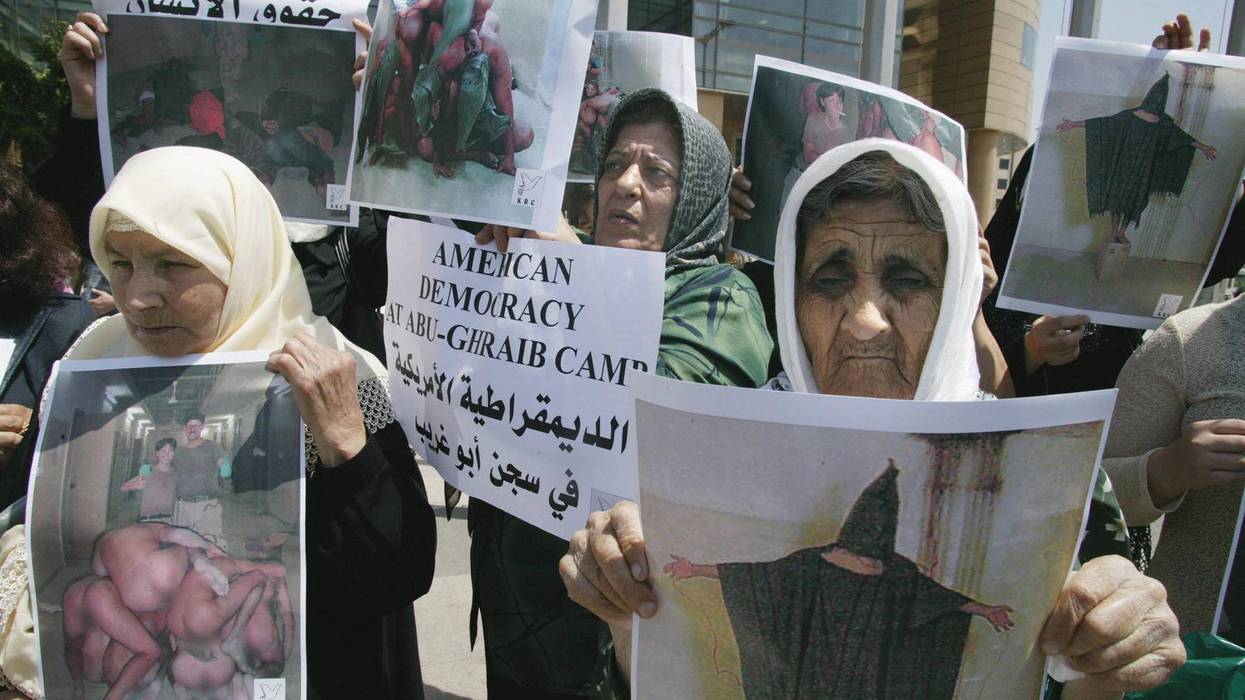
"This is a huge moment, a win that builds a foundation for a new precedent in the US," said one plaintiff. "Those who believe they are above the law will now think twice before violating human rights."
A federal appellate court on Thursday upheld a historic verdict against CACI Premier Technology, a military contractor found liable for its role in the torture of three prisoners at Abu Ghraib during the George W. Bush administration's invasion of Iraq in the early 2000s.
The three plaintiffs—middle school principal Suhail Al Shimari, fruit vendor Asa'ad Zuba'e, and journalist Salah Al-Ejaili—are represented by the Center for Constitutional Rights and two law firms. CCR noted Thursday that Al Shimari v. CACI was first filed in 2008 under the Alien Tort Statute and "is the only lawsuit brought by Abu Ghraib torture victims to make it to trial."
These three survivors of Abu Ghraib—where US captors subjected prisoners to broken bones, death threats, electric shocks, extreme temperatures, sexual abuse, and more torture—finally got their day in court in April 2024. The following November, a federal jury in Virginia ordered CACI to pay each plaintiff $3 million in compensatory damages and $11 million in punitive damages, for a total of $42 million.
"This victory isn't only for the three plaintiffs in this case against a corporation," Al-Ejaili said after the verdict. "This victory is a shining light for everyone who has been oppressed and a strong warning to any company or contractor practicing different forms of torture and abuse."
CACI unsuccessfully sought a new trial at the US District Court for the District of Virginia, then turned to the 4th Circuit, which heard arguments last September.
"We affirm the jury’s verdict in full," wrote Senior Judge Henry Floyd, joined by Judge Stephanie Thacker—both appointees of former President Barack Obama. Judge A. Marvin Quattlebaum Jr., who was appointed by President Donald Trump, dissented.
CCR legal director Baher Azmy, who argued the appeal, said Thursday that "we are gratified yet again that the 4th Circuit rejected CACI's cynical arguments for impunity for its responsibility for the torture of our clients, which the jury confirmed in a historic judgment last year. Our courageous clients have waited so long for recognition and justice, and we are happy for them that this judgment affirmed their entitlement to it."
Joining the center in this fight were the firms Akeel & Valentine and Patterson Belknap Webb & Tyler. Michael Buchanan, a partner at the latter and lead co-counsel for the plaintiffs, also expressed gratitude "for the court's careful review of this matter and for its decision to uphold a verdict that acknowledges the severe harm our clients endured at Abu Ghraib at the hands of CACI employees and military personnel."
"I have been honored to work on this appeal alongside an exceptionally skilled and dedicated team at Patterson Belknap, which included Andrew Haddad, Alex Mahler-Haug, and other lawyers and paralegals, and with our colleagues at the Center for Constitutional Rights," Buchanan said. "While no verdict can undo what these individuals suffered, this outcome affirms their courage and the fundamental principle that all must be held accountable for their actions."
Al-Ejaili also celebrated the development, declaring that "this is a huge moment, a win that builds a foundation for a new precedent in the US."
"This will cause a positive difference in the future. Those who believe they are above the law will now think twice before violating human rights," the plaintiff added. "Thank you to the US legal system and thank you to everyone who had anything to do with this win."
The appellate court's decision notably comes as the Trump administration and Israel have launched another war in the Middle East: a joint assault of Iran, alongside Israeli bombing of Lebanon. Evidence of war crimes—including attacks on schools, hospitals, and other civilian infrastructure—has quickly mounted, fueling global demands for a diplomatic resolution.
This article has been updated with comment from lead co-counsel for the plaintiffs Michael Buchanan.
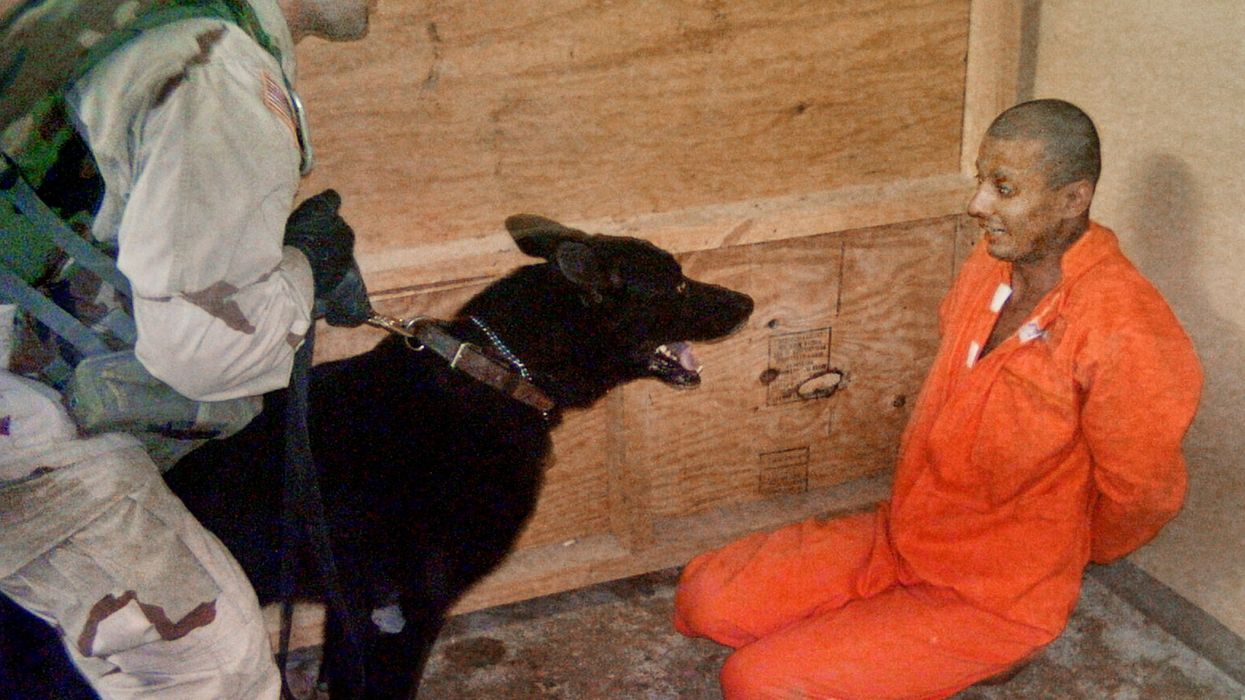
In a landmark verdict cheered by human rights defenders around the world, a federal jury in Virginia found a U.S. military contractor liable for the torture of three prisoners at the notorious Abu Ghraib prison during the invasion and occupation of Iraq in the early 2000s.
The jury ordered CACI Premier Technology to pay each of the three Iraqi plaintiffs $3 million in compensatory damages and $11 million in punitive damages, for a total of $42 million. It is the first time that a civilian contractor has been found legally responsible for abusing Abu Ghraib detainees.
The lawsuit against CACI—filed in 2008 by the Center for Constitutional Rights (CCR) on behalf of Suhail Al Shimari, Asa'ad Al Zuba'e, and Salah Al-Ejaili—alleged that company officials conspired with U.S. military personnel in subjecting the plaintiffs to torture and other crimes.
As CCR noted Tuesday:
The plaintiffs brought their case under the Alien Tort Statute, a 1789 federal law that allows foreign nationals to seek redress in U.S. courts for certain violations of international law. This historic outcome follows 16 years of litigation, more than 20 attempts by CACI to have the case dismissed, and a previous trial in which the jury was unable to reach a verdict. Never before this case had survivors of U.S. post-9/11 torture testified in a U.S. courtroom. It also featured testimony from U.S. generals, CACI employees, and former [military police officers] involved in the torture.
"Today is a big day for me and for justice," said Al-Ejaili. "I've waited a long time for this day."
"This victory isn't only for the three plaintiffs in this case against a corporation," he added. "This victory is a shining light for everyone who has been oppressed and a strong warning to any company or contractor practicing different forms of torture and abuse."
CCR legal director Baher Azmy said that "our clients have fought bravely for 16 years in search of justice for the horrors they endured at Abu Ghraib, against all of the challenges this massive private military contractor threw in their way over the years to avoid basic accountability for its role in this shameful episode in American history."
"We are awed by our clients' courage and by the power of their testimony in court, and we are grateful that this jury knew enough to credit their story over the deflections of CACI," Azmy added. "We thank the jury for affording our clients the measure of justice they came to a United States court to seek."
Like Guantánamo Bay, Abu Ghraib became a byword for U.S. torture during the Bush administration as it waged a worldwide war on terrorism following the September 11, 2001 attacks. The prison's worldwide notoriety stems from the leak and publication in 2004 of photos showing U.S. troops torturing and abusing Abu Ghraib detainees, both living and dead, often with smiles on their faces.
A 2004 investigation by U.S. Army Lt. Gen. Anthony Jones and Maj. Gen. George Fay found that CACI employees participated in and encouraged the torture of Abu Ghraib prisoners.
Investigators found that employees of CACI and Titan Corporation (now L3 Technologies) tortured Abu Ghraib detainees and encouraged U.S. troops to do likewise. Dozens of Abu Ghraib detainees died in U.S. custody, some of them as a result of being tortured to death. Abu Ghraib prisoners endured torture ranging from rape and being attacked with dogs to being forced to eat pork and renounce Islam.
A separate U.S. Army report concluded that most Abu Ghraib prisoners were innocent, with the Red Cross estimating that between 70-90% of inmates there were wrongfully detained. These include women who were held as bargaining chips to induce suspected militants to surrender.
Eleven low-ranking U.S. soldiers were convicted and jailed for their roles in Abu Ghraib torture. Brig. Gen. Janis Karpinski, the prison's commanding officer, was demoted. No other high-ranking military officer faced accountability for the abuse. Senior Bush administration officials—who had authorized many of the "enhanced interrogation techniques" used at prisons including Abu Ghraib and Guantánamo Bay—lied about their knowledge of the torture. None of them were ever held accountable.
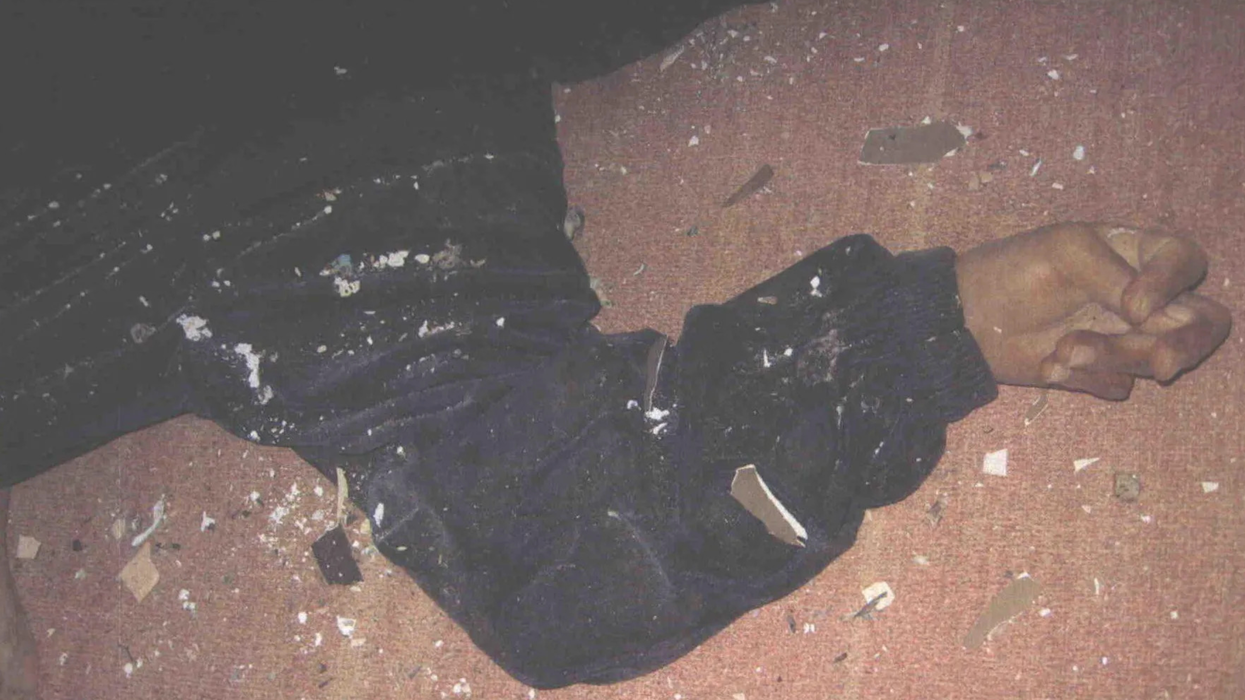
"I watched them shoot my grandfather, first in the chest and then in the head. Then they killed my granny," said one survivor who was just 8 years old during the attack by U.S. Marines.
After years of working with Iraqis whose relatives were killed by U.S. Marines in the 2005 Haditha massacre, American journalists finally obtained and released photos showing the grisly aftermath of the bloody rampage—whose perpetrators never spent a day behind bars.
On Tuesday, The New Yorker published 10 of the massacre photos—part of a collaboration with the "In the Dark" podcast that joined the magazine last year.
The podcast's reporting team had filed its public records request four years ago, then sued the U.S. Navy, Marine Corps, and Central Command over their failure to hand over the images. "In the Dark" host Madeleine Baran also traveled with a colleague to Iraq's remote Anbar Province to meet relatives of some of the 24 Iraqi civilians—who ranged in age from 1 to 76—slaughtered by U.S. troops.
"The impact of an alleged war crime is often directly related to the horror of the images that end up in the hands of the public."
Baran explained that she sought the relatives' help partly because "we anticipated that the government would claim that the release of the photos would harm the surviving family members of the dead," as "military prosecutors had already made this argument after the trial of the final accused Marine."
Khalid Salman Raseef, an attorney who lost 15 members of his family in the massacre, told Baran that "I believe this is our duty to tell the truth."
The graphic photos show dead Iraqi men, women, and children, many of them shot in the head at close range. One 5-year-old girl, Zainab Younis Salim, is shown with the number 11 written on her back in red marker by a U.S. Marine who wanted to differentiate the victims in photos.
On November 19, 2005, a convoy of Humvees carrying Marines of Kilo Company, 3rd Battalion, First Marine Division was traveling through Haditha when a roadside bomb believed to have been placed by Iraqis resisting the U.S. invasion killed Miguel Terrazas, a popular lance corporal, and wounded two other Marines.
In retaliation, Marines forced a nearby taxicab to stop and ordered the driver and his four student passengers out of the vehicle. Sgt. Frank Wuterich then executed the five men in cold blood. Another Marine then desecrated their bodies, including by urinating on them.
Wuterich then ordered his men to "shoot first and ask questions later," and they went house to house killing everyone they saw. They killed seven people in the Walid family home, including a toddler and an elderly couple.
"I watched them shoot my grandfather, first in the chest and then in the head. Then they killed my granny," Iman Walid, a survivor who was 8 years old when her family was slain, told Time in 2006.
Next, the Marines killed eight people in the Salim family home, six of them children. Finally, the troops executed four brothers in a closet in the Ahmad family home.
The Marines subsequently conspired to cover up what a military probe would deem a case of "collateral damage." The military initially claimed that 15 Iraqi civilians were killed by the same explosion that took Terrazas' life. However, a local doctor who examined the victims' bodies said they "were shot in the chest and head from close range."
Eight Marines were eventually charged in connection with the massacre. Six defendants were found not guilty and one had their case dismissed. Initially charged with murder, Wuterich pleaded guilty and was convicted of dereliction of duty. He was punished with a reduction in rank and was later honorably discharged from service.
Marine Corps Gen. James Mattis—who earned his "Mad Dog" moniker during one of the atrocity-laden battles for the Iraqi city of Fallujah in 2004—intervened on behalf of the Haditha defendants and personally dismissed charges against one of them.
Later, while serving as former President Donald Trump's defense secretary, Mattis oversaw an escalation in what he called the U.S. war of "annihilation" against Islamic State in Iraq and Syria. The general warned that "civilian casualties are a fact of life in this sort of situation," and thousands of men, women, and children were subsequently slaughtered as cities including Mosul and Raqqa were leveled.
The Haditha massacre was part of countless U.S. war crimes and atrocities committed during the ongoing so-called War on Terror, which has claimed hundreds of thousands of civilian lives in at least half a dozen countries since 2001. One of the reasons why the Haditha massacre is relatively unknown compared with the torture and killings at the U.S. military prison in Abu Ghraib, Iraq is that photos of the former crime have been kept hidden for decades.
"The impact of an alleged war crime is often directly related to the horror of the images that end up in the hands of the public," Baran wrote in the New Yorker article. She noted that Gen. Michael Hagee, who commanded the Marines at the time of the Haditha massacre, later boasted how "proud" he was about keeping photos of the killings secret.
"This," journalist Murtaza Hussain
reminded the world on Tuesday, "is what the U.S. military was doing in Iraq."
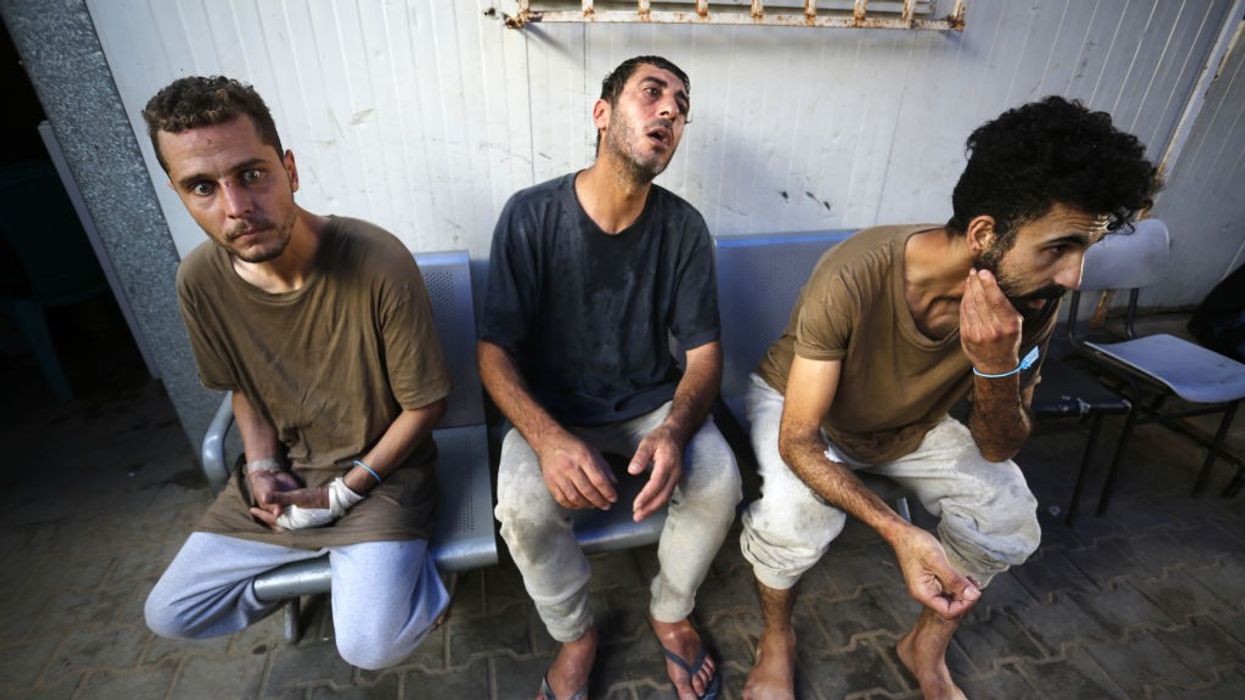
Former detainees say the Israel Prison Service "has significantly reduced their food rations, to the point of starvation, causing them to shed dozens of kilograms."
Israeli prison officials are concealing information about reductions in food rations for Palestinians held in the Gaza Strip, where detainees—who have also reported horrific abuse including alleged rape and deadly torture—have been deliberately driven "to the point of starvation," according to a report published Thursday.
Security sources
told the Israeli newspaper Haaretz that the Israel Prison Service (IPS) is intentionally cutting Palestinian prisoners' caloric intake, a move confirmed by Israeli National Security Minister Itamar Ben-Gvir, who called the policy a "deterrent."
"The Palestinian detainees will receive the minimum rights and the minimum food, and I will ensure that this policy is implemented," Ben-Gvir, who leads the far-right Otzma Yehudit (Jewish Power) party,
said Thursday in response to a query from Israel's Supreme Court.
"There is no starvation, but my policy does call for reducing conditions, including food and calories," Ben-Gvir added.
"The IPS has been deploying a policy of starvation towards Palestinian prisoners and detainees."
However, dozens of Palestinians held by Israel, including so-called security prisoners and detainees unaffiliated with Hamas, have testified that the IPS "has significantly reduced their food rations, to the point of starvation, causing them to shed dozens of kilograms."
One unidentified security source told Haaretz: "Since the start of the war, there's been a deliberate policy of indiscriminate reduction of food. To put it mildly, this policy has raised factual questions about the figures provided by the prison service, to such an extent that it is impossible to get the full picture and to determine whether what is going on is legal at all."
"This is not just a legal question, it can cause security issues with serious implications," the source added.
According to the Association for Civil Rights in Israel, which, along with the Israeli human rights group Gisha, filed a petition in the High Court of Justice earlier this year:
Since October 7, 2023, the IPS has been deploying a policy of starvation towards Palestinian prisoners and detainees. Recently released prisoners testified that they suffered from constant and extreme hunger and very poor quality of food. Among the testimonies presented in the petition were those of a diabetic prisoner who ate toothpaste to raise blood sugar, and of prisoners who lost tens of kilograms in weight in recent months.
The petition argued that the food reduction policy amounts to starvation and torture, and contravenes Israeli and international law. It violates the constitutional right of security prisoners to dignity and health, constitutes a policy of collective punishment, and violates the IPS' obligation to provide detainees in its custody with appropriate prison conditions.
At a hearing on Wednesday, the High Court of Justice slammed the reduction of Palestinian prisoners' food rations as "unacceptable."
Appalling conditions have been widely reported in Israeli military lockups since the start of Israel's bombardment and invasion of Gaza in retaliation for the Hamas-led attacks that left more than 1,100 Israelis and others dead—at least some of whom were killed by so-called "friendly fire"—and over 240 others kidnapped on October 7.
According to Israeli whistleblowers who worked at the notorious Sde Teiman prison camp in the Negev Desert, Palestinian detainees there are tortured not to "gather intelligence," but "out of revenge" for October 7.
Often referred to as "Israel's Abu Ghraib"—the infamous U.S. military prison in Iraq where dozens of detainees died, some of them tortured to death—Sde Teiman has been described by former detainees as hell on Earth. Palestinians held there and at other detention sites described being electrocuted, mauled and even raped by dogs, and starved, among other abuses.
One Sde Teiman physician said that all patients at the camp's field hospital are handcuffed by all four limbs, 24 hours a day, regardless of how dangerous they are deemed. The doctor said that more than half of his patients at the camp have suffered cuffing injuries, including some that have required "repeated surgical interventions."
"Two prisoners had their legs amputated due to handcuff injuries, which unfortunately is a routine event," he told Haaretz.
Last month, Haaretz revealed that 27 detainees have died in custody at the Sde Teiman and Anatot camps or during interrogation by Israeli forces since October 7. While some were Hamas or other militants captured or wounded while fighting IDF troops, others were civilians, including some with preexisting health conditions like the diabetic laborer who was not suspected of any offense when he was arrested and sent to his death at Anatot.
One former Sde Teiman detainee also claimed that he personally witnessed Israeli troops execute five prisoners in separate incidents.
Photos and videos of Israeli troops abusing Palestinians—both alive and dead—have been published by perpetrators on social media. According to testimonies collected by the Geneva-based Euro-Mediterranean Human Rights Monitor, Israeli officers brought Israeli civilians into detention centers and allowed them to witness Palestinian prisoners being tortured.
Former detainees said groups of 10-20 Israeli civilians were allowed to record torture sessions in which the men, stripped nearly naked, were beaten with metal batons, electrocuted, and had hot water poured over their heads. The ex-prisoners said some of the Israelis laughed while filming their torture.
The new Haaretz report comes as the International Court of Justice is weighing whether Israel is committing genocide, in part by blocking food aid from reaching starving Gazans, dozens of whom have died of malnutrition.
International Criminal Court Prosecutor Karim Khan is also seeking to arrest Israeli Prime Minister Benjamin Netanyahu and his defense minister, Yoav Gallant, for alleged war crimes and crimes against humanity including forced starvation of Gazans and extermination. Khan is also pursuing warrants to arrest three Hamas leaders.
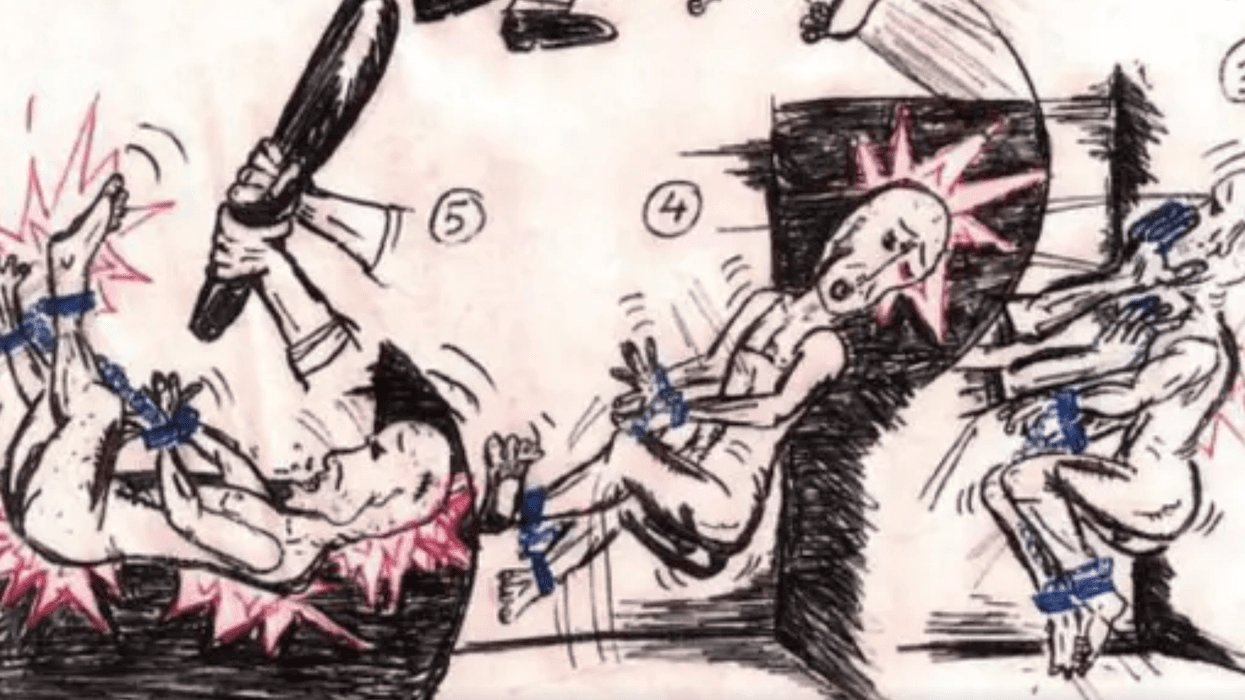
After September 11, 2001, the federal government saw an opportunity to legalize torture in a way that targeted another BIPOC community, and legitimized what it already does to its own citizens.
"Ron DeSantis... witnessed the torture, he was at Guantánamo during one of the worst years there. Yet, when he left Guantánamo, he became a leader. He became the leading voice against closure of Guantánamo. Now he is running for the presidency. Imagine that. You know, that man, with his beliefs, with his views.. .he's going to create Guantánamo within the United States."—Mansoor Adayfi, former detainee #441
The Guantánamo Bay detention facility in Cuba is often viewed as an anomaly of the way America treats people in confinement. This assumes that those incarcerated in state and federal prisons receive decent, just treatment, and that Guantánamo is the worst the U.S. has to offer. This is true, in part, but leaves out the larger fact that Guantánamo was spawned from the U.S. carceral state.
After September 11, 2001, the federal government saw an opportunity to legalize torture in a way that targeted another BIPOC community, and legitimized what it already does to its own citizens. Sometimes the hardest truths are also the cruelest: Guantánamo and U.S. prisons are two sides of the same coin.
One by one, hands bound behind their backs, the detainees were marched beyond the confines of the detention center, until the facility's lights shone in the dark from a distance. They were made to kneel in the dirt, the soldiers that brought them to the remote location standing behind, rifles leveled as if waiting for the command to open fire. In the silence, the men on their knees wept. Some begged for their lives. Others prayed a final prayer. It was an excruciating several minutes. The order never came. It had been a mock execution meant to intimidate and terrorize and torture.
The Convention Against torture and Other Cruel and Inhuman or Degrading Treatment or Punishment (CAT Convention) defines torture as any act that intentionally inflicts mental or physical pain or suffering to obtain information or a confession, punishes an individual or third party for an act they committed or are suspected of committing, or intimidates and coerces for any reason based on discrimination, all of which occurs with the consent or at the direction of a public official or someone acting in an official capacity.
What Adayfi may not have known is that what happened at Guantánamo is rooted in the U.S. carceral state, its devolved standard of decency and exceptional brutality—a pattern and practice carried out on its own citizens in a form of class warfare.
As a signatory of the United Nations and Geneva Convention, the U.S. government should be familiar with the CAT Convention. Indeed, for other countries to join the U.N., they cannot, for example, violate human rights. However, where the use of torture and capital punishment are concerned, America holds other countries to high democratic ideals, yet cannot seem to abide by those same standards. According to Joseph Pugliese, professor of cultural studies at Macquarie University, torture is a "normative practice" in the operation of U.S. interests, through an application of its laws both domestically and abroad.
The detention facility at Guantánamo Bay Naval Base, Cuba, was established in that precise location to deny those confined there meaningful access to the U.S. legal system, constitutional rights, and other processes bound by the international laws of war. The U.S. government confined 780 Muslim men and boys, from 45 different countries, without charges, not as prisoners owed a certain level of human dignity, but as "enemy combatants" who could be dehumanized and tortured under the false flags of "patriotism" and "justice."
Former Guantánamo Bay detainee No. 44, Mansoor Adayfi, was kidnapped by an Afghan warlord and trafficked to the U.S at the age of 19. Adayfi spent 14 years at Guantánamo being beaten, degraded, tortured, and interrogated as an alleged "enemy combatant" before it was determined he was no longer a threat to U.S. security interests and could be released. In his memoir, Don't Forget Us Here, Adayfi asks readers to imagine a reality where American boys, 18 years old or younger, were imprisoned without charges, tortured, punished, and experimented on, and forced to live in solitary confinement for years, if not decades.
What Adayfi may not have known is that what happened at Guantánamo is rooted in the U.S. carceral state, its devolved standard of decency and exceptional brutality—a pattern and practice carried out on its own citizens in a form of class warfare. Some glaring evidence of this link (among the innumerable statistics and cases of institutional brutality) between Guantánamo and the U.S. carceral state is that of Abu Ghraib.
In 2004, U.S. Army reservists guarded Iraqi POWs at Abu Ghraib prison in Iraq. It would eventually be discovered that, alongside some of the most iconic images from the U.S. war in Iraq, the Army reservists responsible for watching the POWs were instead beating, degrading, sexually humiliating, and torturing them. It would also be revealed that the responsible parties, prior to their duty assignment in Iraq, were correctional officers in state prison systems.
The human rights abuses at Abu Ghraib and Guantánamo are, to varying degrees, routine in U.S. prisons: Rape and sexual assaults committed by staff on prisoners, daily physical assaults on people who have spent years in solitary confinement, women forced to give birth while shackled to a hospital bed, brutal cell extractions, unnecessary body cavity searches in women's prisons, and much more. Mental and physical torture, and systemic dehumanizing treatment, are endemic to both state and federal prisons.
"American Citizens will end up one day, being detained indefinitely, tortured, abused, and have no rights. Because if they managed to do it outside, it's on the inside too."—Mansoor Adayfi
While a lack of charges, CIA involvement, and their status as foreign nationals distinguish the individuals held at Guantánamo, Abu Ghraib, and CIA black sites around the world from those who have been convicted of crimes and sentenced as punishment in U.S. prison systems, conditions of confinement are indeed similar. So too are efforts to ignore or otherwise circumvent due process rights, meaningful access to federal court oversight, and the right to be free from cruel or unusual punishments.
In four separate rulings, the U.S. Supreme Court limited the federal government's ability to detain non- U.S. citizens beyond the reach of constitutional protections and international law:
In Rasul v. Bush (2004), the court held that the "complete jurisdiction and control" maintained by the federal government at the Guantánamo Bay detention facility activated the prisoners' right to challenge their confinement in federal court.
In Hamdi v. Rumsfeld (2004), the court held that the Guantánamo prisoners have a right to "notice of the factual basis for their classification [as an enemy combatants] and a fair opportunity to rebut the Government's factual assertions before a neutral decision-maker."
In Hamden v. Rumsfeld (2006), the court held the executive branch's power to detain "enemy combatant" is limited by congressional war powers, which are restricted by international law. The Bush administration's system for trying the detainees was unauthorized under federal law and the Geneva Convention.
In Boumediene v. Bush (2008), the court held that Guantánamo prisoners have the right to challenge their confinement in federal court by filing a writ of habeas corpus. The ruling in Boumediene was necessary because Congress and the Bush administration sought to go around the court's rulings in Rasul, Hamdi, and Hamden, and keep the federal courts out of Guantánamo by suspending the writ of habeas corpus. This was an extension of the belief that the incarcerated do not deserve a review of the circumstances around their confinement, a belief that predates 9/11.
This logic—extend the punishment but not the protection—is used in virtually every criminal case brought against America's underclass or those deemed unworthy of protection or mercy.
A writ of habeas corpus is used to bring a prisoner before a federal court to ensure that person's confinement is not illegal. The original intent of the habeas petition is drawn from the English Habeas Corpus Act, and is equal to the importance of the Magna Carta, the Petition of Rights, and the Bill of Rights. Just as the Habeas Corpus Act protected English liberty, the American habeas petition is a constitutional guarantee of personal liberty. Viewed another way, the habeas petition is a judicial check against government overreach and a protection of the right of any person under U.S. control to be free from wrongful imprisonment. Efforts to undermine, curtail, or otherwise block access to the federal courts through a habeas petition signal naked power grabs by the government and a weakening of the judiciary's independence.
In theory, filing a habeas petition to the federal court of jurisdiction to challenge one's imprisonment as unconstitutional should be a straightforward process. This assumes knowledge of procedural rules, possession of documents that prove the claim, and at a minimum a clear understanding of the charges. The Guantánamo detainees were completely isolated and without knowledge about the formal charges. They were not arraigned, indicted, or given attorneys. They did not even have so much as pen and paper for the first three years of their confinement. Guantánamo was a "black hole" where virtually all information was "classified," "secret," or a national security matter. It would not be until 2004 that attorneys from the Center for Constitutional Rights mounted habeas challenges on behalf of the detainees. Even then, their efforts faced numerous obstacles and government resistance seeking to block access to the federal courts.
U.S. prisoners do not have unfettered access to federal court review of lower court decisions. Rather than classified Military Commission hearings and special designations as "enemy combatants," prisoners in state and federal prisons have to contend with the procedural kudzu of the 1996 Antiterrorism and Effective Death Penalty Act (AEDPA).
AEDPA gutted the federal judiciary's ability to hear and redress constitutional violations that have been overlooked or ignored by state courts. The expressed congressional intent of AEDPA was to reduce the delays in capital post-conviction appeals by imposing strict time and evidentiary constraints on habeas petitions. And though the law may have initially increased executions nationwide, a decade later they returned to pre-AEDPA levels. The unexpressed, and more diabolical, intent of AEDPA changed the way all criminal cases were reviewed by federal courts, making it so the court would not disturb a conviction or sentence unless it was so unconstitutional as to shock the conscience, rendering habeas review worthless to most criminal defendants.
As Guantánamo detainees fought for access to a legitimate court reviewing their confinement, prisoners in the U.S. likewise struggled to attain that same federal judicial oversight. The weakening of the habeas petition had been a longtime goal of conservatives, years before AEDPA. This is critical to understanding the dissent of the conservative justices in Rasul, Hamdi, Hamden, and Boumediene, and how their ideology manifests in constitutional challenges of the death penalty. In these cases the court held that Guantánamo prisoners, or anyone under complete U.S. control in confinement, have a right to file habeas petitions in federal court. The dissent, however, sided with the Bush administration and Republican-controlled Congress: "Enemy combatants" do not deserve constitutional rights.
This logic—extend the punishment but not the protection—is used in virtually every criminal case brought against America's underclass or those deemed unworthy of protection or mercy. Then, to obscure their intent, the narratives around crime and terrorism are threaded with misinformation and appeals to patriotism.
"They constructed their own language" said Mansoor Adayfi. "They said, 'Well, they are detainees, not prisoners. It is rendition, not torture. They are not being tortured. It's enhanced interrogation.'"
Euphemistic language or "doublespeak" is common to most government narratives. It enables the worst human rights violations with little understanding by the average citizen what is actually being said or done in their name. This is how threats to safety were used to pass laws that created mass incarceration, widespread surveillance in the wake of 9/11, and the continued use of the death penalty in America despite its absence in most democratic nations throughout the world. "Justice" for the victims of 9/11 and other crimes is a co-opted word that not only diminishes constitutional protections for the very people who need it the most, it allows for human experimentation, torture, and state-sanctioned murder.
In Glossip v. Gross, the U.S. Supreme Court split along ideological lines and, in a conservative majority opinion, held Oklahoma's three-drug lethal injection protocol did not violate the Eighth Amendment. Glossip was about more than whether Oklahoma's lethal injection was constitutional; it became a pivotal case in the fundamental constitutionality of capital punishment. Simply put, because the conservative justices held a majority on the court, they denied the death penalty could ever be unconstitutional because it is mentioned in the U.S. Constitution.
Writing for the majority, Justice Samuel Alito affirmed the lower court's rejection of the defendant's argument that Oklahoma's lethal injection violated their Eighth Amendment right to be free from cruel and unusual punishment. Alito also held that the prisoners failed to provide an alternative method of execution that "entails less risk of pain." This single statement is responsible for opening the door for states to use other methods of execution, not just the lethal injection. Alito has defended the death penalty in previous cases. In Glossip, he continued that trend: "The death penalty was an accepted punishment at the adoption of the Constitution and the Bill of Rights." The irony of the statement, using the Bill of Rights to ignore the inherent cruelty of the lethal injection, was apparently lost on the justice.
The people who pursue, sanction, and order this brand of "justice," the torture and murder of incapacitated human beings, are seldom around when it is carried out.
Justice Antonin Scalia, in his concurring opinion for Glossip, contended that the Eighth Amendment "was understood to bar only those punishments that added 'terror, pain, and disgrace' to an otherwise permissible capital sentence." Terror, pain, and disgrace are in fact the purpose of capital punishment. If any of the justices who so vigorously defend the use of the death penalty were to be required to witness it in action, if they had a shred of humanity they would not defend it, or the various methods for carrying out an execution, much longer. Especially if they saw a botched execution.
In November, 2022, Kenny Eugene Smith survived Alabama's first attempt to execute him. For over an hour and a half, Smith was tortured as his executioners repeatedly tried and failed to insert IVs in his body for the lethal injection. The Rev. Dr. Jeff Hood was Smith's spiritual adviser and ultimately became his best friend in the final moments of his life. In a phone interview, Dr. Hood described some of what Smith experienced in the aftermath of the botched execution:
Kenny compared it to being under a sewing machine, one where the needle punctured deep over and over again. Then, after it was over, it became a mental image that gave him nightmares and terrified his every waking thought. A mental sewing machine constantly stabbIng into his mind.
Smith was driven insane by the botched execution, not just with nightmares, but pervasive anxiety, PTSD, and numerous other diagnoses. Short of being a comatose zombie, doctors could not give Smith enough meds to make him forget. It was a brutal choice: Be sober enough to function socially and suffer images of hypodermic needles perforating his flesh, or ingest all they could give him, still suffer, and be unable to communicate with his wife, friends, and family in his remaining time on Earth. He chose the former.
To underscore the excruciating nature of Smith's botched execution, the minister who was there in 2022 disappeared, not wanting anything to do with executions or be reminded of them by maintaining contact with Kenny Smith. The minister had been traumatized by what he saw.
It bears mentioning that Kenny Smith was not sentenced to death by a jury of his peers; they actually recommended life imprisonment. But the trial judge took matters into his own hands and sentenced Smith to death. The judge's order was the cold calculation of premeditated murder, a morally bankrupt decision that mocked the word "justice."
As the months passed, Smith, Dr. Hood, and Smith's family and friends talked about the fear of yet another execution date. It was one thing to talk about, though, said Dr. Hood, but another to realize with increasing horror and monumental disappointment in humanity that the U.S Supreme Court refused to even review Kenny Smith's emergency appeal for a stay of execution using the novel execution method of nitrogen hypoxia. Only the court's liberal justices—Sonia Sotomayor, Elena Kagan, and Ketanji Brown Jackson—were willing to hear the appeal, but it takes four justices, and none of the conservative justices were interested.
Though not in the execution chamber like Dr. Hood, independent journalist Lee Hedgepeth attended Smith's execution and Alabama's first use of nitrogen hypoxia. Hedgepeth writes that Kenneth Smith reacted immediately to being gassed: "He began thrashing against the straps, his whole body and head violently jerking back and forth for several minutes."
"Soon for around a minute, Smith appeared heaving and retching inside the mask," Hedgepeth continued. Ten minutes later, despite the steady flow of nitrogen gas, Smith made his final visible efforts to live.
After this grotesque display of State government power over its citizenry, Alabama Attorney General Steve Marshall advertised the revitalized gassing of undesirables: "Alabama has done it, and now so can you." The AG did not attend Smith's execution. Neither did the judge who sentenced Smith to death or the district attorney who pursued the capital sentence. In fact the people who pursue, sanction, and order this brand of "justice," the torture and murder of incapacitated human beings, are seldom around when it is carried out. This is by design, and makes it easier for them to sleep at night, secure in their power and false morality.
"People should have to engage with the punishments they want to inflict on others. Whether that's the judge, jury, prosecutor, or whoever... Part of me thinks they should be forced to carry it out. The process has become too sanitized, the public too disconnected from what the death penalty is: the premeditated murder of another human being."—Rev. Dr. Jeff Hood
Five Muslim men accused of conspiring in the September 11 2001 terrorist attacks have yet to go to trial because of numerous pretrial proceedings at Guantánamo that have lasted over a decade. Military prosecutors made an offer in March 2022 that would spare the prisoners a death sentence if they admitted their alleged roles in 9/11. Defense attorneys of the detainees said their clients wanted certain "accommodations": treatment from a civilian-run program for ongoing health problems they suffer as a result of the torture they experienced, assurances they would not serve their sentence in solitary confinement, and the ability to eat and pray in a communal setting.
Some of the relatives of the nearly 3,000 victims want a trial with the prospect of the prisoners being sentenced to death. Others are "outraged" with the possibility of plea deals, calling for "justice" not "closure." Still other families want the plea agreements to end the indefinite detention at Guantánamo.
Elizabeth L. Miller lost her father Douglas C. Miller, a firefighter who gave his life on 9/11. At the age of 11, Miller wrote to then-President George W. Bush and, along with her classmates who signed with her, begged him to end the wars in Iraq and Afghanistan: "We should be the good country, the peaceful country, but we're not" As a college student, Miller spoke at a 9/11 anniversary event, calling for peace and forgiveness, reminding the attendees the attacks were the actions of a few, not the many. Her family was not invited back. Later, Miller would go on to learn more about the Middle East and wars in Iraq and Afghanistan, and how Guantánamo was used to confine and torture hundreds of people without charges or attorneys:
I learned how other [detainees], including the five men who would later be charged with planning and supporting the 9/11 attacks, were tortured at CIA black sites in foreign countries. All of this was done in the name of justice for the victims like my father. But I felt the United State had abandoned its commitment to human rights and the rule of law. I was ashamed.
President Joe Biden rejected the plea agreements offered to the five men at Guantánamo, declining to "accept the terms" in the United States v. Mohammed, et al. Although Biden placed a moratorium on federal executions after his predecessor executed 12 people in less than a year, this has not stopped federal prosecutors from pursuing capital sentences, nor does it provide more than a fever dream that any elected official with the power to do so has the political will to end the American republic's love affair with punishment sans mercy.
If there is to be a more just society, a United States that closes the Guantánamo Bay detention facility and ends mass incarceration and punishments like those suffered by Kenny Smith, it requires public accountability. Not just accountability for the vindictive, bloodthirsty elected officials calling for the deaths of other human beings, or those who misinform and stir angry mobs with appeals to nationalism. Rather, accountability for anyone who can claim imprisonment and death are a form of "justice," but will never face the person they consign to that fate, or witness the horror of their life thrashing against the straps of a gurney as it is extinguished. Accountability, the sort called upon by those demanding law, order, safety, and justice, is a coin with two sides, and no room for hypocrisy.
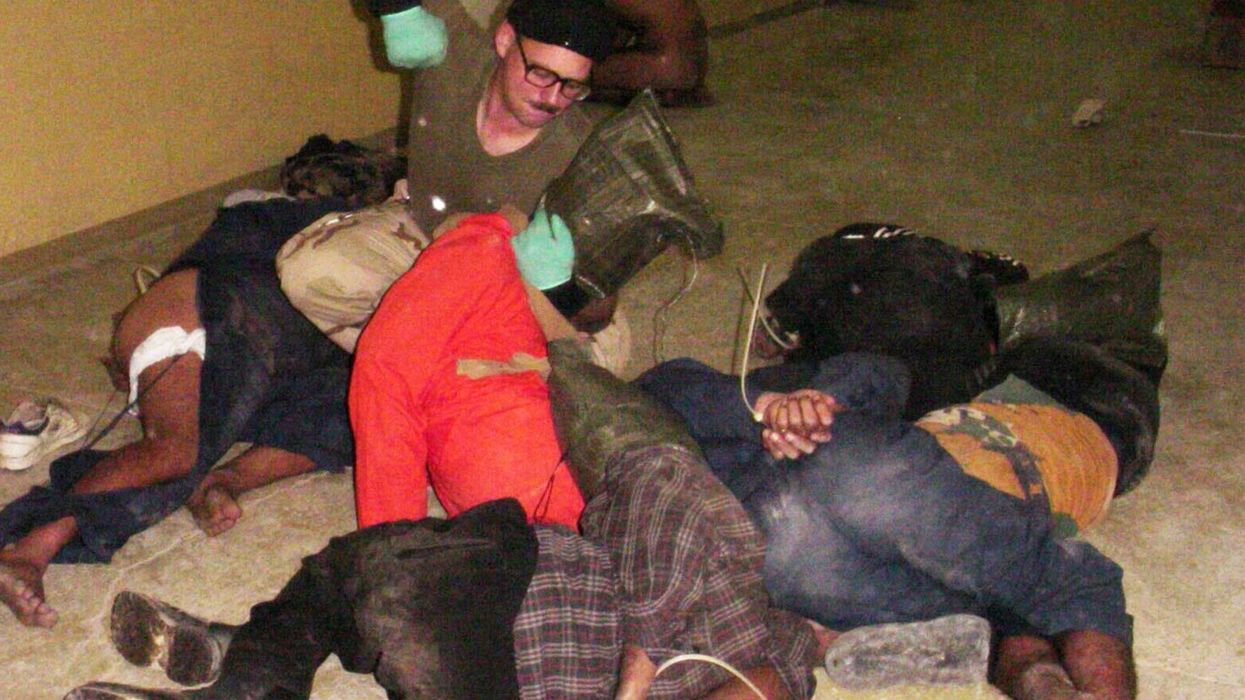
"This will not be the final word; what happened in Abu Ghraib is engraved into our memories and will never be forgotten in history," one plaintiff vowed.
The federal judge presiding over a case filed by three Iraqis who were tortured by U.S. military contractors in the notorious Abu Ghraib prison two decades ago declared a mistrial Thursday after jurors were unable to reach a unanimous verdict.
After eight days of deliberation—a longer period than the trial itself—the eight civil jurors in Alexandria deadlocked over whether employees of CACI conspired with soldiers to torture detainees. The Virginia-based professional services and information technology firm was hired in 2003 during the George W. Bush administration to provide translators and interrogators in Iraq during the U.S.-led invasion and occupation, conspired with soldiers to torture detainees.
U.S. District Judge Leonie Brinkema—who said Wednesday that "it's a very difficult case"—declared a mistrial.
Plaintiff Salah Al-Ejaili told The Guardian that "it is enough that we tried and didn't remain silent."
"We might not have received justice yet in our just case today, but what is more important is that we made it to trial and spoke up so the world could hear from us directly," he added. "This will not be the final word; what happened in Abu Ghraib is engraved into our memories and will never be forgotten in history."
Baher Azmy, legal director of the Center for Constitutional Rights—which filed the case—said that "we are, of course, disappointed by the jury's failure to reach a unanimous verdict in favor of our plaintiffs despite the wealth of evidence."
"But we remain awed by the courage of our clients, who have fought for justice for their torment for 16 years," Azmy added. "We look forward to the opportunity to present our case again."
Al Shimari v. CACI, which was first filed in 2008 under the Alien Tort Statute—a law allowing non-U.S. citizens to sue for human rights abuses committed abroad—plaintiffs Suhail Al Shimari, Asa'ad Zuba'e, and Al-Ejaili accused CACI of conspiring with the U.S. military to perpetrate war crimes including torture at Abu Ghraib. The men suffered broken bones, electric shocks, sexual abuse, extreme temperatures, and death threats at the hands of their U.S. interrogators.
The case marked the first time a U.S. jury heard a case brought by Abu Ghraib survivors. Along with the Guantánamo Bay detention camp in Cuba, the prison became synonymous worldwide with U.S. torture during the War on Terror. Dozens of Abu Ghraib detainees died while in U.S. custody, some of them as a result of being tortured to death. Abu Ghraib prisoners suffered torture and abuse ranging from rape and being attacked with dogs to being forced to eat pork and renounce Islam.
A 2004 probe by Maj. Gen. Anthony Taguba found that the majority of Abu Ghraib prisoners—the Red Cross said 70-90%—were innocent. Women and girls were also imprisoned at Abu Ghraib as bargaining chips to lure militants wanted for resisting the U.S.-led invasion and occupation of their homeland. Some reported rape and sexual abuse by their captors, which reportedly led to the "honor killing" murders of multiple women.
CACI denies any wrongdoing and still gets millions of dollars worth of U.S. government contracts each year. In February, Fortune named CACI one of the "World's Most Admired Companies" for the seventh consecutive year.
Those unforgettable images of torture in the Iraqi prison serve as a continuous reminder of the nature of American brutality in the War on Terror that has not ended.
“To this day I feel humiliation for what was done to me… The time I spent in Abu Ghraib—it ended my life. I’m only half a human now.” That’s what Abu Ghraib survivor Talib al-Majli had to say about the 16 months he spent at that notorious prison in Iraq after being captured and detained by American troops on October 31, 2003. In the wake of his release, al-Majli has continued to suffer a myriad of difficulties, including an inability to hold a job thanks to physical and mental health deficits and a family life that remains in shambles.
He was never even charged with a crime—not exactly surprising, given the Red Cross’ estimate that 70% to 90% of those arrested and detained in Iraq after the 2003 American invasion of that country were guilty of nothing. But like other survivors, his time at Abu Ghraib continues to haunt him, even though, nearly 20 years later in America, the lack of justice and accountability for war crimes at that prison has been relegated to the distant past and is considered a long-closed chapter in this country’s War on Terror.
On April 28, 2004, CBS News’s “60 Minutes” aired a segment about Abu Ghraib prison, revealing for the first time photos of the kinds of torture that had happened there. Some of those now-infamous pictures included a black-hooded prisoner being made to stand on a box, his arms outstretched and electrical wires attached to his hands; naked prisoners piled on top of each other in a pyramid-like structure; and a prisoner in a jumpsuit on his knees being threatened with a dog. In addition to those disturbing images, several photos included American military personnel grinning or posing with thumbs-up signs, indications that they seemed to be taking pleasure in the humiliation and torture of those Iraqi prisoners and that the photos were meant to be seen.
Once those pictures were exposed, there was widespread outrage across the globe in what became known as the Abu Ghraib scandal. However, that word “scandal” still puts the focus on those photos rather than on the violence the victims suffered or the fact that, two decades later, there has been zero accountability when it comes to the government officials who sanctioned an atmosphere ripe for torture.
Thanks to the existence of the Federal Tort Claims Act, all claims against the federal government, when it came to Abu Ghraib, were dismissed. Nor did the government provide any compensation or redress to the Abu Ghraib survivors, even after, in 2022, the Pentagon released a plan to minimize harm to civilians in U.S. military operations. However, there is a civil suit filed in 2008—Al Shimari v. CACI—brought on behalf of three plaintiffs against military contractor CACI’s role in torture at Abu Ghraib. Though CACI tried 20 times to have the case dismissed, the trial—the first to address the abuse of Abu Ghraib detainees—finally began in mid-April in the Eastern District Court of Virginia. If the plaintiffs succeed with a ruling in their favor, it will be a welcome step toward some semblance of justice. However, for other survivors of Abu Ghraib, any prospect of justice remains unlikely at best.
”My impression is that what has been charged thus far is abuse, which I believe technically is different from torture... And therefore, I’m not going to address the ‘torture’ word.” So said Secretary of Defense Donald Rumsfeld at a press conference in 2004. He failed, of course, to even mention that he and other members of President George W. Bush’s administration had gone to great lengths not only to sanction brutal torture techniques in their “Global War on Terror,” but to dramatically raise the threshold for what might even be considered torture.
As Vian Bakir argued in her book Torture, Intelligence and Sousveillance in the War on Terror: Agenda-Building Struggles, his comments were part of a three-pronged Bush administration strategy to reframe the abuses depicted in those photos, including providing “evidence” of the supposed legality of the basic interrogation techniques, framing such abuses as isolated rather than systemic events, and doing their best to destroy visual evidence of torture altogether.
Although top Bush officials claimed to know nothing about what happened at Abu Ghraib, the war on terror they launched was built to thoroughly dehumanize and deny any rights to those detained. As a 2004 Human Rights Watch report, “The Road to Abu Ghraib,” noted, a pattern of abuse globally resulted not from the actions of individual soldiers, but from administration policies that circumvented the law, deployed distinctly torture-like methods of interrogation to “soften up” detainees, and took a “see no evil, hear no evil,” approach to any allegations of prisoner abuse.
Revisiting Bush’s apologia so many years later is a vivid reminder that he and his top officials never had the slightest intention of truly addressing those acts of torture as systemic to America’s war on terror, especially because he was directly implicated in them.
In fact, the Bush administration actively sought out legal opinions about how to exclude war-on-terror prisoners from any legal framework whatsoever. A memorandum from Attorney General Alberto Gonzales to President Bush argued that the Geneva Conventions simply didn’t apply to members of the terror group al Qaeda or the Afghan Taliban. Regarding what would constitute torture, an infamous memo, drafted by Office of Legal Counsel attorney John Yoo, argued that “physical pain amounting to torture must be equivalent in intensity to the pain accompanying serious physical injury, such as organ failure, impairment of bodily function, or even death.” Even after the Abu Ghraib photos became public, Rumsfeld and other Bush administration officials never relented when it came to their supposed inapplicability. As Rumsfeld put it in a television interview, they “did not apply precisely” in Iraq.
In January 2004, Major General Anthony Taguba was appointed to conduct an Army investigation into the military unit, the 800th Military Police Brigade, which ran Abu Ghraib, where abuses had been reported from October through December 2003. His report was unequivocal about the systematic nature of torture there: “Between October and December 2003, at the Abu Ghraib Confinement Facility (BCCF), numerous incidents of sadistic, blatant, and wanton criminal abuses were inflicted on several detainees. This systemic and illegal abuse of detainees was intentionally perpetrated by several members of the military police guard force (372nd Military Police Company, 320th Military Police Battalion, 800th MP Brigade), in Tier (section) 1-A of the Abu Ghraib Prison.”
Sadly, the Taguba report was neither the first nor the last to document abuse and torture at Abu Ghraib. Moreover, prior to its release, the International Committee of the Red Cross had issued multiple warnings that such abuse was occurring at Abu Ghraib and elsewhere.
Once the pictures were revealed, President Bush and other members of his administration were quick to condemn the violence at the prison. Within a week, Bush had assured King Abdullah of Jordan, who was visiting the White House, that he was sorry about what those Iraqi prisoners had endured and “equally sorry that people who’ve been seeing those pictures didn’t understand the true nature and heart of America.”
As scholar Ryan Shepard pointed out, Bush’s behavior was a classic case of “simulated atonement,” aimed at offering an “appearance of genuine confession” while avoiding any real responsibility for what happened. He analyzed four instances in which the president offered an “apologia” for what happened—two interviews with Alhurra and Al Arabiya television on May 5, 2004, and two appearances with the King of Jordan the next day.
In each case, the president also responsible for the setting up of an offshore prison of injustice on occupied Cuban land in Guantánamo Bay in 2002 managed to shift the blame in classic fashion, suggesting that the torture had not been systematic and that the fault for it lay with a few low-level people. He also denied that he knew anything about torture at Abu Ghraib prior to the release of the photos and tried to restore the image of America by drawing a comparison to what the regime of Iraqi autocrat Saddam Hussein had done prior to the American invasion.
The false pretenses under which the U.S. waged war on Iraq are a reminder that the war on terror was never truly about curbing a threat, but about expanding American imperial power globally.
In his interview with Alhurra, for example, he claimed that the U.S. response to Abu Ghraib—investigations and justice—would be unlike anything Saddam Hussein had done. Sadly enough, however, the American takeover of that prison and the torture that occurred there was anything but a break from Hussein’s reign. In the context of such a faux apology, however, Bush apparently assumed that Iraqis could be easily swayed on that point, regardless of the violence they had endured at American hands; that they would, in fact, as Ryan Shepard put it, “accept the truth-seeking, freedom-loving American occupation as vastly superior to the previous regime.”
True accountability for Abu Ghraib? Not a chance. But revisiting Bush’s apologia so many years later is a vivid reminder that he and his top officials never had the slightest intention of truly addressing those acts of torture as systemic to America’s war on terror, especially because he was directly implicated in them.
On March 19th, 2003, President Bush gave an address from the Oval Office to his “fellow citizens.” He opened by saying that “American and coalition forces are in the early stages of military operations to disarm Iraq, to free its people, and to defend the world from grave danger.” The liberated people of Iraq, he said, would “witness the honorable and decent spirit of the American military.”
There was, of course, nothing about his invasion of Iraq that was honorable or decent. It was an illegally waged war for which Bush and his administration had spent months building support. In his State of the Union address in 2002, in fact, the president had referred to Iraq as part of an “axis of evil” and a country that “continues to flaunt its hostility toward America and to support terror.” Later that year, he began to claim that Saddam’s regime also had weapons of mass destruction. (It didn’t and he knew it.) If that wasn’t enough to establish the threat Iraq supposedly posed, in January 2003, Vice President Dick Cheney claimed that it “aids and protects terrorists, including members of al Qaeda.”
Days after Cheney made those claims, Secretary of State Colin Powell falsely asserted to members of the United Nations Security Council that Saddam Hussein had chemical weapons, had used them before, and would not hesitate to use them again. He mentioned the phrase “weapons of mass destruction” 17 times in his speech, leaving no room to mistake the urgency of his message. Similarly, President Bush insisted the U.S. had “no ambition in Iraq, except to remove a threat and restore control of that country to its own people.”
Whether or not justice prevails in some way for Abu Ghraib’s survivors, as witnesses–even distant ones—to what transpired at that prison, our job should still be to search for the stories behind the hoods, the bars, and the indescribable acts of torture that took place there.
The false pretenses under which the U.S. waged war on Iraq are a reminder that the war on terror was never truly about curbing a threat, but about expanding American imperial power globally.
When the United States took over that prison, they replaced Saddam Hussein’s portrait with a sign that said, “America is the friend of all Iraqis.” To befriend the U.S. in the context of Abu Ghraib, would, of course, have involved a sort of coerced amnesia.
In his essay “Abu Ghraib and its Shadow Archives,” Macquarie University professor Joseph Pugliese makes this connection, writing that “the Abu Ghraib photographs compel the viewer to bear testimony to the deployment and enactment of absolute U.S. imperial power on the bodies of the Arab prisoners through the organizing principles of white supremacist aesthetics that intertwine violence and sexuality with Orientalist spectacle.”
As a project of American post-9/11 empire building, Abu Ghraib and the torture of prisoners there should be viewed through the lens of what I call carceral imperialism—an extension of the American carceral state beyond its borders in the service of domination and hegemony. (The Alliance for Global Justice refers to a phenomenon related to the one I’m discussing as “prison imperialism.”) The distinction I draw is based on my focus on the war on terror and how the prison became a tool through which that war was being fought. In the case of Abu Ghraib, the capture, detention, and torture through which Iraqis were contained and subdued was a primary strategy of the U.S. colonization of Iraq and was used as a way to transform detained Iraqis into a visible threat that would legitimize the U.S. presence there. (Bagram prison in Afghanistan was another example of carceral imperialism.)
What made the torture at Abu Ghraib possible to begin with? While there were, of course, several factors, it’s important to consider one above all: the way the American war not on, but of terror rendered Iraqi bodies so utterly disposable.
One way of viewing this dehumanization is through philosopher Giorgio Agamben’s Homo Sacer, which defines a relationship between power and two forms of life: zoe and bios. Zoe refers to an individual who is recognized as fully human with a political and social life, while bios refers to physical life alone. Iraqi prisoners at Abu Ghraib were reduced to bios, or bare life, while being stripped of all rights and protections, which left them vulnerable to uninhibited and unaccountable violence and horrifying torture.
Twenty years later, those unforgettable images of torture at Abu Ghraib serve as a continuous reminder of the nature of American brutality in that Global War on Terror that has not ended. They continue to haunt me—and other Muslims and Arabs—20 years later. They will undoubtedly be seared in my memory for life.
Whether or not justice prevails in some way for Abu Ghraib’s survivors, as witnesses–even distant ones—to what transpired at that prison, our job should still be to search for the stories behind the hoods, the bars, and the indescribable acts of torture that took place there. It’s crucial, even so many years later, to ensure that those who endured such horrific violence at American hands are not forgotten. Otherwise, our gaze will become one more weapon of torture—extending the life of the horrific acts in those images and ensuring that the humiliation of those War on Terror prisoners will continue to be a passing spectacle for our consumption.
Two decades after those photos were released, what’s crucial about the unbearable violence and horror they capture is the choice they still force viewers to make—whether to become just another bystander to the violence and horror this country delivered under the label of the War on Terror or to take in the torture and demand justice for the survivors.
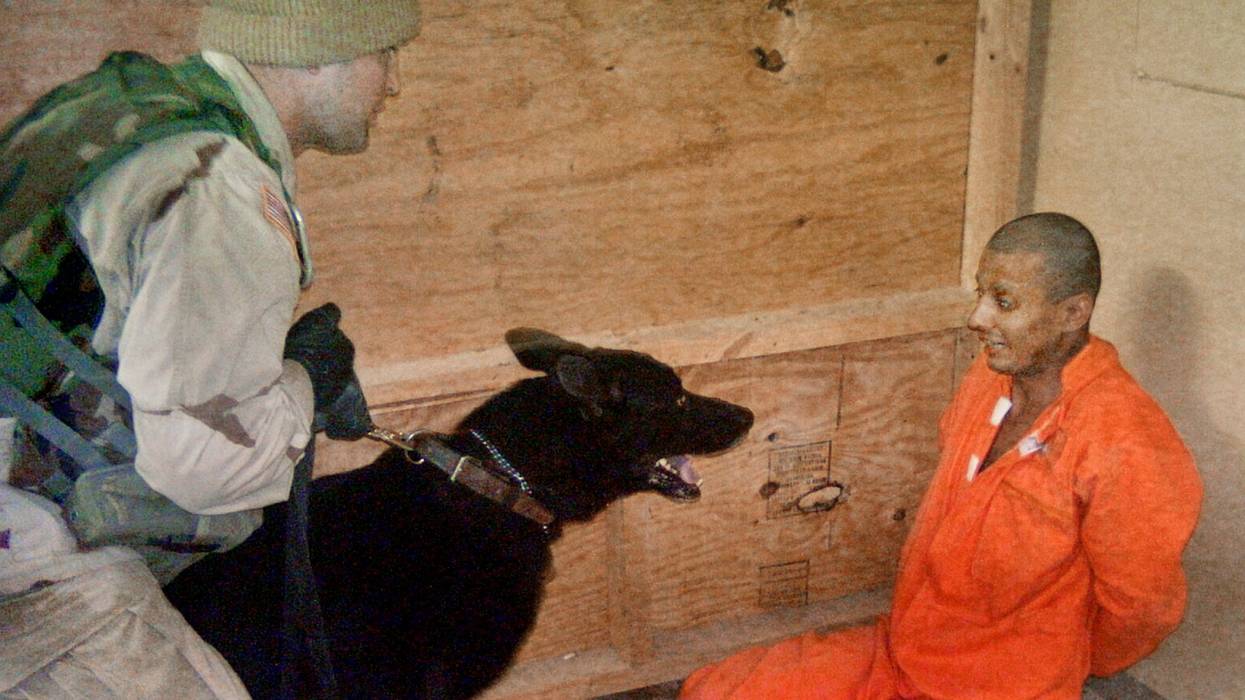
"Meanwhile, the U.S. government STILL hasn't provided compensation or other redress to people tortured by U.S. troops in Iraq," said one observer. "These three men are the lucky few."
Two decades after they were tortured by U.S. military contractors at the notorious Abu Ghraib prison near Baghdad, three Iraqi victims are finally getting their day in court Monday as a federal court in Virginia takes up a case they brought during the George W. Bush administration.
The case being heard in the U.S. District Court in Alexandria, Al Shimari v. CACI, was first filed in 2008 under the Alien Tort Statute—which allows non-U.S. citizens to sue for human rights abuses committed abroad—by the Center for Constitutional Rights (CCR) on behalf of three Iraqis. The men suffered torture directed and perpetrated by employees of CACI, a Virginia-based professional services and information technology firm hired in 2003 by the Bush administration as translators and interrogators in Iraq during the illegal U.S.-led invasion and occupation.
"This lawsuit is a critical step towards justice for these three men who will finally have their day in court."
Plaintiffs Suhail Al Shimari, Asa'ad Zuba'e, and Salah Al-Ejaili accuse CACI of conspiring to commit war crimes including torture at Abu Ghraib, where the men suffered broken bones, electric shocks, sexual abuse, extreme temperatures, and death threats at the hands of their U.S. interrogators.
"This lawsuit is a critical step towards justice for these three men who will finally have their day in court. But they are the lucky few," Sarah Sanbar, an Iraq researcher at Human Rights Watch, wrote on Monday. "For the hundreds of other survivors still suffering from past abuses, their chances of justice remain slim."
"The U.S. government should do the right thing: Take responsibility for their abuses, offer an apology, and open an avenue to redress that has been denied them for too many years," Sanbar added.
U.S. military investigators found that employees of CACI and Titan Corporation (now L3 Technologies) tortured Iraqi prisoners and encouraged U.S. troops to do likewise. Dozens of Abu Ghraib detainees died in U.S. custody, some of them as a result of being tortured to death. Abu Ghraib prisoners endured torture ranging from rape and being attacked with dogs to being forced to eat pork and renounce Islam.
A May 2004 report by Maj. Gen. Anthony Taguba concluded that the majority of Abu Ghraib prisoners—the Red Cross said 70-90%— were innocent. In addition to thousands of men and boys, some women and girls were also jailed there as bargaining chips meant to induce wanted insurgents to surrender. Some of them said they were raped or sexually abused by their American captors; lesser-known Abu Ghraib photos show women being forced to expose their private parts. Some female detainees were reportedly murdered by their own relatives in so-called "honor killings" after their release.
Eleven low-ranking U.S. soldiers were convicted and jailed for their roles in the Abu Ghraib torture scandal. Brig. Gen. Janis Karpinski, the prison's commanding officer, was demoted. No other high-ranking military officer faced accountability for the abuse. Senior Bush administration officials—who had authorized many of the "enhanced interrogation techniques" used at prisons including Abu Ghraib and Guantánamo Bay—lied about their knowledge of the torture. None of them were ever held accountable.
Bush's successor, former President Barack Obama, promised to investigate—and if warranted, to prosecute—the Bush-era officials responsible for the torture that had become synonymous with the War on Terror. Instead, the Obama administration protected them from prosecution.
In 2013, L3 Technologies agreed to pay $5.28 million to 71 former Abu Ghraib detainees who were subjected to sexual assault and humiliation, rape threats, electrical shocks, mock executions, brutal beatings, and other abuse.
The following year, the 4th U.S. Circuit Court of Appeals overturned a lower court ruling prohibiting Abu Ghraib torture victims from suing U.S. companies implicated in their abuse. But the court later reversed itself, finding the case had sufficient ties to the United States to be heard in an American court. The suit was later dismissed under the political question doctrine, which prevents courts from ruling on issues determined to be essentially political.
However, in 2016, a 4th Circuit panel ruled that "the political question doctrine does not shield from judicial review intentional acts by a government contractor that were unlawful at the time they were committed," allowing the Iraqis' case to proceed.
"This is a historic trial that we hope will deliver some measure of justice and healing for what President Bush rightly deemed disgraceful conduct that dishonored the United States and its values," CCR senior attorney Katherine Gallagher told The Guardian on Monday.
"In many ways, this case may be seen as setting a precedent for holding contractors accountable for human rights violations should they happen in other contexts, too," she added.
CACI—which denies any wrongdoing—has tried to get the case dismissed 20 times. The company still lands millions of dollars worth of U.S. government contracts. In February, Fortune included the firm on its "World's Most Admired Companies" list for the seventh straight year.