SUBSCRIBE TO OUR FREE NEWSLETTER
Daily news & progressive opinion—funded by the people, not the corporations—delivered straight to your inbox.
5
#000000
#FFFFFF
To donate by check, phone, or other method, see our More Ways to Give page.
Daily news & progressive opinion—funded by the people, not the corporations—delivered straight to your inbox.
A suicide bomber killed at least 70 people and wounded more than a hundred in Quetta, Pakistan, on Monday.
"There are many wounded, so the death toll could rise," said Rehmat Saleh Baloch, the provincial health minister, to Reuters.
Many of those killed were lawyers who had gathered at the hospital "after the body of their colleague, prominent attorney Bilal Kasi was brought there," Associated Press (AP) reports.
"As they protested [Kasi's] killing," the New York Times writes, "a powerful blast ripped through the entrance to the hospital's emergency department, leading to widespread panic. Television footage showed scores of lawyers running for cover as gunfire echoed in the background."
The Times described the chaotic scene:
Some lawyers could be seen pushing a stretcher bearing a wounded colleague, as others urged them to safety. "Get inside, get inside," one lawyer could be heard saying, waving, as others rushed into the hospital building. Two cameramen working for two local news networks were among those killed.
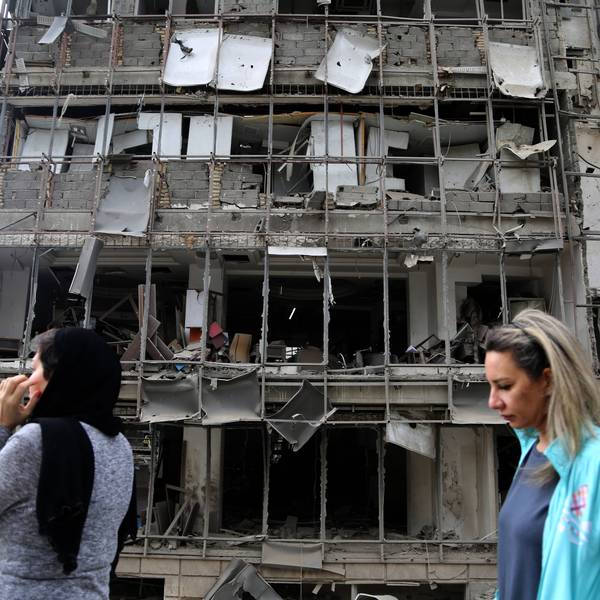
The bombing left a trail of destruction. The charred bodies of victims lay in pools of blood. Several vehicles parked nearby were damaged, and windows in nearby buildings were shattered.
AP notes that "Kasi, the chief of the province's bar association, was shot and killed by gunmen earlier on Monday as he was on his way to his office," adding:
The lawyers gathered at the Quetta Civil Hospital to express their grief as is common with public figures. Kasi was among the most outspoken lawyers in the province and was popular for campaigning for improvements in the lawyers' community.
"It was a suicide attack," said Zahoor Ahmed Afridi, a senior police officer. Afridi said the attacker hit shortly after Kasi's body was brought in and that it seemed the two events were connected.
The president of the Quetta Press Club told the wire service that two journalists were also killed.
Anwar Kakar, the official spokesman for the government of Baluchistan, told NBC: "This doesn't look like the action of insurgent separatists, rather religious extremists. Their only cause is to create fear. Not fear of God. Just fear of living."
A "breakaway faction" of the Taliban in Pakistan claimed responsibility for the attack, according to AP:
In a statement, Ahsanullah Ahsan, spokesman for Jamaat-ul-Ahrar militant group, also said their men killed Bilal Kasi, the president of Baluchistan Bar Association, and then targeted the mourners who had gathered at the government-run Civil Hospital. The group has been behind several acts of terrorism in Pakistan in recent years. The claim could not be independently verified.
The New York Times provided context for the violence, noting that "Quetta is the capital of Baluchistan, a province bordering Afghanistan and Iran that has experienced separatist and sectarian violence for more than a decade, posing a challenge to successive Pakistani governments. Most of the violence in Quetta has been sectarian in nature, mainly directed toward the Hazaras, a Shiite Muslim minority."
AP reports: "Prime Minister Nawaz Sharif strongly condemned the blast and expressed his 'deep grief and anguish over the loss of precious human lives' in the attack."
"The Pakistani Bar Association said lawyers across the country would hold a one-day strike on Tuesday and would spend a week in mourning," adds the New York Times.
Dear Common Dreams reader, It’s been nearly 30 years since I co-founded Common Dreams with my late wife, Lina Newhouser. We had the radical notion that journalism should serve the public good, not corporate profits. It was clear to us from the outset what it would take to build such a project. No paid advertisements. No corporate sponsors. No millionaire publisher telling us what to think or do. Many people said we wouldn't last a year, but we proved those doubters wrong. Together with a tremendous team of journalists and dedicated staff, we built an independent media outlet free from the constraints of profits and corporate control. Our mission has always been simple: To inform. To inspire. To ignite change for the common good. Building Common Dreams was not easy. Our survival was never guaranteed. When you take on the most powerful forces—Wall Street greed, fossil fuel industry destruction, Big Tech lobbyists, and uber-rich oligarchs who have spent billions upon billions rigging the economy and democracy in their favor—the only bulwark you have is supporters who believe in your work. But here’s the urgent message from me today. It's never been this bad out there. And it's never been this hard to keep us going. At the very moment Common Dreams is most needed, the threats we face are intensifying. We need your support now more than ever. We don't accept corporate advertising and never will. We don't have a paywall because we don't think people should be blocked from critical news based on their ability to pay. Everything we do is funded by the donations of readers like you. When everyone does the little they can afford, we are strong. But if that support retreats or dries up, so do we. Will you donate now to make sure Common Dreams not only survives but thrives? —Craig Brown, Co-founder |
A suicide bomber killed at least 70 people and wounded more than a hundred in Quetta, Pakistan, on Monday.
"There are many wounded, so the death toll could rise," said Rehmat Saleh Baloch, the provincial health minister, to Reuters.
Many of those killed were lawyers who had gathered at the hospital "after the body of their colleague, prominent attorney Bilal Kasi was brought there," Associated Press (AP) reports.
"As they protested [Kasi's] killing," the New York Times writes, "a powerful blast ripped through the entrance to the hospital's emergency department, leading to widespread panic. Television footage showed scores of lawyers running for cover as gunfire echoed in the background."
The Times described the chaotic scene:
Some lawyers could be seen pushing a stretcher bearing a wounded colleague, as others urged them to safety. "Get inside, get inside," one lawyer could be heard saying, waving, as others rushed into the hospital building. Two cameramen working for two local news networks were among those killed.
The bombing left a trail of destruction. The charred bodies of victims lay in pools of blood. Several vehicles parked nearby were damaged, and windows in nearby buildings were shattered.
AP notes that "Kasi, the chief of the province's bar association, was shot and killed by gunmen earlier on Monday as he was on his way to his office," adding:
The lawyers gathered at the Quetta Civil Hospital to express their grief as is common with public figures. Kasi was among the most outspoken lawyers in the province and was popular for campaigning for improvements in the lawyers' community.
"It was a suicide attack," said Zahoor Ahmed Afridi, a senior police officer. Afridi said the attacker hit shortly after Kasi's body was brought in and that it seemed the two events were connected.
The president of the Quetta Press Club told the wire service that two journalists were also killed.
Anwar Kakar, the official spokesman for the government of Baluchistan, told NBC: "This doesn't look like the action of insurgent separatists, rather religious extremists. Their only cause is to create fear. Not fear of God. Just fear of living."
A "breakaway faction" of the Taliban in Pakistan claimed responsibility for the attack, according to AP:
In a statement, Ahsanullah Ahsan, spokesman for Jamaat-ul-Ahrar militant group, also said their men killed Bilal Kasi, the president of Baluchistan Bar Association, and then targeted the mourners who had gathered at the government-run Civil Hospital. The group has been behind several acts of terrorism in Pakistan in recent years. The claim could not be independently verified.
The New York Times provided context for the violence, noting that "Quetta is the capital of Baluchistan, a province bordering Afghanistan and Iran that has experienced separatist and sectarian violence for more than a decade, posing a challenge to successive Pakistani governments. Most of the violence in Quetta has been sectarian in nature, mainly directed toward the Hazaras, a Shiite Muslim minority."
AP reports: "Prime Minister Nawaz Sharif strongly condemned the blast and expressed his 'deep grief and anguish over the loss of precious human lives' in the attack."
"The Pakistani Bar Association said lawyers across the country would hold a one-day strike on Tuesday and would spend a week in mourning," adds the New York Times.
A suicide bomber killed at least 70 people and wounded more than a hundred in Quetta, Pakistan, on Monday.
"There are many wounded, so the death toll could rise," said Rehmat Saleh Baloch, the provincial health minister, to Reuters.
Many of those killed were lawyers who had gathered at the hospital "after the body of their colleague, prominent attorney Bilal Kasi was brought there," Associated Press (AP) reports.
"As they protested [Kasi's] killing," the New York Times writes, "a powerful blast ripped through the entrance to the hospital's emergency department, leading to widespread panic. Television footage showed scores of lawyers running for cover as gunfire echoed in the background."
The Times described the chaotic scene:
Some lawyers could be seen pushing a stretcher bearing a wounded colleague, as others urged them to safety. "Get inside, get inside," one lawyer could be heard saying, waving, as others rushed into the hospital building. Two cameramen working for two local news networks were among those killed.
The bombing left a trail of destruction. The charred bodies of victims lay in pools of blood. Several vehicles parked nearby were damaged, and windows in nearby buildings were shattered.
AP notes that "Kasi, the chief of the province's bar association, was shot and killed by gunmen earlier on Monday as he was on his way to his office," adding:
The lawyers gathered at the Quetta Civil Hospital to express their grief as is common with public figures. Kasi was among the most outspoken lawyers in the province and was popular for campaigning for improvements in the lawyers' community.
"It was a suicide attack," said Zahoor Ahmed Afridi, a senior police officer. Afridi said the attacker hit shortly after Kasi's body was brought in and that it seemed the two events were connected.
The president of the Quetta Press Club told the wire service that two journalists were also killed.
Anwar Kakar, the official spokesman for the government of Baluchistan, told NBC: "This doesn't look like the action of insurgent separatists, rather religious extremists. Their only cause is to create fear. Not fear of God. Just fear of living."
A "breakaway faction" of the Taliban in Pakistan claimed responsibility for the attack, according to AP:
In a statement, Ahsanullah Ahsan, spokesman for Jamaat-ul-Ahrar militant group, also said their men killed Bilal Kasi, the president of Baluchistan Bar Association, and then targeted the mourners who had gathered at the government-run Civil Hospital. The group has been behind several acts of terrorism in Pakistan in recent years. The claim could not be independently verified.
The New York Times provided context for the violence, noting that "Quetta is the capital of Baluchistan, a province bordering Afghanistan and Iran that has experienced separatist and sectarian violence for more than a decade, posing a challenge to successive Pakistani governments. Most of the violence in Quetta has been sectarian in nature, mainly directed toward the Hazaras, a Shiite Muslim minority."
AP reports: "Prime Minister Nawaz Sharif strongly condemned the blast and expressed his 'deep grief and anguish over the loss of precious human lives' in the attack."
"The Pakistani Bar Association said lawyers across the country would hold a one-day strike on Tuesday and would spend a week in mourning," adds the New York Times.