SUBSCRIBE TO OUR FREE NEWSLETTER
Daily news & progressive opinion—funded by the people, not the corporations—delivered straight to your inbox.
5
#000000
#FFFFFF
To donate by check, phone, or other method, see our More Ways to Give page.
Daily news & progressive opinion—funded by the people, not the corporations—delivered straight to your inbox.
The U.S. is once again increasing its intelligence-sharing with Saudi Arabia to help the kingdom expand its air campaign in Yemen, U.S. officials told Reuters on Friday.
"We have opened up the aperture a bit wider with what we are sharing with our Saudi partners," one official said. "We are helping them get a better sense of the battlefield and the state of play with the Houthi forces."
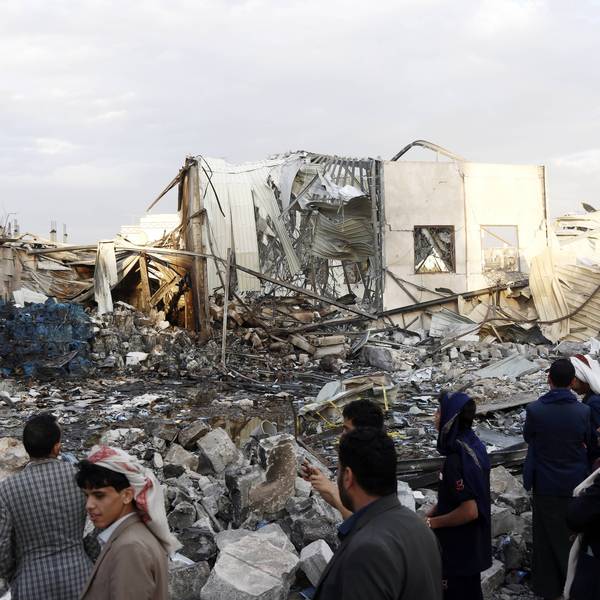
The Saudi military began its aerial assault on Yemen in late March in coordination with 10 other Gulf Arab allies, as well as the U.S., when civil unrest between the Yemeni government and Houthi rebels threatened to boil over. Weeks of relentless bombings and air strikes have contributed to what the Red Cross called a "catastrophic" situation in Yemen, with civilian deaths already in the hundreds and food and water shortages worsening.
The U.S. has backed the Saudi air strikes in Yemen since they began, with the White House authorizing "logistical and intelligence support" the day after the operation was confirmed from the ground in Sana'a.
However, Washington's role in the fight increased significantly over the following weeks. U.S. Deputy Secretary of State Tony Blinken said on Tuesday that the administration had "expedited weapons deliveries, we have increased our intelligence sharing, and we have established a joint coordination planning cell in the Saudi operation center."
That move came despite warnings from international aid groups that the operation, which is also supported by Egypt, Morocco, Jordan, Sudan, Kuwait, the United Arab Emirates, Qatar, and Bahrain, has brought war to "every street and every corner" in Yemen.
The White House and the Pentagon would not comment on the specifics of the increased intelligence-sharing on Friday, Reuters reports. In addition to intelligence-sharing, the U.S. also began daily air-to-air refueling flights of Saudi and U.A.E. fighter jets.
As Common Dreams reported on Friday, the coalition is also blocking nearly all food and medical aid from entering Yemen.
At the same time as the U.S. announced its intelligence-sharing plans, the UN warned that the heavily targeted southern city of Aden was in danger of completely running out of water "within a matter of days."
Dear Common Dreams reader, It’s been nearly 30 years since I co-founded Common Dreams with my late wife, Lina Newhouser. We had the radical notion that journalism should serve the public good, not corporate profits. It was clear to us from the outset what it would take to build such a project. No paid advertisements. No corporate sponsors. No millionaire publisher telling us what to think or do. Many people said we wouldn't last a year, but we proved those doubters wrong. Together with a tremendous team of journalists and dedicated staff, we built an independent media outlet free from the constraints of profits and corporate control. Our mission has always been simple: To inform. To inspire. To ignite change for the common good. Building Common Dreams was not easy. Our survival was never guaranteed. When you take on the most powerful forces—Wall Street greed, fossil fuel industry destruction, Big Tech lobbyists, and uber-rich oligarchs who have spent billions upon billions rigging the economy and democracy in their favor—the only bulwark you have is supporters who believe in your work. But here’s the urgent message from me today. It's never been this bad out there. And it's never been this hard to keep us going. At the very moment Common Dreams is most needed, the threats we face are intensifying. We need your support now more than ever. We don't accept corporate advertising and never will. We don't have a paywall because we don't think people should be blocked from critical news based on their ability to pay. Everything we do is funded by the donations of readers like you. When everyone does the little they can afford, we are strong. But if that support retreats or dries up, so do we. Will you donate now to make sure Common Dreams not only survives but thrives? —Craig Brown, Co-founder |
The U.S. is once again increasing its intelligence-sharing with Saudi Arabia to help the kingdom expand its air campaign in Yemen, U.S. officials told Reuters on Friday.
"We have opened up the aperture a bit wider with what we are sharing with our Saudi partners," one official said. "We are helping them get a better sense of the battlefield and the state of play with the Houthi forces."
The Saudi military began its aerial assault on Yemen in late March in coordination with 10 other Gulf Arab allies, as well as the U.S., when civil unrest between the Yemeni government and Houthi rebels threatened to boil over. Weeks of relentless bombings and air strikes have contributed to what the Red Cross called a "catastrophic" situation in Yemen, with civilian deaths already in the hundreds and food and water shortages worsening.
The U.S. has backed the Saudi air strikes in Yemen since they began, with the White House authorizing "logistical and intelligence support" the day after the operation was confirmed from the ground in Sana'a.
However, Washington's role in the fight increased significantly over the following weeks. U.S. Deputy Secretary of State Tony Blinken said on Tuesday that the administration had "expedited weapons deliveries, we have increased our intelligence sharing, and we have established a joint coordination planning cell in the Saudi operation center."
That move came despite warnings from international aid groups that the operation, which is also supported by Egypt, Morocco, Jordan, Sudan, Kuwait, the United Arab Emirates, Qatar, and Bahrain, has brought war to "every street and every corner" in Yemen.
The White House and the Pentagon would not comment on the specifics of the increased intelligence-sharing on Friday, Reuters reports. In addition to intelligence-sharing, the U.S. also began daily air-to-air refueling flights of Saudi and U.A.E. fighter jets.
As Common Dreams reported on Friday, the coalition is also blocking nearly all food and medical aid from entering Yemen.
At the same time as the U.S. announced its intelligence-sharing plans, the UN warned that the heavily targeted southern city of Aden was in danger of completely running out of water "within a matter of days."
The U.S. is once again increasing its intelligence-sharing with Saudi Arabia to help the kingdom expand its air campaign in Yemen, U.S. officials told Reuters on Friday.
"We have opened up the aperture a bit wider with what we are sharing with our Saudi partners," one official said. "We are helping them get a better sense of the battlefield and the state of play with the Houthi forces."
The Saudi military began its aerial assault on Yemen in late March in coordination with 10 other Gulf Arab allies, as well as the U.S., when civil unrest between the Yemeni government and Houthi rebels threatened to boil over. Weeks of relentless bombings and air strikes have contributed to what the Red Cross called a "catastrophic" situation in Yemen, with civilian deaths already in the hundreds and food and water shortages worsening.
The U.S. has backed the Saudi air strikes in Yemen since they began, with the White House authorizing "logistical and intelligence support" the day after the operation was confirmed from the ground in Sana'a.
However, Washington's role in the fight increased significantly over the following weeks. U.S. Deputy Secretary of State Tony Blinken said on Tuesday that the administration had "expedited weapons deliveries, we have increased our intelligence sharing, and we have established a joint coordination planning cell in the Saudi operation center."
That move came despite warnings from international aid groups that the operation, which is also supported by Egypt, Morocco, Jordan, Sudan, Kuwait, the United Arab Emirates, Qatar, and Bahrain, has brought war to "every street and every corner" in Yemen.
The White House and the Pentagon would not comment on the specifics of the increased intelligence-sharing on Friday, Reuters reports. In addition to intelligence-sharing, the U.S. also began daily air-to-air refueling flights of Saudi and U.A.E. fighter jets.
As Common Dreams reported on Friday, the coalition is also blocking nearly all food and medical aid from entering Yemen.
At the same time as the U.S. announced its intelligence-sharing plans, the UN warned that the heavily targeted southern city of Aden was in danger of completely running out of water "within a matter of days."