SUBSCRIBE TO OUR FREE NEWSLETTER
Daily news & progressive opinion—funded by the people, not the corporations—delivered straight to your inbox.
5
#000000
#FFFFFF
To donate by check, phone, or other method, see our More Ways to Give page.
Daily news & progressive opinion—funded by the people, not the corporations—delivered straight to your inbox.
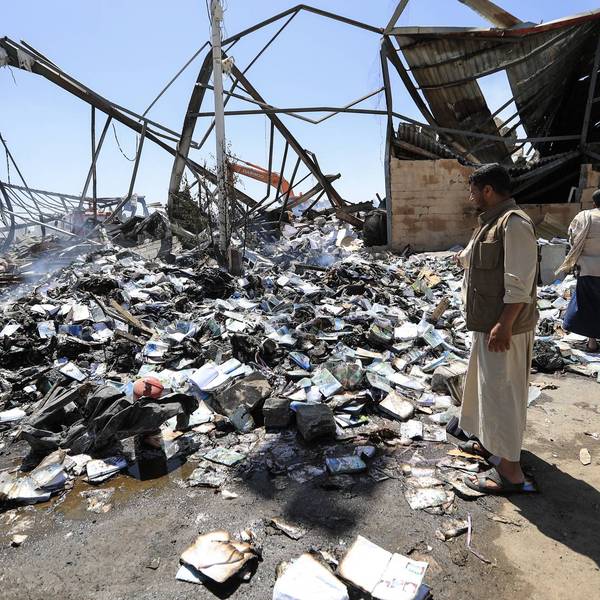
The attack on Yemen will continue until Shiite Houthi rebels in that country "withdraw and surrender their weapons," a coalition of Arab leaders announced Sunday at the conclusion of the Arab League Summit, held in the Egyptian resort city of Sharm el-Sheikh this weekend.
Leaders of the 14 member states--which include the Gulf States, Sudan, Yemen, Iraq, Algeria, Palestine and Somalia--also agreed to the formation of a joint military task force. According to an unnamed source, the task for "would be tasked with intervening in Arab states at their request to protect them against 'danger,' without specifying what kind of threats could lead to the taskforce's deployment," the Middle East Eye reports.
Opening the final session of the summit, Arab League Secretary-General Nabil El-Araby stressed an "absolute need" to confront all threats to the national security of Arab states, Egypt's Al Ahram reports.
Focusing specifically on Yemen, which since Thursday has withstood ongoing bombings by a Saudi-led coalition, El-Araby said, "We will continue to fight the Houthi rebels until they surrender and hand over their weapons."
In a speech at the closure of the summit, Egyptian President Abdel-Fattah El-Sisi announced the new military force. Membership in the fighting force, El-Sisi said, would be compulsory and that a "high-level" team led by Arab army generals will be tasked with the formation of the force.
The formation of the joint military force, the New York Times noted on Sunday, puts the Arab League "on a path to more aggressively challenge Shiite power Iran."
Saudi Arabia's military continued to bomb Houthi-held positions across Yemen on Saturday evening, in what it claims is a defensive attack to prevent the alleged Iranian-backed rebels from gaining control of the strategic territory. The Yemen Times reports that air strikes continued to target the Yemen military's elite Reserve Forces, known as the Republican Guard, which are widely viewed as being loyal to former President Ali Abdullah Saleh.
Despite the prevailing rhetoric at the Arab League Summit in support of the operation, a number of Arab leaders expressed reservations.
According to the Middle East Eye:
Iraqi President Fuad Masoum repeated his calls for caution at the Arab League summit on Saturday, calling on all sides to join the negotiating table and avert a possible "civil war" in the impoverished Gulf State.
"The recent military developments...further complicate the conflicts between all parties, which will lead to more threats in the region," Masoum told the delegates.
"Foreign interventions will not help the Yemeni people," he added.
On Saturday, the director of the Ministry of Health's office in Yemen said that 60 people have been killed and over 500 injured since Operation Decisive Storm began Thursday.
Iraqi President Fuad Masoum repeated his calls for caution at the Arab League summit on Saturday, calling on all sides to join the negotiating table and avert a possible "civil war" in the impoverished Gulf State.
"The recent military developments...further complicate the conflicts between all parties, which will lead to more threats in the region," Masoum told the delegates.
"Foreign interventions will not help the Yemeni people," he added.
Representatives of other member states also expressed reservations about the details of any proposal to create a joint military taskforce, but confirmed their support for the plan in theory.
Algeria's Foreign Minister, Ramtane Lamamra, confirmed that he would not oppose the suggestion, but said the proposal required "clear strategic analysis and strong planning" in order to succeed, he told the press on the sidelines of the conference.
Salaheddine Mezouar, Morocco's Foreign Minister, said on Saturday that all members were agreed on the proposal "in principle," but stated that negotiations were necessary to hammer out the specifics of the taskforce.
- See more at: https://www.middleeasteye.net/news/arab-league-back-joint-military-task...
This country and this world are at a monumental crossroads. US voters have an opportunity to beat back the forces of fascism and confront the billionaires who are rigging the economy, our media system, and our democracy, making it increasingly impossible for ordinary people to get by. We’re not just talking about the election. We’re talking about what must be done once these fascist elements are vanquished from power. We need a bolder set of solutions than what either major party has so far been willing to offer and a working-class movement ready to fight like hell for it. Trump didn't emerge from nowhere. The conditions that fueled MAGA authoritarianism were created by decades of radical neoliberal economic policies and a corrupt political system dominated by corporate interests. They slashed taxes on the super-rich, promising that the benefits would trickle down. They said giveaways to the corporate titans would make life more affordable for the rest of us. It was all bullshit. And when a bitter, betrayed populace searches for someone to blame, right-wing demagogues have little trouble finding scapegoats. People know when they're being lied to, but you won't hear any of this from the corporate media. Only independent journalism—powered and funded by people who believe in building a better world—can deliver truly trustworthy daily news. If you share our vision, please contribute whatever you can to sustain our work. |
The attack on Yemen will continue until Shiite Houthi rebels in that country "withdraw and surrender their weapons," a coalition of Arab leaders announced Sunday at the conclusion of the Arab League Summit, held in the Egyptian resort city of Sharm el-Sheikh this weekend.
Leaders of the 14 member states--which include the Gulf States, Sudan, Yemen, Iraq, Algeria, Palestine and Somalia--also agreed to the formation of a joint military task force. According to an unnamed source, the task for "would be tasked with intervening in Arab states at their request to protect them against 'danger,' without specifying what kind of threats could lead to the taskforce's deployment," the Middle East Eye reports.
Opening the final session of the summit, Arab League Secretary-General Nabil El-Araby stressed an "absolute need" to confront all threats to the national security of Arab states, Egypt's Al Ahram reports.
Focusing specifically on Yemen, which since Thursday has withstood ongoing bombings by a Saudi-led coalition, El-Araby said, "We will continue to fight the Houthi rebels until they surrender and hand over their weapons."
In a speech at the closure of the summit, Egyptian President Abdel-Fattah El-Sisi announced the new military force. Membership in the fighting force, El-Sisi said, would be compulsory and that a "high-level" team led by Arab army generals will be tasked with the formation of the force.
The formation of the joint military force, the New York Times noted on Sunday, puts the Arab League "on a path to more aggressively challenge Shiite power Iran."
Saudi Arabia's military continued to bomb Houthi-held positions across Yemen on Saturday evening, in what it claims is a defensive attack to prevent the alleged Iranian-backed rebels from gaining control of the strategic territory. The Yemen Times reports that air strikes continued to target the Yemen military's elite Reserve Forces, known as the Republican Guard, which are widely viewed as being loyal to former President Ali Abdullah Saleh.
Despite the prevailing rhetoric at the Arab League Summit in support of the operation, a number of Arab leaders expressed reservations.
According to the Middle East Eye:
Iraqi President Fuad Masoum repeated his calls for caution at the Arab League summit on Saturday, calling on all sides to join the negotiating table and avert a possible "civil war" in the impoverished Gulf State.
"The recent military developments...further complicate the conflicts between all parties, which will lead to more threats in the region," Masoum told the delegates.
"Foreign interventions will not help the Yemeni people," he added.
On Saturday, the director of the Ministry of Health's office in Yemen said that 60 people have been killed and over 500 injured since Operation Decisive Storm began Thursday.
Iraqi President Fuad Masoum repeated his calls for caution at the Arab League summit on Saturday, calling on all sides to join the negotiating table and avert a possible "civil war" in the impoverished Gulf State.
"The recent military developments...further complicate the conflicts between all parties, which will lead to more threats in the region," Masoum told the delegates.
"Foreign interventions will not help the Yemeni people," he added.
Representatives of other member states also expressed reservations about the details of any proposal to create a joint military taskforce, but confirmed their support for the plan in theory.
Algeria's Foreign Minister, Ramtane Lamamra, confirmed that he would not oppose the suggestion, but said the proposal required "clear strategic analysis and strong planning" in order to succeed, he told the press on the sidelines of the conference.
Salaheddine Mezouar, Morocco's Foreign Minister, said on Saturday that all members were agreed on the proposal "in principle," but stated that negotiations were necessary to hammer out the specifics of the taskforce.
- See more at: https://www.middleeasteye.net/news/arab-league-back-joint-military-task...