Violence Against Children Is Global Epidemic: UNICEF
New study shows that a young person is killed nearly every five minutes in a world rife with conflict both inside and outside of war zones
Violence against children is a global epidemic in which a young person is killed by violent conflict every five minutes, according to a new study released Tuesday by U.K. branch of UNICEF.
The global assessment--titled "Children in Danger: Act to End Violence Against Children"--reveals that an estimated 345 children under the age of twenty-years-old die nearly every day across the world. According to the report, the vast majority of these young victims are killed outside war zones, indicating that physical, sexual and emotional abuse is widespread with millions of children unsafe in their homes, schools and communities.
"This epidemic of violence against children feeds off silence. It grows when we soundlessly accept that this is just the way things are. Every five minutes, somewhere across the globe, a family loses a son or daughter to violence. This is intolerable - it must stop." --Baroness Doreen Lawrence, justice campaigner
"We live in a world where some children are too scared to walk out of their own front doors or play on their streets," said David Bull, executive director of UNICEF UK. "We want children living in fear to have a chance of feeling safe and secure."
Among its findings, the report reveals that:
- children who are victims of violence have brain activity similar to soldiers exposed to combat
- a third of children who are victims of violence are likely to develop long-lasting symptoms of post-traumatic stress disorder.
- those living in poverty are more likely to be victims of violence, wherever they live in the world.
- over 75 percent of child deaths due to violence each day are the result of interpersonal violence, rather than conflict
- a girl or boy aged between 0-19 dies as a result of violence every five minutes
The release of the study coincides with the launch of a new global effort by UNICEF, called the 'Children in Danger' campaign, designed to curb the assault on young people by placing formalizing protocols that all nations can adopt. According to the group, only 41 countries have implemented an explicit legal ban on violence against children, while only two percent of countries have a comprehensive legal framework to prevent violence.
Lizze Cook, a UNICEF campaigner, says millions of children are threatened each day by violence, disease, hunger, and the chaos of war and disaster. However, she argues, a concerted global effort could help end such suffering by making a commitment to end violence against children and ensuring every child's right to "grow up in a world without fear."
Though the group highlights that a majority of the overall violence experienced by children happens outside of what would be considered official war zones, the role of war and military-scale violence can have a potent impact on those populations exposed to it.
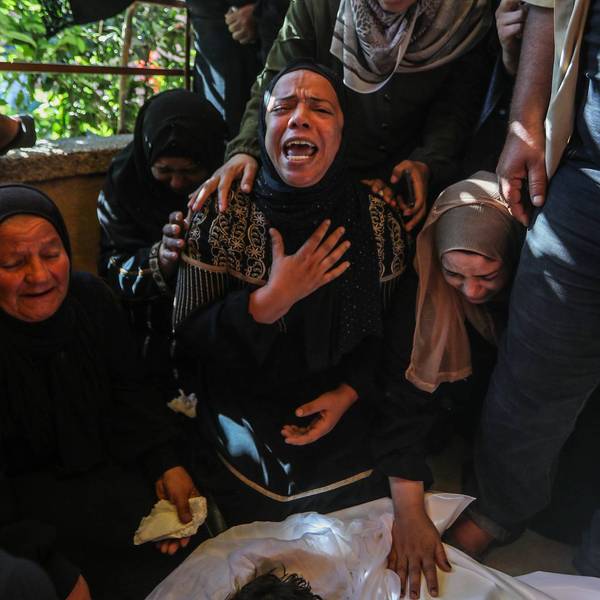
Earlier this year, Israel's sustained attack on the civilian population of the Gaza Strip was condemned globally for the shocking number of children killed in weeks of airstrikes and bombing raids on the civilian population. According to Defense of Children International in Palestine, more than 500 children were killed and thousands more were wounded during the attack.
"Children were killed in their homes as they slept, with their parents as they fled for safety, and in UN shelters where they were told they would be safe," declared DCIP in a recent statement. The group is now running its own campaign demanding justice for those children killed, maimed, and terrified by the violence.
As Baroness Doreen Lawrence, a long term campaigner for justice in the UK, said in her forward to the UNICEF report, "This epidemic of violence against children feeds off silence. It grows when we soundlessly accept that this is just the way things are. Every five minutes, somewhere across the globe, a family loses a son or daughter to violence. This is intolerable - it must stop."
We are at a crossroads
This country and this world are at a monumental crossroads. In a few short weeks, US voters will have an opportunity to beat back the forces of fascism and confront the billionaires who are rigging the economy, our media system, and our democracy, making it increasingly impossible for ordinary people to get by. We’re not just talking about the election. We’re talking about what must be done once these fascist elements are vanquished from power. We need a bolder set of solutions than what either major party has so far been willing to offer and a working-class movement ready to fight like hell for it. Trump didn't emerge from nowhere. The conditions that fueled MAGA authoritarianism were created by decades of radical neoliberal economic policies and a corrupt political system dominated by corporate interests. They slashed taxes on the super-rich, promising that the benefits would trickle down. They said giveaways to the corporate titans would make life more affordable for the rest of us. It was all bullshit. And when a bitter, betrayed populace searches for someone to blame, right-wing demagogues have little trouble finding scapegoats. People know when they're being lied to, but you won't hear any of this from the corporate media. Only independent journalism—powered and funded by people who believe in building a better world—can deliver truly trustworthy daily news. Our Fall Campaign is underway, and we need your help. To power our newsroom through the rest of the year, we need to raise $125,000 by midnight on October 31. So if you share our vision, please contribute whatever you can to sustain our work. |
Violence against children is a global epidemic in which a young person is killed by violent conflict every five minutes, according to a new study released Tuesday by U.K. branch of UNICEF.
The global assessment--titled "Children in Danger: Act to End Violence Against Children"--reveals that an estimated 345 children under the age of twenty-years-old die nearly every day across the world. According to the report, the vast majority of these young victims are killed outside war zones, indicating that physical, sexual and emotional abuse is widespread with millions of children unsafe in their homes, schools and communities.
"This epidemic of violence against children feeds off silence. It grows when we soundlessly accept that this is just the way things are. Every five minutes, somewhere across the globe, a family loses a son or daughter to violence. This is intolerable - it must stop." --Baroness Doreen Lawrence, justice campaigner
"We live in a world where some children are too scared to walk out of their own front doors or play on their streets," said David Bull, executive director of UNICEF UK. "We want children living in fear to have a chance of feeling safe and secure."
Among its findings, the report reveals that:
- children who are victims of violence have brain activity similar to soldiers exposed to combat
- a third of children who are victims of violence are likely to develop long-lasting symptoms of post-traumatic stress disorder.
- those living in poverty are more likely to be victims of violence, wherever they live in the world.
- over 75 percent of child deaths due to violence each day are the result of interpersonal violence, rather than conflict
- a girl or boy aged between 0-19 dies as a result of violence every five minutes
The release of the study coincides with the launch of a new global effort by UNICEF, called the 'Children in Danger' campaign, designed to curb the assault on young people by placing formalizing protocols that all nations can adopt. According to the group, only 41 countries have implemented an explicit legal ban on violence against children, while only two percent of countries have a comprehensive legal framework to prevent violence.
Lizze Cook, a UNICEF campaigner, says millions of children are threatened each day by violence, disease, hunger, and the chaos of war and disaster. However, she argues, a concerted global effort could help end such suffering by making a commitment to end violence against children and ensuring every child's right to "grow up in a world without fear."
Though the group highlights that a majority of the overall violence experienced by children happens outside of what would be considered official war zones, the role of war and military-scale violence can have a potent impact on those populations exposed to it.
Earlier this year, Israel's sustained attack on the civilian population of the Gaza Strip was condemned globally for the shocking number of children killed in weeks of airstrikes and bombing raids on the civilian population. According to Defense of Children International in Palestine, more than 500 children were killed and thousands more were wounded during the attack.
"Children were killed in their homes as they slept, with their parents as they fled for safety, and in UN shelters where they were told they would be safe," declared DCIP in a recent statement. The group is now running its own campaign demanding justice for those children killed, maimed, and terrified by the violence.
As Baroness Doreen Lawrence, a long term campaigner for justice in the UK, said in her forward to the UNICEF report, "This epidemic of violence against children feeds off silence. It grows when we soundlessly accept that this is just the way things are. Every five minutes, somewhere across the globe, a family loses a son or daughter to violence. This is intolerable - it must stop."