SUBSCRIBE TO OUR FREE NEWSLETTER
Daily news & progressive opinion—funded by the people, not the corporations—delivered straight to your inbox.
5
#000000
#FFFFFF
To donate by check, phone, or other method, see our More Ways to Give page.
Daily news & progressive opinion—funded by the people, not the corporations—delivered straight to your inbox.
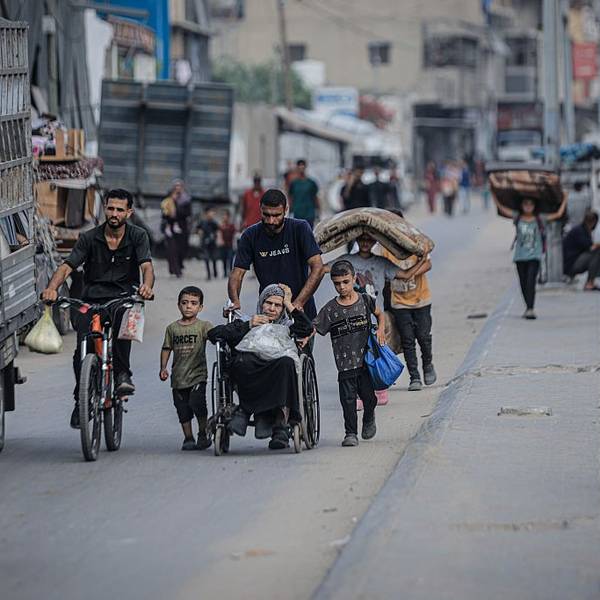
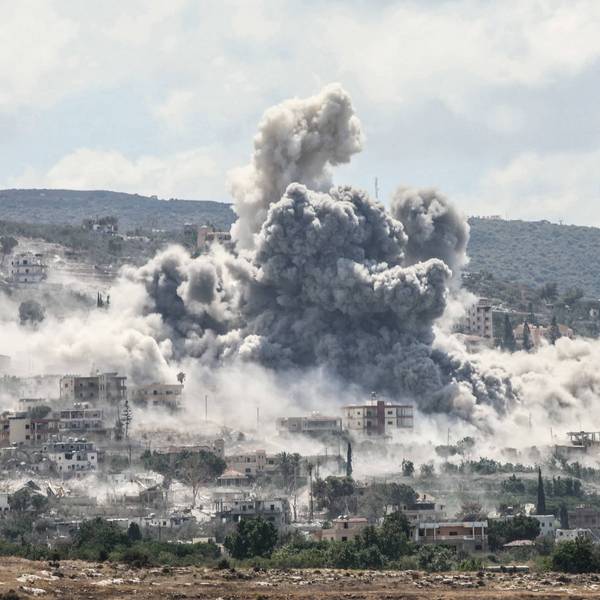
As tensions rise and violence continues between Israeli military forces and Palestinians, a buildup on the border of the Gaza Strip on Thursday is creating worry that a large scale bombardment or military operation of the sealed-off enclave may soon occur.
Israel has launched dozens of airstrikes into Gaza this week as street-level skirmishes in the occupied West Bank have followed the murder of both Israeli and Palestinian teenagers and other civilians in recent weeks.
Outlets report a surge in IDF forces moving to the border region on Thursday amid continuing airstrikes.
Ma'an news agency reports on those wounded inside Gaza following the latest round of bombing:
Eleven Palestinians were injured overnight Wednesday as Israel attacked 15 targets in the Gaza Strip, medics said.
Gaza health ministry spokesman Ashraf al-Qidra said 11 Palestinians were hospitalized following multiple airstrikes, including a 17-year-old boy who sustained shrapnel wounds near Gaza City.
Another airstrike targeted a Hamas training base west of Gaza City, with an elderly woman and teenage girl sustaining injuries in the northern Gaza Strip.
According to the New York Times:
The escalating tit-for-tat clashes in the south come against the backdrop of heightened tensions in Jerusalem, where the burned body of a 16-year-old Palestinian, Muhammad Hussein Abu Khdeir, was found in a Jerusalem forest on Wednesday. Muhammad had been forced into a vehicle near his East Jerusalem home about an hour before his body was discovered, and the police are investigating whether he was killed in retaliation for the death of three Israeli teenagers who were buried on Tuesday after being kidnapped in the occupied West Bank last month.
Khaled Meshal, the political leader of Hamas, said in an interview published Wednesday that the organization was also not interested in an escalation. But a Gaza-based Hamas leader said on Thursday that the group was having trouble convincing other militants to hold their fire.
"In general, there was an agreement to calm the situation," said the official, speaking on the condition of anonymity because of internal politics. "We are communicating with the factions to stop them from firing rockets, but the justification is always, 'Look at what the Israelis are doing in the West Bank and East Jerusalem.'"
The Israeli government, led by Prime Minister Benjamin Netanyahu, has placed the blame for the recent violence squarely on Hamas and ordered aggressive military action in both the occupied territories and Gaza. As Vox.com reported on Wednesday:
Netanyahu's government is launching attacks against Hamas, which Netanyahu insists is collectively responsible for a kidnapping that appears to have been conducted by rogue members. This makes it far more likely that full-on conflict will resume between Israel and Hamas, a dynamic that Netanyahu seems to prefer, because it favors Israel's overwhelming military strength and marginalizes Hamas politically. The last round of Israel-Hamas violence, in November 2012, killed dozens of civilians, almost all of them Palestinian.
Amnesty International on Wednesday condemned what is widely seen as the Israeli government's policy of 'collective punishment' during these recent developments. The human rights group said in a statement: "Justice will not be served by Israel seeking revenge by imposing collective punishment, or committing other violations of Palestinians' rights."
__________________________________
Dear Common Dreams reader, It’s been nearly 30 years since I co-founded Common Dreams with my late wife, Lina Newhouser. We had the radical notion that journalism should serve the public good, not corporate profits. It was clear to us from the outset what it would take to build such a project. No paid advertisements. No corporate sponsors. No millionaire publisher telling us what to think or do. Many people said we wouldn't last a year, but we proved those doubters wrong. Together with a tremendous team of journalists and dedicated staff, we built an independent media outlet free from the constraints of profits and corporate control. Our mission has always been simple: To inform. To inspire. To ignite change for the common good. Building Common Dreams was not easy. Our survival was never guaranteed. When you take on the most powerful forces—Wall Street greed, fossil fuel industry destruction, Big Tech lobbyists, and uber-rich oligarchs who have spent billions upon billions rigging the economy and democracy in their favor—the only bulwark you have is supporters who believe in your work. But here’s the urgent message from me today. It's never been this bad out there. And it's never been this hard to keep us going. At the very moment Common Dreams is most needed, the threats we face are intensifying. We need your support now more than ever. We don't accept corporate advertising and never will. We don't have a paywall because we don't think people should be blocked from critical news based on their ability to pay. Everything we do is funded by the donations of readers like you. When everyone does the little they can afford, we are strong. But if that support retreats or dries up, so do we. Will you donate now to make sure Common Dreams not only survives but thrives? —Craig Brown, Co-founder |
As tensions rise and violence continues between Israeli military forces and Palestinians, a buildup on the border of the Gaza Strip on Thursday is creating worry that a large scale bombardment or military operation of the sealed-off enclave may soon occur.
Israel has launched dozens of airstrikes into Gaza this week as street-level skirmishes in the occupied West Bank have followed the murder of both Israeli and Palestinian teenagers and other civilians in recent weeks.
Outlets report a surge in IDF forces moving to the border region on Thursday amid continuing airstrikes.
Ma'an news agency reports on those wounded inside Gaza following the latest round of bombing:
Eleven Palestinians were injured overnight Wednesday as Israel attacked 15 targets in the Gaza Strip, medics said.
Gaza health ministry spokesman Ashraf al-Qidra said 11 Palestinians were hospitalized following multiple airstrikes, including a 17-year-old boy who sustained shrapnel wounds near Gaza City.
Another airstrike targeted a Hamas training base west of Gaza City, with an elderly woman and teenage girl sustaining injuries in the northern Gaza Strip.
According to the New York Times:
The escalating tit-for-tat clashes in the south come against the backdrop of heightened tensions in Jerusalem, where the burned body of a 16-year-old Palestinian, Muhammad Hussein Abu Khdeir, was found in a Jerusalem forest on Wednesday. Muhammad had been forced into a vehicle near his East Jerusalem home about an hour before his body was discovered, and the police are investigating whether he was killed in retaliation for the death of three Israeli teenagers who were buried on Tuesday after being kidnapped in the occupied West Bank last month.
Khaled Meshal, the political leader of Hamas, said in an interview published Wednesday that the organization was also not interested in an escalation. But a Gaza-based Hamas leader said on Thursday that the group was having trouble convincing other militants to hold their fire.
"In general, there was an agreement to calm the situation," said the official, speaking on the condition of anonymity because of internal politics. "We are communicating with the factions to stop them from firing rockets, but the justification is always, 'Look at what the Israelis are doing in the West Bank and East Jerusalem.'"
The Israeli government, led by Prime Minister Benjamin Netanyahu, has placed the blame for the recent violence squarely on Hamas and ordered aggressive military action in both the occupied territories and Gaza. As Vox.com reported on Wednesday:
Netanyahu's government is launching attacks against Hamas, which Netanyahu insists is collectively responsible for a kidnapping that appears to have been conducted by rogue members. This makes it far more likely that full-on conflict will resume between Israel and Hamas, a dynamic that Netanyahu seems to prefer, because it favors Israel's overwhelming military strength and marginalizes Hamas politically. The last round of Israel-Hamas violence, in November 2012, killed dozens of civilians, almost all of them Palestinian.
Amnesty International on Wednesday condemned what is widely seen as the Israeli government's policy of 'collective punishment' during these recent developments. The human rights group said in a statement: "Justice will not be served by Israel seeking revenge by imposing collective punishment, or committing other violations of Palestinians' rights."
__________________________________
As tensions rise and violence continues between Israeli military forces and Palestinians, a buildup on the border of the Gaza Strip on Thursday is creating worry that a large scale bombardment or military operation of the sealed-off enclave may soon occur.
Israel has launched dozens of airstrikes into Gaza this week as street-level skirmishes in the occupied West Bank have followed the murder of both Israeli and Palestinian teenagers and other civilians in recent weeks.
Outlets report a surge in IDF forces moving to the border region on Thursday amid continuing airstrikes.
Ma'an news agency reports on those wounded inside Gaza following the latest round of bombing:
Eleven Palestinians were injured overnight Wednesday as Israel attacked 15 targets in the Gaza Strip, medics said.
Gaza health ministry spokesman Ashraf al-Qidra said 11 Palestinians were hospitalized following multiple airstrikes, including a 17-year-old boy who sustained shrapnel wounds near Gaza City.
Another airstrike targeted a Hamas training base west of Gaza City, with an elderly woman and teenage girl sustaining injuries in the northern Gaza Strip.
According to the New York Times:
The escalating tit-for-tat clashes in the south come against the backdrop of heightened tensions in Jerusalem, where the burned body of a 16-year-old Palestinian, Muhammad Hussein Abu Khdeir, was found in a Jerusalem forest on Wednesday. Muhammad had been forced into a vehicle near his East Jerusalem home about an hour before his body was discovered, and the police are investigating whether he was killed in retaliation for the death of three Israeli teenagers who were buried on Tuesday after being kidnapped in the occupied West Bank last month.
Khaled Meshal, the political leader of Hamas, said in an interview published Wednesday that the organization was also not interested in an escalation. But a Gaza-based Hamas leader said on Thursday that the group was having trouble convincing other militants to hold their fire.
"In general, there was an agreement to calm the situation," said the official, speaking on the condition of anonymity because of internal politics. "We are communicating with the factions to stop them from firing rockets, but the justification is always, 'Look at what the Israelis are doing in the West Bank and East Jerusalem.'"
The Israeli government, led by Prime Minister Benjamin Netanyahu, has placed the blame for the recent violence squarely on Hamas and ordered aggressive military action in both the occupied territories and Gaza. As Vox.com reported on Wednesday:
Netanyahu's government is launching attacks against Hamas, which Netanyahu insists is collectively responsible for a kidnapping that appears to have been conducted by rogue members. This makes it far more likely that full-on conflict will resume between Israel and Hamas, a dynamic that Netanyahu seems to prefer, because it favors Israel's overwhelming military strength and marginalizes Hamas politically. The last round of Israel-Hamas violence, in November 2012, killed dozens of civilians, almost all of them Palestinian.
Amnesty International on Wednesday condemned what is widely seen as the Israeli government's policy of 'collective punishment' during these recent developments. The human rights group said in a statement: "Justice will not be served by Israel seeking revenge by imposing collective punishment, or committing other violations of Palestinians' rights."
__________________________________