

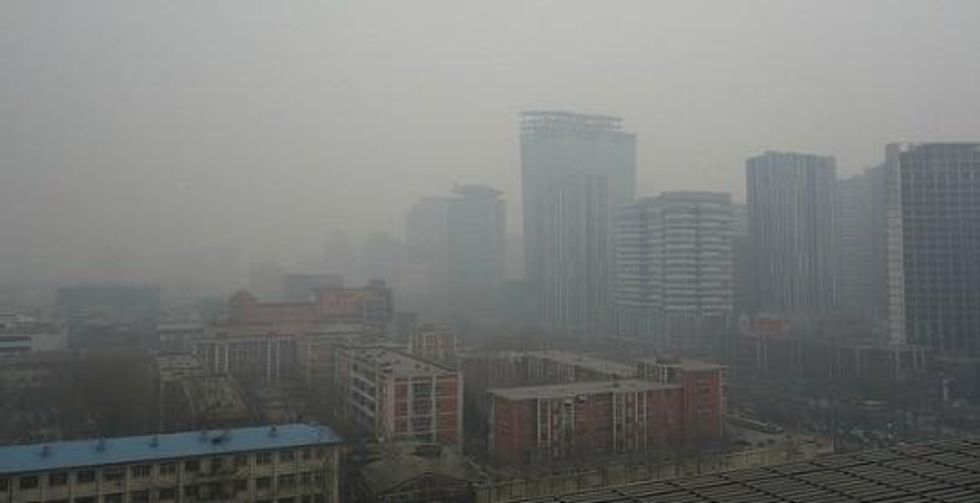
According to the body's just released estimates, seven million people died in 2012 as a result of air pollution. That amounts to one in 8 deaths worldwide.
"The risks from air pollution are now far greater than previously thought or understood, particularly for heart disease and strokes," stated Dr. Maria Neira, Director of the WHO's Department for Public Health, Environmental and Social Determinants of Health.
Their findings attribute 80 percent of outdoor air pollution-caused deaths to heart disease and stroke; those diseases were implicated in 60 percent of indoor air pollution-caused deaths.
Because the indoor air pollution is often the result of smoke and soot from cooking stoves, women and children pay a particular heavy price.
"Thanks to effective regulatory and legislative policies over the years, the United States has made significant strides towards cleaning up deadly emissions from some of the largest sources of air pollution -- old dirty diesel engines and coal-fired power plants - and has done so cost-effectively," Ann Weeks, Senior Counsel and Legal Director at Clean Air Task Force, told Common Dreams. "But, as the WHO finding points out, the rest of the world, particularly the developing countries, has a long way to go."
The WHO called their new data a "significant step in advancing a WHO roadmap for preventing diseases related to air pollution" -- and Weeks said the U.S. experience can help in creating such a roadmap, "particularly [for] women, children and the elderly who are most vulnerable."
WHO's Neira issued a call for action as well.
"Few risks have a greater impact on global health today than air pollution; the evidence signals the need for concerted action to clean up the air we all breathe," she stated.
_________________
According to the body's just released estimates, seven million people died in 2012 as a result of air pollution. That amounts to one in 8 deaths worldwide.
"The risks from air pollution are now far greater than previously thought or understood, particularly for heart disease and strokes," stated Dr. Maria Neira, Director of the WHO's Department for Public Health, Environmental and Social Determinants of Health.
Their findings attribute 80 percent of outdoor air pollution-caused deaths to heart disease and stroke; those diseases were implicated in 60 percent of indoor air pollution-caused deaths.
Because the indoor air pollution is often the result of smoke and soot from cooking stoves, women and children pay a particular heavy price.
"Thanks to effective regulatory and legislative policies over the years, the United States has made significant strides towards cleaning up deadly emissions from some of the largest sources of air pollution -- old dirty diesel engines and coal-fired power plants - and has done so cost-effectively," Ann Weeks, Senior Counsel and Legal Director at Clean Air Task Force, told Common Dreams. "But, as the WHO finding points out, the rest of the world, particularly the developing countries, has a long way to go."
The WHO called their new data a "significant step in advancing a WHO roadmap for preventing diseases related to air pollution" -- and Weeks said the U.S. experience can help in creating such a roadmap, "particularly [for] women, children and the elderly who are most vulnerable."
WHO's Neira issued a call for action as well.
"Few risks have a greater impact on global health today than air pollution; the evidence signals the need for concerted action to clean up the air we all breathe," she stated.
_________________
According to the body's just released estimates, seven million people died in 2012 as a result of air pollution. That amounts to one in 8 deaths worldwide.
"The risks from air pollution are now far greater than previously thought or understood, particularly for heart disease and strokes," stated Dr. Maria Neira, Director of the WHO's Department for Public Health, Environmental and Social Determinants of Health.
Their findings attribute 80 percent of outdoor air pollution-caused deaths to heart disease and stroke; those diseases were implicated in 60 percent of indoor air pollution-caused deaths.
Because the indoor air pollution is often the result of smoke and soot from cooking stoves, women and children pay a particular heavy price.
"Thanks to effective regulatory and legislative policies over the years, the United States has made significant strides towards cleaning up deadly emissions from some of the largest sources of air pollution -- old dirty diesel engines and coal-fired power plants - and has done so cost-effectively," Ann Weeks, Senior Counsel and Legal Director at Clean Air Task Force, told Common Dreams. "But, as the WHO finding points out, the rest of the world, particularly the developing countries, has a long way to go."
The WHO called their new data a "significant step in advancing a WHO roadmap for preventing diseases related to air pollution" -- and Weeks said the U.S. experience can help in creating such a roadmap, "particularly [for] women, children and the elderly who are most vulnerable."
WHO's Neira issued a call for action as well.
"Few risks have a greater impact on global health today than air pollution; the evidence signals the need for concerted action to clean up the air we all breathe," she stated.
_________________