SUBSCRIBE TO OUR FREE NEWSLETTER
Daily news & progressive opinion—funded by the people, not the corporations—delivered straight to your inbox.
5
#000000
#FFFFFF
To donate by check, phone, or other method, see our More Ways to Give page.

The signs of a people's victory, after more than a decade of deadlock over the planned mine, left officials with Gabriel Resources Ltd.--the corporation pushing for the deal--furious and hurling threats Monday that, if parliament does not give the company a pass, they will sue for billions for "multiple breaches of international investment treaties."
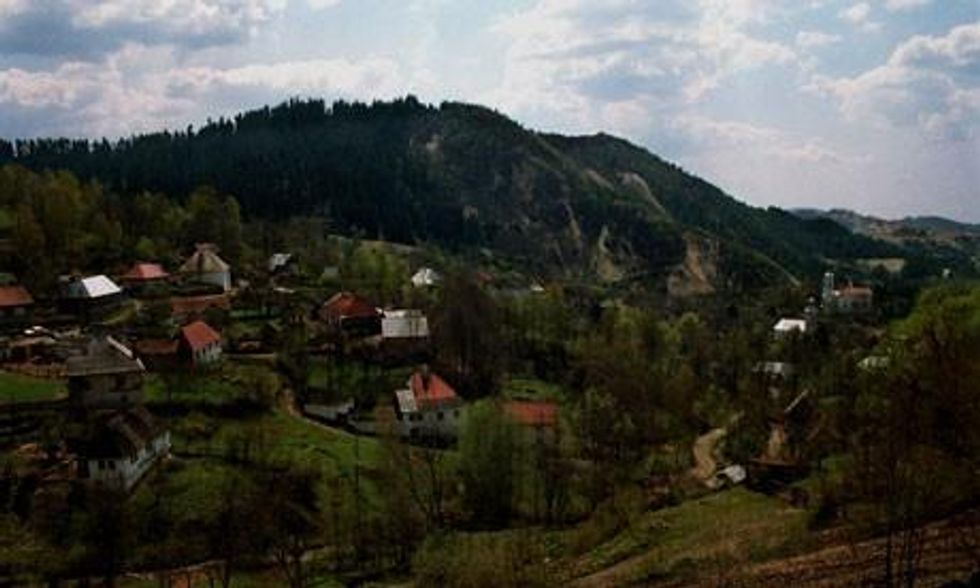
Romanian residents and environmental activists have successfully opposed plans to build the mine since it was proposed in the 1990s, charging that it would blast off mountaintops, destroy ancient Roman ruins, and displace residents from the town of Rosia Montana and nearby villages.
Among their chief concern is the planned use of cyanide as part of the extraction process. In 2000, a cyanide spill at a Baie Mare gold mine released dangerous toxins into mud and water that seeped into Romania, Hungary, and Serbia in Europe's worst environmental accident since Chernobyl, heightening concerns about cyanide use in mining.
The company and some politicians have publicly championed the proposed mine on grounds it would bring much needed jobs to a country battling poverty and unemployment. However, critics charge that opening Romania for business to foreign corporations merely ensures that natural wealth will be siphoned out of the country while leaving a path of environmental and human destruction.
Ponta, who was initially opposed to the mine, changed course after negotiating higher state royalties and introduced a bill for the project to go through in late August. His move touched off a week of escalating protests, including 15,000 people who took to the streets in mobilizations across the country Sunday.
In the face of this opposition, Ponta announced on Monday that the bill in favor of the mine is no longer viable. "As long as it is obvious that there is a majority opposed to the bill, it is useless to waste too much time on it," he stated Monday, noting a majority of lawmakers oppose the plan.
Opponents to the mine say that the outcome of the struggle, which is not over until parliament votes a definitive "no," is vitally important for efforts to address poverty and joblessness without turning to false solutions that only make foreign corporations more wealthy.
"It is the symbolic fight of our generation," 26 year-old Oana Mondoc told the Guardian at a Sunday solidarity protest at the Romanian Embassy in London.
Opponents to the mine note that the outcome will impact people affected by destructive mining practices across the world. Lorna Howarth writes in Ecologist., "[I]t is indigenous people, first nations people, farm labourers and peasants who, all over the world, have to pick up the pieces after such corporate ransacking; who pay the price in terms of debilitating illness and unrelenting poverty as their crops fail and animals succumb to the poisoned land."
_____________________
The signs of a people's victory, after more than a decade of deadlock over the planned mine, left officials with Gabriel Resources Ltd.--the corporation pushing for the deal--furious and hurling threats Monday that, if parliament does not give the company a pass, they will sue for billions for "multiple breaches of international investment treaties."
Romanian residents and environmental activists have successfully opposed plans to build the mine since it was proposed in the 1990s, charging that it would blast off mountaintops, destroy ancient Roman ruins, and displace residents from the town of Rosia Montana and nearby villages.
Among their chief concern is the planned use of cyanide as part of the extraction process. In 2000, a cyanide spill at a Baie Mare gold mine released dangerous toxins into mud and water that seeped into Romania, Hungary, and Serbia in Europe's worst environmental accident since Chernobyl, heightening concerns about cyanide use in mining.
The company and some politicians have publicly championed the proposed mine on grounds it would bring much needed jobs to a country battling poverty and unemployment. However, critics charge that opening Romania for business to foreign corporations merely ensures that natural wealth will be siphoned out of the country while leaving a path of environmental and human destruction.
Ponta, who was initially opposed to the mine, changed course after negotiating higher state royalties and introduced a bill for the project to go through in late August. His move touched off a week of escalating protests, including 15,000 people who took to the streets in mobilizations across the country Sunday.
In the face of this opposition, Ponta announced on Monday that the bill in favor of the mine is no longer viable. "As long as it is obvious that there is a majority opposed to the bill, it is useless to waste too much time on it," he stated Monday, noting a majority of lawmakers oppose the plan.
Opponents to the mine say that the outcome of the struggle, which is not over until parliament votes a definitive "no," is vitally important for efforts to address poverty and joblessness without turning to false solutions that only make foreign corporations more wealthy.
"It is the symbolic fight of our generation," 26 year-old Oana Mondoc told the Guardian at a Sunday solidarity protest at the Romanian Embassy in London.
Opponents to the mine note that the outcome will impact people affected by destructive mining practices across the world. Lorna Howarth writes in Ecologist., "[I]t is indigenous people, first nations people, farm labourers and peasants who, all over the world, have to pick up the pieces after such corporate ransacking; who pay the price in terms of debilitating illness and unrelenting poverty as their crops fail and animals succumb to the poisoned land."
_____________________
The signs of a people's victory, after more than a decade of deadlock over the planned mine, left officials with Gabriel Resources Ltd.--the corporation pushing for the deal--furious and hurling threats Monday that, if parliament does not give the company a pass, they will sue for billions for "multiple breaches of international investment treaties."
Romanian residents and environmental activists have successfully opposed plans to build the mine since it was proposed in the 1990s, charging that it would blast off mountaintops, destroy ancient Roman ruins, and displace residents from the town of Rosia Montana and nearby villages.
Among their chief concern is the planned use of cyanide as part of the extraction process. In 2000, a cyanide spill at a Baie Mare gold mine released dangerous toxins into mud and water that seeped into Romania, Hungary, and Serbia in Europe's worst environmental accident since Chernobyl, heightening concerns about cyanide use in mining.
The company and some politicians have publicly championed the proposed mine on grounds it would bring much needed jobs to a country battling poverty and unemployment. However, critics charge that opening Romania for business to foreign corporations merely ensures that natural wealth will be siphoned out of the country while leaving a path of environmental and human destruction.
Ponta, who was initially opposed to the mine, changed course after negotiating higher state royalties and introduced a bill for the project to go through in late August. His move touched off a week of escalating protests, including 15,000 people who took to the streets in mobilizations across the country Sunday.
In the face of this opposition, Ponta announced on Monday that the bill in favor of the mine is no longer viable. "As long as it is obvious that there is a majority opposed to the bill, it is useless to waste too much time on it," he stated Monday, noting a majority of lawmakers oppose the plan.
Opponents to the mine say that the outcome of the struggle, which is not over until parliament votes a definitive "no," is vitally important for efforts to address poverty and joblessness without turning to false solutions that only make foreign corporations more wealthy.
"It is the symbolic fight of our generation," 26 year-old Oana Mondoc told the Guardian at a Sunday solidarity protest at the Romanian Embassy in London.
Opponents to the mine note that the outcome will impact people affected by destructive mining practices across the world. Lorna Howarth writes in Ecologist., "[I]t is indigenous people, first nations people, farm labourers and peasants who, all over the world, have to pick up the pieces after such corporate ransacking; who pay the price in terms of debilitating illness and unrelenting poverty as their crops fail and animals succumb to the poisoned land."
_____________________