SUBSCRIBE TO OUR FREE NEWSLETTER
Daily news & progressive opinion—funded by the people, not the corporations—delivered straight to your inbox.
5
#000000
#FFFFFF
To donate by check, phone, or other method, see our More Ways to Give page.

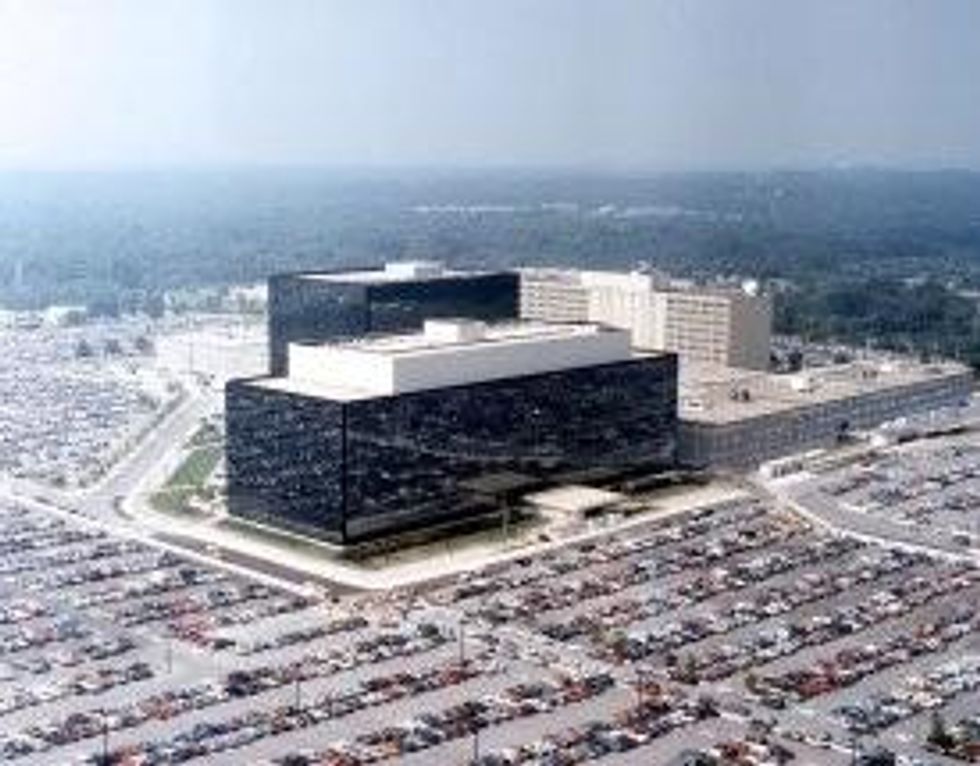
This newest revelation of the scope of NSA surveillance exposed by Der Spiegel is from secret documents obtained by NSA whistleblower Edward Snowden, including a 2010 document marked "top secret" the paper had seen in part.
The NSA "not only conducted online surveillance of European citizens, but also appears to have specifically targeted buildings housing European Union institutions," it reports.
According to the documents, the NSA bugged EU offices in DC and New York, and infiltrated their computer networks.
In Brussels, the NSA was also behind an electronic eavesdropping operation.
Der Spiegel also reported that Germany was a significant target of NSA surveillance, "with some 500 million communication connections being monitored every month."
On Sunday, Germany's justice minister, Sabine Leutheusser-Schnarrenberger, said the tactic "recalls the methods used by enemies during the Cold War," and added, "It is beyond comprehension that our friends in the United States see Europeans as enemies."
"It must ultimately be immediately and extensively explained by the American side whether media reports about completely disproportionate tapping measures by the US in the EU are accurate or not," Leutheusser-Schnarrenberger stated.
Luxembourgian Foreign Minister Jean Asselborn reacted to the revelations saying, "The US justifies everything as being part of the fight against terrorism. But the EU and its diplomats are not terrorists. We need a guarantee from the very highest level that it stops immediately."
European Parliament President Martin Schulz said he was "deeply worried and shocked" over the allegations, and added, "On behalf of the European Parliament, I demand full clarification and require further information speedily from the US authorities with regard to these allegations."
One person of the team of writers behind the Der Spiegel report is documentary filmmaker Laura Poitras, also on the board of the Freedom of the Press Foundation, and who, as the New York Times wrote, "emerged as the pivotal connection between the former government contractor Edward J. Snowden and writers for The Guardian and The Washington Post who published his leaked documents about government surveillance."
The Observer has more on revelations of the extent of the NSA spying:
Meanwhile, it has emerged that at least six European member states have shared personal communications data with the NSA, according to declassified US intelligence reports and EU parliamentary documents.
The documents, seen by the Observer, show that - in addition to the UK - Denmark, the Netherlands, France, Germany, Spain, and Italy have all had formal agreements to provide communications data to the US. They state that the EU countries have had "second and third party status" under decades-old signal intelligence (Sigint) agreements that compel them to hand over data which, in later years, experts believe, has come to include mobile phone and internet data.
Under the international intelligence agreements, nations are categorised by the US according to their trust level. The US is defined as 'first party' while the UK, Canada, Australia and New Zealand enjoy 'second party' trusted relationships. Countries such as Germany and France have 'third party', or less trusted, relationships.
The data-sharing was set out under a 1955 UK-USA agreement that provided a legal framework for intelligence-sharing that has continued.
It stipulates: "In accordance with these arrangements, each party will continue to make available to the other, continuously, and without request, all raw traffic, COMINT (communications intelligence) end-product and technical material acquired or produced, and all pertinent information concerning its activities, priorities and facilities."
_____________________
This newest revelation of the scope of NSA surveillance exposed by Der Spiegel is from secret documents obtained by NSA whistleblower Edward Snowden, including a 2010 document marked "top secret" the paper had seen in part.
The NSA "not only conducted online surveillance of European citizens, but also appears to have specifically targeted buildings housing European Union institutions," it reports.
According to the documents, the NSA bugged EU offices in DC and New York, and infiltrated their computer networks.
In Brussels, the NSA was also behind an electronic eavesdropping operation.
Der Spiegel also reported that Germany was a significant target of NSA surveillance, "with some 500 million communication connections being monitored every month."
On Sunday, Germany's justice minister, Sabine Leutheusser-Schnarrenberger, said the tactic "recalls the methods used by enemies during the Cold War," and added, "It is beyond comprehension that our friends in the United States see Europeans as enemies."
"It must ultimately be immediately and extensively explained by the American side whether media reports about completely disproportionate tapping measures by the US in the EU are accurate or not," Leutheusser-Schnarrenberger stated.
Luxembourgian Foreign Minister Jean Asselborn reacted to the revelations saying, "The US justifies everything as being part of the fight against terrorism. But the EU and its diplomats are not terrorists. We need a guarantee from the very highest level that it stops immediately."
European Parliament President Martin Schulz said he was "deeply worried and shocked" over the allegations, and added, "On behalf of the European Parliament, I demand full clarification and require further information speedily from the US authorities with regard to these allegations."
One person of the team of writers behind the Der Spiegel report is documentary filmmaker Laura Poitras, also on the board of the Freedom of the Press Foundation, and who, as the New York Times wrote, "emerged as the pivotal connection between the former government contractor Edward J. Snowden and writers for The Guardian and The Washington Post who published his leaked documents about government surveillance."
The Observer has more on revelations of the extent of the NSA spying:
Meanwhile, it has emerged that at least six European member states have shared personal communications data with the NSA, according to declassified US intelligence reports and EU parliamentary documents.
The documents, seen by the Observer, show that - in addition to the UK - Denmark, the Netherlands, France, Germany, Spain, and Italy have all had formal agreements to provide communications data to the US. They state that the EU countries have had "second and third party status" under decades-old signal intelligence (Sigint) agreements that compel them to hand over data which, in later years, experts believe, has come to include mobile phone and internet data.
Under the international intelligence agreements, nations are categorised by the US according to their trust level. The US is defined as 'first party' while the UK, Canada, Australia and New Zealand enjoy 'second party' trusted relationships. Countries such as Germany and France have 'third party', or less trusted, relationships.
The data-sharing was set out under a 1955 UK-USA agreement that provided a legal framework for intelligence-sharing that has continued.
It stipulates: "In accordance with these arrangements, each party will continue to make available to the other, continuously, and without request, all raw traffic, COMINT (communications intelligence) end-product and technical material acquired or produced, and all pertinent information concerning its activities, priorities and facilities."
_____________________
This newest revelation of the scope of NSA surveillance exposed by Der Spiegel is from secret documents obtained by NSA whistleblower Edward Snowden, including a 2010 document marked "top secret" the paper had seen in part.
The NSA "not only conducted online surveillance of European citizens, but also appears to have specifically targeted buildings housing European Union institutions," it reports.
According to the documents, the NSA bugged EU offices in DC and New York, and infiltrated their computer networks.
In Brussels, the NSA was also behind an electronic eavesdropping operation.
Der Spiegel also reported that Germany was a significant target of NSA surveillance, "with some 500 million communication connections being monitored every month."
On Sunday, Germany's justice minister, Sabine Leutheusser-Schnarrenberger, said the tactic "recalls the methods used by enemies during the Cold War," and added, "It is beyond comprehension that our friends in the United States see Europeans as enemies."
"It must ultimately be immediately and extensively explained by the American side whether media reports about completely disproportionate tapping measures by the US in the EU are accurate or not," Leutheusser-Schnarrenberger stated.
Luxembourgian Foreign Minister Jean Asselborn reacted to the revelations saying, "The US justifies everything as being part of the fight against terrorism. But the EU and its diplomats are not terrorists. We need a guarantee from the very highest level that it stops immediately."
European Parliament President Martin Schulz said he was "deeply worried and shocked" over the allegations, and added, "On behalf of the European Parliament, I demand full clarification and require further information speedily from the US authorities with regard to these allegations."
One person of the team of writers behind the Der Spiegel report is documentary filmmaker Laura Poitras, also on the board of the Freedom of the Press Foundation, and who, as the New York Times wrote, "emerged as the pivotal connection between the former government contractor Edward J. Snowden and writers for The Guardian and The Washington Post who published his leaked documents about government surveillance."
The Observer has more on revelations of the extent of the NSA spying:
Meanwhile, it has emerged that at least six European member states have shared personal communications data with the NSA, according to declassified US intelligence reports and EU parliamentary documents.
The documents, seen by the Observer, show that - in addition to the UK - Denmark, the Netherlands, France, Germany, Spain, and Italy have all had formal agreements to provide communications data to the US. They state that the EU countries have had "second and third party status" under decades-old signal intelligence (Sigint) agreements that compel them to hand over data which, in later years, experts believe, has come to include mobile phone and internet data.
Under the international intelligence agreements, nations are categorised by the US according to their trust level. The US is defined as 'first party' while the UK, Canada, Australia and New Zealand enjoy 'second party' trusted relationships. Countries such as Germany and France have 'third party', or less trusted, relationships.
The data-sharing was set out under a 1955 UK-USA agreement that provided a legal framework for intelligence-sharing that has continued.
It stipulates: "In accordance with these arrangements, each party will continue to make available to the other, continuously, and without request, all raw traffic, COMINT (communications intelligence) end-product and technical material acquired or produced, and all pertinent information concerning its activities, priorities and facilities."
_____________________