
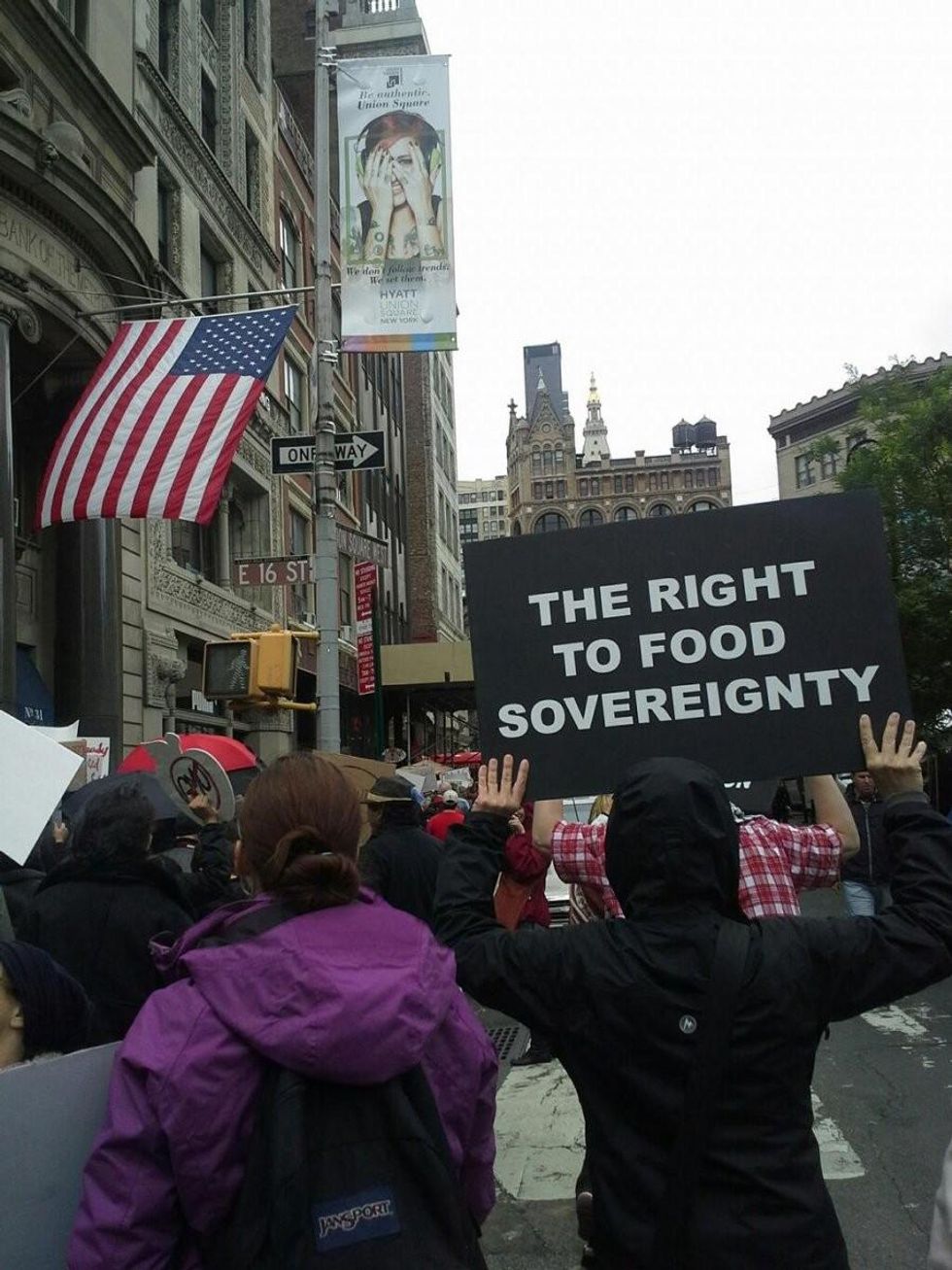
The march, ecofeminist Dr. Vandana Shiva has said, "is inspired by the love for freedom and democracy, the love for the Earth, the soil, the seed."
It "is a call to end the dictatorship over seeds, over life, over food and over our freedom."
Tweets about "#MarchAgainstMonsanto OR #MAM OR #OpMonsanto lang:en"
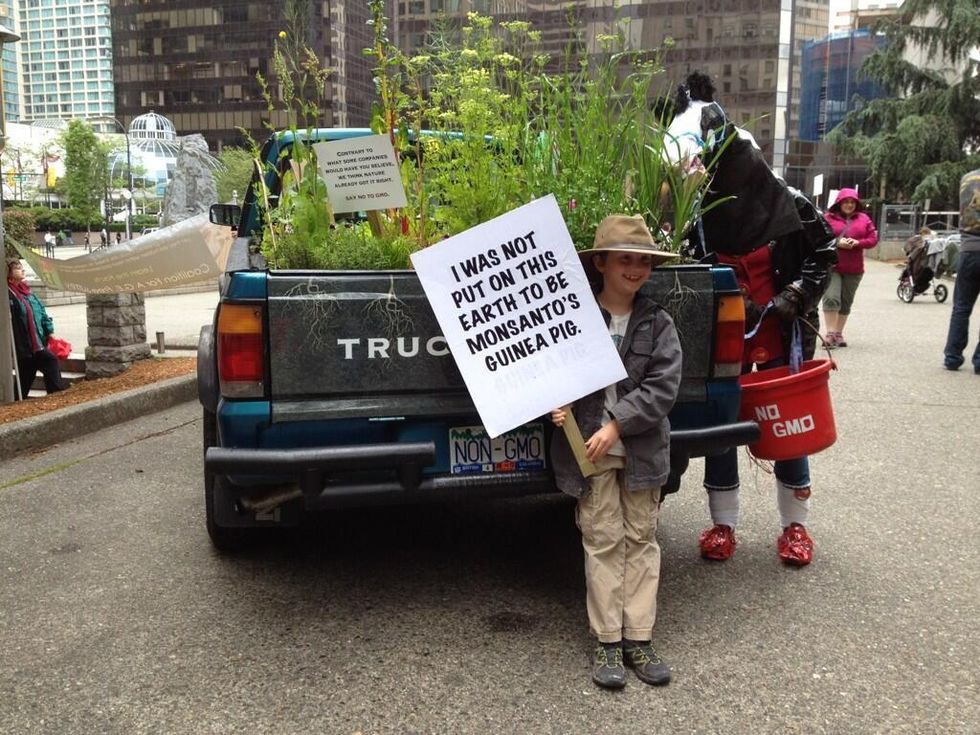
Specifically, the organizers explain, they are marching because:
- Research studies have shown that Monsanto's genetically-modified foods can lead to serious health conditions such as the development of cancer tumors, infertility and birth defects.
- In the United States, the FDA, the agency tasked with ensuring food safety for the population, is steered by ex-Monsanto executives, and we feel that's a questionable conflict of interests and explains the lack of government-led research on the long-term effects of GM products.
- Recently, the U.S. Congress and president collectively passed the nicknamed "Monsanto Protection Act" that, among other things, bans courts from halting the sale of Monsanto's genetically-modified seeds.
- For too long, Monsanto has been the benefactor of corporate subsidies and political favoritism. Organic and small farmers suffer losses while Monsanto continues to forge its monopoly over the world's food supply, including exclusive patenting rights over seeds and genetic makeup.
- Monsanto's GM seeds are harmful to the environment; for example, scientists have indicated they have contributed to Colony Collapse Disorder among the world's bee population.
"For the sake of ourselves and future generations we need to reclaim our food supply," offers another take of 'Why #MarchAgainstMonsanto.' "We need to start a grassroots revolution against destructive and voracious agribusiness. The seed for this has already been planted. All around, people are rallying to save biodiversity, to practice agriculture with respect for people and nature, to develop technologies that don't rely on poison or genetic engineering."
Josh Castro, a march organizer for Quito, Ecuador, says his country "is such a beautiful place, with the richest biodiversity in the world. We will not allow this Garden of Eden to be compromised by evil multinational corporations like Monsanto. Biotechnology is not the solution to world hunger. Agroecology is."
_________________________
The march, ecofeminist Dr. Vandana Shiva has said, "is inspired by the love for freedom and democracy, the love for the Earth, the soil, the seed."
It "is a call to end the dictatorship over seeds, over life, over food and over our freedom."
Tweets about "#MarchAgainstMonsanto OR #MAM OR #OpMonsanto lang:en"
Specifically, the organizers explain, they are marching because:
- Research studies have shown that Monsanto's genetically-modified foods can lead to serious health conditions such as the development of cancer tumors, infertility and birth defects.
- In the United States, the FDA, the agency tasked with ensuring food safety for the population, is steered by ex-Monsanto executives, and we feel that's a questionable conflict of interests and explains the lack of government-led research on the long-term effects of GM products.
- Recently, the U.S. Congress and president collectively passed the nicknamed "Monsanto Protection Act" that, among other things, bans courts from halting the sale of Monsanto's genetically-modified seeds.
- For too long, Monsanto has been the benefactor of corporate subsidies and political favoritism. Organic and small farmers suffer losses while Monsanto continues to forge its monopoly over the world's food supply, including exclusive patenting rights over seeds and genetic makeup.
- Monsanto's GM seeds are harmful to the environment; for example, scientists have indicated they have contributed to Colony Collapse Disorder among the world's bee population.
"For the sake of ourselves and future generations we need to reclaim our food supply," offers another take of 'Why #MarchAgainstMonsanto.' "We need to start a grassroots revolution against destructive and voracious agribusiness. The seed for this has already been planted. All around, people are rallying to save biodiversity, to practice agriculture with respect for people and nature, to develop technologies that don't rely on poison or genetic engineering."
Josh Castro, a march organizer for Quito, Ecuador, says his country "is such a beautiful place, with the richest biodiversity in the world. We will not allow this Garden of Eden to be compromised by evil multinational corporations like Monsanto. Biotechnology is not the solution to world hunger. Agroecology is."
_________________________
The march, ecofeminist Dr. Vandana Shiva has said, "is inspired by the love for freedom and democracy, the love for the Earth, the soil, the seed."
It "is a call to end the dictatorship over seeds, over life, over food and over our freedom."
Tweets about "#MarchAgainstMonsanto OR #MAM OR #OpMonsanto lang:en"
Specifically, the organizers explain, they are marching because:
- Research studies have shown that Monsanto's genetically-modified foods can lead to serious health conditions such as the development of cancer tumors, infertility and birth defects.
- In the United States, the FDA, the agency tasked with ensuring food safety for the population, is steered by ex-Monsanto executives, and we feel that's a questionable conflict of interests and explains the lack of government-led research on the long-term effects of GM products.
- Recently, the U.S. Congress and president collectively passed the nicknamed "Monsanto Protection Act" that, among other things, bans courts from halting the sale of Monsanto's genetically-modified seeds.
- For too long, Monsanto has been the benefactor of corporate subsidies and political favoritism. Organic and small farmers suffer losses while Monsanto continues to forge its monopoly over the world's food supply, including exclusive patenting rights over seeds and genetic makeup.
- Monsanto's GM seeds are harmful to the environment; for example, scientists have indicated they have contributed to Colony Collapse Disorder among the world's bee population.
"For the sake of ourselves and future generations we need to reclaim our food supply," offers another take of 'Why #MarchAgainstMonsanto.' "We need to start a grassroots revolution against destructive and voracious agribusiness. The seed for this has already been planted. All around, people are rallying to save biodiversity, to practice agriculture with respect for people and nature, to develop technologies that don't rely on poison or genetic engineering."
Josh Castro, a march organizer for Quito, Ecuador, says his country "is such a beautiful place, with the richest biodiversity in the world. We will not allow this Garden of Eden to be compromised by evil multinational corporations like Monsanto. Biotechnology is not the solution to world hunger. Agroecology is."
_________________________