SUBSCRIBE TO OUR FREE NEWSLETTER
Daily news & progressive opinion—funded by the people, not the corporations—delivered straight to your inbox.
5
#000000
#FFFFFF
To donate by check, phone, or other method, see our More Ways to Give page.
Daily news & progressive opinion—funded by the people, not the corporations—delivered straight to your inbox.
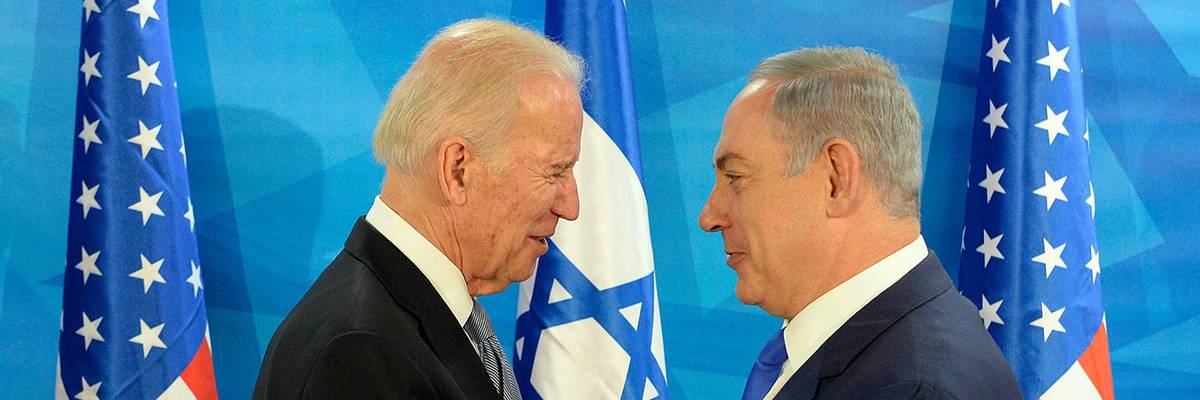
Then-U.S. Vice President Joe Biden meets with Israeli Prime Minister in Jerusalem on March 9, 2016. (Photo: U.S. Embassy Jerusalem/flickr/cc)
The U.S. will push back against annexation, according to U.S. ambassador to Israel, Tom Nides, as the Abraham Accords are set to feature as a continuation of an internationally approved U.S. policy. "Our position is quite clear: We do not support annexation. We will fight any attempt to do so," Nides stated during an interview.
Nides should have specified that the U.S. is not opposing annexation but a possible formalization of the process, which is likely under Netanyahu.
Prior to the Abraham Accords agenda, then Israeli Prime Minister, Benjamin Netanyahu, was prioritizing annexation. Its suspensions prompted many statements from within the Trump administration that the plan will not be permanently halted. A question of strategizing priorities, the normalization agreements, which some Arab States signed with Israel, enabled the settler-colonial enterprise to legitimize its violence through other means, while de facto annexation continued unhindered. The formality of annexation is what the far right in Israel is after, however, as Likud MK Yarid Levi stated, "We were a mere step from applying sovereignty in Judea and Samaria and I hope that we will make fewer statements and take more actions to move there."
The Jerusalem Post has reported that Bezalel Smotrich, leader of the Religious Zionist Party, is demanding that the forthcoming Israeli government exerts its rule over Israeli settlements, as opposed to the Israeli Defence Forces (IDF) Civil Administration, which would bring annexation a step forward.
Meanwhile, the Biden administration has, so far, issued vague statements on shared values while indicating that it will push back on annexation. According to Nides, the US is "a very, very strong ally of the state of Israel, but there will be times where we will articulate where we believe our differences are." Most Arab countries oppose annexation, he noted, while failing to articulate that Arab states have completely failed Palestinians and their opposition to annexation will hardly dent any future plans by the next Israeli government led by Benjamin Netanyahu.
The Abraham Accords have not halted settlement expansion. The latest U.N. Commission of Inquiry report acknowledges Israel's de-facto annexation. Nides should have specified that the U.S. is not opposing annexation but a possible formalization of the process, which is likely under Netanyahu.
U.S. President Joe Biden has operated largely from within the Trump legacy, making only concessionary gestures to Palestinians rather than altering U.S. foreign policy or reversing former U.S. President Donald Trump's concessions. Arab countries, meanwhile, have failed to collectively oppose the Abraham Accords, which goes against the Arab Peace initiative of 2002, which calls upon Israel to withdraw from the Occupied Palestinian Territories, in return for normalizing relations with the settler-colonial entity. A hypocritical move still, because settler-colonialism remains unaddressed, yet the fact remains that Arab countries have even betrayed their own initiative for a colonial demand.
The allegiances Netanyahu will be working with during his tenure as prime minister is perceived by settlers as a victory. It must not be forgotten that Netanyahu has already managed to build the foundations for annexation in his previous tenures, particularly his insistence that the Palestinian cause is no longer a priority for Arab states - a proven statement given the betrayal over the Abraham Accords. Given that the U.S. will prioritize Israel's colonial narrative, it is unlikely that any alleged opposition to annexation will influence Israel's forthcoming government.
Dear Common Dreams reader, It’s been nearly 30 years since I co-founded Common Dreams with my late wife, Lina Newhouser. We had the radical notion that journalism should serve the public good, not corporate profits. It was clear to us from the outset what it would take to build such a project. No paid advertisements. No corporate sponsors. No millionaire publisher telling us what to think or do. Many people said we wouldn't last a year, but we proved those doubters wrong. Together with a tremendous team of journalists and dedicated staff, we built an independent media outlet free from the constraints of profits and corporate control. Our mission has always been simple: To inform. To inspire. To ignite change for the common good. Building Common Dreams was not easy. Our survival was never guaranteed. When you take on the most powerful forces—Wall Street greed, fossil fuel industry destruction, Big Tech lobbyists, and uber-rich oligarchs who have spent billions upon billions rigging the economy and democracy in their favor—the only bulwark you have is supporters who believe in your work. But here’s the urgent message from me today. It's never been this bad out there. And it's never been this hard to keep us going. At the very moment Common Dreams is most needed, the threats we face are intensifying. We need your support now more than ever. We don't accept corporate advertising and never will. We don't have a paywall because we don't think people should be blocked from critical news based on their ability to pay. Everything we do is funded by the donations of readers like you. When everyone does the little they can afford, we are strong. But if that support retreats or dries up, so do we. Will you donate now to make sure Common Dreams not only survives but thrives? —Craig Brown, Co-founder |
The U.S. will push back against annexation, according to U.S. ambassador to Israel, Tom Nides, as the Abraham Accords are set to feature as a continuation of an internationally approved U.S. policy. "Our position is quite clear: We do not support annexation. We will fight any attempt to do so," Nides stated during an interview.
Nides should have specified that the U.S. is not opposing annexation but a possible formalization of the process, which is likely under Netanyahu.
Prior to the Abraham Accords agenda, then Israeli Prime Minister, Benjamin Netanyahu, was prioritizing annexation. Its suspensions prompted many statements from within the Trump administration that the plan will not be permanently halted. A question of strategizing priorities, the normalization agreements, which some Arab States signed with Israel, enabled the settler-colonial enterprise to legitimize its violence through other means, while de facto annexation continued unhindered. The formality of annexation is what the far right in Israel is after, however, as Likud MK Yarid Levi stated, "We were a mere step from applying sovereignty in Judea and Samaria and I hope that we will make fewer statements and take more actions to move there."
The Jerusalem Post has reported that Bezalel Smotrich, leader of the Religious Zionist Party, is demanding that the forthcoming Israeli government exerts its rule over Israeli settlements, as opposed to the Israeli Defence Forces (IDF) Civil Administration, which would bring annexation a step forward.
Meanwhile, the Biden administration has, so far, issued vague statements on shared values while indicating that it will push back on annexation. According to Nides, the US is "a very, very strong ally of the state of Israel, but there will be times where we will articulate where we believe our differences are." Most Arab countries oppose annexation, he noted, while failing to articulate that Arab states have completely failed Palestinians and their opposition to annexation will hardly dent any future plans by the next Israeli government led by Benjamin Netanyahu.
The Abraham Accords have not halted settlement expansion. The latest U.N. Commission of Inquiry report acknowledges Israel's de-facto annexation. Nides should have specified that the U.S. is not opposing annexation but a possible formalization of the process, which is likely under Netanyahu.
U.S. President Joe Biden has operated largely from within the Trump legacy, making only concessionary gestures to Palestinians rather than altering U.S. foreign policy or reversing former U.S. President Donald Trump's concessions. Arab countries, meanwhile, have failed to collectively oppose the Abraham Accords, which goes against the Arab Peace initiative of 2002, which calls upon Israel to withdraw from the Occupied Palestinian Territories, in return for normalizing relations with the settler-colonial entity. A hypocritical move still, because settler-colonialism remains unaddressed, yet the fact remains that Arab countries have even betrayed their own initiative for a colonial demand.
The allegiances Netanyahu will be working with during his tenure as prime minister is perceived by settlers as a victory. It must not be forgotten that Netanyahu has already managed to build the foundations for annexation in his previous tenures, particularly his insistence that the Palestinian cause is no longer a priority for Arab states - a proven statement given the betrayal over the Abraham Accords. Given that the U.S. will prioritize Israel's colonial narrative, it is unlikely that any alleged opposition to annexation will influence Israel's forthcoming government.
The U.S. will push back against annexation, according to U.S. ambassador to Israel, Tom Nides, as the Abraham Accords are set to feature as a continuation of an internationally approved U.S. policy. "Our position is quite clear: We do not support annexation. We will fight any attempt to do so," Nides stated during an interview.
Nides should have specified that the U.S. is not opposing annexation but a possible formalization of the process, which is likely under Netanyahu.
Prior to the Abraham Accords agenda, then Israeli Prime Minister, Benjamin Netanyahu, was prioritizing annexation. Its suspensions prompted many statements from within the Trump administration that the plan will not be permanently halted. A question of strategizing priorities, the normalization agreements, which some Arab States signed with Israel, enabled the settler-colonial enterprise to legitimize its violence through other means, while de facto annexation continued unhindered. The formality of annexation is what the far right in Israel is after, however, as Likud MK Yarid Levi stated, "We were a mere step from applying sovereignty in Judea and Samaria and I hope that we will make fewer statements and take more actions to move there."
The Jerusalem Post has reported that Bezalel Smotrich, leader of the Religious Zionist Party, is demanding that the forthcoming Israeli government exerts its rule over Israeli settlements, as opposed to the Israeli Defence Forces (IDF) Civil Administration, which would bring annexation a step forward.
Meanwhile, the Biden administration has, so far, issued vague statements on shared values while indicating that it will push back on annexation. According to Nides, the US is "a very, very strong ally of the state of Israel, but there will be times where we will articulate where we believe our differences are." Most Arab countries oppose annexation, he noted, while failing to articulate that Arab states have completely failed Palestinians and their opposition to annexation will hardly dent any future plans by the next Israeli government led by Benjamin Netanyahu.
The Abraham Accords have not halted settlement expansion. The latest U.N. Commission of Inquiry report acknowledges Israel's de-facto annexation. Nides should have specified that the U.S. is not opposing annexation but a possible formalization of the process, which is likely under Netanyahu.
U.S. President Joe Biden has operated largely from within the Trump legacy, making only concessionary gestures to Palestinians rather than altering U.S. foreign policy or reversing former U.S. President Donald Trump's concessions. Arab countries, meanwhile, have failed to collectively oppose the Abraham Accords, which goes against the Arab Peace initiative of 2002, which calls upon Israel to withdraw from the Occupied Palestinian Territories, in return for normalizing relations with the settler-colonial entity. A hypocritical move still, because settler-colonialism remains unaddressed, yet the fact remains that Arab countries have even betrayed their own initiative for a colonial demand.
The allegiances Netanyahu will be working with during his tenure as prime minister is perceived by settlers as a victory. It must not be forgotten that Netanyahu has already managed to build the foundations for annexation in his previous tenures, particularly his insistence that the Palestinian cause is no longer a priority for Arab states - a proven statement given the betrayal over the Abraham Accords. Given that the U.S. will prioritize Israel's colonial narrative, it is unlikely that any alleged opposition to annexation will influence Israel's forthcoming government.