SUBSCRIBE TO OUR FREE NEWSLETTER
Daily news & progressive opinion—funded by the people, not the corporations—delivered straight to your inbox.
5
#000000
#FFFFFF
To donate by check, phone, or other method, see our More Ways to Give page.
Daily news & progressive opinion—funded by the people, not the corporations—delivered straight to your inbox.
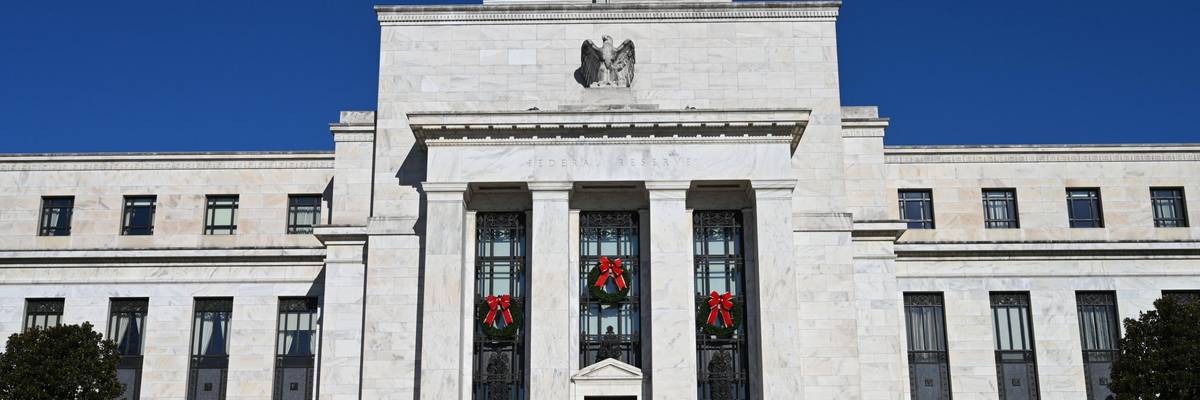
The US Federal Reserve on December 12, 2021 in Washington DC. (Photo: Daniel Slim/AFP via Getty Images)
In 2007, our global financial system was pushed to the brink of collapse after financial regulators ignored reckless lending.
In the aftermath of that financial crisis, regulators vowed to prevent a similar crisis in the future.
But now, those same regulators are once again ignoring a devastating risk to our economy, our health, and our safety: the climate crisis.
We must address the role that big banks play in fossil fuel financing and direct regulators to protect consumers from the risks that climate change poses to our economy.
Last month, President Joe Biden and leaders from more than 190 countries gathered in Glasgow for the 26th Conference of Parties to the United Nations Framework Convention on Climate Change, a summit to strengthen climate action commitments under the Paris climate agreement.
In Glasgow, Biden reiterated the U.S.'s commitment to cut emissions that cause dangerous short-term warming and end new international financing of unabated fossil fuel energy.
And we need leadership that will get it done. We were disappointed in the Biden administration's decision to nominate Jerome Powell to continue serving as Chairman of the Federal Reserve - the top financial regulator job in the country. Rather than heed Biden's call for a "whole-of-government" approach to climate change, Powell has said climate change "is really an issue that is assigned to lots of other government agencies, not so much the Fed."
But our banking system, which the Fed oversees, plays a key role in causing the climate crisis, while being uniquely exposed to climate risks. From 2016 to 2020, banks provided $3.8 trillion to the fossil fuel industry, with most of that investment coming from institutions under the Fed's supervision--financing that is used for projects that accelerate the climate crisis and will become worthless assets on banks' ledgers in a clean energy economy.
We must address the role that big banks play in fossil fuel financing and direct regulators to protect consumers from the risks that climate change poses to our economy.
Our global counterparts are already working to protect their financial systems from investments that are bad for the climate and dangerous for lenders.
The Bank of England conducts climate stress tests to understand the resilience of U.K. financial institutions to climate risks and, starting in 2022, will require banks to hold additional capital to offset these risks.
The European Central Bank (ECB) announced a plan to further incorporate climate considerations into its monetary policy framework, including its own asset purchases. The ECB also has committed to climate stress tests and the inclusion of climate considerations when valuing bank assets used as collateral.
But to date, the Fed has failed to follow the examples set by its counterparts. This is why we introduced the Fossil Free Finance Act, legislation that would compel the Fed to become part of the all-of-government approach to combat the climate crisis.
Our legislation would require banks and other large financial institutions to wind down their lending to polluting industries, in line with our national climate targets. It also would hold the largest banks accountable to scientifically necessary climate targets, rather than banking on their promises alone.
As the United States commits to ambitious emissions reduction goals, we must also commit to ending the flow of capital to the industries responsible for these emissions. And that starts with financial regulators.
After the 2008 economic collapse, the Fed vowed to do more to prevent systemic risks to our financial system. But today, regulators are failing to address the biggest risk to our economy and our planet - a risk that, if left unaddressed, will be orders of magnitude worse than anything we saw in the late 2000s.
It's time for the Federal Reserve and all financial regulators to step up and treat the climate crisis with the urgency it demands--before it's too late.
Dear Common Dreams reader, It’s been nearly 30 years since I co-founded Common Dreams with my late wife, Lina Newhouser. We had the radical notion that journalism should serve the public good, not corporate profits. It was clear to us from the outset what it would take to build such a project. No paid advertisements. No corporate sponsors. No millionaire publisher telling us what to think or do. Many people said we wouldn't last a year, but we proved those doubters wrong. Together with a tremendous team of journalists and dedicated staff, we built an independent media outlet free from the constraints of profits and corporate control. Our mission has always been simple: To inform. To inspire. To ignite change for the common good. Building Common Dreams was not easy. Our survival was never guaranteed. When you take on the most powerful forces—Wall Street greed, fossil fuel industry destruction, Big Tech lobbyists, and uber-rich oligarchs who have spent billions upon billions rigging the economy and democracy in their favor—the only bulwark you have is supporters who believe in your work. But here’s the urgent message from me today. It's never been this bad out there. And it's never been this hard to keep us going. At the very moment Common Dreams is most needed, the threats we face are intensifying. We need your support now more than ever. We don't accept corporate advertising and never will. We don't have a paywall because we don't think people should be blocked from critical news based on their ability to pay. Everything we do is funded by the donations of readers like you. When everyone does the little they can afford, we are strong. But if that support retreats or dries up, so do we. Will you donate now to make sure Common Dreams not only survives but thrives? —Craig Brown, Co-founder |
In 2007, our global financial system was pushed to the brink of collapse after financial regulators ignored reckless lending.
In the aftermath of that financial crisis, regulators vowed to prevent a similar crisis in the future.
But now, those same regulators are once again ignoring a devastating risk to our economy, our health, and our safety: the climate crisis.
We must address the role that big banks play in fossil fuel financing and direct regulators to protect consumers from the risks that climate change poses to our economy.
Last month, President Joe Biden and leaders from more than 190 countries gathered in Glasgow for the 26th Conference of Parties to the United Nations Framework Convention on Climate Change, a summit to strengthen climate action commitments under the Paris climate agreement.
In Glasgow, Biden reiterated the U.S.'s commitment to cut emissions that cause dangerous short-term warming and end new international financing of unabated fossil fuel energy.
And we need leadership that will get it done. We were disappointed in the Biden administration's decision to nominate Jerome Powell to continue serving as Chairman of the Federal Reserve - the top financial regulator job in the country. Rather than heed Biden's call for a "whole-of-government" approach to climate change, Powell has said climate change "is really an issue that is assigned to lots of other government agencies, not so much the Fed."
But our banking system, which the Fed oversees, plays a key role in causing the climate crisis, while being uniquely exposed to climate risks. From 2016 to 2020, banks provided $3.8 trillion to the fossil fuel industry, with most of that investment coming from institutions under the Fed's supervision--financing that is used for projects that accelerate the climate crisis and will become worthless assets on banks' ledgers in a clean energy economy.
We must address the role that big banks play in fossil fuel financing and direct regulators to protect consumers from the risks that climate change poses to our economy.
Our global counterparts are already working to protect their financial systems from investments that are bad for the climate and dangerous for lenders.
The Bank of England conducts climate stress tests to understand the resilience of U.K. financial institutions to climate risks and, starting in 2022, will require banks to hold additional capital to offset these risks.
The European Central Bank (ECB) announced a plan to further incorporate climate considerations into its monetary policy framework, including its own asset purchases. The ECB also has committed to climate stress tests and the inclusion of climate considerations when valuing bank assets used as collateral.
But to date, the Fed has failed to follow the examples set by its counterparts. This is why we introduced the Fossil Free Finance Act, legislation that would compel the Fed to become part of the all-of-government approach to combat the climate crisis.
Our legislation would require banks and other large financial institutions to wind down their lending to polluting industries, in line with our national climate targets. It also would hold the largest banks accountable to scientifically necessary climate targets, rather than banking on their promises alone.
As the United States commits to ambitious emissions reduction goals, we must also commit to ending the flow of capital to the industries responsible for these emissions. And that starts with financial regulators.
After the 2008 economic collapse, the Fed vowed to do more to prevent systemic risks to our financial system. But today, regulators are failing to address the biggest risk to our economy and our planet - a risk that, if left unaddressed, will be orders of magnitude worse than anything we saw in the late 2000s.
It's time for the Federal Reserve and all financial regulators to step up and treat the climate crisis with the urgency it demands--before it's too late.
In 2007, our global financial system was pushed to the brink of collapse after financial regulators ignored reckless lending.
In the aftermath of that financial crisis, regulators vowed to prevent a similar crisis in the future.
But now, those same regulators are once again ignoring a devastating risk to our economy, our health, and our safety: the climate crisis.
We must address the role that big banks play in fossil fuel financing and direct regulators to protect consumers from the risks that climate change poses to our economy.
Last month, President Joe Biden and leaders from more than 190 countries gathered in Glasgow for the 26th Conference of Parties to the United Nations Framework Convention on Climate Change, a summit to strengthen climate action commitments under the Paris climate agreement.
In Glasgow, Biden reiterated the U.S.'s commitment to cut emissions that cause dangerous short-term warming and end new international financing of unabated fossil fuel energy.
And we need leadership that will get it done. We were disappointed in the Biden administration's decision to nominate Jerome Powell to continue serving as Chairman of the Federal Reserve - the top financial regulator job in the country. Rather than heed Biden's call for a "whole-of-government" approach to climate change, Powell has said climate change "is really an issue that is assigned to lots of other government agencies, not so much the Fed."
But our banking system, which the Fed oversees, plays a key role in causing the climate crisis, while being uniquely exposed to climate risks. From 2016 to 2020, banks provided $3.8 trillion to the fossil fuel industry, with most of that investment coming from institutions under the Fed's supervision--financing that is used for projects that accelerate the climate crisis and will become worthless assets on banks' ledgers in a clean energy economy.
We must address the role that big banks play in fossil fuel financing and direct regulators to protect consumers from the risks that climate change poses to our economy.
Our global counterparts are already working to protect their financial systems from investments that are bad for the climate and dangerous for lenders.
The Bank of England conducts climate stress tests to understand the resilience of U.K. financial institutions to climate risks and, starting in 2022, will require banks to hold additional capital to offset these risks.
The European Central Bank (ECB) announced a plan to further incorporate climate considerations into its monetary policy framework, including its own asset purchases. The ECB also has committed to climate stress tests and the inclusion of climate considerations when valuing bank assets used as collateral.
But to date, the Fed has failed to follow the examples set by its counterparts. This is why we introduced the Fossil Free Finance Act, legislation that would compel the Fed to become part of the all-of-government approach to combat the climate crisis.
Our legislation would require banks and other large financial institutions to wind down their lending to polluting industries, in line with our national climate targets. It also would hold the largest banks accountable to scientifically necessary climate targets, rather than banking on their promises alone.
As the United States commits to ambitious emissions reduction goals, we must also commit to ending the flow of capital to the industries responsible for these emissions. And that starts with financial regulators.
After the 2008 economic collapse, the Fed vowed to do more to prevent systemic risks to our financial system. But today, regulators are failing to address the biggest risk to our economy and our planet - a risk that, if left unaddressed, will be orders of magnitude worse than anything we saw in the late 2000s.
It's time for the Federal Reserve and all financial regulators to step up and treat the climate crisis with the urgency it demands--before it's too late.