SUBSCRIBE TO OUR FREE NEWSLETTER
Daily news & progressive opinion—funded by the people, not the corporations—delivered straight to your inbox.
5
#000000
#FFFFFF
To donate by check, phone, or other method, see our More Ways to Give page.
Daily news & progressive opinion—funded by the people, not the corporations—delivered straight to your inbox.
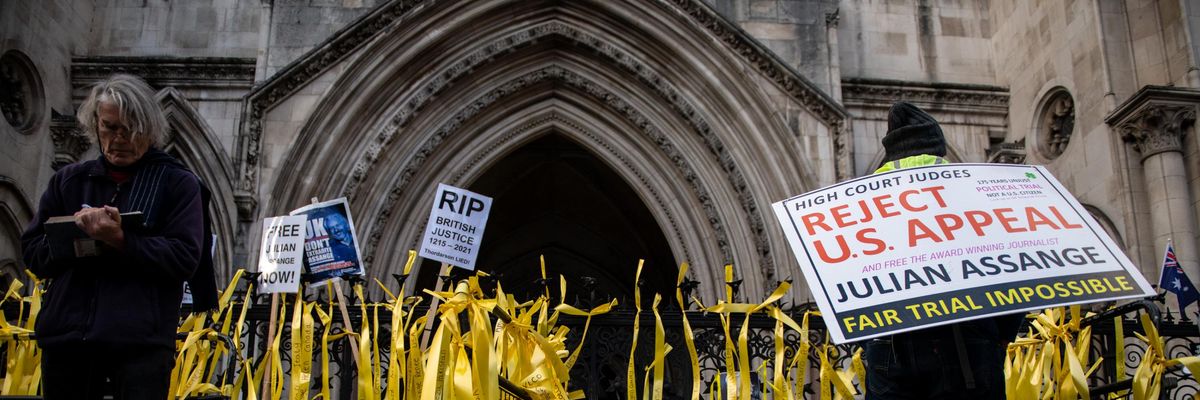
Yellow ribbons with messages from supporters of Julian Assange are tied to the railings of the Royal Courts of Justice during an appeal hearing for his extradition to the United States on October 27, 2021 in London, England. (Photo: Chris J Ratcliffe/Getty Images)
In 1791, in an attempt to stop the publication of the first part of Thomas Paine's seminal work, The Rights of Man, the British government tried to buy up the copyright.
The publisher refused to sell.
The following year, after the second part of the work was published, the government tried a more direct tactic, charging Paine with seditious libel and treason.
Were his extradition to be allowed it would set a precedent that would effectively criminalise common journalistic practices.
Outraged, Paine listed the things his book had done--exposing fraud, ending war and promoting universal peace--stating "if these things be libellous ... let the name of libeller be engraved on my tomb."
More than 200 years on, governments around the world still endeavour to suppress damning information, violating the right to freedom of expression and targeting those responsible for exposing it.
Today, the US government is attempting to overturn an earlier ruling blocking Julian Assange's extradition. The appeal of the extradition hearing, scheduled to last two days, is expected to determine whether the High Court in London will accede to the US administration's ongoing request that the WikiLeaks founder be extradited to the United States.
If sent back to the US, Assange would stand trial on espionage charges and if convicted could face a prison sentence of up to 175 years. The American prosecutors claim he conspired with a whistleblower--army intelligence analyst Chelsea Manning--to obtain classified information. They say the publication of this evidence put their assets at risk.
Assurances by the US authorities that they would not put Julian Assange in a maximum-security prison or subject him to abusive special administrative measures, including prolonged solitary confinement, have been discredited by their admission that they reserved the right to reverse those guarantees.
Recent bombshell reports that the CIA considered kidnapping or killing Assange while he was holed up in the Ecuadorian embassy have cast even more doubt on the reliability of US promises and further expose the political motivation behind this case. These revelations follow evidence produced in court and not contested by the US government--that people allegedly working on its behalf had bugged the Ecuadorian embassy in London, followed Assange's family and associates, and burgled the office of his lawyer.
The US government's indictment poses a grave threat to press freedom both in the US and abroad. Much of the conduct it describes is conduct that journalists and publishers engage in on a daily basis. Were his extradition to be allowed it would set a precedent that would effectively criminalise common journalistic practices.
The potentially chilling effect on journalists and others who expose official wrongdoing by publishing information disclosed to them by credible sources would have a profound effect on the public's right to know what our governments are up to.
Indeed, at a time when press freedom is under unrelenting assault around the world, the silencing of Julian Assange would be widely felt, affecting journalists either directly or indirectly by instilling the fear of prosecution.
By charging with espionage someone who has no non-disclosure obligation, is not a US citizen and is not in the US, the US government is behaving as if they have jurisdiction all over the world to pursue any person who receives and publishes information of government wrongdoing.
The UK court has found that Julian Assange--who has been held in Belmarsh high-security prison in London for more than 18 months--would be at risk of committing suicide if detained in poor conditions in US prisons because of his fragile mental health condition.
Today, Amnesty International's Secretary-General Agnes Callamard called on US authorities to drop the charges against him and the UK authorities not to extradite him but release him immediately.
"It is a damning indictment that nearly 20 years on, virtually no one responsible for alleged US war crimes committed in the course of the Afghanistan and Iraq wars has been held accountable, let alone prosecuted, and yet a publisher who exposed such crimes is potentially facing a lifetime in jail," she said.
"The US government's unrelenting pursuit of Julian Assange makes it clear that this prosecution is a punitive measure, but the case involves concerns which go far beyond the fate of one man and put media freedom and freedom of expression in peril."
Whistleblowers, publishers, and journalists are of vital importance in holding governments to scrutiny and perpetrators of human rights violations to account. The charges against Assange should be urgently dropped and he should be released.
Dear Common Dreams reader, It’s been nearly 30 years since I co-founded Common Dreams with my late wife, Lina Newhouser. We had the radical notion that journalism should serve the public good, not corporate profits. It was clear to us from the outset what it would take to build such a project. No paid advertisements. No corporate sponsors. No millionaire publisher telling us what to think or do. Many people said we wouldn't last a year, but we proved those doubters wrong. Together with a tremendous team of journalists and dedicated staff, we built an independent media outlet free from the constraints of profits and corporate control. Our mission has always been simple: To inform. To inspire. To ignite change for the common good. Building Common Dreams was not easy. Our survival was never guaranteed. When you take on the most powerful forces—Wall Street greed, fossil fuel industry destruction, Big Tech lobbyists, and uber-rich oligarchs who have spent billions upon billions rigging the economy and democracy in their favor—the only bulwark you have is supporters who believe in your work. But here’s the urgent message from me today. It's never been this bad out there. And it's never been this hard to keep us going. At the very moment Common Dreams is most needed, the threats we face are intensifying. We need your support now more than ever. We don't accept corporate advertising and never will. We don't have a paywall because we don't think people should be blocked from critical news based on their ability to pay. Everything we do is funded by the donations of readers like you. When everyone does the little they can afford, we are strong. But if that support retreats or dries up, so do we. Will you donate now to make sure Common Dreams not only survives but thrives? —Craig Brown, Co-founder |
In 1791, in an attempt to stop the publication of the first part of Thomas Paine's seminal work, The Rights of Man, the British government tried to buy up the copyright.
The publisher refused to sell.
The following year, after the second part of the work was published, the government tried a more direct tactic, charging Paine with seditious libel and treason.
Were his extradition to be allowed it would set a precedent that would effectively criminalise common journalistic practices.
Outraged, Paine listed the things his book had done--exposing fraud, ending war and promoting universal peace--stating "if these things be libellous ... let the name of libeller be engraved on my tomb."
More than 200 years on, governments around the world still endeavour to suppress damning information, violating the right to freedom of expression and targeting those responsible for exposing it.
Today, the US government is attempting to overturn an earlier ruling blocking Julian Assange's extradition. The appeal of the extradition hearing, scheduled to last two days, is expected to determine whether the High Court in London will accede to the US administration's ongoing request that the WikiLeaks founder be extradited to the United States.
If sent back to the US, Assange would stand trial on espionage charges and if convicted could face a prison sentence of up to 175 years. The American prosecutors claim he conspired with a whistleblower--army intelligence analyst Chelsea Manning--to obtain classified information. They say the publication of this evidence put their assets at risk.
Assurances by the US authorities that they would not put Julian Assange in a maximum-security prison or subject him to abusive special administrative measures, including prolonged solitary confinement, have been discredited by their admission that they reserved the right to reverse those guarantees.
Recent bombshell reports that the CIA considered kidnapping or killing Assange while he was holed up in the Ecuadorian embassy have cast even more doubt on the reliability of US promises and further expose the political motivation behind this case. These revelations follow evidence produced in court and not contested by the US government--that people allegedly working on its behalf had bugged the Ecuadorian embassy in London, followed Assange's family and associates, and burgled the office of his lawyer.
The US government's indictment poses a grave threat to press freedom both in the US and abroad. Much of the conduct it describes is conduct that journalists and publishers engage in on a daily basis. Were his extradition to be allowed it would set a precedent that would effectively criminalise common journalistic practices.
The potentially chilling effect on journalists and others who expose official wrongdoing by publishing information disclosed to them by credible sources would have a profound effect on the public's right to know what our governments are up to.
Indeed, at a time when press freedom is under unrelenting assault around the world, the silencing of Julian Assange would be widely felt, affecting journalists either directly or indirectly by instilling the fear of prosecution.
By charging with espionage someone who has no non-disclosure obligation, is not a US citizen and is not in the US, the US government is behaving as if they have jurisdiction all over the world to pursue any person who receives and publishes information of government wrongdoing.
The UK court has found that Julian Assange--who has been held in Belmarsh high-security prison in London for more than 18 months--would be at risk of committing suicide if detained in poor conditions in US prisons because of his fragile mental health condition.
Today, Amnesty International's Secretary-General Agnes Callamard called on US authorities to drop the charges against him and the UK authorities not to extradite him but release him immediately.
"It is a damning indictment that nearly 20 years on, virtually no one responsible for alleged US war crimes committed in the course of the Afghanistan and Iraq wars has been held accountable, let alone prosecuted, and yet a publisher who exposed such crimes is potentially facing a lifetime in jail," she said.
"The US government's unrelenting pursuit of Julian Assange makes it clear that this prosecution is a punitive measure, but the case involves concerns which go far beyond the fate of one man and put media freedom and freedom of expression in peril."
Whistleblowers, publishers, and journalists are of vital importance in holding governments to scrutiny and perpetrators of human rights violations to account. The charges against Assange should be urgently dropped and he should be released.
In 1791, in an attempt to stop the publication of the first part of Thomas Paine's seminal work, The Rights of Man, the British government tried to buy up the copyright.
The publisher refused to sell.
The following year, after the second part of the work was published, the government tried a more direct tactic, charging Paine with seditious libel and treason.
Were his extradition to be allowed it would set a precedent that would effectively criminalise common journalistic practices.
Outraged, Paine listed the things his book had done--exposing fraud, ending war and promoting universal peace--stating "if these things be libellous ... let the name of libeller be engraved on my tomb."
More than 200 years on, governments around the world still endeavour to suppress damning information, violating the right to freedom of expression and targeting those responsible for exposing it.
Today, the US government is attempting to overturn an earlier ruling blocking Julian Assange's extradition. The appeal of the extradition hearing, scheduled to last two days, is expected to determine whether the High Court in London will accede to the US administration's ongoing request that the WikiLeaks founder be extradited to the United States.
If sent back to the US, Assange would stand trial on espionage charges and if convicted could face a prison sentence of up to 175 years. The American prosecutors claim he conspired with a whistleblower--army intelligence analyst Chelsea Manning--to obtain classified information. They say the publication of this evidence put their assets at risk.
Assurances by the US authorities that they would not put Julian Assange in a maximum-security prison or subject him to abusive special administrative measures, including prolonged solitary confinement, have been discredited by their admission that they reserved the right to reverse those guarantees.
Recent bombshell reports that the CIA considered kidnapping or killing Assange while he was holed up in the Ecuadorian embassy have cast even more doubt on the reliability of US promises and further expose the political motivation behind this case. These revelations follow evidence produced in court and not contested by the US government--that people allegedly working on its behalf had bugged the Ecuadorian embassy in London, followed Assange's family and associates, and burgled the office of his lawyer.
The US government's indictment poses a grave threat to press freedom both in the US and abroad. Much of the conduct it describes is conduct that journalists and publishers engage in on a daily basis. Were his extradition to be allowed it would set a precedent that would effectively criminalise common journalistic practices.
The potentially chilling effect on journalists and others who expose official wrongdoing by publishing information disclosed to them by credible sources would have a profound effect on the public's right to know what our governments are up to.
Indeed, at a time when press freedom is under unrelenting assault around the world, the silencing of Julian Assange would be widely felt, affecting journalists either directly or indirectly by instilling the fear of prosecution.
By charging with espionage someone who has no non-disclosure obligation, is not a US citizen and is not in the US, the US government is behaving as if they have jurisdiction all over the world to pursue any person who receives and publishes information of government wrongdoing.
The UK court has found that Julian Assange--who has been held in Belmarsh high-security prison in London for more than 18 months--would be at risk of committing suicide if detained in poor conditions in US prisons because of his fragile mental health condition.
Today, Amnesty International's Secretary-General Agnes Callamard called on US authorities to drop the charges against him and the UK authorities not to extradite him but release him immediately.
"It is a damning indictment that nearly 20 years on, virtually no one responsible for alleged US war crimes committed in the course of the Afghanistan and Iraq wars has been held accountable, let alone prosecuted, and yet a publisher who exposed such crimes is potentially facing a lifetime in jail," she said.
"The US government's unrelenting pursuit of Julian Assange makes it clear that this prosecution is a punitive measure, but the case involves concerns which go far beyond the fate of one man and put media freedom and freedom of expression in peril."
Whistleblowers, publishers, and journalists are of vital importance in holding governments to scrutiny and perpetrators of human rights violations to account. The charges against Assange should be urgently dropped and he should be released.