SUBSCRIBE TO OUR FREE NEWSLETTER
Daily news & progressive opinion—funded by the people, not the corporations—delivered straight to your inbox.
5
#000000
#FFFFFF
To donate by check, phone, or other method, see our More Ways to Give page.
Daily news & progressive opinion—funded by the people, not the corporations—delivered straight to your inbox.
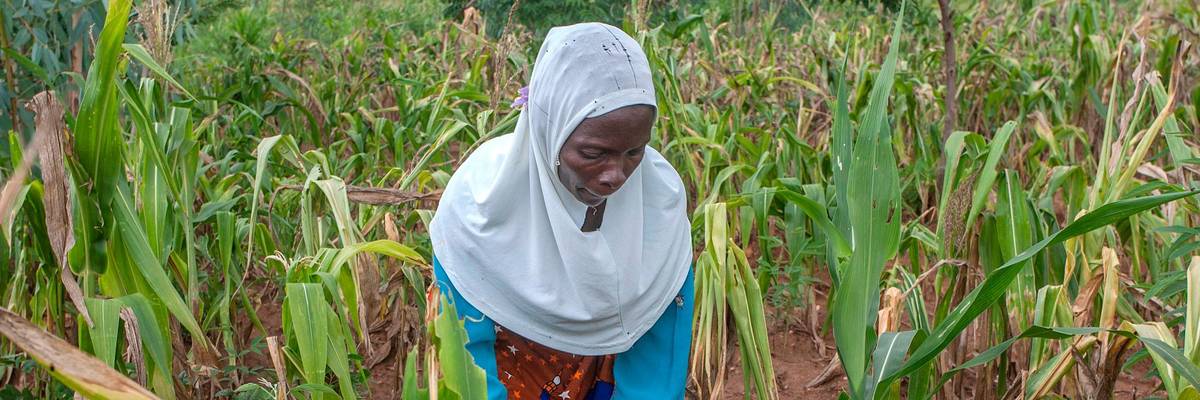
A Malawian woman tends to her maize field on February 14, 2018. (Photo: Amos Gumulira/AFP via Getty Images)
In August 2021, an alliance of African faith leaders delivered a powerful message to the Bill & Melinda Gates Foundation: Stop promoting failing and harmful high-input Green Revolution programs, such as the Alliance for a Green Revolution in Africa (AGRA).
"Is this food security or food slavery?"
--Celestine Otieno, Kenyan farmer
At a virtual press conference, the Southern African Faith Communities' Environment Institute (SAFCEI) released its public letter to the Gates Foundation, which it sent two months ago with 500 signatures from African faith and farming communities. They have received neither an acknowledgment nor a response from the Foundation.
"Faith leaders are witnessing the negative impact of industrialized farming to the land and in their communities and have come together in this letter to say to the Gates Foundation: please re-think your approach to farming in Africa," says SAFCEI Executive Director Francesca de Gasparis. Farmers and faith leaders speaking at the press conference urged donors to shift their funding to more effective and sustainable approaches such as agroecology.
Crucial challenge at a critical time
Their call comes at a critical time. In Sub-Saharan Africa, 66 percent of people (724 million) now suffer moderate to severe food insecurity, up from 51 percent in 2014, according to the State of Food Insecurity report recently released by the United Nations Food and Agriculture Organization. As food insecurity increases -- intensified by the ongoing crises of climate change and the COVID-19 pandemic -- the United Nations is convening a Food Systems Summit in September to address global failures to reduce hunger in line with commitments made in the Sustainable Development goals. The summit, which is led by AGRA President Agnes Kalibata, is mired in controversy, accused by farmer groups of promoting the same kinds of industrialized agricultural development that have failed to address the hunger crisis.
The letter to the Gates Foundation detailed the negative impacts that industrialized agriculture has had on the land and in the communities of faith leaders from around the continent. At the press conference, presenters emphasized the need for the Gates Foundation and other donors to break with the current agriculture agenda and instead invest in more regenerative, agroecological approaches.
"Farmers have become wary of programs that promote monoculture and chemical-intensive farming. They have lost control of their seeds. Now, they say they are being held hostage on their own farms," says Celestine Otieno, a permaculture farmer from Kenya. "Is this food security or food slavery?"
South African agroecology farmer Busisiwe Mgangxelareiterated that farmers practicing agroecology "do not feed the soil with chemicals, we feed it with organic matter and fertility from other companion plants." As the letter details, input-intensive monoculture agriculture damages ecosystems, threatens local livelihoods, increases climate vulnerabilities and undermines smallholder farmers engaged in more sustainable methods of production.
Fletcher Harper, director of GreenFaith, an international network, was direct: "The plan of displacing millions of small holding farmers, using an industrial monoculture approach to farming, lacing the soil and water supplies with toxic chemicals and concentrating ownership of the means of production and land ownership in a small elite is an immoral and dangerous vision that must be stopped."
AGRA in the crosshairs
Anne Maina, national coordinator of the Biodiversity and Biosafety Association of Kenya (BIBA), highlights the negative impacts and lack of accountability of AGRA. Launched in 2006 by the Gates Foundation in partnership the Rockefeller Foundation, AGRA set goals of doubling crop productivity and incomes for 30 million small-scale farming households while halving food insecurity in 20 focus countries by 2020. As IATP's Timothy A. Wise documented in a report last year, the deadline has passed, and productivity has improved only marginally, poverty remains high and the number of "undernourished" people in AGRA's 13 focus countries had increased 30 percent by 2018.
BIBA and other groups engaged with AGRA demanding evidence to counter these findings, but Maina says they received no substantive answers. Even AGRA's own 2020 Annual Report offers little convincing evidence of success.
According to SAFCEI, another insidious aspect of the Gates Foundation's efforts in Africa is the foundation's attempt to influence and restructure seed laws. "80% of non-certified seeds come from millions of smallholder farmers who recycle and exchange seeds each year," SAFCEI reports in its press statement at the event, "building an 'open-source knowledge bank' of seeds that cost little to nothing but have all the nutritional value needed to sustain these communities. In contrast, the approach supported by the Gates Foundation threatens to replace seed systems diversity and the agro-biodiversity system that is critical for human and ecosystem health and replace it with a privatized, corporate approach that will reduce food systems resilience."
SAFCEI director de Gasparis is clear on the social and environmental stakes: "What African farmers need is support to find communal solutions that increase climate resilience, rather than top-down profit-driven industrial-scale farming systems. When it comes to the climate, African faith communities are urging the world to think twice before pushing a technical and corporate farming approach," she says.
Summarizing the demands of African faith communities, Rev.Wellington Sibanda, intern resident minister in South Africa, says, "We can't keep quiet as faith leaders. We call on the Bill and Melinda Gates Foundation to shift its funding into agroecological farming."
Dear Common Dreams reader, It’s been nearly 30 years since I co-founded Common Dreams with my late wife, Lina Newhouser. We had the radical notion that journalism should serve the public good, not corporate profits. It was clear to us from the outset what it would take to build such a project. No paid advertisements. No corporate sponsors. No millionaire publisher telling us what to think or do. Many people said we wouldn't last a year, but we proved those doubters wrong. Together with a tremendous team of journalists and dedicated staff, we built an independent media outlet free from the constraints of profits and corporate control. Our mission has always been simple: To inform. To inspire. To ignite change for the common good. Building Common Dreams was not easy. Our survival was never guaranteed. When you take on the most powerful forces—Wall Street greed, fossil fuel industry destruction, Big Tech lobbyists, and uber-rich oligarchs who have spent billions upon billions rigging the economy and democracy in their favor—the only bulwark you have is supporters who believe in your work. But here’s the urgent message from me today. It's never been this bad out there. And it's never been this hard to keep us going. At the very moment Common Dreams is most needed, the threats we face are intensifying. We need your support now more than ever. We don't accept corporate advertising and never will. We don't have a paywall because we don't think people should be blocked from critical news based on their ability to pay. Everything we do is funded by the donations of readers like you. When everyone does the little they can afford, we are strong. But if that support retreats or dries up, so do we. Will you donate now to make sure Common Dreams not only survives but thrives? —Craig Brown, Co-founder |
In August 2021, an alliance of African faith leaders delivered a powerful message to the Bill & Melinda Gates Foundation: Stop promoting failing and harmful high-input Green Revolution programs, such as the Alliance for a Green Revolution in Africa (AGRA).
"Is this food security or food slavery?"
--Celestine Otieno, Kenyan farmer
At a virtual press conference, the Southern African Faith Communities' Environment Institute (SAFCEI) released its public letter to the Gates Foundation, which it sent two months ago with 500 signatures from African faith and farming communities. They have received neither an acknowledgment nor a response from the Foundation.
"Faith leaders are witnessing the negative impact of industrialized farming to the land and in their communities and have come together in this letter to say to the Gates Foundation: please re-think your approach to farming in Africa," says SAFCEI Executive Director Francesca de Gasparis. Farmers and faith leaders speaking at the press conference urged donors to shift their funding to more effective and sustainable approaches such as agroecology.
Crucial challenge at a critical time
Their call comes at a critical time. In Sub-Saharan Africa, 66 percent of people (724 million) now suffer moderate to severe food insecurity, up from 51 percent in 2014, according to the State of Food Insecurity report recently released by the United Nations Food and Agriculture Organization. As food insecurity increases -- intensified by the ongoing crises of climate change and the COVID-19 pandemic -- the United Nations is convening a Food Systems Summit in September to address global failures to reduce hunger in line with commitments made in the Sustainable Development goals. The summit, which is led by AGRA President Agnes Kalibata, is mired in controversy, accused by farmer groups of promoting the same kinds of industrialized agricultural development that have failed to address the hunger crisis.
The letter to the Gates Foundation detailed the negative impacts that industrialized agriculture has had on the land and in the communities of faith leaders from around the continent. At the press conference, presenters emphasized the need for the Gates Foundation and other donors to break with the current agriculture agenda and instead invest in more regenerative, agroecological approaches.
"Farmers have become wary of programs that promote monoculture and chemical-intensive farming. They have lost control of their seeds. Now, they say they are being held hostage on their own farms," says Celestine Otieno, a permaculture farmer from Kenya. "Is this food security or food slavery?"
South African agroecology farmer Busisiwe Mgangxelareiterated that farmers practicing agroecology "do not feed the soil with chemicals, we feed it with organic matter and fertility from other companion plants." As the letter details, input-intensive monoculture agriculture damages ecosystems, threatens local livelihoods, increases climate vulnerabilities and undermines smallholder farmers engaged in more sustainable methods of production.
Fletcher Harper, director of GreenFaith, an international network, was direct: "The plan of displacing millions of small holding farmers, using an industrial monoculture approach to farming, lacing the soil and water supplies with toxic chemicals and concentrating ownership of the means of production and land ownership in a small elite is an immoral and dangerous vision that must be stopped."
AGRA in the crosshairs
Anne Maina, national coordinator of the Biodiversity and Biosafety Association of Kenya (BIBA), highlights the negative impacts and lack of accountability of AGRA. Launched in 2006 by the Gates Foundation in partnership the Rockefeller Foundation, AGRA set goals of doubling crop productivity and incomes for 30 million small-scale farming households while halving food insecurity in 20 focus countries by 2020. As IATP's Timothy A. Wise documented in a report last year, the deadline has passed, and productivity has improved only marginally, poverty remains high and the number of "undernourished" people in AGRA's 13 focus countries had increased 30 percent by 2018.
BIBA and other groups engaged with AGRA demanding evidence to counter these findings, but Maina says they received no substantive answers. Even AGRA's own 2020 Annual Report offers little convincing evidence of success.
According to SAFCEI, another insidious aspect of the Gates Foundation's efforts in Africa is the foundation's attempt to influence and restructure seed laws. "80% of non-certified seeds come from millions of smallholder farmers who recycle and exchange seeds each year," SAFCEI reports in its press statement at the event, "building an 'open-source knowledge bank' of seeds that cost little to nothing but have all the nutritional value needed to sustain these communities. In contrast, the approach supported by the Gates Foundation threatens to replace seed systems diversity and the agro-biodiversity system that is critical for human and ecosystem health and replace it with a privatized, corporate approach that will reduce food systems resilience."
SAFCEI director de Gasparis is clear on the social and environmental stakes: "What African farmers need is support to find communal solutions that increase climate resilience, rather than top-down profit-driven industrial-scale farming systems. When it comes to the climate, African faith communities are urging the world to think twice before pushing a technical and corporate farming approach," she says.
Summarizing the demands of African faith communities, Rev.Wellington Sibanda, intern resident minister in South Africa, says, "We can't keep quiet as faith leaders. We call on the Bill and Melinda Gates Foundation to shift its funding into agroecological farming."
In August 2021, an alliance of African faith leaders delivered a powerful message to the Bill & Melinda Gates Foundation: Stop promoting failing and harmful high-input Green Revolution programs, such as the Alliance for a Green Revolution in Africa (AGRA).
"Is this food security or food slavery?"
--Celestine Otieno, Kenyan farmer
At a virtual press conference, the Southern African Faith Communities' Environment Institute (SAFCEI) released its public letter to the Gates Foundation, which it sent two months ago with 500 signatures from African faith and farming communities. They have received neither an acknowledgment nor a response from the Foundation.
"Faith leaders are witnessing the negative impact of industrialized farming to the land and in their communities and have come together in this letter to say to the Gates Foundation: please re-think your approach to farming in Africa," says SAFCEI Executive Director Francesca de Gasparis. Farmers and faith leaders speaking at the press conference urged donors to shift their funding to more effective and sustainable approaches such as agroecology.
Crucial challenge at a critical time
Their call comes at a critical time. In Sub-Saharan Africa, 66 percent of people (724 million) now suffer moderate to severe food insecurity, up from 51 percent in 2014, according to the State of Food Insecurity report recently released by the United Nations Food and Agriculture Organization. As food insecurity increases -- intensified by the ongoing crises of climate change and the COVID-19 pandemic -- the United Nations is convening a Food Systems Summit in September to address global failures to reduce hunger in line with commitments made in the Sustainable Development goals. The summit, which is led by AGRA President Agnes Kalibata, is mired in controversy, accused by farmer groups of promoting the same kinds of industrialized agricultural development that have failed to address the hunger crisis.
The letter to the Gates Foundation detailed the negative impacts that industrialized agriculture has had on the land and in the communities of faith leaders from around the continent. At the press conference, presenters emphasized the need for the Gates Foundation and other donors to break with the current agriculture agenda and instead invest in more regenerative, agroecological approaches.
"Farmers have become wary of programs that promote monoculture and chemical-intensive farming. They have lost control of their seeds. Now, they say they are being held hostage on their own farms," says Celestine Otieno, a permaculture farmer from Kenya. "Is this food security or food slavery?"
South African agroecology farmer Busisiwe Mgangxelareiterated that farmers practicing agroecology "do not feed the soil with chemicals, we feed it with organic matter and fertility from other companion plants." As the letter details, input-intensive monoculture agriculture damages ecosystems, threatens local livelihoods, increases climate vulnerabilities and undermines smallholder farmers engaged in more sustainable methods of production.
Fletcher Harper, director of GreenFaith, an international network, was direct: "The plan of displacing millions of small holding farmers, using an industrial monoculture approach to farming, lacing the soil and water supplies with toxic chemicals and concentrating ownership of the means of production and land ownership in a small elite is an immoral and dangerous vision that must be stopped."
AGRA in the crosshairs
Anne Maina, national coordinator of the Biodiversity and Biosafety Association of Kenya (BIBA), highlights the negative impacts and lack of accountability of AGRA. Launched in 2006 by the Gates Foundation in partnership the Rockefeller Foundation, AGRA set goals of doubling crop productivity and incomes for 30 million small-scale farming households while halving food insecurity in 20 focus countries by 2020. As IATP's Timothy A. Wise documented in a report last year, the deadline has passed, and productivity has improved only marginally, poverty remains high and the number of "undernourished" people in AGRA's 13 focus countries had increased 30 percent by 2018.
BIBA and other groups engaged with AGRA demanding evidence to counter these findings, but Maina says they received no substantive answers. Even AGRA's own 2020 Annual Report offers little convincing evidence of success.
According to SAFCEI, another insidious aspect of the Gates Foundation's efforts in Africa is the foundation's attempt to influence and restructure seed laws. "80% of non-certified seeds come from millions of smallholder farmers who recycle and exchange seeds each year," SAFCEI reports in its press statement at the event, "building an 'open-source knowledge bank' of seeds that cost little to nothing but have all the nutritional value needed to sustain these communities. In contrast, the approach supported by the Gates Foundation threatens to replace seed systems diversity and the agro-biodiversity system that is critical for human and ecosystem health and replace it with a privatized, corporate approach that will reduce food systems resilience."
SAFCEI director de Gasparis is clear on the social and environmental stakes: "What African farmers need is support to find communal solutions that increase climate resilience, rather than top-down profit-driven industrial-scale farming systems. When it comes to the climate, African faith communities are urging the world to think twice before pushing a technical and corporate farming approach," she says.
Summarizing the demands of African faith communities, Rev.Wellington Sibanda, intern resident minister in South Africa, says, "We can't keep quiet as faith leaders. We call on the Bill and Melinda Gates Foundation to shift its funding into agroecological farming."