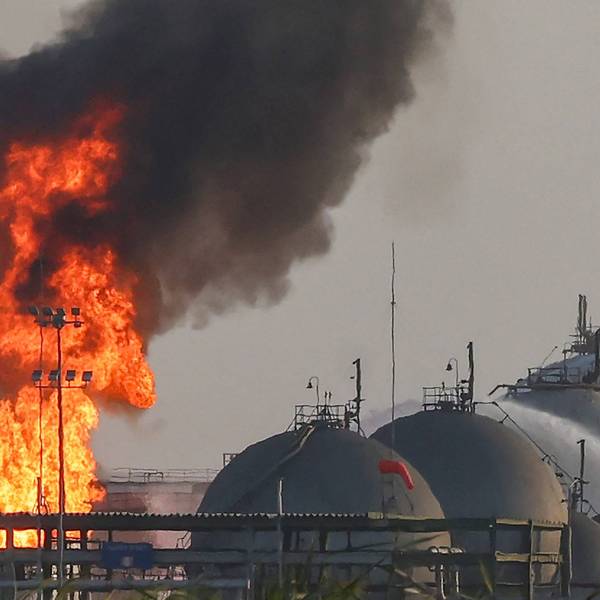

"Human Rights Watch has documented that the Saudi-led coalition was using internationally banned cluster munitions in at least 16 attacks that targeted populated areas, killing scores of civilians including women and children." (Photo: (c) UNICEF Yemen)
The Case For Course Correction in Yemen's Endless War
The crisis in Yemen is largely America's making. America needs to fix it now.
Yemen's war has entered its sixth year with no ceasefire in sight. In March of 2015, Saudi Arabia, the United Arab Emirates and a dozen other countries launched Operation Decisive Storm (later changed to Restoring Hope) in Yemen. According to Saudi Arabia and its allies the operation aimed to restore the ousted Yemeni transitional government, headed by Abdul-Rabbu Mansour Hadi and contain the Houthi militia allegedly supported by Iran, Saudi Arabia's archrival in the region. Adding fuel to the fire, under the directives of the Obama administration then and the Trump administration now, the United States elevated its military support to Saudi Arabia while callously flouting its complicity in the ever-evolving humanitarian crisis. Now that the American people have elected Joe Biden as the 46th president of the United States, his administration should take concrete steps toward reducing and ultimately eliminating United States involvement in the war.
Correcting Past Mistakes
If there is a war that the Obama and Trump administrations would like to keep under the rug, it would be the war in Yemen. However, it is likely that a Biden administration will pursue a different course of action. On Joe Biden's campaign website, the president-elect makes it clear--that his administration will stop the support for the Saudi-led coalition in Yemen. To stay true to his words, Joe Biden will need to assertively address Yemen's humanitarian crisis with the Saudis and demand an immediate and unconditional end to the nightmare in his first hundred days in office.
The death toll in Yemen which hovers in the hundreds of thousands amidst a backdrop of total infrastructure collapse makes it even more urgent for Biden to correct course sooner than later. The severe challenges culminating from the decimation of the centuries old educational, societal, economic and healthcare infrastructure are also now compounded with the arrival of the global COVID-19 pandemic as well as the largest cholera outbreak ever recorded. On November 20, 2020, the United Nations Secretary General, Antonio Guterres warned that Yemen is in "imminent danger of the worst famine the world has seen for decades". The implication of this layered destruction will undoubtedly lead to further catastrophic loss of life. Therefore there is a moral and humanitarian obligation upon the new Biden administration to terminate US involvement in the war.
Trump administration's designation of the Houthis as a terrorist organization on January 11, 2021 will further complicate the war in Yemen. According to multiple humanitarian agencies, this last minute impulsive decision will hamstring the delivery of humanitarian assistance to the Yemenis.
Finally, the US should resume its humanitarian intervention and begin with unfreezing USAID's intervention in Yemen--which has been put on hold by the Trump administration for no discernible reason. The US should also urge the Saudis and the Emiratis to lift their blockade on Sana'a International Airport to allow the flow of international relief aids into northern Yemen.
Fool Me Once, Shame On Me
Obama and Biden made terrible choices to join the Saudis in the war of Yemen. The logic to lend support to the Saudis at the time seemed reasonable--given the Joint Comprehensive Plan Of Action (JCPOA) or the Iran nuclear deal. The administration needed something to offset the deal--or so they were advised, which made US regional allies, notably Saudi Arabia and the UAE feel alienated. The moderate conservatives within the Republican Party echoed the Obama administration. Following the US senate's failure to pass a resolution aimed at blocking arms sales to Saudi Arabia in September 2016, the late senator of Arizona, John McCain argued that passing the resolution will mean abandoning "our commitment in the region" and will cast the US as "an unreliable security partner."
Nonetheless, everything on the ground is inconsistent with that logic now. The JCPOA has been arguably on life support since Trump took office--and effectively dead by May 2018. The Saudis have doubled down on their offensive in Yemen and Iran has cemented its grip on Northern Yemen. In the new Biden administration, not only the same mistakes should not be repeated, but also in order for the US to disengage from the "endless wars" of the Middle East, the Biden administration will need to learn how to dissociate US core interest from those of its regional allies, Saudi Arabia, Israel and the UAE who are determined to finding new ways to keep American military presence in the region. An end to the war in Yemen has the potential to reinstate the United States' image and give the Biden administration a good footing to embark on a broader US foreign policy achievement.
The disastrous war in Yemen has taken a significant toll on the land, and social infrastructure, most notably human lives, social welfare and the healthcare system. The damages will take years if not decades to repair and the United States government has everything to do with it. The bombs that decimate a school bus, a hospital or a residential neighborhood in Yemen bear in some shape or form the United States footprints. The new Biden administration has to show the courage and commitment to put this nightmare to an end. Yemen's crisis is in huge part America's making, it should as well be America's to fix it.
We are at a crossroads
This country and this world are at a monumental crossroads. In a few short weeks, US voters will have an opportunity to beat back the forces of fascism and confront the billionaires who are rigging the economy, our media system, and our democracy, making it increasingly impossible for ordinary people to get by. We’re not just talking about the election. We’re talking about what must be done once these fascist elements are vanquished from power. We need a bolder set of solutions than what either major party has so far been willing to offer and a working-class movement ready to fight like hell for it. Trump didn't emerge from nowhere. The conditions that fueled MAGA authoritarianism were created by decades of radical neoliberal economic policies and a corrupt political system dominated by corporate interests. They slashed taxes on the super-rich, promising that the benefits would trickle down. They said giveaways to the corporate titans would make life more affordable for the rest of us. It was all bullshit. And when a bitter, betrayed populace searches for someone to blame, right-wing demagogues have little trouble finding scapegoats. People know when they're being lied to, but you won't hear any of this from the corporate media. Only independent journalism—powered and funded by people who believe in building a better world—can deliver truly trustworthy daily news. Our Fall Campaign is underway, and we need your help. To power our newsroom through the rest of the year, we need to raise $125,000 by midnight on October 31. So if you share our vision, please contribute whatever you can to sustain our work. |
Yemen's war has entered its sixth year with no ceasefire in sight. In March of 2015, Saudi Arabia, the United Arab Emirates and a dozen other countries launched Operation Decisive Storm (later changed to Restoring Hope) in Yemen. According to Saudi Arabia and its allies the operation aimed to restore the ousted Yemeni transitional government, headed by Abdul-Rabbu Mansour Hadi and contain the Houthi militia allegedly supported by Iran, Saudi Arabia's archrival in the region. Adding fuel to the fire, under the directives of the Obama administration then and the Trump administration now, the United States elevated its military support to Saudi Arabia while callously flouting its complicity in the ever-evolving humanitarian crisis. Now that the American people have elected Joe Biden as the 46th president of the United States, his administration should take concrete steps toward reducing and ultimately eliminating United States involvement in the war.
Correcting Past Mistakes
If there is a war that the Obama and Trump administrations would like to keep under the rug, it would be the war in Yemen. However, it is likely that a Biden administration will pursue a different course of action. On Joe Biden's campaign website, the president-elect makes it clear--that his administration will stop the support for the Saudi-led coalition in Yemen. To stay true to his words, Joe Biden will need to assertively address Yemen's humanitarian crisis with the Saudis and demand an immediate and unconditional end to the nightmare in his first hundred days in office.
The death toll in Yemen which hovers in the hundreds of thousands amidst a backdrop of total infrastructure collapse makes it even more urgent for Biden to correct course sooner than later. The severe challenges culminating from the decimation of the centuries old educational, societal, economic and healthcare infrastructure are also now compounded with the arrival of the global COVID-19 pandemic as well as the largest cholera outbreak ever recorded. On November 20, 2020, the United Nations Secretary General, Antonio Guterres warned that Yemen is in "imminent danger of the worst famine the world has seen for decades". The implication of this layered destruction will undoubtedly lead to further catastrophic loss of life. Therefore there is a moral and humanitarian obligation upon the new Biden administration to terminate US involvement in the war.
Trump administration's designation of the Houthis as a terrorist organization on January 11, 2021 will further complicate the war in Yemen. According to multiple humanitarian agencies, this last minute impulsive decision will hamstring the delivery of humanitarian assistance to the Yemenis.
Finally, the US should resume its humanitarian intervention and begin with unfreezing USAID's intervention in Yemen--which has been put on hold by the Trump administration for no discernible reason. The US should also urge the Saudis and the Emiratis to lift their blockade on Sana'a International Airport to allow the flow of international relief aids into northern Yemen.
Fool Me Once, Shame On Me
Obama and Biden made terrible choices to join the Saudis in the war of Yemen. The logic to lend support to the Saudis at the time seemed reasonable--given the Joint Comprehensive Plan Of Action (JCPOA) or the Iran nuclear deal. The administration needed something to offset the deal--or so they were advised, which made US regional allies, notably Saudi Arabia and the UAE feel alienated. The moderate conservatives within the Republican Party echoed the Obama administration. Following the US senate's failure to pass a resolution aimed at blocking arms sales to Saudi Arabia in September 2016, the late senator of Arizona, John McCain argued that passing the resolution will mean abandoning "our commitment in the region" and will cast the US as "an unreliable security partner."
Nonetheless, everything on the ground is inconsistent with that logic now. The JCPOA has been arguably on life support since Trump took office--and effectively dead by May 2018. The Saudis have doubled down on their offensive in Yemen and Iran has cemented its grip on Northern Yemen. In the new Biden administration, not only the same mistakes should not be repeated, but also in order for the US to disengage from the "endless wars" of the Middle East, the Biden administration will need to learn how to dissociate US core interest from those of its regional allies, Saudi Arabia, Israel and the UAE who are determined to finding new ways to keep American military presence in the region. An end to the war in Yemen has the potential to reinstate the United States' image and give the Biden administration a good footing to embark on a broader US foreign policy achievement.
The disastrous war in Yemen has taken a significant toll on the land, and social infrastructure, most notably human lives, social welfare and the healthcare system. The damages will take years if not decades to repair and the United States government has everything to do with it. The bombs that decimate a school bus, a hospital or a residential neighborhood in Yemen bear in some shape or form the United States footprints. The new Biden administration has to show the courage and commitment to put this nightmare to an end. Yemen's crisis is in huge part America's making, it should as well be America's to fix it.
Yemen's war has entered its sixth year with no ceasefire in sight. In March of 2015, Saudi Arabia, the United Arab Emirates and a dozen other countries launched Operation Decisive Storm (later changed to Restoring Hope) in Yemen. According to Saudi Arabia and its allies the operation aimed to restore the ousted Yemeni transitional government, headed by Abdul-Rabbu Mansour Hadi and contain the Houthi militia allegedly supported by Iran, Saudi Arabia's archrival in the region. Adding fuel to the fire, under the directives of the Obama administration then and the Trump administration now, the United States elevated its military support to Saudi Arabia while callously flouting its complicity in the ever-evolving humanitarian crisis. Now that the American people have elected Joe Biden as the 46th president of the United States, his administration should take concrete steps toward reducing and ultimately eliminating United States involvement in the war.
Correcting Past Mistakes
If there is a war that the Obama and Trump administrations would like to keep under the rug, it would be the war in Yemen. However, it is likely that a Biden administration will pursue a different course of action. On Joe Biden's campaign website, the president-elect makes it clear--that his administration will stop the support for the Saudi-led coalition in Yemen. To stay true to his words, Joe Biden will need to assertively address Yemen's humanitarian crisis with the Saudis and demand an immediate and unconditional end to the nightmare in his first hundred days in office.
The death toll in Yemen which hovers in the hundreds of thousands amidst a backdrop of total infrastructure collapse makes it even more urgent for Biden to correct course sooner than later. The severe challenges culminating from the decimation of the centuries old educational, societal, economic and healthcare infrastructure are also now compounded with the arrival of the global COVID-19 pandemic as well as the largest cholera outbreak ever recorded. On November 20, 2020, the United Nations Secretary General, Antonio Guterres warned that Yemen is in "imminent danger of the worst famine the world has seen for decades". The implication of this layered destruction will undoubtedly lead to further catastrophic loss of life. Therefore there is a moral and humanitarian obligation upon the new Biden administration to terminate US involvement in the war.
Trump administration's designation of the Houthis as a terrorist organization on January 11, 2021 will further complicate the war in Yemen. According to multiple humanitarian agencies, this last minute impulsive decision will hamstring the delivery of humanitarian assistance to the Yemenis.
Finally, the US should resume its humanitarian intervention and begin with unfreezing USAID's intervention in Yemen--which has been put on hold by the Trump administration for no discernible reason. The US should also urge the Saudis and the Emiratis to lift their blockade on Sana'a International Airport to allow the flow of international relief aids into northern Yemen.
Fool Me Once, Shame On Me
Obama and Biden made terrible choices to join the Saudis in the war of Yemen. The logic to lend support to the Saudis at the time seemed reasonable--given the Joint Comprehensive Plan Of Action (JCPOA) or the Iran nuclear deal. The administration needed something to offset the deal--or so they were advised, which made US regional allies, notably Saudi Arabia and the UAE feel alienated. The moderate conservatives within the Republican Party echoed the Obama administration. Following the US senate's failure to pass a resolution aimed at blocking arms sales to Saudi Arabia in September 2016, the late senator of Arizona, John McCain argued that passing the resolution will mean abandoning "our commitment in the region" and will cast the US as "an unreliable security partner."
Nonetheless, everything on the ground is inconsistent with that logic now. The JCPOA has been arguably on life support since Trump took office--and effectively dead by May 2018. The Saudis have doubled down on their offensive in Yemen and Iran has cemented its grip on Northern Yemen. In the new Biden administration, not only the same mistakes should not be repeated, but also in order for the US to disengage from the "endless wars" of the Middle East, the Biden administration will need to learn how to dissociate US core interest from those of its regional allies, Saudi Arabia, Israel and the UAE who are determined to finding new ways to keep American military presence in the region. An end to the war in Yemen has the potential to reinstate the United States' image and give the Biden administration a good footing to embark on a broader US foreign policy achievement.
The disastrous war in Yemen has taken a significant toll on the land, and social infrastructure, most notably human lives, social welfare and the healthcare system. The damages will take years if not decades to repair and the United States government has everything to do with it. The bombs that decimate a school bus, a hospital or a residential neighborhood in Yemen bear in some shape or form the United States footprints. The new Biden administration has to show the courage and commitment to put this nightmare to an end. Yemen's crisis is in huge part America's making, it should as well be America's to fix it.