SUBSCRIBE TO OUR FREE NEWSLETTER
Daily news & progressive opinion—funded by the people, not the corporations—delivered straight to your inbox.
5
#000000
#FFFFFF
To donate by check, phone, or other method, see our More Ways to Give page.
Daily news & progressive opinion—funded by the people, not the corporations—delivered straight to your inbox.
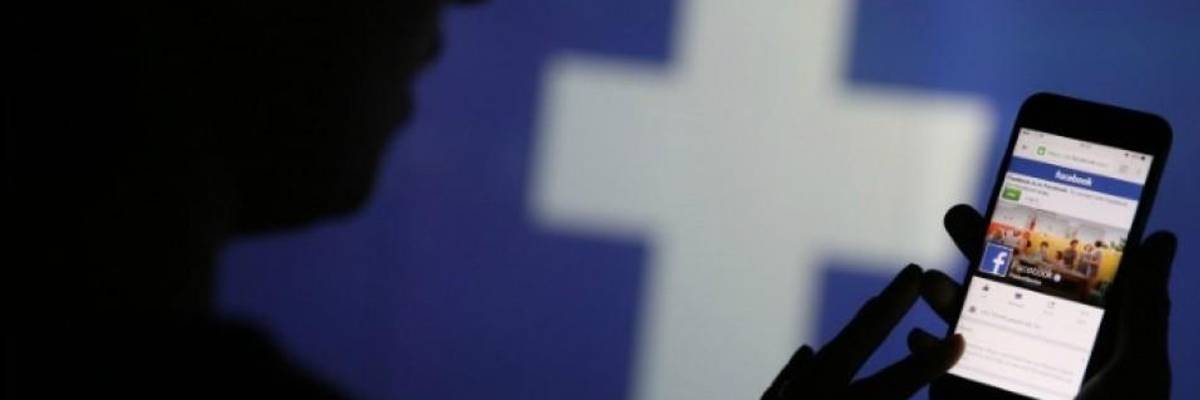
Big Tech must do more in the 2020 election to protect the public. (Image: Getty Images)
As we approach one of the most critical elections in our nation's history, the role that Big Tech played in the 2016 election has come under intense scrutiny. And there's a very real possibility that the same companies that fell down on the job the last time around will once again be a force for evil in 2020.
Much attention has been paid to foreign interference and the spread of disinformation on social media. Just as dangerous, however, is how politicians and white supremacists spread hate and other forms of bigotry against historically oppressed groups.
In 2018, my organization, Free Press, co-founded the Change the Terms coalition to push tech companies like Facebook, Google, and Twitter to adopt policies we developed to curb the spread of online hate. The threats, defamation and other forms of harassment that target people of color, women, religious minorities, immigrants and the LGBTQ+ community can and do have dangerous real-life consequences. Look no further than the string of mass shootings that happened within a week of each other last summer in Gilroy, California; El Paso, Texas; and Dayton, Ohio.
In 2019, Change the Terms met with the world's most powerful tech companies. We called on them to update their terms of service to ban hateful activities and to balance that ban with due process, rights of appeal, transparency, proper enforcement, and accountability at the C-Suite and board levels. We asked them to ban bot and troll campaigns that trade in racism and other forms of hate.
We saw some real progress--and a stunning degree of apathy:
YouTube tightened its hate-speech policies; PayPal began regularly deplatforming identified white- supremacist accounts; and web-hosting service Cloudflare dropped 8-chan, the horrific online haven for white supremacists.
Facebook removed a significant number of prominent white supremacists and published a report on content removal. Its chief operating officer, Sheryl Sandberg, also spent a day listening to Change the Terms representatives at an Atlanta town hall organized by Color Of Change.
Both Facebook and YouTube adopted policies banning white supremacists, including YouTube's revision earlier this month of its harassment policy to ban videos that "maliciously insult" or target people based on their race, gender or sexual orientation. But their enforcement of these policies is lackluster at best, and many hate groups continue to use both platforms to organize hate campaigns.
In October, Facebook CEO Mark Zuckerberg displayed a shameful lack of knowledge about the history of civil rights in the United States. In a speech at Georgetown University, he defended a new company policy that allows politicians to lie, inflame hate and bigotry, and spread disinformation in Facebook ads, all while invoking the civil rights and racial justice legacy of Dr. Martin Luther King, Jr.
Two years after Charlottesville's deadly Unite the Right rally--which was organized on Twitter--the platform remains flush with white supremacists, giving them nearly free rein on the site. In fact, Twitter has shown a profound indifference to people who exploit the platform to indoctrinate and organize hateful activities that threaten the most vulnerable users. And while Twitter agreed to ban harassment based on one's religion, it refused to extend this protection to other demographic groups.
This fall, Free Press released two reports about the state of content moderation in Big Tech: one about Facebook, the other on Twitter. The reports reveal just how much work both companies have to do.
As the 2020 election ramps up, everyone needs to call on Big Tech to do more to disrupt online hate. The stakes couldn't be higher: If these companies continue to maximize clicks and profits over the well-being of their users, white supremacists and their political allies will continue to subject people of color and other marginalized groups to an unrelenting onslaught of hate. As we've seen on too many occasions, the consequences are tragic.
Dear Common Dreams reader, It’s been nearly 30 years since I co-founded Common Dreams with my late wife, Lina Newhouser. We had the radical notion that journalism should serve the public good, not corporate profits. It was clear to us from the outset what it would take to build such a project. No paid advertisements. No corporate sponsors. No millionaire publisher telling us what to think or do. Many people said we wouldn't last a year, but we proved those doubters wrong. Together with a tremendous team of journalists and dedicated staff, we built an independent media outlet free from the constraints of profits and corporate control. Our mission has always been simple: To inform. To inspire. To ignite change for the common good. Building Common Dreams was not easy. Our survival was never guaranteed. When you take on the most powerful forces—Wall Street greed, fossil fuel industry destruction, Big Tech lobbyists, and uber-rich oligarchs who have spent billions upon billions rigging the economy and democracy in their favor—the only bulwark you have is supporters who believe in your work. But here’s the urgent message from me today. It's never been this bad out there. And it's never been this hard to keep us going. At the very moment Common Dreams is most needed, the threats we face are intensifying. We need your support now more than ever. We don't accept corporate advertising and never will. We don't have a paywall because we don't think people should be blocked from critical news based on their ability to pay. Everything we do is funded by the donations of readers like you. When everyone does the little they can afford, we are strong. But if that support retreats or dries up, so do we. Will you donate now to make sure Common Dreams not only survives but thrives? —Craig Brown, Co-founder |
As we approach one of the most critical elections in our nation's history, the role that Big Tech played in the 2016 election has come under intense scrutiny. And there's a very real possibility that the same companies that fell down on the job the last time around will once again be a force for evil in 2020.
Much attention has been paid to foreign interference and the spread of disinformation on social media. Just as dangerous, however, is how politicians and white supremacists spread hate and other forms of bigotry against historically oppressed groups.
In 2018, my organization, Free Press, co-founded the Change the Terms coalition to push tech companies like Facebook, Google, and Twitter to adopt policies we developed to curb the spread of online hate. The threats, defamation and other forms of harassment that target people of color, women, religious minorities, immigrants and the LGBTQ+ community can and do have dangerous real-life consequences. Look no further than the string of mass shootings that happened within a week of each other last summer in Gilroy, California; El Paso, Texas; and Dayton, Ohio.
In 2019, Change the Terms met with the world's most powerful tech companies. We called on them to update their terms of service to ban hateful activities and to balance that ban with due process, rights of appeal, transparency, proper enforcement, and accountability at the C-Suite and board levels. We asked them to ban bot and troll campaigns that trade in racism and other forms of hate.
We saw some real progress--and a stunning degree of apathy:
YouTube tightened its hate-speech policies; PayPal began regularly deplatforming identified white- supremacist accounts; and web-hosting service Cloudflare dropped 8-chan, the horrific online haven for white supremacists.
Facebook removed a significant number of prominent white supremacists and published a report on content removal. Its chief operating officer, Sheryl Sandberg, also spent a day listening to Change the Terms representatives at an Atlanta town hall organized by Color Of Change.
Both Facebook and YouTube adopted policies banning white supremacists, including YouTube's revision earlier this month of its harassment policy to ban videos that "maliciously insult" or target people based on their race, gender or sexual orientation. But their enforcement of these policies is lackluster at best, and many hate groups continue to use both platforms to organize hate campaigns.
In October, Facebook CEO Mark Zuckerberg displayed a shameful lack of knowledge about the history of civil rights in the United States. In a speech at Georgetown University, he defended a new company policy that allows politicians to lie, inflame hate and bigotry, and spread disinformation in Facebook ads, all while invoking the civil rights and racial justice legacy of Dr. Martin Luther King, Jr.
Two years after Charlottesville's deadly Unite the Right rally--which was organized on Twitter--the platform remains flush with white supremacists, giving them nearly free rein on the site. In fact, Twitter has shown a profound indifference to people who exploit the platform to indoctrinate and organize hateful activities that threaten the most vulnerable users. And while Twitter agreed to ban harassment based on one's religion, it refused to extend this protection to other demographic groups.
This fall, Free Press released two reports about the state of content moderation in Big Tech: one about Facebook, the other on Twitter. The reports reveal just how much work both companies have to do.
As the 2020 election ramps up, everyone needs to call on Big Tech to do more to disrupt online hate. The stakes couldn't be higher: If these companies continue to maximize clicks and profits over the well-being of their users, white supremacists and their political allies will continue to subject people of color and other marginalized groups to an unrelenting onslaught of hate. As we've seen on too many occasions, the consequences are tragic.
As we approach one of the most critical elections in our nation's history, the role that Big Tech played in the 2016 election has come under intense scrutiny. And there's a very real possibility that the same companies that fell down on the job the last time around will once again be a force for evil in 2020.
Much attention has been paid to foreign interference and the spread of disinformation on social media. Just as dangerous, however, is how politicians and white supremacists spread hate and other forms of bigotry against historically oppressed groups.
In 2018, my organization, Free Press, co-founded the Change the Terms coalition to push tech companies like Facebook, Google, and Twitter to adopt policies we developed to curb the spread of online hate. The threats, defamation and other forms of harassment that target people of color, women, religious minorities, immigrants and the LGBTQ+ community can and do have dangerous real-life consequences. Look no further than the string of mass shootings that happened within a week of each other last summer in Gilroy, California; El Paso, Texas; and Dayton, Ohio.
In 2019, Change the Terms met with the world's most powerful tech companies. We called on them to update their terms of service to ban hateful activities and to balance that ban with due process, rights of appeal, transparency, proper enforcement, and accountability at the C-Suite and board levels. We asked them to ban bot and troll campaigns that trade in racism and other forms of hate.
We saw some real progress--and a stunning degree of apathy:
YouTube tightened its hate-speech policies; PayPal began regularly deplatforming identified white- supremacist accounts; and web-hosting service Cloudflare dropped 8-chan, the horrific online haven for white supremacists.
Facebook removed a significant number of prominent white supremacists and published a report on content removal. Its chief operating officer, Sheryl Sandberg, also spent a day listening to Change the Terms representatives at an Atlanta town hall organized by Color Of Change.
Both Facebook and YouTube adopted policies banning white supremacists, including YouTube's revision earlier this month of its harassment policy to ban videos that "maliciously insult" or target people based on their race, gender or sexual orientation. But their enforcement of these policies is lackluster at best, and many hate groups continue to use both platforms to organize hate campaigns.
In October, Facebook CEO Mark Zuckerberg displayed a shameful lack of knowledge about the history of civil rights in the United States. In a speech at Georgetown University, he defended a new company policy that allows politicians to lie, inflame hate and bigotry, and spread disinformation in Facebook ads, all while invoking the civil rights and racial justice legacy of Dr. Martin Luther King, Jr.
Two years after Charlottesville's deadly Unite the Right rally--which was organized on Twitter--the platform remains flush with white supremacists, giving them nearly free rein on the site. In fact, Twitter has shown a profound indifference to people who exploit the platform to indoctrinate and organize hateful activities that threaten the most vulnerable users. And while Twitter agreed to ban harassment based on one's religion, it refused to extend this protection to other demographic groups.
This fall, Free Press released two reports about the state of content moderation in Big Tech: one about Facebook, the other on Twitter. The reports reveal just how much work both companies have to do.
As the 2020 election ramps up, everyone needs to call on Big Tech to do more to disrupt online hate. The stakes couldn't be higher: If these companies continue to maximize clicks and profits over the well-being of their users, white supremacists and their political allies will continue to subject people of color and other marginalized groups to an unrelenting onslaught of hate. As we've seen on too many occasions, the consequences are tragic.