SUBSCRIBE TO OUR FREE NEWSLETTER
Daily news & progressive opinion—funded by the people, not the corporations—delivered straight to your inbox.
5
#000000
#FFFFFF
To donate by check, phone, or other method, see our More Ways to Give page.

As the holidays approach, corporate media issue a spirited message to readers: Pipe down about politics. Major outlets repeatedly warn that family gatherings are potential hotbeds of political contention, and readers must be strategic with discordant relatives in order to prevent heated debate.
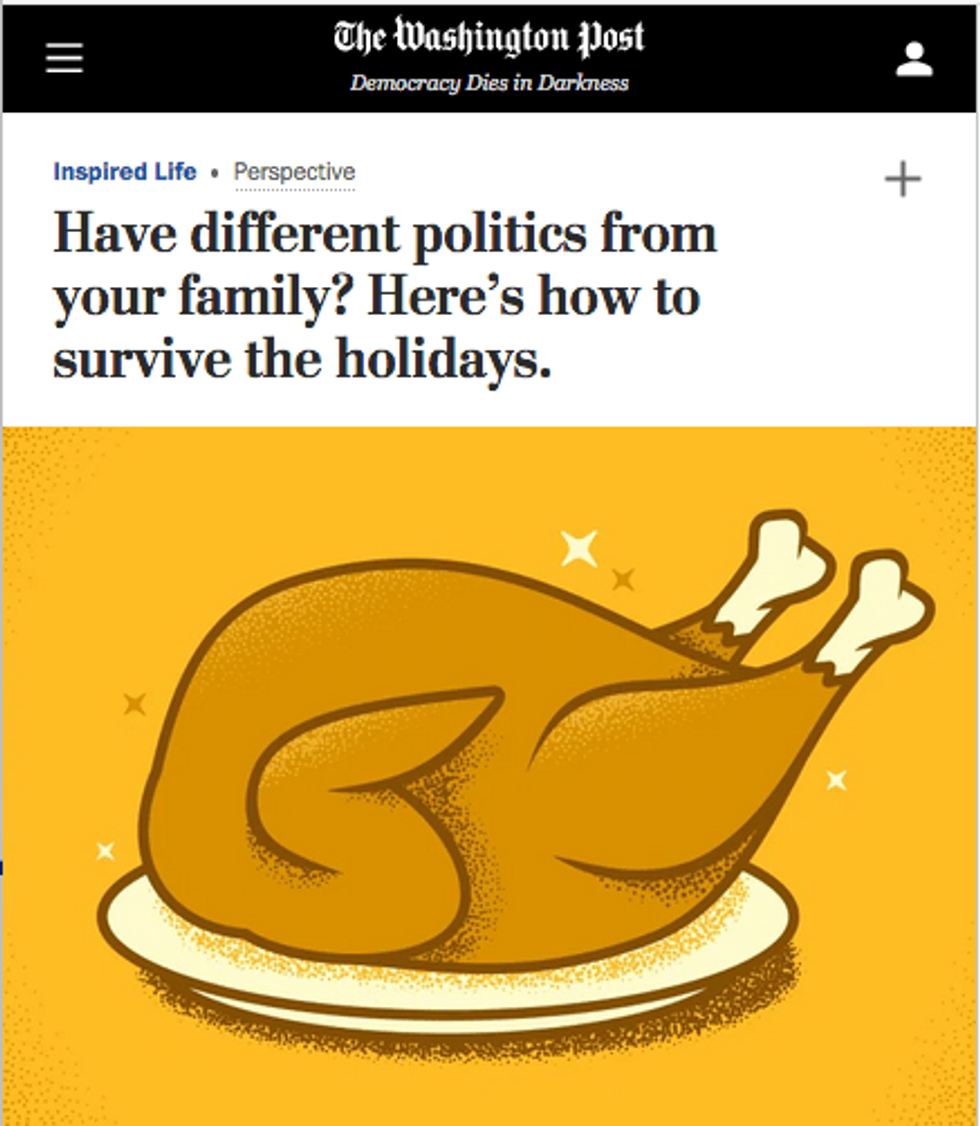
In November, the Washington Post's "Have Different Politics From Your Family? Here's How to Survive the Holidays" (11/25/19) offered strategies on how to "avoid detonating the room" with opinions. Last year, the New York Times (11/20/18) instructed readers on "surviving" Thanksgiving, with tips including "don't mention President Trump" and "find the cutest thing in the room and home in." The year before, PBS NewsHour (11/22/17) even produced a printable placemat with prescriptions for "civil" holiday conduct, with advice on questions like "how to end a conversation that gets heated or politically charged," and "should we be having these conversations at all?"
Holiday civility guides might seem innocuous; after all, they ostensibly seek to foster relationships, encouraging people to enjoy food and play with babies in the process. Yet in so doing, they dismiss and stigmatize political dissent.
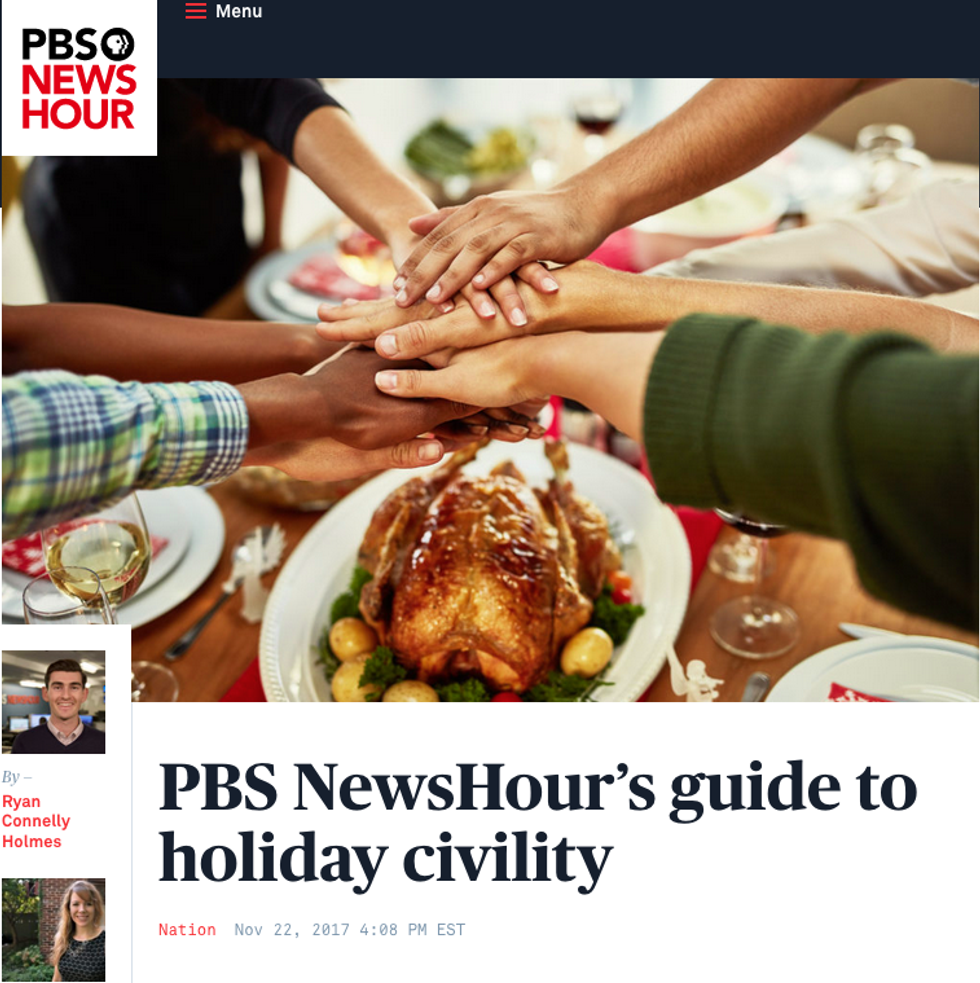
NPR (11/28/19), for example, told listeners to proceed with "empathy," discouraging political discussions because "no policy is going to change because of your argument about politics over Thanksgiving." PBS's paternalistic placemat (11/22/17), meanwhile, includes a quote from New York Times columnist David Brooks that, ultimately, "politics is not that important." NBC News (11/29/17) bluntly insisted, "Don't talk about politics."
These claims offer a glimpse into corporate media's technocratic, right-skewing political conceptions. Preaching "politics isn't that important," for example, is a luxury only the most protected classes can afford--it's not an option for those facing threats of deportation or SNAP cuts. In a particularly on-the-nose piece, the New York Times (11/26/19) designed a chatbot to coach readers on conversations with an imagined cantankerous uncle of a different political inclination from their own. Users can choose between "liberal" or "conservative"--which, judging by the article, are the only political alignments that exist among families in the U.S.
These appeals to "civility" evoke a common trope in corporate media. Outlets, including those mentioned above, routinely chastise anyone who would dare to condemn powerful figures without politely asking permission to do so. Several analysts have expounded (Citations Needed Podcast, 6/13/18; FAIR.org, 6/27/18, 10/31/18) upon this topic in recent years, observing how the media castigates those who defy elites--critics of the late wealth-hoarding warmonger John McCain, restaurant workers who refused to serve Trump's former press secretary Sarah Huckabee Sanders--for their perceived boorishness. It's no wonder, then, that holiday gatherings are used as yet another opportunity to stifle discourse that might challenge the political establishment.
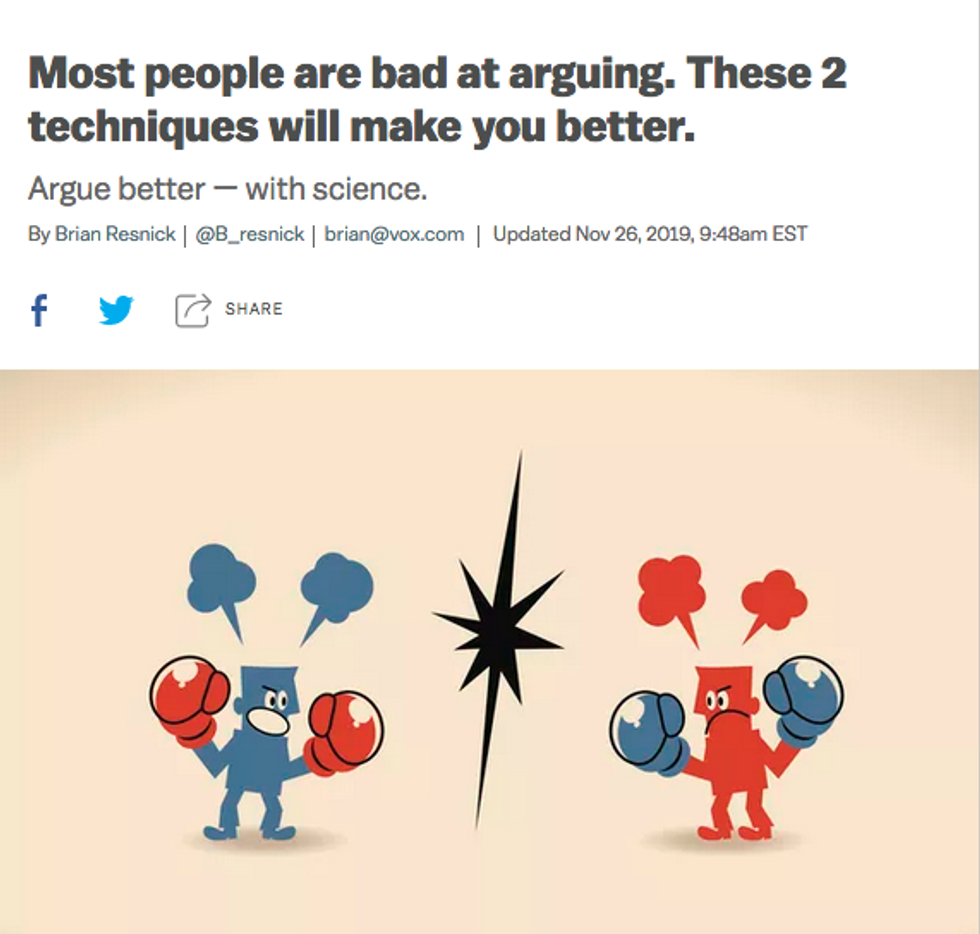
Still, in the interest of appearing objective, holiday civility entreaties often include some sort of scientific citation. On November 27, Barack Obama tweeted, "Before arguing with friends or family around the Thanksgiving table, take a look at the science behind arguing better." Obama posted a link to a corresponding Vox article (11/26/19) that provided psychological "techniques" for political discussion, including finding an argument that "resonates" with someone of another political tendency, and making one's ideological opponents "feel like they've been heard." This, the story argued, would lead interlocutors to find their "common humanity."
The article treated "liberals" and "conservatives" as opponents of equal moral validity, even including a tip on how conservatives could convince liberals to support an increase in military spending. (Say something like: "Through the military, the disadvantaged can achieve equal standing and overcome the challenges of poverty and inequality.") The day after the article was published, Vox (11/27/19) ran an interview with psychology professor Joshua Grubbs admonishing readers not to engage in "moral grandstanding." The piece touted centrists as model arguers: "People that are more toward the middle grandstand less so," said Grubbs.
In its aforementioned holiday "survival" guide, the Washington Post (11/25/19) claimed that "science has determined that both incivility and kindness are contagious." The article linked to another Post story (6/26/18) calling "rudeness" "as contagious as the common cold" and lamenting the fact that protesters would dare to "heckle" former Secretary of Homeland Security Kirstjen Nielsen at a Washington, D.C., restaurant. The protesters, of course, weren't "heckling" Nielsen; they were confronting her about deportation and family separation at the U.S./Mexico border. Still, the story implied they were infected by a general climate of incivility, and not acting out of outrage at the brutality--the unkindness, in Washington Post-speak--of U.S. immigration policy. But the "kindness" corporate media are most concerned about is the kind deserved by the powerful.
For all this talk of empathizing with one's conversational counterpart, corporate media never mentions one approach that might actually work: establishing a shared distrust of elites. A 2014 survey found that 82% of people felt the country's wealthiest people wielded too much political influence, and 69% felt "working people" had too little (Associated Press, 7/13/17). But this runs counter to the establishment-boosting agenda of corporate media, which consistently encourages progressives not to find common ground on economic issues (FAIR.org, 6/20/17).
This shows no signs of changing. Just in time for the December holidays, Facebook developed a chatbot to control how its employees discuss issues like privacy and content moderation with their relatives. The New York Times' coverage (12/2/19) could have decried the company's attempts to convert its employees into 24-hour PR representatives during their holiday vacations. Instead, the Times toed the pro-business line, praising the bot for providing "answers to difficult questions" and for being "practical with personal technology advice."
As the holidays approach, corporate media issue a spirited message to readers: Pipe down about politics. Major outlets repeatedly warn that family gatherings are potential hotbeds of political contention, and readers must be strategic with discordant relatives in order to prevent heated debate.
In November, the Washington Post's "Have Different Politics From Your Family? Here's How to Survive the Holidays" (11/25/19) offered strategies on how to "avoid detonating the room" with opinions. Last year, the New York Times (11/20/18) instructed readers on "surviving" Thanksgiving, with tips including "don't mention President Trump" and "find the cutest thing in the room and home in." The year before, PBS NewsHour (11/22/17) even produced a printable placemat with prescriptions for "civil" holiday conduct, with advice on questions like "how to end a conversation that gets heated or politically charged," and "should we be having these conversations at all?"
Holiday civility guides might seem innocuous; after all, they ostensibly seek to foster relationships, encouraging people to enjoy food and play with babies in the process. Yet in so doing, they dismiss and stigmatize political dissent.
NPR (11/28/19), for example, told listeners to proceed with "empathy," discouraging political discussions because "no policy is going to change because of your argument about politics over Thanksgiving." PBS's paternalistic placemat (11/22/17), meanwhile, includes a quote from New York Times columnist David Brooks that, ultimately, "politics is not that important." NBC News (11/29/17) bluntly insisted, "Don't talk about politics."
These claims offer a glimpse into corporate media's technocratic, right-skewing political conceptions. Preaching "politics isn't that important," for example, is a luxury only the most protected classes can afford--it's not an option for those facing threats of deportation or SNAP cuts. In a particularly on-the-nose piece, the New York Times (11/26/19) designed a chatbot to coach readers on conversations with an imagined cantankerous uncle of a different political inclination from their own. Users can choose between "liberal" or "conservative"--which, judging by the article, are the only political alignments that exist among families in the U.S.
These appeals to "civility" evoke a common trope in corporate media. Outlets, including those mentioned above, routinely chastise anyone who would dare to condemn powerful figures without politely asking permission to do so. Several analysts have expounded (Citations Needed Podcast, 6/13/18; FAIR.org, 6/27/18, 10/31/18) upon this topic in recent years, observing how the media castigates those who defy elites--critics of the late wealth-hoarding warmonger John McCain, restaurant workers who refused to serve Trump's former press secretary Sarah Huckabee Sanders--for their perceived boorishness. It's no wonder, then, that holiday gatherings are used as yet another opportunity to stifle discourse that might challenge the political establishment.
Still, in the interest of appearing objective, holiday civility entreaties often include some sort of scientific citation. On November 27, Barack Obama tweeted, "Before arguing with friends or family around the Thanksgiving table, take a look at the science behind arguing better." Obama posted a link to a corresponding Vox article (11/26/19) that provided psychological "techniques" for political discussion, including finding an argument that "resonates" with someone of another political tendency, and making one's ideological opponents "feel like they've been heard." This, the story argued, would lead interlocutors to find their "common humanity."
The article treated "liberals" and "conservatives" as opponents of equal moral validity, even including a tip on how conservatives could convince liberals to support an increase in military spending. (Say something like: "Through the military, the disadvantaged can achieve equal standing and overcome the challenges of poverty and inequality.") The day after the article was published, Vox (11/27/19) ran an interview with psychology professor Joshua Grubbs admonishing readers not to engage in "moral grandstanding." The piece touted centrists as model arguers: "People that are more toward the middle grandstand less so," said Grubbs.
In its aforementioned holiday "survival" guide, the Washington Post (11/25/19) claimed that "science has determined that both incivility and kindness are contagious." The article linked to another Post story (6/26/18) calling "rudeness" "as contagious as the common cold" and lamenting the fact that protesters would dare to "heckle" former Secretary of Homeland Security Kirstjen Nielsen at a Washington, D.C., restaurant. The protesters, of course, weren't "heckling" Nielsen; they were confronting her about deportation and family separation at the U.S./Mexico border. Still, the story implied they were infected by a general climate of incivility, and not acting out of outrage at the brutality--the unkindness, in Washington Post-speak--of U.S. immigration policy. But the "kindness" corporate media are most concerned about is the kind deserved by the powerful.
For all this talk of empathizing with one's conversational counterpart, corporate media never mentions one approach that might actually work: establishing a shared distrust of elites. A 2014 survey found that 82% of people felt the country's wealthiest people wielded too much political influence, and 69% felt "working people" had too little (Associated Press, 7/13/17). But this runs counter to the establishment-boosting agenda of corporate media, which consistently encourages progressives not to find common ground on economic issues (FAIR.org, 6/20/17).
This shows no signs of changing. Just in time for the December holidays, Facebook developed a chatbot to control how its employees discuss issues like privacy and content moderation with their relatives. The New York Times' coverage (12/2/19) could have decried the company's attempts to convert its employees into 24-hour PR representatives during their holiday vacations. Instead, the Times toed the pro-business line, praising the bot for providing "answers to difficult questions" and for being "practical with personal technology advice."
As the holidays approach, corporate media issue a spirited message to readers: Pipe down about politics. Major outlets repeatedly warn that family gatherings are potential hotbeds of political contention, and readers must be strategic with discordant relatives in order to prevent heated debate.
In November, the Washington Post's "Have Different Politics From Your Family? Here's How to Survive the Holidays" (11/25/19) offered strategies on how to "avoid detonating the room" with opinions. Last year, the New York Times (11/20/18) instructed readers on "surviving" Thanksgiving, with tips including "don't mention President Trump" and "find the cutest thing in the room and home in." The year before, PBS NewsHour (11/22/17) even produced a printable placemat with prescriptions for "civil" holiday conduct, with advice on questions like "how to end a conversation that gets heated or politically charged," and "should we be having these conversations at all?"
Holiday civility guides might seem innocuous; after all, they ostensibly seek to foster relationships, encouraging people to enjoy food and play with babies in the process. Yet in so doing, they dismiss and stigmatize political dissent.
NPR (11/28/19), for example, told listeners to proceed with "empathy," discouraging political discussions because "no policy is going to change because of your argument about politics over Thanksgiving." PBS's paternalistic placemat (11/22/17), meanwhile, includes a quote from New York Times columnist David Brooks that, ultimately, "politics is not that important." NBC News (11/29/17) bluntly insisted, "Don't talk about politics."
These claims offer a glimpse into corporate media's technocratic, right-skewing political conceptions. Preaching "politics isn't that important," for example, is a luxury only the most protected classes can afford--it's not an option for those facing threats of deportation or SNAP cuts. In a particularly on-the-nose piece, the New York Times (11/26/19) designed a chatbot to coach readers on conversations with an imagined cantankerous uncle of a different political inclination from their own. Users can choose between "liberal" or "conservative"--which, judging by the article, are the only political alignments that exist among families in the U.S.
These appeals to "civility" evoke a common trope in corporate media. Outlets, including those mentioned above, routinely chastise anyone who would dare to condemn powerful figures without politely asking permission to do so. Several analysts have expounded (Citations Needed Podcast, 6/13/18; FAIR.org, 6/27/18, 10/31/18) upon this topic in recent years, observing how the media castigates those who defy elites--critics of the late wealth-hoarding warmonger John McCain, restaurant workers who refused to serve Trump's former press secretary Sarah Huckabee Sanders--for their perceived boorishness. It's no wonder, then, that holiday gatherings are used as yet another opportunity to stifle discourse that might challenge the political establishment.
Still, in the interest of appearing objective, holiday civility entreaties often include some sort of scientific citation. On November 27, Barack Obama tweeted, "Before arguing with friends or family around the Thanksgiving table, take a look at the science behind arguing better." Obama posted a link to a corresponding Vox article (11/26/19) that provided psychological "techniques" for political discussion, including finding an argument that "resonates" with someone of another political tendency, and making one's ideological opponents "feel like they've been heard." This, the story argued, would lead interlocutors to find their "common humanity."
The article treated "liberals" and "conservatives" as opponents of equal moral validity, even including a tip on how conservatives could convince liberals to support an increase in military spending. (Say something like: "Through the military, the disadvantaged can achieve equal standing and overcome the challenges of poverty and inequality.") The day after the article was published, Vox (11/27/19) ran an interview with psychology professor Joshua Grubbs admonishing readers not to engage in "moral grandstanding." The piece touted centrists as model arguers: "People that are more toward the middle grandstand less so," said Grubbs.
In its aforementioned holiday "survival" guide, the Washington Post (11/25/19) claimed that "science has determined that both incivility and kindness are contagious." The article linked to another Post story (6/26/18) calling "rudeness" "as contagious as the common cold" and lamenting the fact that protesters would dare to "heckle" former Secretary of Homeland Security Kirstjen Nielsen at a Washington, D.C., restaurant. The protesters, of course, weren't "heckling" Nielsen; they were confronting her about deportation and family separation at the U.S./Mexico border. Still, the story implied they were infected by a general climate of incivility, and not acting out of outrage at the brutality--the unkindness, in Washington Post-speak--of U.S. immigration policy. But the "kindness" corporate media are most concerned about is the kind deserved by the powerful.
For all this talk of empathizing with one's conversational counterpart, corporate media never mentions one approach that might actually work: establishing a shared distrust of elites. A 2014 survey found that 82% of people felt the country's wealthiest people wielded too much political influence, and 69% felt "working people" had too little (Associated Press, 7/13/17). But this runs counter to the establishment-boosting agenda of corporate media, which consistently encourages progressives not to find common ground on economic issues (FAIR.org, 6/20/17).
This shows no signs of changing. Just in time for the December holidays, Facebook developed a chatbot to control how its employees discuss issues like privacy and content moderation with their relatives. The New York Times' coverage (12/2/19) could have decried the company's attempts to convert its employees into 24-hour PR representatives during their holiday vacations. Instead, the Times toed the pro-business line, praising the bot for providing "answers to difficult questions" and for being "practical with personal technology advice."