SUBSCRIBE TO OUR FREE NEWSLETTER
Daily news & progressive opinion—funded by the people, not the corporations—delivered straight to your inbox.
5
#000000
#FFFFFF
To donate by check, phone, or other method, see our More Ways to Give page.
Daily news & progressive opinion—funded by the people, not the corporations—delivered straight to your inbox.
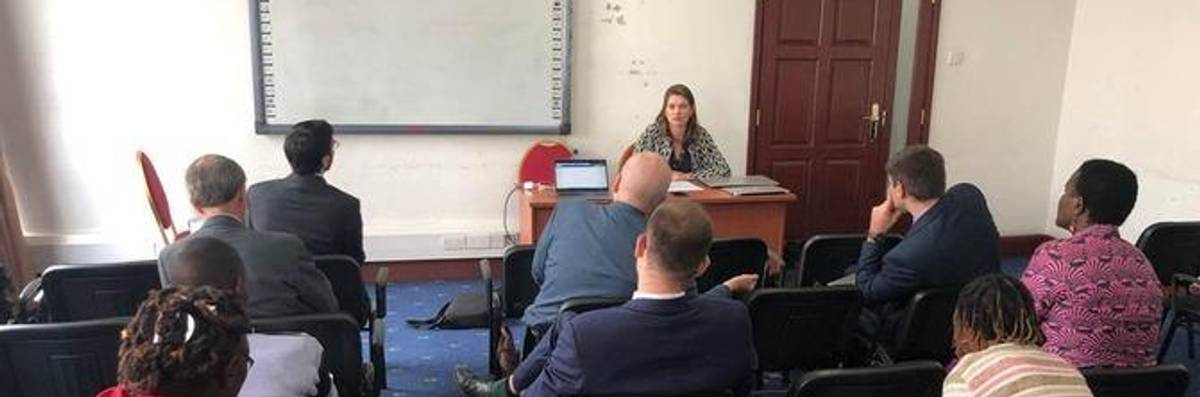
Inside the empty counter-summit. (Photo: R Bak.)
US representatives found themselves isolated at a "failed" counter-summit, organised by religious conservative groups, to protest against the International Conference on Population and Development (ICPD25) in Nairobi this week.
More than 9,500 people from 170 countries attended the three-day global summit, queuing for hours to get in on the opening day. Five people were rushed to hospital after fainting in the packed lines of delegates.
In contrast, around the corner, openDemocracy found a sparsely-attended counter-summit organised by groups rallying against sex education, access to safe abortion and LGBTIQ rights.
Throughout the week, Kenyan, US and European activists at the counter-summit accused the ICPD25 of 'cultural imperialism' and claimed that LGBTIQ people are sick and need treatment.
However their protests failed to get much traction. On Thursday, numerous placards were left lying on the floor along the side of the venue after only a few dozen people showed up for a demonstration.
"They were predicting thousands - this was a huge blow for them and an embarrassment", said Remigiusz Bak, policy officer at the European Parliamentary Forum for Sexual and Reproductive Rights (EPF).
"The US in the end was very isolated", he added, citing how only a handful of countries signed a US-led statement against the summit. "They hugely underestimated the culture of people here, the openness, and inclusiveness".
The ICPD25 summit was organised by the Kenyan and Danish governments and the UN Population Fund (UNFPA) to evaluate progress since 1994 Cairo meetings that set goals on issues like contraception and maternal mortality.
Kenyan president Uhuru Kenyatta addressed the summit, saying: "Advancing people's rights, in particular, women's rights, their choices and their well-being, is the path to prosperous and resilient societies."
Top UN officials praised Kenya's leadership in hosting the summit, while the Director-General of the Kenya National Council for Population and Development, Josephine Kibaru-Mbae, called it "a massive success".
Meanwhile, the counter-summit was "largely facilitated and led by western organisations", said Kenyan women's rights activist Jade Maina.
"Religious extremists polarised the situation months in the buildup to ICPD25", she said, but the counter-summit was "mostly attended by white men trying to make decisions for black African and especially Kenyan women".
Vincent Villenueve, also from EPF, contrasted the media attention to the counter-summit with its "failure to find fertile ground" in Nairobi, while the ICPD25 "was full of African leaders, civil society and activists".
Photos from inside the counter-summit show numerous empty chairs. Human rights activists who also attended the counter-summit said they saw fewer than 50 people at most of its sessions, and fewer than 10 at some.
One British speaker urged attendees to "get dressed and ready for battle,'' after sharing the addresses of local family planning service providers. He also suggested that African countries should restrict foreign-funded NGOs as Russia has.
A US official, Dianne Foley, compared teenage sex to the risks associated with tobacco and drug consumption, advocating an abstinence-first "just say no" approach to educating young people.
She took aim at comprehensive sexuality education programmes advocated by UN agencies, urging parents to more closely scrutinise what their children are being taught.
Other US officials who addressed the counter-summit claimed that UN institutions and abortion rights are ideological and unpopular, and gave a detailed presentation on how attendees could apply for US aid funding.
Brazilian and Polish politicians were also there. Their countries were among the few that signed a US-led statement against the summit, along with Belarus, Egypt, Haiti, Hungary, Libya, Senegal, St Lucia and Uganda.
Meanwhile, ICPD25 organisers said their large global summit had "mobilised more than 1,200 commitments from around the world", along with billions of dollars in financial pledges, to tackle issues including maternal deaths and unmet needs for family planning.
Dear Common Dreams reader, It’s been nearly 30 years since I co-founded Common Dreams with my late wife, Lina Newhouser. We had the radical notion that journalism should serve the public good, not corporate profits. It was clear to us from the outset what it would take to build such a project. No paid advertisements. No corporate sponsors. No millionaire publisher telling us what to think or do. Many people said we wouldn't last a year, but we proved those doubters wrong. Together with a tremendous team of journalists and dedicated staff, we built an independent media outlet free from the constraints of profits and corporate control. Our mission has always been simple: To inform. To inspire. To ignite change for the common good. Building Common Dreams was not easy. Our survival was never guaranteed. When you take on the most powerful forces—Wall Street greed, fossil fuel industry destruction, Big Tech lobbyists, and uber-rich oligarchs who have spent billions upon billions rigging the economy and democracy in their favor—the only bulwark you have is supporters who believe in your work. But here’s the urgent message from me today. It's never been this bad out there. And it's never been this hard to keep us going. At the very moment Common Dreams is most needed, the threats we face are intensifying. We need your support now more than ever. We don't accept corporate advertising and never will. We don't have a paywall because we don't think people should be blocked from critical news based on their ability to pay. Everything we do is funded by the donations of readers like you. When everyone does the little they can afford, we are strong. But if that support retreats or dries up, so do we. Will you donate now to make sure Common Dreams not only survives but thrives? —Craig Brown, Co-founder |
US representatives found themselves isolated at a "failed" counter-summit, organised by religious conservative groups, to protest against the International Conference on Population and Development (ICPD25) in Nairobi this week.
More than 9,500 people from 170 countries attended the three-day global summit, queuing for hours to get in on the opening day. Five people were rushed to hospital after fainting in the packed lines of delegates.
In contrast, around the corner, openDemocracy found a sparsely-attended counter-summit organised by groups rallying against sex education, access to safe abortion and LGBTIQ rights.
Throughout the week, Kenyan, US and European activists at the counter-summit accused the ICPD25 of 'cultural imperialism' and claimed that LGBTIQ people are sick and need treatment.
However their protests failed to get much traction. On Thursday, numerous placards were left lying on the floor along the side of the venue after only a few dozen people showed up for a demonstration.
"They were predicting thousands - this was a huge blow for them and an embarrassment", said Remigiusz Bak, policy officer at the European Parliamentary Forum for Sexual and Reproductive Rights (EPF).
"The US in the end was very isolated", he added, citing how only a handful of countries signed a US-led statement against the summit. "They hugely underestimated the culture of people here, the openness, and inclusiveness".
The ICPD25 summit was organised by the Kenyan and Danish governments and the UN Population Fund (UNFPA) to evaluate progress since 1994 Cairo meetings that set goals on issues like contraception and maternal mortality.
Kenyan president Uhuru Kenyatta addressed the summit, saying: "Advancing people's rights, in particular, women's rights, their choices and their well-being, is the path to prosperous and resilient societies."
Top UN officials praised Kenya's leadership in hosting the summit, while the Director-General of the Kenya National Council for Population and Development, Josephine Kibaru-Mbae, called it "a massive success".
Meanwhile, the counter-summit was "largely facilitated and led by western organisations", said Kenyan women's rights activist Jade Maina.
"Religious extremists polarised the situation months in the buildup to ICPD25", she said, but the counter-summit was "mostly attended by white men trying to make decisions for black African and especially Kenyan women".
Vincent Villenueve, also from EPF, contrasted the media attention to the counter-summit with its "failure to find fertile ground" in Nairobi, while the ICPD25 "was full of African leaders, civil society and activists".
Photos from inside the counter-summit show numerous empty chairs. Human rights activists who also attended the counter-summit said they saw fewer than 50 people at most of its sessions, and fewer than 10 at some.
One British speaker urged attendees to "get dressed and ready for battle,'' after sharing the addresses of local family planning service providers. He also suggested that African countries should restrict foreign-funded NGOs as Russia has.
A US official, Dianne Foley, compared teenage sex to the risks associated with tobacco and drug consumption, advocating an abstinence-first "just say no" approach to educating young people.
She took aim at comprehensive sexuality education programmes advocated by UN agencies, urging parents to more closely scrutinise what their children are being taught.
Other US officials who addressed the counter-summit claimed that UN institutions and abortion rights are ideological and unpopular, and gave a detailed presentation on how attendees could apply for US aid funding.
Brazilian and Polish politicians were also there. Their countries were among the few that signed a US-led statement against the summit, along with Belarus, Egypt, Haiti, Hungary, Libya, Senegal, St Lucia and Uganda.
Meanwhile, ICPD25 organisers said their large global summit had "mobilised more than 1,200 commitments from around the world", along with billions of dollars in financial pledges, to tackle issues including maternal deaths and unmet needs for family planning.
US representatives found themselves isolated at a "failed" counter-summit, organised by religious conservative groups, to protest against the International Conference on Population and Development (ICPD25) in Nairobi this week.
More than 9,500 people from 170 countries attended the three-day global summit, queuing for hours to get in on the opening day. Five people were rushed to hospital after fainting in the packed lines of delegates.
In contrast, around the corner, openDemocracy found a sparsely-attended counter-summit organised by groups rallying against sex education, access to safe abortion and LGBTIQ rights.
Throughout the week, Kenyan, US and European activists at the counter-summit accused the ICPD25 of 'cultural imperialism' and claimed that LGBTIQ people are sick and need treatment.
However their protests failed to get much traction. On Thursday, numerous placards were left lying on the floor along the side of the venue after only a few dozen people showed up for a demonstration.
"They were predicting thousands - this was a huge blow for them and an embarrassment", said Remigiusz Bak, policy officer at the European Parliamentary Forum for Sexual and Reproductive Rights (EPF).
"The US in the end was very isolated", he added, citing how only a handful of countries signed a US-led statement against the summit. "They hugely underestimated the culture of people here, the openness, and inclusiveness".
The ICPD25 summit was organised by the Kenyan and Danish governments and the UN Population Fund (UNFPA) to evaluate progress since 1994 Cairo meetings that set goals on issues like contraception and maternal mortality.
Kenyan president Uhuru Kenyatta addressed the summit, saying: "Advancing people's rights, in particular, women's rights, their choices and their well-being, is the path to prosperous and resilient societies."
Top UN officials praised Kenya's leadership in hosting the summit, while the Director-General of the Kenya National Council for Population and Development, Josephine Kibaru-Mbae, called it "a massive success".
Meanwhile, the counter-summit was "largely facilitated and led by western organisations", said Kenyan women's rights activist Jade Maina.
"Religious extremists polarised the situation months in the buildup to ICPD25", she said, but the counter-summit was "mostly attended by white men trying to make decisions for black African and especially Kenyan women".
Vincent Villenueve, also from EPF, contrasted the media attention to the counter-summit with its "failure to find fertile ground" in Nairobi, while the ICPD25 "was full of African leaders, civil society and activists".
Photos from inside the counter-summit show numerous empty chairs. Human rights activists who also attended the counter-summit said they saw fewer than 50 people at most of its sessions, and fewer than 10 at some.
One British speaker urged attendees to "get dressed and ready for battle,'' after sharing the addresses of local family planning service providers. He also suggested that African countries should restrict foreign-funded NGOs as Russia has.
A US official, Dianne Foley, compared teenage sex to the risks associated with tobacco and drug consumption, advocating an abstinence-first "just say no" approach to educating young people.
She took aim at comprehensive sexuality education programmes advocated by UN agencies, urging parents to more closely scrutinise what their children are being taught.
Other US officials who addressed the counter-summit claimed that UN institutions and abortion rights are ideological and unpopular, and gave a detailed presentation on how attendees could apply for US aid funding.
Brazilian and Polish politicians were also there. Their countries were among the few that signed a US-led statement against the summit, along with Belarus, Egypt, Haiti, Hungary, Libya, Senegal, St Lucia and Uganda.
Meanwhile, ICPD25 organisers said their large global summit had "mobilised more than 1,200 commitments from around the world", along with billions of dollars in financial pledges, to tackle issues including maternal deaths and unmet needs for family planning.