
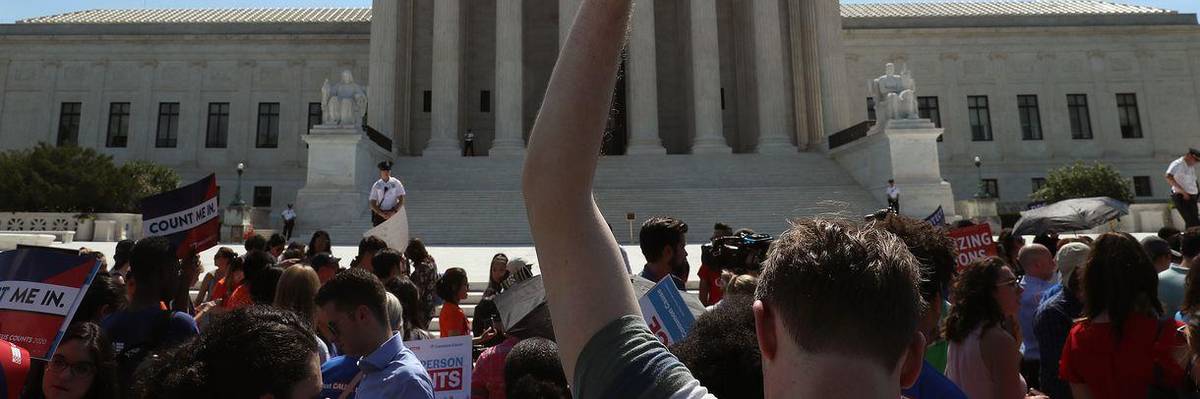
A crowd gathers in front of the U.S. Supreme Court after several decisions were handed down on June 27, 2019, including a decision that blocked a citizenship question from being added to the 2020 census. (Photo: Mark Wilson/Getty Images)
How Politics Threatens the 2020 Census
If Hispanics, blacks, the poor and other hard-to-count groups go undercounted, seats in Congress and federal funding will be in jeopardy.
A new report should raise alarms about the upcoming 2020 Census.
According to the Pew Research Center, the good news is that the overwhelming majority of Americans are aware of the census, and over eight in 10 say they are likely to participate.
The bad news is that nearly one in four blacks, young people, and lower-income people, and one in five Hispanics, are uncertain or reluctant to participate. If that does not change, it could have a truly negative impact on the most vulnerable.
The census is a big deal. The Constitution of the United States mandates a population count every 10 years. That count is used to allocate seats in Congress, to inform redistricting of political boundaries and to guide the distribution of literally hundreds of billions of federal funds.
If Hispanics or blacks are hesitant to participate, the undercount will impact how well represented they are, and how much federal money their neighborhoods get.
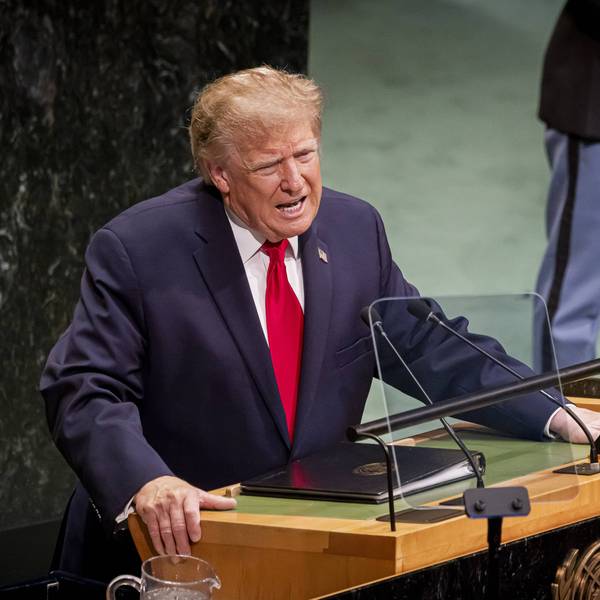
In these polarized times, the census is in danger of being turned into a political football. The Trump administration sought to place a question about citizenship on the census, clearly designed to intimidate immigrants from participating. That was blocked by the U.S. Supreme Court, but the controversy around it may well impact the willingness of immigrants generally, and Hispanics in particular, to participate.
The Census Bureau classifies low-income people as "hard to count." The census is mailed to households in March. The homeless, however, have no mailbox. Low income people change addresses and jobs more often and are often forced into temporary housing with friends or relatives. Too often the people most in need of federal assistance are the very people who are not counted in the census that determines the allocation of funds.
The Trump administration has consistently sought to cut the budget for the Census Bureau. The 2020 census will be the first that is done largely online--but many Americans, particularly older ones, aren't as familiar with online responses. They will need extra help, and President Trump seems to be doing what he can to ensure that help is not there.
That increasingly leaves publicizing the census and providing assistance to complete the process, to the states. Some states like California and New York take this seriously. Others -- like Texas and Florida -- do not. Southern states, mired in the habit of not wanting African Americans to count, often do little as well. According to the National Conference of State Legislatures, just 20 states have appropriated funds to coordinate, advertise and partner with local groups on the census.
Again, an undercount can have major effects. In Texas, which has no state committee, 40 percent of the population is Hispanic, and many are no doubt terrified by the fervid debate over immigration. Texas could gain as many as three seats in Congress, if its population is counted. In fiscal year 2016, Texas received over $59 billion in federal funds derived from census data. An analysis by Andrew Reamer, professor at The George Washington University, estimates that an undercount of merely 1 percent would cost the state nearly $300 million in federal funds.
Citizen groups have scrambled to address the problem. The Congressional Black Caucus and Congressional Hispanic Caucus have created projects, partnering with local groups and national organizations to spread the word about the census and to set up volunteer efforts. A fight over funding for the census is likely to occur in the upcoming budget battle. If -- as seems increasingly likely -- there is no new budget, but merely an agreement to keep operating at current levels, the Census Bureau will face doing a census with inadequate funds.
It should not have to be this way. The census is in the Constitution because the founders understood how important it was to know the size of the population. Everyone should agree that an accurate count is vital. Congress should step up to ensure the Census Bureau has adequate funding. The states should gear up so that their most vulnerable are counted and gain a fair share of federal support. Volunteer organizations should mobilize to help register those hardest to count.
Time is short: the census is mailed to households in March. The time to act is now.
We are at a crossroads
This country and this world are at a monumental crossroads. In a few short weeks, US voters will have an opportunity to beat back the forces of fascism and confront the billionaires who are rigging the economy, our media system, and our democracy, making it increasingly impossible for ordinary people to get by. We’re not just talking about the election. We’re talking about what must be done once these fascist elements are vanquished from power. We need a bolder set of solutions than what either major party has so far been willing to offer and a working-class movement ready to fight like hell for it. Trump didn't emerge from nowhere. The conditions that fueled MAGA authoritarianism were created by decades of radical neoliberal economic policies and a corrupt political system dominated by corporate interests. They slashed taxes on the super-rich, promising that the benefits would trickle down. They said giveaways to the corporate titans would make life more affordable for the rest of us. It was all bullshit. And when a bitter, betrayed populace searches for someone to blame, right-wing demagogues have little trouble finding scapegoats. People know when they're being lied to, but you won't hear any of this from the corporate media. Only independent journalism—powered and funded by people who believe in building a better world—can deliver truly trustworthy daily news. Our Fall Campaign is underway, and we need your help. To power our newsroom through the rest of the year, we need to raise $125,000 by midnight on October 31. So if you share our vision, please contribute whatever you can to sustain our work. |
A new report should raise alarms about the upcoming 2020 Census.
According to the Pew Research Center, the good news is that the overwhelming majority of Americans are aware of the census, and over eight in 10 say they are likely to participate.
The bad news is that nearly one in four blacks, young people, and lower-income people, and one in five Hispanics, are uncertain or reluctant to participate. If that does not change, it could have a truly negative impact on the most vulnerable.
The census is a big deal. The Constitution of the United States mandates a population count every 10 years. That count is used to allocate seats in Congress, to inform redistricting of political boundaries and to guide the distribution of literally hundreds of billions of federal funds.
If Hispanics or blacks are hesitant to participate, the undercount will impact how well represented they are, and how much federal money their neighborhoods get.
In these polarized times, the census is in danger of being turned into a political football. The Trump administration sought to place a question about citizenship on the census, clearly designed to intimidate immigrants from participating. That was blocked by the U.S. Supreme Court, but the controversy around it may well impact the willingness of immigrants generally, and Hispanics in particular, to participate.
The Census Bureau classifies low-income people as "hard to count." The census is mailed to households in March. The homeless, however, have no mailbox. Low income people change addresses and jobs more often and are often forced into temporary housing with friends or relatives. Too often the people most in need of federal assistance are the very people who are not counted in the census that determines the allocation of funds.
The Trump administration has consistently sought to cut the budget for the Census Bureau. The 2020 census will be the first that is done largely online--but many Americans, particularly older ones, aren't as familiar with online responses. They will need extra help, and President Trump seems to be doing what he can to ensure that help is not there.
That increasingly leaves publicizing the census and providing assistance to complete the process, to the states. Some states like California and New York take this seriously. Others -- like Texas and Florida -- do not. Southern states, mired in the habit of not wanting African Americans to count, often do little as well. According to the National Conference of State Legislatures, just 20 states have appropriated funds to coordinate, advertise and partner with local groups on the census.
Again, an undercount can have major effects. In Texas, which has no state committee, 40 percent of the population is Hispanic, and many are no doubt terrified by the fervid debate over immigration. Texas could gain as many as three seats in Congress, if its population is counted. In fiscal year 2016, Texas received over $59 billion in federal funds derived from census data. An analysis by Andrew Reamer, professor at The George Washington University, estimates that an undercount of merely 1 percent would cost the state nearly $300 million in federal funds.
Citizen groups have scrambled to address the problem. The Congressional Black Caucus and Congressional Hispanic Caucus have created projects, partnering with local groups and national organizations to spread the word about the census and to set up volunteer efforts. A fight over funding for the census is likely to occur in the upcoming budget battle. If -- as seems increasingly likely -- there is no new budget, but merely an agreement to keep operating at current levels, the Census Bureau will face doing a census with inadequate funds.
It should not have to be this way. The census is in the Constitution because the founders understood how important it was to know the size of the population. Everyone should agree that an accurate count is vital. Congress should step up to ensure the Census Bureau has adequate funding. The states should gear up so that their most vulnerable are counted and gain a fair share of federal support. Volunteer organizations should mobilize to help register those hardest to count.
Time is short: the census is mailed to households in March. The time to act is now.
A new report should raise alarms about the upcoming 2020 Census.
According to the Pew Research Center, the good news is that the overwhelming majority of Americans are aware of the census, and over eight in 10 say they are likely to participate.
The bad news is that nearly one in four blacks, young people, and lower-income people, and one in five Hispanics, are uncertain or reluctant to participate. If that does not change, it could have a truly negative impact on the most vulnerable.
The census is a big deal. The Constitution of the United States mandates a population count every 10 years. That count is used to allocate seats in Congress, to inform redistricting of political boundaries and to guide the distribution of literally hundreds of billions of federal funds.
If Hispanics or blacks are hesitant to participate, the undercount will impact how well represented they are, and how much federal money their neighborhoods get.
In these polarized times, the census is in danger of being turned into a political football. The Trump administration sought to place a question about citizenship on the census, clearly designed to intimidate immigrants from participating. That was blocked by the U.S. Supreme Court, but the controversy around it may well impact the willingness of immigrants generally, and Hispanics in particular, to participate.
The Census Bureau classifies low-income people as "hard to count." The census is mailed to households in March. The homeless, however, have no mailbox. Low income people change addresses and jobs more often and are often forced into temporary housing with friends or relatives. Too often the people most in need of federal assistance are the very people who are not counted in the census that determines the allocation of funds.
The Trump administration has consistently sought to cut the budget for the Census Bureau. The 2020 census will be the first that is done largely online--but many Americans, particularly older ones, aren't as familiar with online responses. They will need extra help, and President Trump seems to be doing what he can to ensure that help is not there.
That increasingly leaves publicizing the census and providing assistance to complete the process, to the states. Some states like California and New York take this seriously. Others -- like Texas and Florida -- do not. Southern states, mired in the habit of not wanting African Americans to count, often do little as well. According to the National Conference of State Legislatures, just 20 states have appropriated funds to coordinate, advertise and partner with local groups on the census.
Again, an undercount can have major effects. In Texas, which has no state committee, 40 percent of the population is Hispanic, and many are no doubt terrified by the fervid debate over immigration. Texas could gain as many as three seats in Congress, if its population is counted. In fiscal year 2016, Texas received over $59 billion in federal funds derived from census data. An analysis by Andrew Reamer, professor at The George Washington University, estimates that an undercount of merely 1 percent would cost the state nearly $300 million in federal funds.
Citizen groups have scrambled to address the problem. The Congressional Black Caucus and Congressional Hispanic Caucus have created projects, partnering with local groups and national organizations to spread the word about the census and to set up volunteer efforts. A fight over funding for the census is likely to occur in the upcoming budget battle. If -- as seems increasingly likely -- there is no new budget, but merely an agreement to keep operating at current levels, the Census Bureau will face doing a census with inadequate funds.
It should not have to be this way. The census is in the Constitution because the founders understood how important it was to know the size of the population. Everyone should agree that an accurate count is vital. Congress should step up to ensure the Census Bureau has adequate funding. The states should gear up so that their most vulnerable are counted and gain a fair share of federal support. Volunteer organizations should mobilize to help register those hardest to count.
Time is short: the census is mailed to households in March. The time to act is now.