SUBSCRIBE TO OUR FREE NEWSLETTER
Daily news & progressive opinion—funded by the people, not the corporations—delivered straight to your inbox.
5
#000000
#FFFFFF
To donate by check, phone, or other method, see our More Ways to Give page.
Daily news & progressive opinion—funded by the people, not the corporations—delivered straight to your inbox.
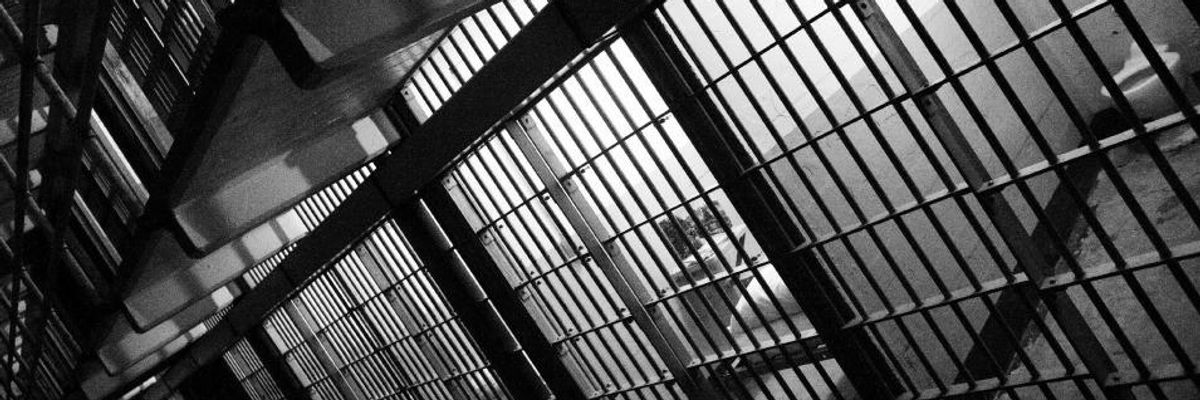
A new report from the ACLU of Louisiana, Solitary Watch, and the Jesuit Social Research Institute "proves that the degrading conditions I experienced continue to harm other people," writes a survivor of solitary confinement. (Photo: Thomas Hawk/flickr/cc)
I was just 17 years old when I was sent to solitary confinement in "Camp J," one of the most severe lockdown units at one of America's most brutal prisons, the Louisiana State Penitentiary at Angola. I languished in solitary for 16 months.
Back then I didn't know that Louisiana was the solitary confinement capital of the world. All I knew was that I'd been convicted of a crime I didn't commit, and I had to maintain my humanity in one of the most dehumanizing places on Earth.
Back then I didn't know that Louisiana was the solitary confinement capital of the world. All I knew was that I'd been convicted of a crime I didn't commit, and I had to maintain my humanity in one of the most dehumanizing places on Earth.
It's called "23 and 1" because you spend 23 hours alone in your cell, with one hour to take a shower or make a phone call, if allowed. There are no educational programs. You are stuck in your cell with just the voices in your own head and the cries of men who have already gone mad. Most of the other people in my unit were suffering from severe mental illness. I remember how they would ram their heads into the bars, play with their own defecation, or throw urine or feces.
The hardest part of living in solitary is trying not to lose hope. Each morning that I woke up in solitary I would quote the same serenity prayer I remember my father reciting when I was young. "God, grant me the serenity to accept the things I cannot change, the courage to change the things I can, and the wisdom to know the difference."
The consequences are devastating. It's been 22 years since my time in solitary and 8 years since my release from prison, but I still have flashbacks and nightmares. Even when I'm with someone else, I find myself secluded in my own mind. I call it being psychologically incarcerated. I'm learning to identify and deal with it, but I am still not normal.
A new report from the ACLU of Louisiana, Solitary Watch, and the Jesuit Social Research Institute proves that the degrading conditions I experienced continue to harm other people. The report is based on a survey of more than 700 people held in solitary, and as someone who has experienced solitary first-hand, their stories ring painfully true. "These cells drive men mad," wrote Carl, one of the report's survey respondents. "I have personally witnessed one man take his life, another tried to by running the length of the tier and smashing his head into the front bars, sadly for him he still lives, if you can really call it that... Point is the cells are killing men and they know it."
I hope that the information in this report will help prove to corrections officials that more changes are needed throughout the system, not just for the benefit of people living in solitary--but also for their families and communities.
The report contains specific, immediate recommendations for reducing the Louisiana Department of Corrections' extreme dependence on prolonged isolation and moving quickly toward more safe, effective, and humane alternatives.
The need for reform is urgent. Because putting people in dehumanizing situations pushes them to do dehumanizing things. If your life is destruction, the only thing you can give out is destruction.
The need for reform is urgent. Because putting people in dehumanizing situations pushes them to do dehumanizing things. If your life is destruction, the only thing you can give out is destruction.
That's why the United Nations has said that extended solitary confinement can rise to the level of torture, and called on countries around the world to ban the practice beyond 15 days.
Solitary confinement is an experience I will never forget. Just the other morning, my wife told me I was screaming during the night--and I knew it was a nightmare about my time in solitary.
But I'm strong, and through my work with Voice of the Experienced, a grassroots organization founded and run by formerly incarcerated people, I'm blessed to be able to use my experiences to press for reforms to combat mass incarceration and restore the civil rights of those most impacted by the criminal legal system.
For too long, the voices from Louisiana's solitary cells were silenced. Through this report and the courageous advocacy of other survivors, we can help make sure they are finally heard.
Dear Common Dreams reader, It’s been nearly 30 years since I co-founded Common Dreams with my late wife, Lina Newhouser. We had the radical notion that journalism should serve the public good, not corporate profits. It was clear to us from the outset what it would take to build such a project. No paid advertisements. No corporate sponsors. No millionaire publisher telling us what to think or do. Many people said we wouldn't last a year, but we proved those doubters wrong. Together with a tremendous team of journalists and dedicated staff, we built an independent media outlet free from the constraints of profits and corporate control. Our mission has always been simple: To inform. To inspire. To ignite change for the common good. Building Common Dreams was not easy. Our survival was never guaranteed. When you take on the most powerful forces—Wall Street greed, fossil fuel industry destruction, Big Tech lobbyists, and uber-rich oligarchs who have spent billions upon billions rigging the economy and democracy in their favor—the only bulwark you have is supporters who believe in your work. But here’s the urgent message from me today. It's never been this bad out there. And it's never been this hard to keep us going. At the very moment Common Dreams is most needed, the threats we face are intensifying. We need your support now more than ever. We don't accept corporate advertising and never will. We don't have a paywall because we don't think people should be blocked from critical news based on their ability to pay. Everything we do is funded by the donations of readers like you. When everyone does the little they can afford, we are strong. But if that support retreats or dries up, so do we. Will you donate now to make sure Common Dreams not only survives but thrives? —Craig Brown, Co-founder |
I was just 17 years old when I was sent to solitary confinement in "Camp J," one of the most severe lockdown units at one of America's most brutal prisons, the Louisiana State Penitentiary at Angola. I languished in solitary for 16 months.
Back then I didn't know that Louisiana was the solitary confinement capital of the world. All I knew was that I'd been convicted of a crime I didn't commit, and I had to maintain my humanity in one of the most dehumanizing places on Earth.
Back then I didn't know that Louisiana was the solitary confinement capital of the world. All I knew was that I'd been convicted of a crime I didn't commit, and I had to maintain my humanity in one of the most dehumanizing places on Earth.
It's called "23 and 1" because you spend 23 hours alone in your cell, with one hour to take a shower or make a phone call, if allowed. There are no educational programs. You are stuck in your cell with just the voices in your own head and the cries of men who have already gone mad. Most of the other people in my unit were suffering from severe mental illness. I remember how they would ram their heads into the bars, play with their own defecation, or throw urine or feces.
The hardest part of living in solitary is trying not to lose hope. Each morning that I woke up in solitary I would quote the same serenity prayer I remember my father reciting when I was young. "God, grant me the serenity to accept the things I cannot change, the courage to change the things I can, and the wisdom to know the difference."
The consequences are devastating. It's been 22 years since my time in solitary and 8 years since my release from prison, but I still have flashbacks and nightmares. Even when I'm with someone else, I find myself secluded in my own mind. I call it being psychologically incarcerated. I'm learning to identify and deal with it, but I am still not normal.
A new report from the ACLU of Louisiana, Solitary Watch, and the Jesuit Social Research Institute proves that the degrading conditions I experienced continue to harm other people. The report is based on a survey of more than 700 people held in solitary, and as someone who has experienced solitary first-hand, their stories ring painfully true. "These cells drive men mad," wrote Carl, one of the report's survey respondents. "I have personally witnessed one man take his life, another tried to by running the length of the tier and smashing his head into the front bars, sadly for him he still lives, if you can really call it that... Point is the cells are killing men and they know it."
I hope that the information in this report will help prove to corrections officials that more changes are needed throughout the system, not just for the benefit of people living in solitary--but also for their families and communities.
The report contains specific, immediate recommendations for reducing the Louisiana Department of Corrections' extreme dependence on prolonged isolation and moving quickly toward more safe, effective, and humane alternatives.
The need for reform is urgent. Because putting people in dehumanizing situations pushes them to do dehumanizing things. If your life is destruction, the only thing you can give out is destruction.
The need for reform is urgent. Because putting people in dehumanizing situations pushes them to do dehumanizing things. If your life is destruction, the only thing you can give out is destruction.
That's why the United Nations has said that extended solitary confinement can rise to the level of torture, and called on countries around the world to ban the practice beyond 15 days.
Solitary confinement is an experience I will never forget. Just the other morning, my wife told me I was screaming during the night--and I knew it was a nightmare about my time in solitary.
But I'm strong, and through my work with Voice of the Experienced, a grassroots organization founded and run by formerly incarcerated people, I'm blessed to be able to use my experiences to press for reforms to combat mass incarceration and restore the civil rights of those most impacted by the criminal legal system.
For too long, the voices from Louisiana's solitary cells were silenced. Through this report and the courageous advocacy of other survivors, we can help make sure they are finally heard.
I was just 17 years old when I was sent to solitary confinement in "Camp J," one of the most severe lockdown units at one of America's most brutal prisons, the Louisiana State Penitentiary at Angola. I languished in solitary for 16 months.
Back then I didn't know that Louisiana was the solitary confinement capital of the world. All I knew was that I'd been convicted of a crime I didn't commit, and I had to maintain my humanity in one of the most dehumanizing places on Earth.
Back then I didn't know that Louisiana was the solitary confinement capital of the world. All I knew was that I'd been convicted of a crime I didn't commit, and I had to maintain my humanity in one of the most dehumanizing places on Earth.
It's called "23 and 1" because you spend 23 hours alone in your cell, with one hour to take a shower or make a phone call, if allowed. There are no educational programs. You are stuck in your cell with just the voices in your own head and the cries of men who have already gone mad. Most of the other people in my unit were suffering from severe mental illness. I remember how they would ram their heads into the bars, play with their own defecation, or throw urine or feces.
The hardest part of living in solitary is trying not to lose hope. Each morning that I woke up in solitary I would quote the same serenity prayer I remember my father reciting when I was young. "God, grant me the serenity to accept the things I cannot change, the courage to change the things I can, and the wisdom to know the difference."
The consequences are devastating. It's been 22 years since my time in solitary and 8 years since my release from prison, but I still have flashbacks and nightmares. Even when I'm with someone else, I find myself secluded in my own mind. I call it being psychologically incarcerated. I'm learning to identify and deal with it, but I am still not normal.
A new report from the ACLU of Louisiana, Solitary Watch, and the Jesuit Social Research Institute proves that the degrading conditions I experienced continue to harm other people. The report is based on a survey of more than 700 people held in solitary, and as someone who has experienced solitary first-hand, their stories ring painfully true. "These cells drive men mad," wrote Carl, one of the report's survey respondents. "I have personally witnessed one man take his life, another tried to by running the length of the tier and smashing his head into the front bars, sadly for him he still lives, if you can really call it that... Point is the cells are killing men and they know it."
I hope that the information in this report will help prove to corrections officials that more changes are needed throughout the system, not just for the benefit of people living in solitary--but also for their families and communities.
The report contains specific, immediate recommendations for reducing the Louisiana Department of Corrections' extreme dependence on prolonged isolation and moving quickly toward more safe, effective, and humane alternatives.
The need for reform is urgent. Because putting people in dehumanizing situations pushes them to do dehumanizing things. If your life is destruction, the only thing you can give out is destruction.
The need for reform is urgent. Because putting people in dehumanizing situations pushes them to do dehumanizing things. If your life is destruction, the only thing you can give out is destruction.
That's why the United Nations has said that extended solitary confinement can rise to the level of torture, and called on countries around the world to ban the practice beyond 15 days.
Solitary confinement is an experience I will never forget. Just the other morning, my wife told me I was screaming during the night--and I knew it was a nightmare about my time in solitary.
But I'm strong, and through my work with Voice of the Experienced, a grassroots organization founded and run by formerly incarcerated people, I'm blessed to be able to use my experiences to press for reforms to combat mass incarceration and restore the civil rights of those most impacted by the criminal legal system.
For too long, the voices from Louisiana's solitary cells were silenced. Through this report and the courageous advocacy of other survivors, we can help make sure they are finally heard.