SUBSCRIBE TO OUR FREE NEWSLETTER
Daily news & progressive opinion—funded by the people, not the corporations—delivered straight to your inbox.
5
#000000
#FFFFFF
To donate by check, phone, or other method, see our More Ways to Give page.
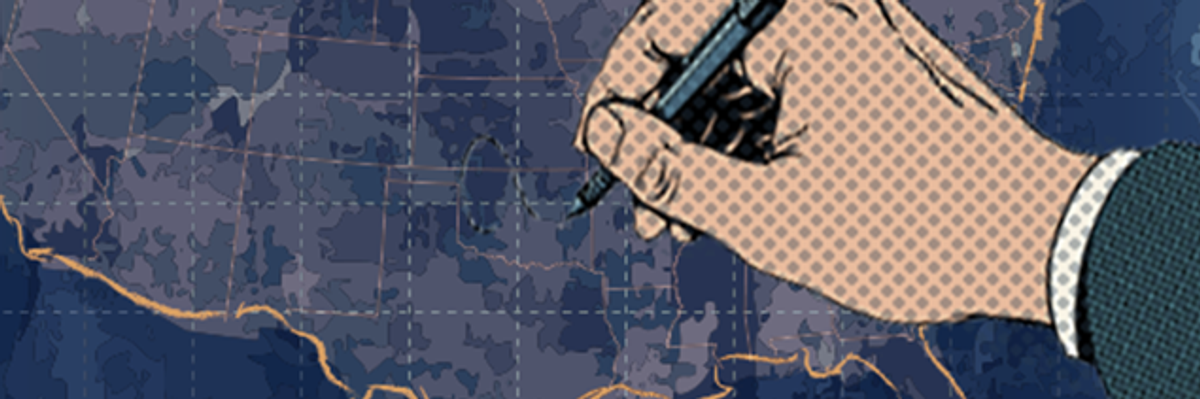
We found that commissions or courts drew 39 percent of all districts nationwide, but they drew 72 percent of the districts that Democrats flipped or are leading in with votes still being counted. (As of Monday morning, The New York Times put that total at 39 seats.)
By contrast, legislatures in states where Republicans enjoyed unified control drew 44 percent of districts nationwide, but they drew just 23 percent of the districts Democrats flipped or are leading in. (The percentages exclude states with only a single district).
Out of the nine Democratic pickups on maps drawn by Republicans, none were in North Carolina and Ohio, and only two were in Michigan -- the three states rated by the Brennan Center as being the most extremely gerrymandered.

Delving more deeply into the analysis, the Brennan Center groups the 435 House seats into seven different categories based on control of the map-drawing process. Our pre-election analysis revealed that courts, commissions, and split-control governments were nearly four times more likely to draw super-competitive districts than lawmakers who had one-party control of state government.
Seats in Virginia and Florida, where congressional maps have been modified by courts, were especially pivotal Tuesday. In fact, Democrats did particularly well nationwide in states with court-modified maps, flipping a whopping 16 seats where courts either ordered redraws or stepped in after legislative deadlock. Republicans also benefited from the fairer competition created by courts, netting their only three pickups of the cycle in states with court-modified maps.
Here's the full breakdown:
We found that commissions or courts drew 39 percent of all districts nationwide, but they drew 72 percent of the districts that Democrats flipped or are leading in with votes still being counted. (As of Monday morning, The New York Times put that total at 39 seats.)
By contrast, legislatures in states where Republicans enjoyed unified control drew 44 percent of districts nationwide, but they drew just 23 percent of the districts Democrats flipped or are leading in. (The percentages exclude states with only a single district).
Out of the nine Democratic pickups on maps drawn by Republicans, none were in North Carolina and Ohio, and only two were in Michigan -- the three states rated by the Brennan Center as being the most extremely gerrymandered.
Delving more deeply into the analysis, the Brennan Center groups the 435 House seats into seven different categories based on control of the map-drawing process. Our pre-election analysis revealed that courts, commissions, and split-control governments were nearly four times more likely to draw super-competitive districts than lawmakers who had one-party control of state government.
Seats in Virginia and Florida, where congressional maps have been modified by courts, were especially pivotal Tuesday. In fact, Democrats did particularly well nationwide in states with court-modified maps, flipping a whopping 16 seats where courts either ordered redraws or stepped in after legislative deadlock. Republicans also benefited from the fairer competition created by courts, netting their only three pickups of the cycle in states with court-modified maps.
Here's the full breakdown:
We found that commissions or courts drew 39 percent of all districts nationwide, but they drew 72 percent of the districts that Democrats flipped or are leading in with votes still being counted. (As of Monday morning, The New York Times put that total at 39 seats.)
By contrast, legislatures in states where Republicans enjoyed unified control drew 44 percent of districts nationwide, but they drew just 23 percent of the districts Democrats flipped or are leading in. (The percentages exclude states with only a single district).
Out of the nine Democratic pickups on maps drawn by Republicans, none were in North Carolina and Ohio, and only two were in Michigan -- the three states rated by the Brennan Center as being the most extremely gerrymandered.
Delving more deeply into the analysis, the Brennan Center groups the 435 House seats into seven different categories based on control of the map-drawing process. Our pre-election analysis revealed that courts, commissions, and split-control governments were nearly four times more likely to draw super-competitive districts than lawmakers who had one-party control of state government.
Seats in Virginia and Florida, where congressional maps have been modified by courts, were especially pivotal Tuesday. In fact, Democrats did particularly well nationwide in states with court-modified maps, flipping a whopping 16 seats where courts either ordered redraws or stepped in after legislative deadlock. Republicans also benefited from the fairer competition created by courts, netting their only three pickups of the cycle in states with court-modified maps.
Here's the full breakdown: