SUBSCRIBE TO OUR FREE NEWSLETTER
Daily news & progressive opinion—funded by the people, not the corporations—delivered straight to your inbox.
5
#000000
#FFFFFF
To donate by check, phone, or other method, see our More Ways to Give page.
Daily news & progressive opinion—funded by the people, not the corporations—delivered straight to your inbox.
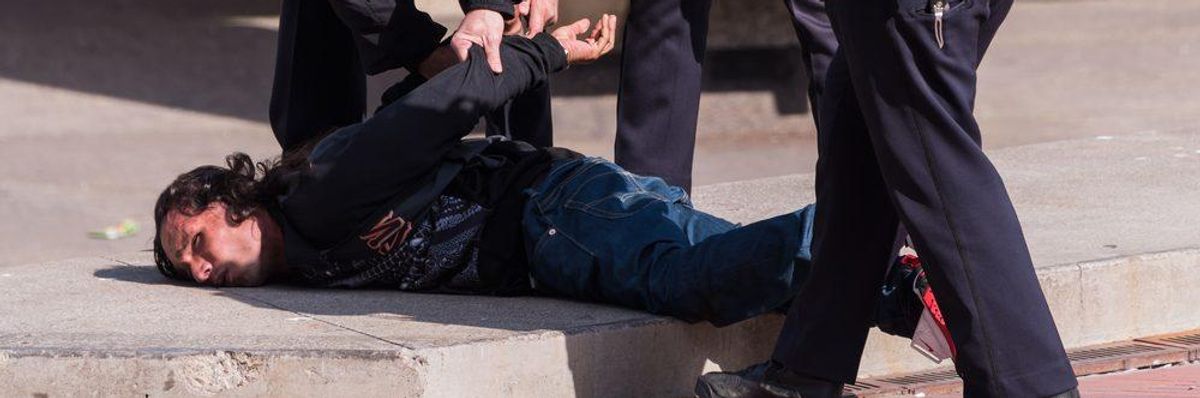
We must strengthen federal anti-discrimination laws, so housing can't be denied to someone due to their source of income, poor credit, lack of rental history, or their status as a victim of domestic violence.(Photo: Shutterstock)
When San Diego resident Gerald Stark's rent increased and he couldn't afford another apartment, the retired union pipefitter moved into his RV.
But because he lacked an address, San Diego law made it almost impossible for him to park his RV legally. Soon the city confiscated it, leaving him out on the streets.
There, he was ticketed for violating another law prohibiting sleeping in public. Faced with thousands of dollars in fines and fees he was unable to pay, Stark lived every day in fear of being arrested -- for simply trying to survive.
He's not alone.
There isn't a single county in the United States where you can rent a two-bedroom, market-rate apartment working a full-time, minimum-wage job. Many of our neighbors are just one emergency or missed paycheck away from losing their homes.
Unfortunately, law enforcement is often used as a first response to address homelessness. Many communities essentially criminalize it.
Instead of connecting people with services and housing, they drag people experiencing homelessness into the criminal justice system, making it more difficult for them to get a job or housing.
It's a harmful myth that homeless people cause an increase in crime. Several studies show homeless people are actually more likely to be victims of crime -- especially in places where they have to hide from police.
In the absence of low-cost housing, many people often have no choice but to break the law to carry out necessary, life-sustaining activities -- like sleeping, resting, or using the bathroom -- in public places. But instead of responding with solutions, cities like Denver, Houston, and Puyallup, Washington are enacting more laws against those activities.
Such laws are harmful, wasteful, and arguably unconstitutional.
Cities spend taxpayer dollars enforcing homeless encampment "sweeps" and "move along" policies for homeless people. And burdening homeless people with fines and fees makes it even more difficult for them to return to the tax rolls.
One homeless man, Russell Bartholow of Sacramento, received an astonishing $100,000 in fines for sleeping and camping in public. Fining people who don't even have enough money for rent isn't productive or humane.
Homelessness is a community issue, and it demands a community to solve it.
At the federal level, a universal voucher program, where no person pays more than 30 percent of their income on rent, would go a long way. Currently, because of funding cuts spanning almost four decades, only one-in-four of those poor enough to be eligible for federal housing help actually receives it.
Those who do are often turned away due to discrimination. We must strengthen federal anti-discrimination laws, so housing can't be denied to someone due to their source of income, poor credit, lack of rental history, or their status as a victim of domestic violence.
At the local level, tenants in good standing should be protected from arbitrary eviction, and low-income people facing eviction should get a right to counsel.
And all laws that make it a crime to be homeless should be repealed.
Philadelphia offers an example. Earlier this year, law enforcement officials donated a vacant office in the subway station to create the HUB of Hope, where homeless people can do their laundry and stay out of bad weather. "We are not going to arrest people for being homeless," said Major Jim Kenney.
In Syracuse, Mayor Stephanie Miner refused to follow a state order to arrest homeless people who didn't enter shelters. Instead, the city reached out to people experiencing homelessness to connect them to housing, helping Syracuse become one of the first cities to end veteran homelessness.
With proven solutions, communities can help people like Gerald Stark, Russell Bartholow, and millions of others off the streets and onto a better path, leaving everyone safer and healthier.
Dear Common Dreams reader, It’s been nearly 30 years since I co-founded Common Dreams with my late wife, Lina Newhouser. We had the radical notion that journalism should serve the public good, not corporate profits. It was clear to us from the outset what it would take to build such a project. No paid advertisements. No corporate sponsors. No millionaire publisher telling us what to think or do. Many people said we wouldn't last a year, but we proved those doubters wrong. Together with a tremendous team of journalists and dedicated staff, we built an independent media outlet free from the constraints of profits and corporate control. Our mission has always been simple: To inform. To inspire. To ignite change for the common good. Building Common Dreams was not easy. Our survival was never guaranteed. When you take on the most powerful forces—Wall Street greed, fossil fuel industry destruction, Big Tech lobbyists, and uber-rich oligarchs who have spent billions upon billions rigging the economy and democracy in their favor—the only bulwark you have is supporters who believe in your work. But here’s the urgent message from me today. It's never been this bad out there. And it's never been this hard to keep us going. At the very moment Common Dreams is most needed, the threats we face are intensifying. We need your support now more than ever. We don't accept corporate advertising and never will. We don't have a paywall because we don't think people should be blocked from critical news based on their ability to pay. Everything we do is funded by the donations of readers like you. When everyone does the little they can afford, we are strong. But if that support retreats or dries up, so do we. Will you donate now to make sure Common Dreams not only survives but thrives? —Craig Brown, Co-founder |
When San Diego resident Gerald Stark's rent increased and he couldn't afford another apartment, the retired union pipefitter moved into his RV.
But because he lacked an address, San Diego law made it almost impossible for him to park his RV legally. Soon the city confiscated it, leaving him out on the streets.
There, he was ticketed for violating another law prohibiting sleeping in public. Faced with thousands of dollars in fines and fees he was unable to pay, Stark lived every day in fear of being arrested -- for simply trying to survive.
He's not alone.
There isn't a single county in the United States where you can rent a two-bedroom, market-rate apartment working a full-time, minimum-wage job. Many of our neighbors are just one emergency or missed paycheck away from losing their homes.
Unfortunately, law enforcement is often used as a first response to address homelessness. Many communities essentially criminalize it.
Instead of connecting people with services and housing, they drag people experiencing homelessness into the criminal justice system, making it more difficult for them to get a job or housing.
It's a harmful myth that homeless people cause an increase in crime. Several studies show homeless people are actually more likely to be victims of crime -- especially in places where they have to hide from police.
In the absence of low-cost housing, many people often have no choice but to break the law to carry out necessary, life-sustaining activities -- like sleeping, resting, or using the bathroom -- in public places. But instead of responding with solutions, cities like Denver, Houston, and Puyallup, Washington are enacting more laws against those activities.
Such laws are harmful, wasteful, and arguably unconstitutional.
Cities spend taxpayer dollars enforcing homeless encampment "sweeps" and "move along" policies for homeless people. And burdening homeless people with fines and fees makes it even more difficult for them to return to the tax rolls.
One homeless man, Russell Bartholow of Sacramento, received an astonishing $100,000 in fines for sleeping and camping in public. Fining people who don't even have enough money for rent isn't productive or humane.
Homelessness is a community issue, and it demands a community to solve it.
At the federal level, a universal voucher program, where no person pays more than 30 percent of their income on rent, would go a long way. Currently, because of funding cuts spanning almost four decades, only one-in-four of those poor enough to be eligible for federal housing help actually receives it.
Those who do are often turned away due to discrimination. We must strengthen federal anti-discrimination laws, so housing can't be denied to someone due to their source of income, poor credit, lack of rental history, or their status as a victim of domestic violence.
At the local level, tenants in good standing should be protected from arbitrary eviction, and low-income people facing eviction should get a right to counsel.
And all laws that make it a crime to be homeless should be repealed.
Philadelphia offers an example. Earlier this year, law enforcement officials donated a vacant office in the subway station to create the HUB of Hope, where homeless people can do their laundry and stay out of bad weather. "We are not going to arrest people for being homeless," said Major Jim Kenney.
In Syracuse, Mayor Stephanie Miner refused to follow a state order to arrest homeless people who didn't enter shelters. Instead, the city reached out to people experiencing homelessness to connect them to housing, helping Syracuse become one of the first cities to end veteran homelessness.
With proven solutions, communities can help people like Gerald Stark, Russell Bartholow, and millions of others off the streets and onto a better path, leaving everyone safer and healthier.
When San Diego resident Gerald Stark's rent increased and he couldn't afford another apartment, the retired union pipefitter moved into his RV.
But because he lacked an address, San Diego law made it almost impossible for him to park his RV legally. Soon the city confiscated it, leaving him out on the streets.
There, he was ticketed for violating another law prohibiting sleeping in public. Faced with thousands of dollars in fines and fees he was unable to pay, Stark lived every day in fear of being arrested -- for simply trying to survive.
He's not alone.
There isn't a single county in the United States where you can rent a two-bedroom, market-rate apartment working a full-time, minimum-wage job. Many of our neighbors are just one emergency or missed paycheck away from losing their homes.
Unfortunately, law enforcement is often used as a first response to address homelessness. Many communities essentially criminalize it.
Instead of connecting people with services and housing, they drag people experiencing homelessness into the criminal justice system, making it more difficult for them to get a job or housing.
It's a harmful myth that homeless people cause an increase in crime. Several studies show homeless people are actually more likely to be victims of crime -- especially in places where they have to hide from police.
In the absence of low-cost housing, many people often have no choice but to break the law to carry out necessary, life-sustaining activities -- like sleeping, resting, or using the bathroom -- in public places. But instead of responding with solutions, cities like Denver, Houston, and Puyallup, Washington are enacting more laws against those activities.
Such laws are harmful, wasteful, and arguably unconstitutional.
Cities spend taxpayer dollars enforcing homeless encampment "sweeps" and "move along" policies for homeless people. And burdening homeless people with fines and fees makes it even more difficult for them to return to the tax rolls.
One homeless man, Russell Bartholow of Sacramento, received an astonishing $100,000 in fines for sleeping and camping in public. Fining people who don't even have enough money for rent isn't productive or humane.
Homelessness is a community issue, and it demands a community to solve it.
At the federal level, a universal voucher program, where no person pays more than 30 percent of their income on rent, would go a long way. Currently, because of funding cuts spanning almost four decades, only one-in-four of those poor enough to be eligible for federal housing help actually receives it.
Those who do are often turned away due to discrimination. We must strengthen federal anti-discrimination laws, so housing can't be denied to someone due to their source of income, poor credit, lack of rental history, or their status as a victim of domestic violence.
At the local level, tenants in good standing should be protected from arbitrary eviction, and low-income people facing eviction should get a right to counsel.
And all laws that make it a crime to be homeless should be repealed.
Philadelphia offers an example. Earlier this year, law enforcement officials donated a vacant office in the subway station to create the HUB of Hope, where homeless people can do their laundry and stay out of bad weather. "We are not going to arrest people for being homeless," said Major Jim Kenney.
In Syracuse, Mayor Stephanie Miner refused to follow a state order to arrest homeless people who didn't enter shelters. Instead, the city reached out to people experiencing homelessness to connect them to housing, helping Syracuse become one of the first cities to end veteran homelessness.
With proven solutions, communities can help people like Gerald Stark, Russell Bartholow, and millions of others off the streets and onto a better path, leaving everyone safer and healthier.