

Brown's Last Chance campaign to demand Jerry Brown stop new oil and gas drilling in California and devise a fair plan to phase it out entirely.
Keeping Fossil Fuels in the Ground is the Only Way to Save Polar Bears Ravaged by Climate Change
That’s why I’m working with the Brown’s Last Chance campaign to demand Jerry Brown stop new oil and gas drilling in California and devise a fair plan to phase it out entirely.
Ten years ago this month, I was anxiously awaiting a decision that could change environmental policy forever. I was in my office with butterflies in my stomach and a film crew in the next room ready to record my reaction.
Then the news hit. The polar bears won protection throughout their range as a "threatened" species under the U.S. Endangered Species Act. It was one of the proudest moments of my life.
As an attorney with the Center for Biological Diversity, I fought for that protection for more than three years.
The polar bear's listing was a watershed decision. It was the first time a species was protected solely because of the threat from global warming. It was an acknowledgment from the federal government that climate change is real, urgent and dangerous enough to wipe out a species.
But today, I'm more worried than ever about polar bears and other climate-threatened wildlife -- and it's not just because President Trump has turned the White House into the capital of climate denial.
Our hope a decade ago was that the listing would help spur swift and aggressive action to curb fossil fuel pollution, the largest climate culprit. The science was clear: Keeping the vast majority of the world's fossil fuels in the ground is critical not only to save the polar bear, but to preserve a livable planet for all of us.
Fossil fuels are still being extracted and burned at a furious rate. And the polar bear's habitat is melting away even faster than predicted.
While the Trump administration pursued its dirty-energy agenda, the Arctic experienced its warmest winter on record. The maximum sea ice extent was the second-lowest ever recorded. And the sea ice this summer may well hit a new record low.
As the sea ice retreats, polar bears need to swim longer distances. They are spending less time on the sea ice, where they can hunt the seals they need to survive. Individual bears are starving and drowning, and fewer cubs are surviving.
If sea ice loss continues unabated, scientists estimate that polar bears will be drastically reduced across their range by mid-century. Then they'll disappear.
We must keep global average temperature rise below 1.5 degrees Celsius, in line with the Paris Agreement, to preserve polar bears in parts of their range and avoid many of the worst consequences of climate change for all life on Earth.
But the world's developed oil, gas, and coal fields contain enough carbon to blow us past that target. Just like a household budget already overspent, there is simply no room in our carbon budget for any fossil fuel development. Moreover, most fields need to be shut down before their fossil fuel reserves are fully depleted to limit warming to below 1.5 degrees.
There is another danger in the false solutions masquerading as climate heroism.
All over the world, supposed climate leaders are driving us down a road of half-measures straight toward climate catastrophe. They get showered in praise for small steps to reduce fossil fuel consumption while they turn a blind eye to the other side of the equation -- fossil fuel extraction.
California Gov. Jerry Brown, widely regarded as America's de facto climate leader under Trump, is the best example.
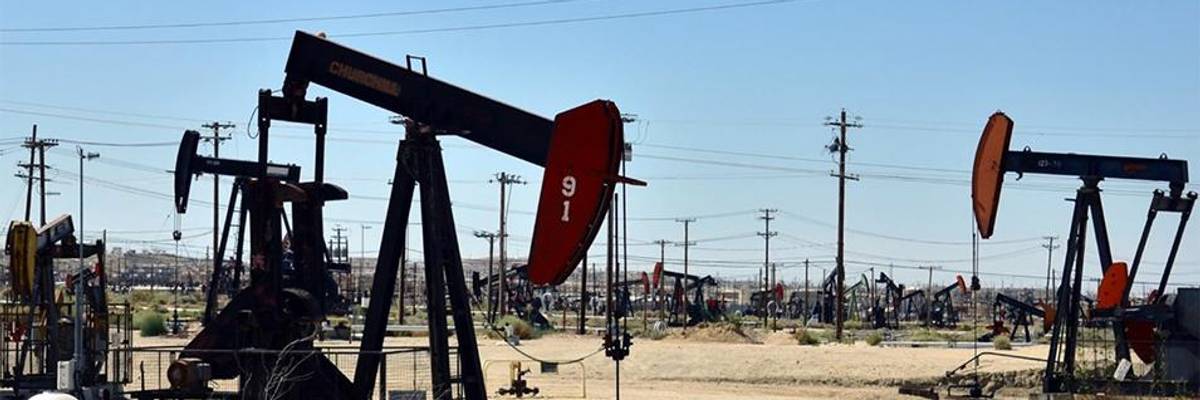
Brown focuses only on reducing oil consumption, while his state is one of the nation's largest oil producers. Three-quarters of California's oil is as climate-damaging as Alberta's tar sands. But Brown's regulators continue to issue thousands of drilling permits a year.
This dirty oil production doesn't just fuel climate change; it contaminates our air and water with toxic chemicals that cause asthma, heart problems and other serious illness.
More than 5 million Californians live within a mile of at least one oil or gas well. Wells are disproportionally located in communities of color already suffering an unfair pollution burden.
California is the bellwether for climate policy, but its actual policies do not protect people or polar bears from the health and climate ravages of fossil fuels. We cannot allow this to continue. That's why I'm working with the Brown's Last Chance campaign to demand Brown stop new oil and gas drilling in California and devise a fair plan to phase it out entirely.
Keeping fossil fuels in the ground now is the only way to save the polar bear's icy Arctic home. It is the only way to address the health and justice crisis caused by dirty oil extraction in our communities. That's why Brown must act now -- on the 20-year anniversary of the polar bear's listing, it will be far too late.
An Urgent Message From Our Co-Founder
Dear Common Dreams reader, It’s been nearly 30 years since I co-founded Common Dreams with my late wife, Lina Newhouser. We had the radical notion that journalism should serve the public good, not corporate profits. It was clear to us from the outset what it would take to build such a project. No paid advertisements. No corporate sponsors. No millionaire publisher telling us what to think or do. Many people said we wouldn't last a year, but we proved those doubters wrong. Together with a tremendous team of journalists and dedicated staff, we built an independent media outlet free from the constraints of profits and corporate control. Our mission has always been simple: To inform. To inspire. To ignite change for the common good. Building Common Dreams was not easy. Our survival was never guaranteed. When you take on the most powerful forces—Wall Street greed, fossil fuel industry destruction, Big Tech lobbyists, and uber-rich oligarchs who have spent billions upon billions rigging the economy and democracy in their favor—the only bulwark you have is supporters who believe in your work. But here’s the urgent message from me today. It's never been this bad out there. And it's never been this hard to keep us going. At the very moment Common Dreams is most needed, the threats we face are intensifying. We need your support now more than ever. We don't accept corporate advertising and never will. We don't have a paywall because we don't think people should be blocked from critical news based on their ability to pay. Everything we do is funded by the donations of readers like you. When everyone does the little they can afford, we are strong. But if that support retreats or dries up, so do we. Will you donate now to make sure Common Dreams not only survives but thrives? —Craig Brown, Co-founder |
Ten years ago this month, I was anxiously awaiting a decision that could change environmental policy forever. I was in my office with butterflies in my stomach and a film crew in the next room ready to record my reaction.
Then the news hit. The polar bears won protection throughout their range as a "threatened" species under the U.S. Endangered Species Act. It was one of the proudest moments of my life.
As an attorney with the Center for Biological Diversity, I fought for that protection for more than three years.
The polar bear's listing was a watershed decision. It was the first time a species was protected solely because of the threat from global warming. It was an acknowledgment from the federal government that climate change is real, urgent and dangerous enough to wipe out a species.
But today, I'm more worried than ever about polar bears and other climate-threatened wildlife -- and it's not just because President Trump has turned the White House into the capital of climate denial.
Our hope a decade ago was that the listing would help spur swift and aggressive action to curb fossil fuel pollution, the largest climate culprit. The science was clear: Keeping the vast majority of the world's fossil fuels in the ground is critical not only to save the polar bear, but to preserve a livable planet for all of us.
Fossil fuels are still being extracted and burned at a furious rate. And the polar bear's habitat is melting away even faster than predicted.
While the Trump administration pursued its dirty-energy agenda, the Arctic experienced its warmest winter on record. The maximum sea ice extent was the second-lowest ever recorded. And the sea ice this summer may well hit a new record low.
As the sea ice retreats, polar bears need to swim longer distances. They are spending less time on the sea ice, where they can hunt the seals they need to survive. Individual bears are starving and drowning, and fewer cubs are surviving.
If sea ice loss continues unabated, scientists estimate that polar bears will be drastically reduced across their range by mid-century. Then they'll disappear.
We must keep global average temperature rise below 1.5 degrees Celsius, in line with the Paris Agreement, to preserve polar bears in parts of their range and avoid many of the worst consequences of climate change for all life on Earth.
But the world's developed oil, gas, and coal fields contain enough carbon to blow us past that target. Just like a household budget already overspent, there is simply no room in our carbon budget for any fossil fuel development. Moreover, most fields need to be shut down before their fossil fuel reserves are fully depleted to limit warming to below 1.5 degrees.
There is another danger in the false solutions masquerading as climate heroism.
All over the world, supposed climate leaders are driving us down a road of half-measures straight toward climate catastrophe. They get showered in praise for small steps to reduce fossil fuel consumption while they turn a blind eye to the other side of the equation -- fossil fuel extraction.
California Gov. Jerry Brown, widely regarded as America's de facto climate leader under Trump, is the best example.
Brown focuses only on reducing oil consumption, while his state is one of the nation's largest oil producers. Three-quarters of California's oil is as climate-damaging as Alberta's tar sands. But Brown's regulators continue to issue thousands of drilling permits a year.
This dirty oil production doesn't just fuel climate change; it contaminates our air and water with toxic chemicals that cause asthma, heart problems and other serious illness.
More than 5 million Californians live within a mile of at least one oil or gas well. Wells are disproportionally located in communities of color already suffering an unfair pollution burden.
California is the bellwether for climate policy, but its actual policies do not protect people or polar bears from the health and climate ravages of fossil fuels. We cannot allow this to continue. That's why I'm working with the Brown's Last Chance campaign to demand Brown stop new oil and gas drilling in California and devise a fair plan to phase it out entirely.
Keeping fossil fuels in the ground now is the only way to save the polar bear's icy Arctic home. It is the only way to address the health and justice crisis caused by dirty oil extraction in our communities. That's why Brown must act now -- on the 20-year anniversary of the polar bear's listing, it will be far too late.
Ten years ago this month, I was anxiously awaiting a decision that could change environmental policy forever. I was in my office with butterflies in my stomach and a film crew in the next room ready to record my reaction.
Then the news hit. The polar bears won protection throughout their range as a "threatened" species under the U.S. Endangered Species Act. It was one of the proudest moments of my life.
As an attorney with the Center for Biological Diversity, I fought for that protection for more than three years.
The polar bear's listing was a watershed decision. It was the first time a species was protected solely because of the threat from global warming. It was an acknowledgment from the federal government that climate change is real, urgent and dangerous enough to wipe out a species.
But today, I'm more worried than ever about polar bears and other climate-threatened wildlife -- and it's not just because President Trump has turned the White House into the capital of climate denial.
Our hope a decade ago was that the listing would help spur swift and aggressive action to curb fossil fuel pollution, the largest climate culprit. The science was clear: Keeping the vast majority of the world's fossil fuels in the ground is critical not only to save the polar bear, but to preserve a livable planet for all of us.
Fossil fuels are still being extracted and burned at a furious rate. And the polar bear's habitat is melting away even faster than predicted.
While the Trump administration pursued its dirty-energy agenda, the Arctic experienced its warmest winter on record. The maximum sea ice extent was the second-lowest ever recorded. And the sea ice this summer may well hit a new record low.
As the sea ice retreats, polar bears need to swim longer distances. They are spending less time on the sea ice, where they can hunt the seals they need to survive. Individual bears are starving and drowning, and fewer cubs are surviving.
If sea ice loss continues unabated, scientists estimate that polar bears will be drastically reduced across their range by mid-century. Then they'll disappear.
We must keep global average temperature rise below 1.5 degrees Celsius, in line with the Paris Agreement, to preserve polar bears in parts of their range and avoid many of the worst consequences of climate change for all life on Earth.
But the world's developed oil, gas, and coal fields contain enough carbon to blow us past that target. Just like a household budget already overspent, there is simply no room in our carbon budget for any fossil fuel development. Moreover, most fields need to be shut down before their fossil fuel reserves are fully depleted to limit warming to below 1.5 degrees.
There is another danger in the false solutions masquerading as climate heroism.
All over the world, supposed climate leaders are driving us down a road of half-measures straight toward climate catastrophe. They get showered in praise for small steps to reduce fossil fuel consumption while they turn a blind eye to the other side of the equation -- fossil fuel extraction.
California Gov. Jerry Brown, widely regarded as America's de facto climate leader under Trump, is the best example.
Brown focuses only on reducing oil consumption, while his state is one of the nation's largest oil producers. Three-quarters of California's oil is as climate-damaging as Alberta's tar sands. But Brown's regulators continue to issue thousands of drilling permits a year.
This dirty oil production doesn't just fuel climate change; it contaminates our air and water with toxic chemicals that cause asthma, heart problems and other serious illness.
More than 5 million Californians live within a mile of at least one oil or gas well. Wells are disproportionally located in communities of color already suffering an unfair pollution burden.
California is the bellwether for climate policy, but its actual policies do not protect people or polar bears from the health and climate ravages of fossil fuels. We cannot allow this to continue. That's why I'm working with the Brown's Last Chance campaign to demand Brown stop new oil and gas drilling in California and devise a fair plan to phase it out entirely.
Keeping fossil fuels in the ground now is the only way to save the polar bear's icy Arctic home. It is the only way to address the health and justice crisis caused by dirty oil extraction in our communities. That's why Brown must act now -- on the 20-year anniversary of the polar bear's listing, it will be far too late.