SUBSCRIBE TO OUR FREE NEWSLETTER
Daily news & progressive opinion—funded by the people, not the corporations—delivered straight to your inbox.
5
#000000
#FFFFFF
To donate by check, phone, or other method, see our More Ways to Give page.
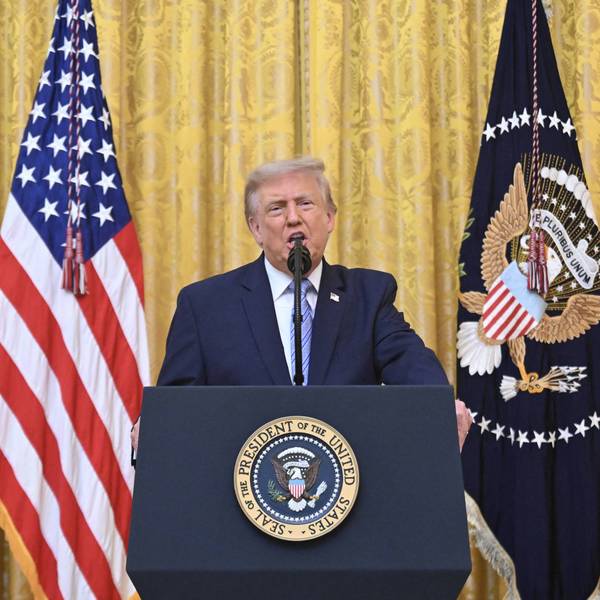
With under a month to go until Donald Trump's inauguration as president, activists from the grassroots to large organizations like the ACLU are working to fortify their digital platforms against potential government intrusions. Many fear that a Trump presidency will usher in an age of greater government surveillance and the suppression of civil rights.
"We can't trust Trump with the NSA," argued John Napier Tye, who served in the U.S. State Department's Bureau of Democracy, Human Rights, and Labor from 2011 to 2014. "There are simply not enough safeguards in place to protect Americans from our own National Security Agency."
Others point out that while Americans' privacy has been eroded under past presidents, Trump may push the state surveillance apparatus to new limits. And this is especially concerning to historically marginalized communities, as technology and civil rights analyst Logan Koepke warned, saying, "People of color, activists, and community organizers disproportionately are targets of the surveillance state."
As Inauguration Day quickly approaches, groups have been forced to decide which aspects of cyber security to prioritize. For journalists, finding secure methods of communication and information sharing is a primary concern. While mainstream industry leaders like David Remnick and Christiane Amanpour have appealed to the need for better security in the Trump era, for those engaged in activism or leftist political coverage, the threat feels even more severe.
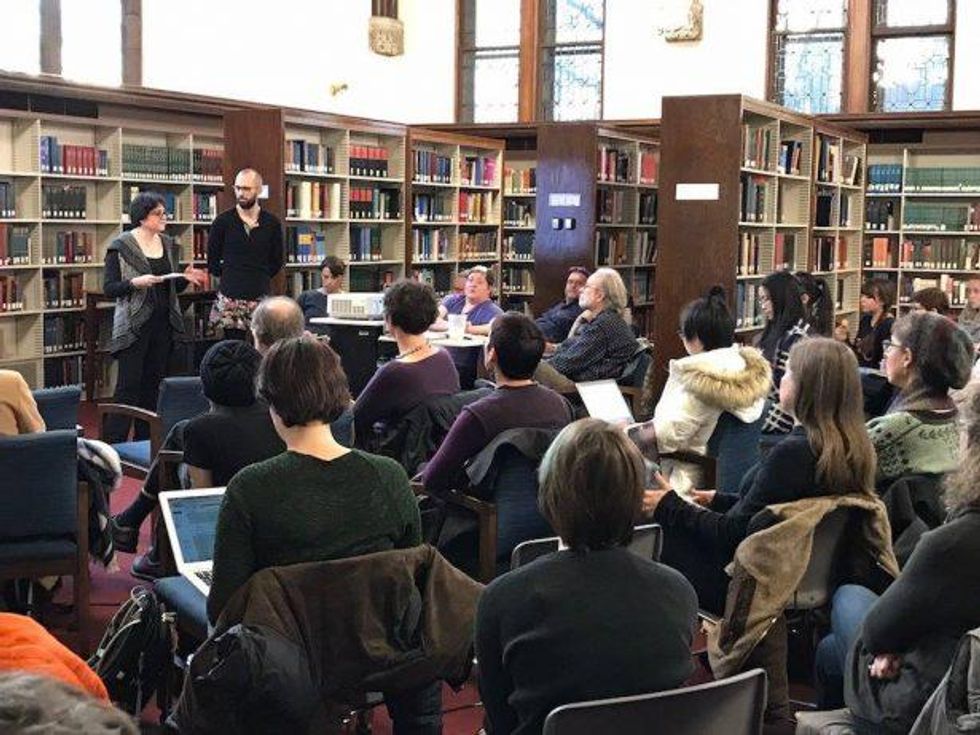
"To prepare for life under Trump we'll have to do more than download Signal and learn PGP," admonished an organizer at the New Inquiry, referring to some common encryption practices among activist journalists. "We'll have to learn how to scheme in the shadows, pass notes, and encrypt our offline communications as securely as we do our emails." To that end, ad-hoc workshops, "cryptoparties" and online guides to digital security have multiplied across the country -- and beyond -- as journalists scramble to fortify their data.
For immigrants, issues of privacy take a different form. Many of the millions of non-citizens who have had their personal information recorded for programs such as the Deferred Action for Childhood Arrivals, may be used by the Trump administration to identify targets for deportation. "Programs [like DACA] intended to protect undocumented immigrants could have the ultimate effect of exposing them," Councilman Ritchie Torres told New York Magazine. "It's a cruel irony." Many organizers are now calling on these organizations to destroy this information before Trump takes office. In New York City, Mayor Bill de Blasio has suggested that his administration may move ahead with destroying the databases of all participants in the city's ID program, IDNYC. But immigrants and others should be aware -- many online data miners and social media sites have already been implicated for helping U.S. immigration officers surveil possible targets.
Trump's rise has also emboldened many online "trolls," many of whom tend to target women and LGBT users for their abuse. Now that America has "elected the biggest online troll this country has seen," said CommunityRED co-founder Shauna Dillavou, it is more important than ever for these communities to take precautions. "Surveillance is a feminist issue," argued Koepeke, directing readers to take advantage of the wealth of resources available to empower feminists -- and others -- to protect themselves online. A good place to start is Noah Kelley's impressive Feminist Guide to Cyber Security, published through HACK*BLOSSOM, a cyber justice organization committed to an "inclusive culture of technology" and "feminist vision."
Yet, amidst these widespread efforts to screen, shield or destroy data, at least one community is rushing to duplicate and distribute its information: environmental scientists. Many in the scientific community fear that Trump may suppress or even delete federal data related to climate change. To prevent this, researchers, developers, students and climate justice activists across the United States and abroad have launched "guerrilla archiving" efforts to collect and store relevant information in various remote locations. (Instructions for how to participate in this campaign can be found online, including here). Eric Holthaus, a leader in this data archiving campaign, said the aim is to make it "harder for someone who maybe maliciously would want to destroy" data related to climate change to do so. While Holthaus said he hopes the efforts will prove unnecessary, "it definitely feels like we are entering a time when climate scientists feel the need to sort of hunker down and preserve what they've done so far."
Individuals everywhere would do well to consider bolstering their own online security practices, regardless of their affiliations or activism, said Kio Stark, a tech journalist and feminist. Even if activists are not worried about being flagged for their politics, Stark explained, they should consider what implications this might have for those connected to them. "I'm especially keen to make sure people understand that it's not just them, it's their networks that can be put at risk," Stark said. "They can protect others by being careful."
With under a month to go until Donald Trump's inauguration as president, activists from the grassroots to large organizations like the ACLU are working to fortify their digital platforms against potential government intrusions. Many fear that a Trump presidency will usher in an age of greater government surveillance and the suppression of civil rights.
"We can't trust Trump with the NSA," argued John Napier Tye, who served in the U.S. State Department's Bureau of Democracy, Human Rights, and Labor from 2011 to 2014. "There are simply not enough safeguards in place to protect Americans from our own National Security Agency."
Others point out that while Americans' privacy has been eroded under past presidents, Trump may push the state surveillance apparatus to new limits. And this is especially concerning to historically marginalized communities, as technology and civil rights analyst Logan Koepke warned, saying, "People of color, activists, and community organizers disproportionately are targets of the surveillance state."
As Inauguration Day quickly approaches, groups have been forced to decide which aspects of cyber security to prioritize. For journalists, finding secure methods of communication and information sharing is a primary concern. While mainstream industry leaders like David Remnick and Christiane Amanpour have appealed to the need for better security in the Trump era, for those engaged in activism or leftist political coverage, the threat feels even more severe.
"To prepare for life under Trump we'll have to do more than download Signal and learn PGP," admonished an organizer at the New Inquiry, referring to some common encryption practices among activist journalists. "We'll have to learn how to scheme in the shadows, pass notes, and encrypt our offline communications as securely as we do our emails." To that end, ad-hoc workshops, "cryptoparties" and online guides to digital security have multiplied across the country -- and beyond -- as journalists scramble to fortify their data.
For immigrants, issues of privacy take a different form. Many of the millions of non-citizens who have had their personal information recorded for programs such as the Deferred Action for Childhood Arrivals, may be used by the Trump administration to identify targets for deportation. "Programs [like DACA] intended to protect undocumented immigrants could have the ultimate effect of exposing them," Councilman Ritchie Torres told New York Magazine. "It's a cruel irony." Many organizers are now calling on these organizations to destroy this information before Trump takes office. In New York City, Mayor Bill de Blasio has suggested that his administration may move ahead with destroying the databases of all participants in the city's ID program, IDNYC. But immigrants and others should be aware -- many online data miners and social media sites have already been implicated for helping U.S. immigration officers surveil possible targets.
Trump's rise has also emboldened many online "trolls," many of whom tend to target women and LGBT users for their abuse. Now that America has "elected the biggest online troll this country has seen," said CommunityRED co-founder Shauna Dillavou, it is more important than ever for these communities to take precautions. "Surveillance is a feminist issue," argued Koepeke, directing readers to take advantage of the wealth of resources available to empower feminists -- and others -- to protect themselves online. A good place to start is Noah Kelley's impressive Feminist Guide to Cyber Security, published through HACK*BLOSSOM, a cyber justice organization committed to an "inclusive culture of technology" and "feminist vision."
Yet, amidst these widespread efforts to screen, shield or destroy data, at least one community is rushing to duplicate and distribute its information: environmental scientists. Many in the scientific community fear that Trump may suppress or even delete federal data related to climate change. To prevent this, researchers, developers, students and climate justice activists across the United States and abroad have launched "guerrilla archiving" efforts to collect and store relevant information in various remote locations. (Instructions for how to participate in this campaign can be found online, including here). Eric Holthaus, a leader in this data archiving campaign, said the aim is to make it "harder for someone who maybe maliciously would want to destroy" data related to climate change to do so. While Holthaus said he hopes the efforts will prove unnecessary, "it definitely feels like we are entering a time when climate scientists feel the need to sort of hunker down and preserve what they've done so far."
Individuals everywhere would do well to consider bolstering their own online security practices, regardless of their affiliations or activism, said Kio Stark, a tech journalist and feminist. Even if activists are not worried about being flagged for their politics, Stark explained, they should consider what implications this might have for those connected to them. "I'm especially keen to make sure people understand that it's not just them, it's their networks that can be put at risk," Stark said. "They can protect others by being careful."
With under a month to go until Donald Trump's inauguration as president, activists from the grassroots to large organizations like the ACLU are working to fortify their digital platforms against potential government intrusions. Many fear that a Trump presidency will usher in an age of greater government surveillance and the suppression of civil rights.
"We can't trust Trump with the NSA," argued John Napier Tye, who served in the U.S. State Department's Bureau of Democracy, Human Rights, and Labor from 2011 to 2014. "There are simply not enough safeguards in place to protect Americans from our own National Security Agency."
Others point out that while Americans' privacy has been eroded under past presidents, Trump may push the state surveillance apparatus to new limits. And this is especially concerning to historically marginalized communities, as technology and civil rights analyst Logan Koepke warned, saying, "People of color, activists, and community organizers disproportionately are targets of the surveillance state."
As Inauguration Day quickly approaches, groups have been forced to decide which aspects of cyber security to prioritize. For journalists, finding secure methods of communication and information sharing is a primary concern. While mainstream industry leaders like David Remnick and Christiane Amanpour have appealed to the need for better security in the Trump era, for those engaged in activism or leftist political coverage, the threat feels even more severe.
"To prepare for life under Trump we'll have to do more than download Signal and learn PGP," admonished an organizer at the New Inquiry, referring to some common encryption practices among activist journalists. "We'll have to learn how to scheme in the shadows, pass notes, and encrypt our offline communications as securely as we do our emails." To that end, ad-hoc workshops, "cryptoparties" and online guides to digital security have multiplied across the country -- and beyond -- as journalists scramble to fortify their data.
For immigrants, issues of privacy take a different form. Many of the millions of non-citizens who have had their personal information recorded for programs such as the Deferred Action for Childhood Arrivals, may be used by the Trump administration to identify targets for deportation. "Programs [like DACA] intended to protect undocumented immigrants could have the ultimate effect of exposing them," Councilman Ritchie Torres told New York Magazine. "It's a cruel irony." Many organizers are now calling on these organizations to destroy this information before Trump takes office. In New York City, Mayor Bill de Blasio has suggested that his administration may move ahead with destroying the databases of all participants in the city's ID program, IDNYC. But immigrants and others should be aware -- many online data miners and social media sites have already been implicated for helping U.S. immigration officers surveil possible targets.
Trump's rise has also emboldened many online "trolls," many of whom tend to target women and LGBT users for their abuse. Now that America has "elected the biggest online troll this country has seen," said CommunityRED co-founder Shauna Dillavou, it is more important than ever for these communities to take precautions. "Surveillance is a feminist issue," argued Koepeke, directing readers to take advantage of the wealth of resources available to empower feminists -- and others -- to protect themselves online. A good place to start is Noah Kelley's impressive Feminist Guide to Cyber Security, published through HACK*BLOSSOM, a cyber justice organization committed to an "inclusive culture of technology" and "feminist vision."
Yet, amidst these widespread efforts to screen, shield or destroy data, at least one community is rushing to duplicate and distribute its information: environmental scientists. Many in the scientific community fear that Trump may suppress or even delete federal data related to climate change. To prevent this, researchers, developers, students and climate justice activists across the United States and abroad have launched "guerrilla archiving" efforts to collect and store relevant information in various remote locations. (Instructions for how to participate in this campaign can be found online, including here). Eric Holthaus, a leader in this data archiving campaign, said the aim is to make it "harder for someone who maybe maliciously would want to destroy" data related to climate change to do so. While Holthaus said he hopes the efforts will prove unnecessary, "it definitely feels like we are entering a time when climate scientists feel the need to sort of hunker down and preserve what they've done so far."
Individuals everywhere would do well to consider bolstering their own online security practices, regardless of their affiliations or activism, said Kio Stark, a tech journalist and feminist. Even if activists are not worried about being flagged for their politics, Stark explained, they should consider what implications this might have for those connected to them. "I'm especially keen to make sure people understand that it's not just them, it's their networks that can be put at risk," Stark said. "They can protect others by being careful."