SUBSCRIBE TO OUR FREE NEWSLETTER
Daily news & progressive opinion—funded by the people, not the corporations—delivered straight to your inbox.
5
#000000
#FFFFFF
To donate by check, phone, or other method, see our More Ways to Give page.


Daily news & progressive opinion—funded by the people, not the corporations—delivered straight to your inbox.
Donald Trump has reportedly picked his presidential campaign's finance chairman to be the next U.S. Secretary of the Treasury. Steve Mnuchin is a Wall Street insider, a 17-year-veteran of Goldman Sachs, and currently the head of the hedge fund Dune Capital Management.
The Financial Services Roundtable, a Wall Street lobby group, was quick to praise Trump's choice. "Steve is a seasoned and results-oriented leader who is really smart, interested in public policy, and understands the urgent need to boost economic growth and opportunity," the group's leader, Tim Pawlenty, said in a statement.
Mnuchin may be a leader who gets results, but they are not exactly the results we need if we're to reverse extreme inequality.
Alys Cohen, an attorney with the National Consumer Law Center, responded to Trump's choice by pointing out that Mnuchin "has a track record of profiting by foreclosing on older homeowners and homeowners in communities of color."
Hedge Clippers, a campaign to reduce the undue political influence of private investment fund managers, documented this disturbing part of Mnuchin's past in a report released prior to the election. A major focus is Dune Capital's ownership of OneWest Bank, one of the major villains in California's foreclosure crisis. Mnuchin served as the bank's chair from 2009 to 2015. During this period, OneWest foreclosed on more than 36,000 families. According to the California Reinvestment Coalition, 68 percent of these foreclosures occurred in zip codes with a majority non-white population and 35 percent were in zip codes where the non-white population was more than 75 percent of the total population.
According to the Hedge Clippers report, OneWest was also notorious for engaging in predatory practices, including robo-signing of loan agreements and pushing reverse mortgages on older Americans.
The coalition Americans for Financial Reform is ringing alarm bells about a bill the House of Representatives is expected to consider any day now that would further enrich Mnuchin. In a letter to members of Congress, AFR charged that H.R. 6392, the "Systemic Risk Designation Improvement Act of 2016," would increase the likelihood of bank failures by loosening financial regulations on financial institutions that have assets of more than $50 billion but are not among the eight largest U.S. banks.
One bank that happens to fit into that category is CIT. The bank topped the $50 billion threshold only recently after purchasing another bank -- Mnuchin's infamous OneWest. The expected Treasury nominee, who could soon be in a position to make major decisions regarding banking regulation, sits on CIT's board of directors.
Say goodbye to the candidate who promised to fix a rigged system.
At the Center on Budget and Policy Priorities, Chuck Marr was quick to rebut a statement by Mnuchin on CNBC this morning regarding tax policy, which also comes under the purview of the Treasury Secretary. In response to concerns about Trump's proposals to slash taxes on the wealthy, Mnuchin claimed on air that these cuts would be offset by new restrictions on deductions. Marr pointed out that this assertion "is completely at odds with the tax plan that Trump announced during the campaign." While Trump is in favor of some limits on itemized deductions for high-income taxpayers (to $100,000 for individuals, $200,000 for joint filers), Marr says his proposed tax cuts would far outweigh these limits.
Frank Clemente, head of the coalition Americans for Tax Fairness, piled on to say that Mnuchin is simply the wrong choice for Treasury. "Strong proactive leadership in the Treasury Department is necessary to challenge wealthy special interests that seek to preserve or expand tax loopholes and subsidies," Clemente said. "The Treasury secretary must stand for a fairer, more inclusive economy, not one that only works for those already at the top. Steven Mnuchin's history indicates he will do the opposite."
In his response to Trump's choice, Public Citizen President Robert Weissman zeroed in on the president-elect's hypocrisy. Just this past August, Weissman pointed out, Trump declared that "We can't fix a rigged system by relying on the people who rigged it in the first place."
By tapping Mnuchin for Treasury, Weissman says it's obvious that we've been had. "Say goodbye to the candidate who promised to fix a rigged economic and political system. And say hello to the incoming president intent on turning over the machinery of government to the corporate elite against whom he railed just a few short months ago."

Dear Common Dreams reader, It’s been nearly 30 years since I co-founded Common Dreams with my late wife, Lina Newhouser. We had the radical notion that journalism should serve the public good, not corporate profits. It was clear to us from the outset what it would take to build such a project. No paid advertisements. No corporate sponsors. No millionaire publisher telling us what to think or do. Many people said we wouldn't last a year, but we proved those doubters wrong. Together with a tremendous team of journalists and dedicated staff, we built an independent media outlet free from the constraints of profits and corporate control. Our mission has always been simple: To inform. To inspire. To ignite change for the common good. Building Common Dreams was not easy. Our survival was never guaranteed. When you take on the most powerful forces—Wall Street greed, fossil fuel industry destruction, Big Tech lobbyists, and uber-rich oligarchs who have spent billions upon billions rigging the economy and democracy in their favor—the only bulwark you have is supporters who believe in your work. But here’s the urgent message from me today. It's never been this bad out there. And it's never been this hard to keep us going. At the very moment Common Dreams is most needed, the threats we face are intensifying. We need your support now more than ever. We don't accept corporate advertising and never will. We don't have a paywall because we don't think people should be blocked from critical news based on their ability to pay. Everything we do is funded by the donations of readers like you. When everyone does the little they can afford, we are strong. But if that support retreats or dries up, so do we. Will you donate now to make sure Common Dreams not only survives but thrives? —Craig Brown, Co-founder |
Donald Trump has reportedly picked his presidential campaign's finance chairman to be the next U.S. Secretary of the Treasury. Steve Mnuchin is a Wall Street insider, a 17-year-veteran of Goldman Sachs, and currently the head of the hedge fund Dune Capital Management.
The Financial Services Roundtable, a Wall Street lobby group, was quick to praise Trump's choice. "Steve is a seasoned and results-oriented leader who is really smart, interested in public policy, and understands the urgent need to boost economic growth and opportunity," the group's leader, Tim Pawlenty, said in a statement.
Mnuchin may be a leader who gets results, but they are not exactly the results we need if we're to reverse extreme inequality.
Alys Cohen, an attorney with the National Consumer Law Center, responded to Trump's choice by pointing out that Mnuchin "has a track record of profiting by foreclosing on older homeowners and homeowners in communities of color."
Hedge Clippers, a campaign to reduce the undue political influence of private investment fund managers, documented this disturbing part of Mnuchin's past in a report released prior to the election. A major focus is Dune Capital's ownership of OneWest Bank, one of the major villains in California's foreclosure crisis. Mnuchin served as the bank's chair from 2009 to 2015. During this period, OneWest foreclosed on more than 36,000 families. According to the California Reinvestment Coalition, 68 percent of these foreclosures occurred in zip codes with a majority non-white population and 35 percent were in zip codes where the non-white population was more than 75 percent of the total population.
According to the Hedge Clippers report, OneWest was also notorious for engaging in predatory practices, including robo-signing of loan agreements and pushing reverse mortgages on older Americans.
The coalition Americans for Financial Reform is ringing alarm bells about a bill the House of Representatives is expected to consider any day now that would further enrich Mnuchin. In a letter to members of Congress, AFR charged that H.R. 6392, the "Systemic Risk Designation Improvement Act of 2016," would increase the likelihood of bank failures by loosening financial regulations on financial institutions that have assets of more than $50 billion but are not among the eight largest U.S. banks.
One bank that happens to fit into that category is CIT. The bank topped the $50 billion threshold only recently after purchasing another bank -- Mnuchin's infamous OneWest. The expected Treasury nominee, who could soon be in a position to make major decisions regarding banking regulation, sits on CIT's board of directors.
Say goodbye to the candidate who promised to fix a rigged system.
At the Center on Budget and Policy Priorities, Chuck Marr was quick to rebut a statement by Mnuchin on CNBC this morning regarding tax policy, which also comes under the purview of the Treasury Secretary. In response to concerns about Trump's proposals to slash taxes on the wealthy, Mnuchin claimed on air that these cuts would be offset by new restrictions on deductions. Marr pointed out that this assertion "is completely at odds with the tax plan that Trump announced during the campaign." While Trump is in favor of some limits on itemized deductions for high-income taxpayers (to $100,000 for individuals, $200,000 for joint filers), Marr says his proposed tax cuts would far outweigh these limits.
Frank Clemente, head of the coalition Americans for Tax Fairness, piled on to say that Mnuchin is simply the wrong choice for Treasury. "Strong proactive leadership in the Treasury Department is necessary to challenge wealthy special interests that seek to preserve or expand tax loopholes and subsidies," Clemente said. "The Treasury secretary must stand for a fairer, more inclusive economy, not one that only works for those already at the top. Steven Mnuchin's history indicates he will do the opposite."
In his response to Trump's choice, Public Citizen President Robert Weissman zeroed in on the president-elect's hypocrisy. Just this past August, Weissman pointed out, Trump declared that "We can't fix a rigged system by relying on the people who rigged it in the first place."
By tapping Mnuchin for Treasury, Weissman says it's obvious that we've been had. "Say goodbye to the candidate who promised to fix a rigged economic and political system. And say hello to the incoming president intent on turning over the machinery of government to the corporate elite against whom he railed just a few short months ago."
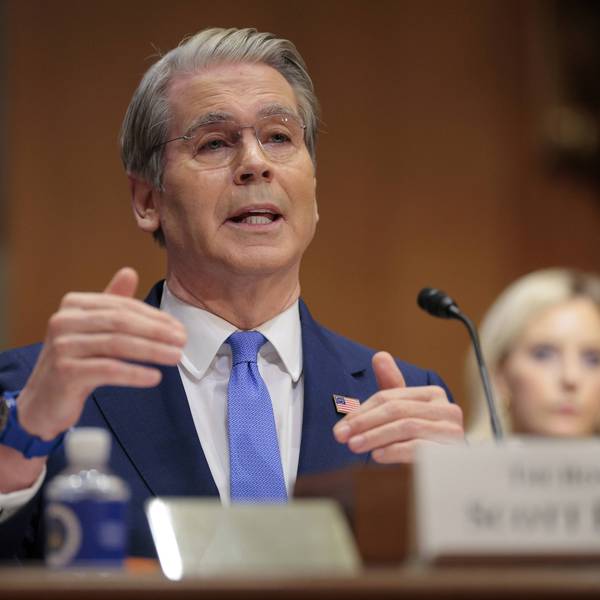
Donald Trump has reportedly picked his presidential campaign's finance chairman to be the next U.S. Secretary of the Treasury. Steve Mnuchin is a Wall Street insider, a 17-year-veteran of Goldman Sachs, and currently the head of the hedge fund Dune Capital Management.
The Financial Services Roundtable, a Wall Street lobby group, was quick to praise Trump's choice. "Steve is a seasoned and results-oriented leader who is really smart, interested in public policy, and understands the urgent need to boost economic growth and opportunity," the group's leader, Tim Pawlenty, said in a statement.
Mnuchin may be a leader who gets results, but they are not exactly the results we need if we're to reverse extreme inequality.
Alys Cohen, an attorney with the National Consumer Law Center, responded to Trump's choice by pointing out that Mnuchin "has a track record of profiting by foreclosing on older homeowners and homeowners in communities of color."
Hedge Clippers, a campaign to reduce the undue political influence of private investment fund managers, documented this disturbing part of Mnuchin's past in a report released prior to the election. A major focus is Dune Capital's ownership of OneWest Bank, one of the major villains in California's foreclosure crisis. Mnuchin served as the bank's chair from 2009 to 2015. During this period, OneWest foreclosed on more than 36,000 families. According to the California Reinvestment Coalition, 68 percent of these foreclosures occurred in zip codes with a majority non-white population and 35 percent were in zip codes where the non-white population was more than 75 percent of the total population.
According to the Hedge Clippers report, OneWest was also notorious for engaging in predatory practices, including robo-signing of loan agreements and pushing reverse mortgages on older Americans.
The coalition Americans for Financial Reform is ringing alarm bells about a bill the House of Representatives is expected to consider any day now that would further enrich Mnuchin. In a letter to members of Congress, AFR charged that H.R. 6392, the "Systemic Risk Designation Improvement Act of 2016," would increase the likelihood of bank failures by loosening financial regulations on financial institutions that have assets of more than $50 billion but are not among the eight largest U.S. banks.
One bank that happens to fit into that category is CIT. The bank topped the $50 billion threshold only recently after purchasing another bank -- Mnuchin's infamous OneWest. The expected Treasury nominee, who could soon be in a position to make major decisions regarding banking regulation, sits on CIT's board of directors.
Say goodbye to the candidate who promised to fix a rigged system.
At the Center on Budget and Policy Priorities, Chuck Marr was quick to rebut a statement by Mnuchin on CNBC this morning regarding tax policy, which also comes under the purview of the Treasury Secretary. In response to concerns about Trump's proposals to slash taxes on the wealthy, Mnuchin claimed on air that these cuts would be offset by new restrictions on deductions. Marr pointed out that this assertion "is completely at odds with the tax plan that Trump announced during the campaign." While Trump is in favor of some limits on itemized deductions for high-income taxpayers (to $100,000 for individuals, $200,000 for joint filers), Marr says his proposed tax cuts would far outweigh these limits.
Frank Clemente, head of the coalition Americans for Tax Fairness, piled on to say that Mnuchin is simply the wrong choice for Treasury. "Strong proactive leadership in the Treasury Department is necessary to challenge wealthy special interests that seek to preserve or expand tax loopholes and subsidies," Clemente said. "The Treasury secretary must stand for a fairer, more inclusive economy, not one that only works for those already at the top. Steven Mnuchin's history indicates he will do the opposite."
In his response to Trump's choice, Public Citizen President Robert Weissman zeroed in on the president-elect's hypocrisy. Just this past August, Weissman pointed out, Trump declared that "We can't fix a rigged system by relying on the people who rigged it in the first place."
By tapping Mnuchin for Treasury, Weissman says it's obvious that we've been had. "Say goodbye to the candidate who promised to fix a rigged economic and political system. And say hello to the incoming president intent on turning over the machinery of government to the corporate elite against whom he railed just a few short months ago."